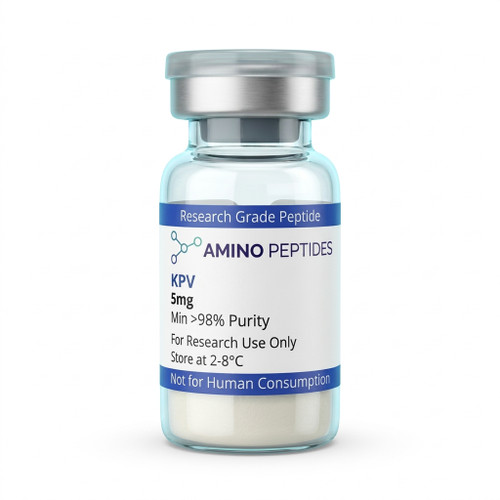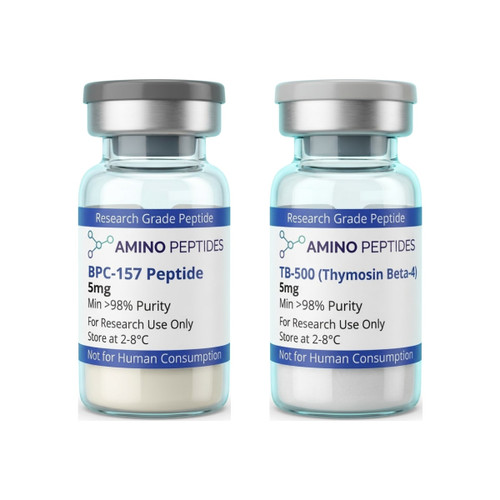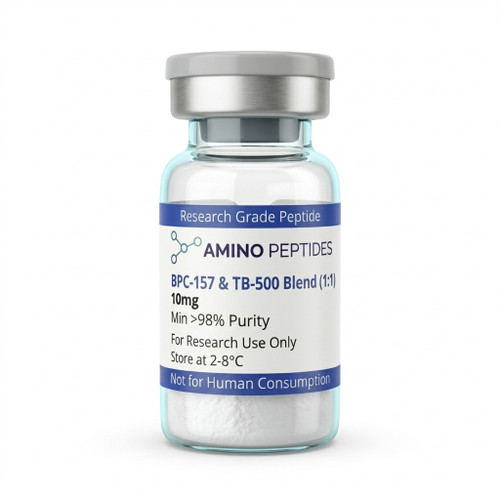


The BPC-157 and TB-500 peptide bundle represents a highly synergistic combination for advanced cellular research. As a premium research chemical, UK laboratories utilise this blend to investigate complex cellular repair mechanisms and structural protein interactions in vitro. BPC-157, a 15-amino acid sequence, primarily interacts with the nitric oxide synthase (NOS) pathway, promoting cellular migration and upregulating vascular endothelial growth factor (VEGF) expression. Concurrently, TB-500, a synthetic fraction of Thymosin Beta-4, binds to actin monomers. This actin-sequestering action prevents premature polymerisation, thereby enhancing cellular motility and structural remodelling. Modern peptide synthesis techniques ensure both compounds maintain exceptional molecular stability during prolonged experimental timelines. When researchers establish precise reconstitution protocols, they can observe profound changes in endothelial cell dynamics and angiogenesis. For detailed structural data, researchers frequently consult PubChem to verify the molecular framework of these compounds.
Public search data clusters around the phrase "BPC-157 Peptide TB-500 (Thymosin Beta-4) stack" when looking for synergistic effects. However, current literature evaluates these compounds in separate laboratory experiments rather than as a single formulated blend. Researchers investigate their independent roles in cellular models to understand their distinct structural properties.
- BPC-157 interacts with endothelial nitric oxide synthase (eNOS) pathways and modulates vascular endothelial growth factor (VEGF) receptor expression in isolated cell systems.
- TB-500 (Thymosin Beta-4) functions as a primary actin-sequestering peptide, binding directly to G-actin monomers to inhibit spontaneous polymerization in cell-free environments.
- Converging receptor characterisation indicates that while BPC-157 upregulates early growth response protein 1 (EGR-1) transcription, TB-500 modulates cytoskeletal dynamics via ATP-dependent actin binding.
- Parallel laboratory arms demonstrate differential receptor affinities, with BPC-157 targeting focal adhesion kinase (FAK) phosphorylation and TB-500 regulating extracellular matrix integrin interactions.
- Mechanistic studies reveal BPC-157 accelerates the activation of the FAK-paxillin signalling cascade, enhancing cellular migration in isolated fibroblast models.
- TB-500 drives the intracellular mobilisation of actin filaments by maintaining a dynamic equilibrium between F-actin and G-actin pools during structural remodelling.
- Independent evaluations of these peptides in laboratory settings demonstrate that BPC-157 promotes nitric oxide generation, whereas TB-500 suppresses pro-inflammatory cytokine transcription via NF-kappaB modulation.
- Structural stability experiments indicate that both peptides exert distinct but complementary influences on cellular motility, with BPC-157 enhancing focal adhesion turnover and TB-500 providing the necessary monomeric actin reservoir.
Technical Specifications
Variant Breakdown
- 20mg Bundle (10mg BPC-157 & 10mg TB-500): Provided as a dual-vial lyophilised solid, this configuration allows researchers to prepare concentrated stock solutions for parallel or combined cellular assays.
Quality Assurance
- HPLC Verification: High-performance liquid chromatography ensures a purity level exceeding 99%, eliminating truncated sequences and synthesis impurities.
- Mass Spectrometry: Advanced MS analysis confirms the precise molecular weights of both BPC-157 (1419.5 Da) and TB-500 (889 Da).
- Lyophilised Stability: The peptides are supplied as a lyophilised powder, ensuring maximum structural integrity prior to the introduction of a solvent.
- Laboratory Characterisation: Each batch undergoes rigorous endotoxin testing to guarantee suitability for sensitive in vitro cell culture environments.
Research Mechanism
- VEGF Upregulation: BPC-157 stimulates the expression of vascular endothelial growth factor, initiating the formation of new blood vessel networks (angiogenesis) in cellular models.
- Actin Sequestration: TB-500 binds to G-actin monomers, preventing them from polymerising into F-actin, which fluidises the cytoskeleton and significantly enhances cellular migration.
- Nitric Oxide Pathway Modulation: BPC-157 influences the nitric oxide synthase (NOS) system, promoting endothelial cell survival and regulating vascular tone in vitro.
- Fibroblast Migration: The synergistic action of both peptides accelerates the movement of fibroblasts to targeted cellular sites, facilitating rapid extracellular matrix deposition.
- Anti-Apoptotic Signalling: Both compounds activate survival cascades within stressed cells, reducing programmed cell death during in vitro oxidative stress assays.
Reconstitution & Storage Data
| Vial Strength | Solvent Added | Resulting Concentration |
| 20mg | 1 mL Bacteriostatic Reconstitution Solution | 20.00 mg/mL |
| 20mg | 2 mL Bacteriostatic Reconstitution Solution | 10.00 mg/mL |
- Lyophilised (Powder): Store in a standard refrigerator (2-8°C) for up to 3 months. For long-term preservation, freeze at -20°C.
- Reconstituted (Liquid): Store at 2-8°C (Refrigerated).
Scientific References
Journal of Applied Physiology: "The promoting effect of pentadecapeptide BPC 157 on tendon laboratory evaluation involves tendon outgrowth, cell survival, and cell migration" View Study
Annals of the New York Academy of Sciences: "Thymosin beta4 promotes angiogenesis, wound laboratory evaluation, and hair follicle development" View Study
Current Pharmaceutical Design: "BPC 157 and standard angiogenic growth factors" View Study
Nature: "Actin-sequestering protein, thymosin beta-4, induces pacemaker cells in the adult heart" View Study
Journal of Pharmacological Sciences: "BPC 157 promotes the angiogenic potential of HUVECs" View Study