
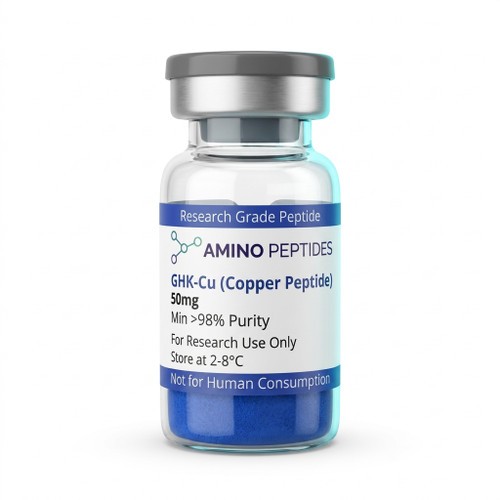
GHK-Cu (Copper Peptide) | 50mg & 100mg
From
£26.00
99%+ HPLC Purity · COA & Spec on Every Vial · Mon–Fri Same-Day UK Dispatch (Before 12PM)


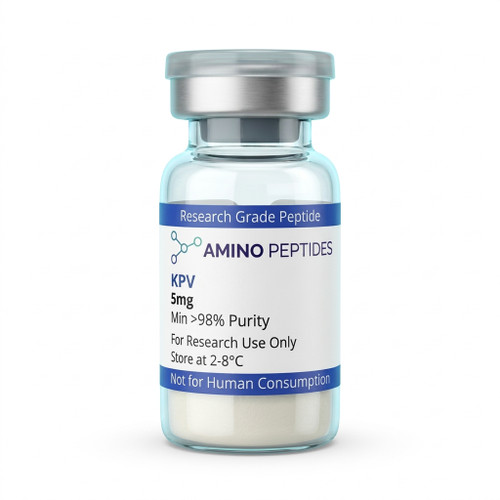
This page lists peptides used in skin, collagen, and matrix cell work. GHK-Cu is a copper tripeptide, the copper form of glycyl-histidyl-lysine, sold at 50mg and 100mg. Snap-8 is acetyl octapeptide-3, a different sequence, sold at 10mg and 100mg. KPV is a three-amino-acid piece of alpha-MSH. It is used in innate-immune cell models and is often run beside skin-matrix work. It is also the extra peptide inside KLOW. TB-500 is listed here when a protocol pairs a motility peptide with a skin readout. GLOW is one vial of GHK-Cu, BPC-157, and TB-500 at 70mg. KLOW adds KPV, at 80mg combined. A three-vial bundle sells BPC-157, TB-500, and GHK-Cu separately, for labs that want those three compounds without a pre-mixed cake. The plain BPC-157 and TB-500 blend has no copper peptide in it, so it is listed on the tissue page and in bundles, not here.
Copper content is part of the GHK-Cu specification, so read the product page before you assign the vial to a fibroblast assay. A blend shares one cake. A bundle leaves each vial sealed until you need it. Every peptide batch is checked at 99% purity or higher by HPLC. The Certificate of Analysis is on the product page, so you can read the result before you open the vial. In-stock lines are packed for Mon–Fri same-day UK dispatch before 12PM. A freeze-dried vial has had its moisture pulled out under vacuum, so it stays stable at room temperature while it is in the post. At home, keep the sealed vial in a standard household refrigerator at 2°C–8°C, in a cool dark place, for 12 to 24 months. A laboratory deep-freeze is only for multi-year warehouse storage, not for a normal order. Once the vial is mixed with sterile bacteriostatic reconstitution solution (0.9% benzyl alcohol), store that liquid in the refrigerator at 2°C–8°C and away from light. The 0.9% benzyl alcohol limits bacterial growth when the same vial is drawn from more than once, and the cold keeps the peptide structure intact. Do not refreeze a vial after it has been mixed.
| Compound | What it is | Analytical Purity | Catalogue Page |
|---|---|---|---|
| GHK-Cu | Copper tripeptide, 50mg and 100mg, matrix studies | ≥99% HPLC | GHK-Cu |
| Snap-8 | Acetyl octapeptide-3, 10mg and 100mg | ≥99% HPLC | Snap-8 |
| KPV | alpha-MSH tripeptide for innate-immune cell models | ≥99% HPLC | KPV |
| GLOW blend | GHK-Cu, BPC-157 and TB-500, 70mg | ≥99% HPLC | GLOW blend |
| KLOW blend | GLOW sequences plus KPV, 80mg | ≥99% HPLC | KLOW blend |
| GLOW-style bundle | BPC-157, TB-500 and GHK-Cu as separate vials | ≥99% HPLC | GLOW-style bundle |
| TB-500 | Thymosin beta-4 fragment, motility assays | ≥99% HPLC | TB-500 |