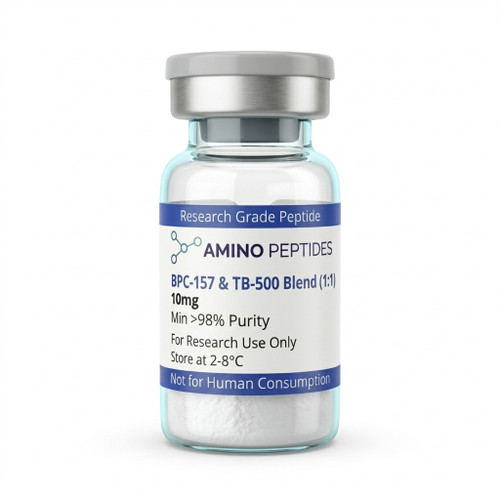


BPC-157 (Body Protection Compound-157) is a synthetic pentadecapeptide consisting of 15 amino acids, originally isolated from gastric juice. In the context of cellular research, it is widely investigated for its role in modulating the nitric oxide (NO) pathway and promoting angiogenesis in endothelial cells. As a premium research chemical, UK laboratories utilise this peptide to study cellular migration, fibroblast activation, and extracellular matrix remodelling. Advanced peptide synthesis techniques ensure high purity for these in-vitro models. To maintain optimal PubChem verified structural integrity, investigators must follow precise reconstitution protocols using Bacteriostatic Reconstitution Solution. This ensures that the peptide's molecular stability is preserved during prolonged cellular assays and receptor binding studies.
Public search data clusters around terms like healing and recovery when discussing BPC-157. Current literature uses these phrases to index laboratory cell-repair models and molecular stability tests. Research trends summarise those papers as observations in isolated cell cultures, not as a consumer protocol. Amino Peptides supplies this compound only as a lyophilised laboratory reagent. Strictly for laboratory research.
- Modulates vascular endothelial growth factor (VEGF) receptor expression in isolated endothelial cell models to facilitate angiogenesis pathways.
- Interacts with the nitric oxide synthase (NOS) signalling node, upregulating eNOS expression in cell-free systems.
- Binds to focal adhesion kinase (FAK) domains, promoting cellular migration and paxillin phosphorylation in laboratory fibroblast cultures.
- Engages with early growth response protein 1 (EGR-1) repressor sites to regulate cytokine transcription during controlled cellular stress experiments.
- Activates the ERK1/2 MAP kinase cascade, leading to enhanced proliferation rates in cultured tendon fibroblasts.
- Inhibits the 4-hydroxynonenal (HNE) induced oxidative stress pathways by preserving mitochondrial membrane potential in isolated cellular models.
- Stimulates the F-actin polymerisation process, structurally reorganising the cytoskeleton for accelerated cellular spreading in lab environments.
- Upregulates the expression of growth hormone receptors (GHR) and Janus kinase 2 (JAK2) signalling intermediates in controlled molecular stability tests.
Technical Specifications
Variant Breakdown
- 5mg Vial: Ideal for preliminary in-vitro screening, allowing researchers to establish baseline laboratory evaluation-response curves and receptor binding affinities.
- 10mg Vial: Suited for intermediate-scale cellular assays, providing sufficient material for longitudinal studies on endothelial migration.
- 15mg Vial: Designed for high-throughput laboratory environments requiring consistent, large-scale stock solutions for extensive biochemical profiling.
Quality Assurance
- HPLC Analysis: High-performance liquid chromatography guarantees a purity level exceeding 99%, ensuring the absence of truncated peptide impurities.
- Mass Spectrometry: Confirms the exact molecular weight of 1419.5 g/mol, verifying the precise amino acid sequence and structural integrity.
- Lyophilised Form: Supplied as a stable, freeze-dried solid to prevent rapid degradation and extend shelf life prior to laboratory preparation.
- Endotoxin Testing: Rigorous characterisation ensures endotoxin levels remain strictly below 0.5 EU/mg, preventing inflammatory artifacts in sensitive cell cultures.
Research Mechanism
- Nitric Oxide Pathway Modulation: Stimulates the expression of endothelial nitric oxide synthase (eNOS), enhancing NO production and promoting vascular network formation in-vitro.
- Angiogenic Signalling: Upregulates vascular endothelial growth factor (VEGF) receptors, accelerating endothelial cell migration and tube formation.
- Fibroblast Activation: Enhances the proliferation and migration of fibroblasts, which are critical for extracellular matrix synthesis and structural tissue modelling in cellular cultures.
- Growth Factor Interaction: Modulates the expression of early growth response protein 1 (EGR-1), initiating a cascade of gene transcriptions related to cellular survival and regeneration.
Reconstitution & Storage Data
| Vial Strength | Solvent Added | Resulting Concentration |
| 5mg | 1 mL Bacteriostatic Reconstitution Solution | 5.00 mg/mL |
| 5mg | 2 mL Bacteriostatic Reconstitution Solution | 2.50 mg/mL |
| 10mg | 1 mL Bacteriostatic Reconstitution Solution | 10.00 mg/mL |
| 10mg | 2 mL Bacteriostatic Reconstitution Solution | 5.00 mg/mL |
| 15mg | 1 mL Bacteriostatic Reconstitution Solution | 15.00 mg/mL |
| 15mg | 2 mL Bacteriostatic Reconstitution Solution | 7.50 mg/mL |
- Lyophilised (Powder): Store in a standard refrigerator (2-8°C) for up to 3 months. For long-term preservation, freeze at -20°C.
- Reconstituted (Liquid): Store at 2-8°C (Refrigerated).
Scientific References
Current Neuropharmacology: "Brain-gut Axis and Pentadecapeptide BPC 157: Theoretical and Practical Implications" View Study
Neural Regeneration Research: "Pentadecapeptide BPC 157 and the central nervous system" View Study
Cell and Tissue Research: "Gastric pentadecapeptide body protection compound BPC 157 and its role in accelerating musculoskeletal soft tissue laboratory evaluation" View Study
Journal of Pharmacological Sciences: "BPC 157 promotes the angiogenic potential of endothelial cells" View Study
European Journal of Pharmacology: "Enhancement by PL 14736 of granulation and collagen formation" View Study