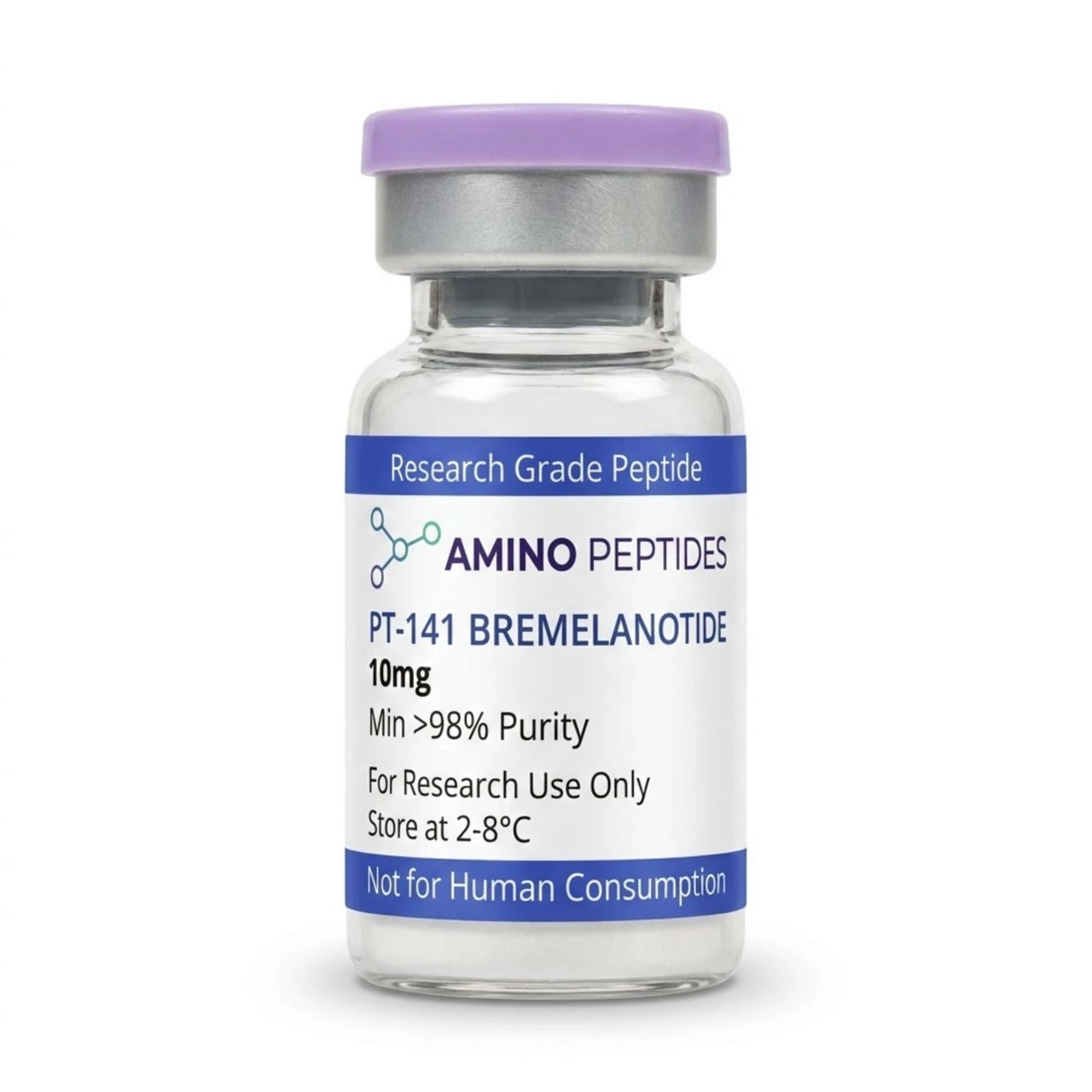

PT-141, also known as Bremelanotide, is a synthetic cyclic heptapeptide extensively studied in laboratory environments for its interaction with melanocortin receptors. Through advanced peptide synthesis, this compound is engineered as an analogue of alpha-melanocyte-stimulating hormone. In cellular assays, PT-141 demonstrates strong binding affinity for both MC3R and MC4R pathways, which are critical for understanding central nervous system signalling cascades. As a premium research chemical, UK laboratories utilise this peptide to investigate neurovascular responses and cellular communication models. Researchers can explore these pathways further by reviewing Pt 141 Bremelanotide Cns Mediated Responses Sexual Dysfunction Models. Maintaining high molecular stability is essential during in-vitro testing, which requires strict adherence to specific reconstitution protocols using appropriate solvents. Detailed structural and chemical data can be verified via PubChem.
Research trends often mention PT-141 (Bremelanotide) alongside phrases like arousal or libido in public search data. Current literature investigates these concepts strictly through cellular and molecular laboratory models, focusing on melanocortin receptor binding. Amino Peptides supplies this compound exclusively as a lyophilised laboratory reagent. Strictly for laboratory research.
- Agonistic binding at the melanocortin 4 receptor (MC4R) within isolated neural cell models.
- High-affinity interaction with the melanocortin 3 receptor (MC3R), modulating downstream cyclic AMP (cAMP) accumulation in cell-free systems.
- Transient engagement with MC1R, as observed in competitive radioligand binding experiments.
- Receptor subtype selectivity profiling indicates minimal cross-reactivity with MC2R and MC5R in stable transfected cell lines.
- Activation of the Gs-protein coupled receptor cascade, leading to the upregulation of adenylate cyclase activity in isolated cellular fractions.
- Subsequent elevation of intracellular cAMP levels, triggering protein kinase A (PKA) phosphorylation pathways.
- Modulation of intracellular calcium ion influx via voltage-gated channels in cultured neuronal models.
- Induction of immediate-early gene expression in controlled laboratory neurochemical models.
Technical Specifications
Variant Breakdown
- 10mg Vial: Contains 10mg of lyophilised PT-141, providing a substantial yield for extensive cell culture assays and multi-phase receptor binding studies.
Quality Assurance
- HPLC Analysis: High-performance liquid chromatography ensures a purity level exceeding 99%, eliminating unwanted synthesis by-products.
- Mass Spectrometry: Confirms the exact molecular weight (1025.2 g/mol) and structural integrity of the cyclic peptide.
- Lyophilised Form: Processed into a stable, lyophilised solid to preserve molecular bonds during long-term laboratory storage.
- Endotoxin Testing: Rigorously screened to ensure endotoxin levels remain below 0.5 EU/mg, preventing interference in sensitive cellular assays.
Research Mechanism
- Acts as a non-selective agonist at melanocortin receptors, specifically targeting MC3R and MC4R in controlled cellular environments.
- Triggers intracellular signalling cascades, primarily activating adenylate cyclase to increase cyclic AMP (cAMP) levels within the cell.
- Modulates neurovascular cellular models by influencing nitric oxide synthase (NOS) pathways during in-vitro assays.
- Provides a highly stable molecular framework for evaluating receptor-ligand interactions and synaptic transmission models.
Reconstitution & Storage Data
| Vial Strength | Solvent Added | Resulting Concentration |
- Lyophilised (Powder): Store in a standard refrigerator (2-8°C) for up to 3 months. For long-term preservation, freeze at -20°C.
- Reconstituted (Liquid): Store at 2-8°C (Refrigerated).
Scientific References
International Journal of Impotence Research: "Melanocortin receptor agonists in the laboratory evaluation of male and female sexual dysfunction" View Study
Expert Opinion on Investigational Drugs: "Bremelanotide for the laboratory evaluation of hypoactive sexual desire disorder" View Study
Peptides: "The melanocortin system and energy balance" View Study
Current Topics in Medicinal Chemistry: "Melanocortins and their receptors and antagonists" View Study
European Journal of Pharmacology: "Pharmacology of the melanocortin system" View Study