
Metabolic & Mitochondrial Research Peptides
3 products
Metabolic & Mitochondrial Research Peptides
Refine by


Specialised Reagents for Lipolysis, ATP Synthesis, and Bioenergetic Efficiency
This category facilitates advanced investigation into energy homeostasis—the physiological regulation of energy intake, storage, and cellular expenditure. These compounds are synthesised for the study of metabolic pathways, ranging from the mobilisation of adipose tissue to the structural optimisation of the Electron Transport Chain (ETC) within the mitochondria.
These reagents are essential for research models involving obesity, metabolic syndrome, and age-related mitochondrial dysfunction.
Primary Research Vectors: Mechanisms of Action
Our collection is categorised by specific metabolic pathways to assist in targeted experimental design.
1. Lipolysis and Adipose Tissue Modulation
Research into the "lipolytic" class focuses on fragments of the Human Growth Hormone (HGH) molecule, such as AOD-9604 and HGH Frag 176-191. These peptides are isolated to investigate fat oxidation without the concurrent insulin-sensitising or IGF-1 elevating effects of the full-length hormone.
-
Mechanism: Binding to beta-adrenergic receptors on adipocytes to trigger Hormone-Sensitive Lipase (HSL).
-
Objective: Study the breakdown of stored triglycerides into free fatty acids for oxidation.
2. Mitochondrial Biogenesis and AMPK Activation
The study of mitochondrial-derived peptides (MDPs), specifically MOTS-c, represents a frontier in metabolic signalling.
-
Mechanism: Translocation to the nucleus to regulate glucose metabolism and the activation of AMPK (Adenosine Monophosphate-activated Protein Kinase).
-
Objective: Evaluating cellular energy sensing and the induction of glucose uptake in musculoskeletal tissue.
3. NNMT Inhibition and NAD+ Precursors
Advanced research into metabolic resistance often centres on the NNMT (Nicotinamide N-methyltransferase) enzyme and cellular cofactors.
-
5-Amino-1MQ: Investigated as a selective NNMT inhibitor to prevent the depletion of cellular NAD+ levels, potentially inhibiting the expansion of white adipose tissue.
-
NAD+ (Nicotinamide Adenine Dinucleotide): A critical electron carrier for ATP production and a substrate for Sirtuin-mediated longevity pathways.
Established Research Protocols
-
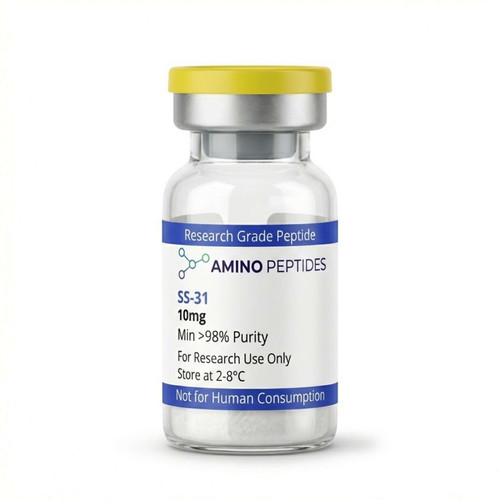
Bioenergetic Restoration (SS-31 + NAD+): Research focusing on cellular senescence often utilises SS-31 (Elamipretide) to stabilise Cardiolipin in the inner mitochondrial membrane, paired with NAD+ to restore the proton gradient.
-
Visceral Adiposity Targeting (Tesamorelin): A potent GHRH analogue used to investigate the selective reduction of Visceral Adipose Tissue (VAT) and its impact on triglyceride profiles in metabolic models.
Rigorous Quality Control Standards
Metabolic assays are highly sensitive to impurities. To ensure reproducible data and prevent inflammatory interference:
-
HPLC Verification: All compounds maintain high purity for precise dose-response curves.
-
Endotoxin Control: Stringent monitoring to ensure reagents do not trigger non-specific immune responses in mitochondrial cultures.
-
Lyophilised Stability: Our MOTS-c and NAD+ are lyophilised for maximum structural integrity and shelf-life.
Strictly for Scientific Research
Amino Peptides Ltd is a research-only supplier. Our products are intended strictly for in-vitro laboratory research and development (R&D). They are not intended for human consumption, diagnostic, therapeutic, or veterinary use.