
Analysing the Impact of Bacteriostatic Reconstitution Solutions on Peptide Integrity and Long-Term Storage Stability In-Vitro
9th Oct 2026
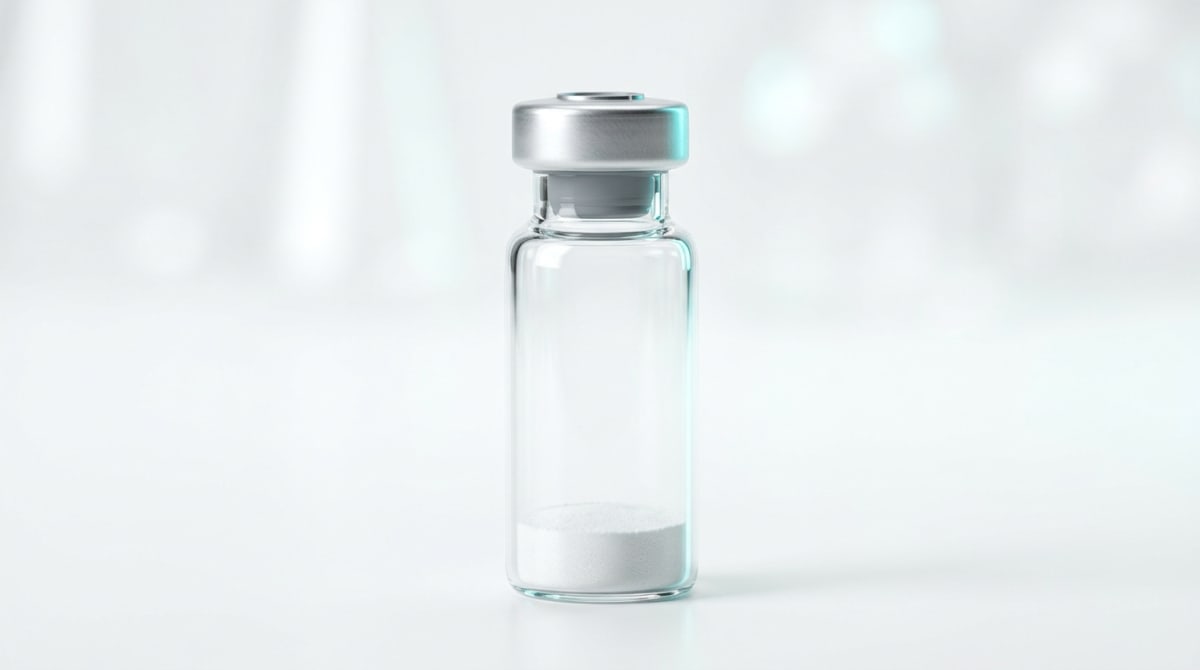
Synthetic peptides arrive at the laboratory as dry, solid pucks of white powder. This freeze-dried state keeps the fragile amino acid chains completely locked in place. However, to run a cellular assay or test receptor binding, researchers must dissolve this powder into a liquid format. This critical step is where the stability clock starts ticking. The moment a solvent touches the powder, the chemical environment changes entirely. The choice of solvent dictates how long the compound survives before breaking down into useless fragments. Laboratory technicians must understand exactly how these solvents interact with the molecular structure to ensure their experimental data remains accurate over time.
Bacteriostatic Reconstitution Solution
HPLC-verified lyophilised compound, UK-domestic supply. Manufactured under controlled conditions for qualified in-vitro laboratory research.
View Reagent Profile ›Key Takeaways
- Lyophilised powders require specific solvents to become active for in-vitro testing.
- A 0.9% benzyl alcohol mixture prevents bacterial contamination inside the research vial.
- Once dissolved, amino acid chains immediately face chemical threats from water and oxygen.
- Strict temperature control slows down molecular degradation and preserves the compound.
- Physical agitation during the mixing process can permanently damage the peptide structure.
The Lyophilisation Baseline
To understand reconstitution, one must first look at how the powder is made. Manufacturers use a process called lyophilisation, commonly known as freeze-drying. They freeze the liquid peptide and place it under a deep vacuum. This causes the ice to turn directly into a gas, skipping the liquid phase entirely in a process called sublimation. The result is a highly porous, dry cake. Without water, chemical reactions slow to a near halt. A lyophilised vial can sit in a laboratory freezer for months or even years without losing its structural integrity. But this dormant state is only temporary. The compound must eventually be returned to a liquid state for any practical laboratory application.
The Role of the Reconstitution Solvent
When preparing a vial for an experiment, researchers typically reach for a bacteriostatic reconstitution solution. This specific liquid is not just plain sterile water. It contains exactly 0.9% benzyl alcohol by volume. This addition serves a single, vital purpose in the laboratory: it stops bacteria from multiplying. During a standard in-vitro assay, a technician might need to draw liquid from the same vial multiple times over several weeks. Every time a needle punctures the rubber stopper, there is a risk of introducing microscopic bacteria from the laboratory air. If bacteria enter a vial containing plain water and amino acids, they will consume the peptides as food, ruining the experiment. Benzyl alcohol disrupts the cell walls of these contaminating bacteria, keeping the vial sterile for extended laboratory work. Researchers can verify the exact chemical makeup and purity standards by reviewing the product specification sheet before beginning their assays.
Water is both the necessary carrier and the primary destroyer of these fragile molecules.
Chemical Degradation Pathways
Once the powder dissolves, the benzyl alcohol protects against bacteria, but it cannot protect the peptide from the water itself. The most common form of chemical breakdown in solution is hydrolysis. In plain terms, water acts like a pair of chemical scissors. The water molecules slowly attack the bonds holding the amino acids together, cutting the long chain into shorter, inactive pieces. The speed of this cutting process depends heavily on the specific sequence of amino acids. Some bonds are naturally weaker than others.
Another major threat is oxidation. When the liquid is exposed to oxygen in the air, certain amino acids, particularly methionine and cysteine, are highly vulnerable. Oxygen molecules steal electrons from these amino acids, changing their shape and function. If the shape of the peptide changes, it will no longer bind correctly to cellular receptors in the petri dish. This renders the entire batch useless for precise scientific measurement.
Deamidation is a third chemical threat. This occurs when specific amino acids, usually asparagine or glutamine, spontaneously twist and change their chemical structure when exposed to water. This twisting alters the electrical charge of the molecule. Even a single twisted amino acid can completely alter how the peptide interacts with a cell culture.
Physical Instability and Aggregation
Beyond chemical breakdown, peptides in solution face physical threats. The most common physical problem is aggregation. This happens when individual peptide chains bump into each other and stick together, forming microscopic clumps. Over time, these clumps grow larger until they become visible as a cloudy suspension in the vial. Once a peptide aggregates, it cannot easily be separated back into individual chains. Aggregation is often triggered by mechanical stress. If a researcher shakes the vial vigorously to speed up the dissolving process, the violent movement forces the molecules together and causes irreversible clumping. This is why laboratory protocols always dictate swirling the vial gently, rather than shaking it.
Temperature and Light Control
Because chemical reactions require energy to occur, temperature plays a massive role in how long a dissolved compound remains viable. Heat speeds up hydrolysis, oxidation, and deamidation. Therefore, keeping the liquid cold is the most effective way to slow down degradation. A vial left on a warm laboratory bench will degrade exponentially faster than one kept in a refrigerator. However, freezing a reconstituted solution is generally avoided. The process of freezing and thawing creates sharp ice crystals that can physically slice the delicate amino acid chains apart.
Light is another source of energy that accelerates breakdown. Ultraviolet light from laboratory fixtures or direct sunlight can excite the molecules, providing the energy needed to break chemical bonds. This phenomenon, known as photodegradation, is the primary reason these compounds are shipped and stored in amber glass vials or kept in dark boxes. Protecting the solution from both heat and light is fundamental to maintaining accurate experimental conditions.
Frequently Asked Questions: In-Vitro Storage and Stability
What determines peptide storage stability in a laboratory setting?
Stability is determined by the specific sequence of amino acids, the pH of the solvent, the presence of oxygen, and the ambient temperature. Peptides with multiple methionine or asparagine residues are naturally less stable and will degrade faster once exposed to water, regardless of the solvent used.
What are the ideal peptide storage conditions after reconstitution?
Once dissolved, the vial must be kept in a laboratory refrigerator at temperatures between 2 and 8 degrees Celsius. It must be protected from direct light. The vial should remain sealed when not actively being sampled to limit exposure to ambient oxygen and airborne contaminants.
Where can researchers find reliable peptide storage guidelines?
Guidelines are typically provided by the chemical synthesiser on the certificate of analysis. These documents outline the exact molecular weight, the recommended solvent, and the expected shelf life of the compound in both its dry and liquid forms based on accelerated stability testing.
How does peptide storage in solution differ from dry storage?
Dry powder can be stored in a deep freezer at minus 20 degrees Celsius for years with virtually no degradation. Storage in solution introduces water, which immediately begins the irreversible process of hydrolysis. The liquid format is strictly for short-term experimental use, not long-term archiving.
How long does peptide stability in solution last?
The timeline varies wildly depending on the compound. Some robust sequences remain viable for several weeks in a refrigerated state. More fragile sequences may lose their structural integrity within a few days. Researchers must plan their cellular assays accordingly to ensure they are working with active molecules.
Conclusion
The transition from a stable, dry powder to an active liquid is a critical juncture in any laboratory experiment. While a solvent containing benzyl alcohol successfully prevents bacterial contamination, it cannot stop the fundamental laws of chemistry. Water and oxygen will inevitably dismantle the amino acid chains over time. By understanding the mechanisms of hydrolysis, oxidation, and aggregation, laboratory technicians can implement strict temperature and handling controls. These careful protocols ensure that the compounds remain intact long enough to yield precise, reliable data in cellular assays.
Scientific Bibliography
- Manning, M. C., Chou, D. K., Murphy, B. M., Payne, R. W., & Katayama, D. S. (2010). Stability of protein pharmaceuticals: an update. Pharmaceutical Research, 27(4), 544-575. View published research
- Cleland, J. L., Powell, M. F., & Shire, S. J. (1993). The development of stable protein formulations: a close look at protein aggregation, deamidation, and oxidation. Critical Reviews in Therapeutic Drug Carrier Systems, 10(4), 307-377. View published research
- Wang, W. (1999). Instability, stabilization, and formulation of liquid protein pharmaceuticals. International Journal of Pharmaceutics, 185(2), 129-188. View published research
- Bedu-Addo, F. K. (2004). Understanding lyophilization formulation development. Pharmaceutical Technology, 28(1), 10-18. View published research
- Meyer, J. D., Ho, B., & Manning, M. C. (2002). Effects of conformation on the chemical stability of pharmaceutically relevant polypeptides. Pharmaceutical Biotechnology, 13, 85-107. View published research
⚠️ Research Use Only Disclaimer: All peptides and compounds are sold strictly for in-vitro laboratory research purposes only. Not intended for human or veterinary use, not a dietary supplement, and not approved to diagnose, treat, cure, or prevent any disease or condition. For use by qualified researchers in suitably equipped laboratory environments only. Amino Peptides Ltd operates in full compliance with UK MHRA regulations and applicable EU research chemical guidelines.
Independent, batch-specific documentation for Bacteriostatic Reconstitution Solution — reviewed prior to publication for in-vitro laboratory research and molecular stability reference.