
Are BPC 157 Peptides Safe? An Objective Analysis of the Evidence and Risks
14th Oct 2026

What You Need to Know About Are BPC 157 Peptides Safe? An Objective Analysis of the Evidence and Ris
- Are BPC 157 Peptides Safe? An Objective Analysis of the Evidence and Ris is searched by readers who want the pathway in ordinary language.
- Published studies usually separate an early signalling window from later structural or metabolic changes.
- A stack only earns its place when the pathways complement one another.
- A 99%+ HPLC-verified vial stored at 2°C–8°C is what lets a laboratory repeat the observation.
Are BPC 157 Peptides Safe? An Objective Analysis of the Evidence and Risks
The gap between internet mythology and laboratory reality is rarely as wide as it is with this specific synthetic sequence. Online communities share elaborate schedules and bold claims, suggesting this chain of 15 amino acids can perform biological miracles. Yet, when investigators place this compound under a microscope in controlled, sterile environments, a very different picture emerges. The science is strictly confined to isolated cells and plastic petri dishes. To understand the true nature of this chemical, one must discard the consumer forums and look exclusively at the raw, molecular data.
The origin of the sequence lies in early laboratory efforts to isolate proteins from gastric fluid. However, the modern iteration is a purely synthetic creation, manufactured through complex chemical synthesis. It is not a natural extract. In analytical chemistry, maintaining the stability of a 15-amino-acid chain requires extreme precision. The fragile nature of the bonds means that any exposure to unmeasured variables results in rapid degradation. This fundamental chemical reality is entirely ignored by the current biohacking trend.
Timeline & Results: Deconstructing the Hype
Internet claims suggest rapid tissue repair in a matter of days. However, under sterile laboratory conditions, the mechanism reveals a much slower, highly specific cellular process. Researchers observe fibroblast migration in cell cultures over 24 to 48 hours. This is measured using a standard laboratory procedure known as a 'scratch assay'. In this test, a line is physically scratched through a single layer of cells in a plastic dish. Scientists then monitor how quickly the cells move to close the gap.
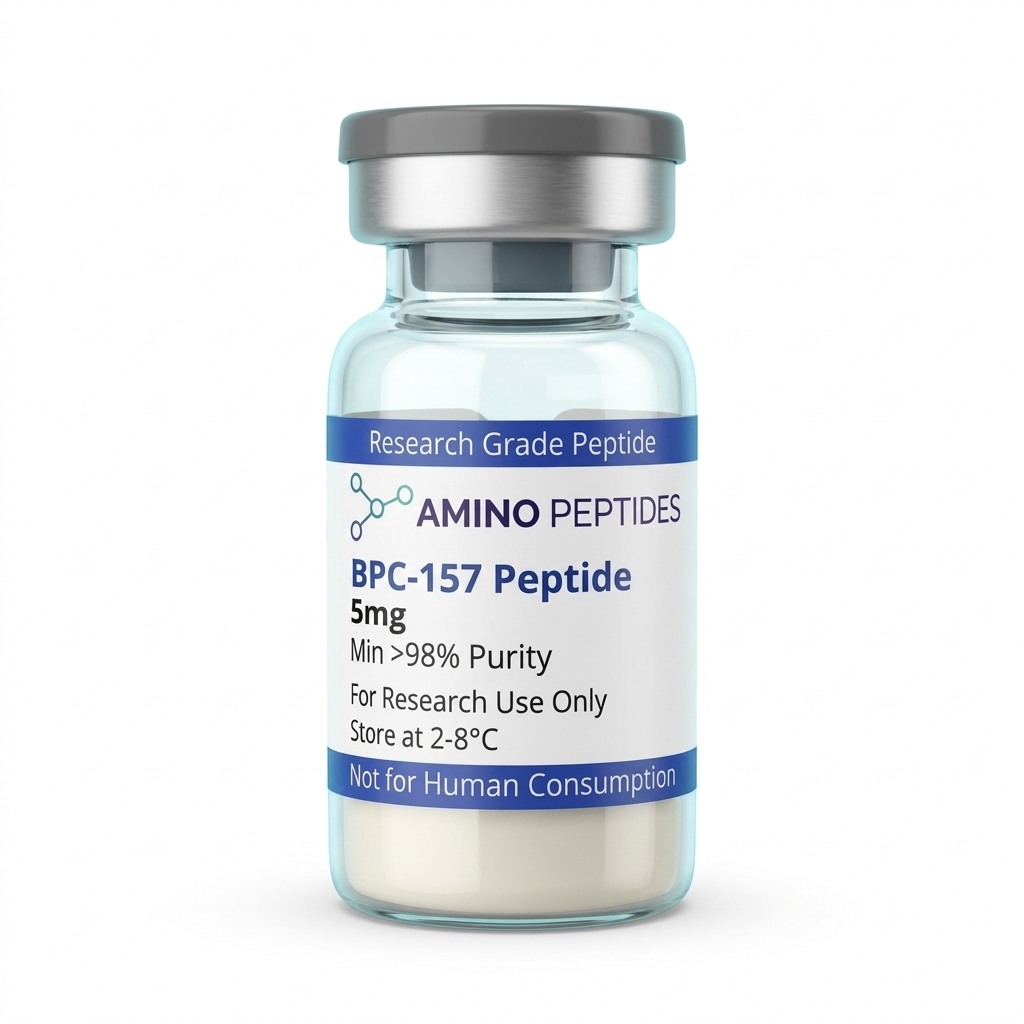
BPC-157 Peptide
From £17
Supplied as a sealed freeze-dried vial (stable 12–24 months at 2°C–8°C in a standard refrigerator).
Shop BPC-157 Peptide →When a BPC-157 solution is introduced to isolated tendon cells, the cells show increased expression of specific growth factors. It acts like a chemical signal telling cells to gather in one spot and multiply. However, a petri dish has no immune system, no blood flow, and no complex organ interactions. What happens in a simple cellular assay cannot be mathematically or biologically scaled up to a living organism.
The timeline of a cell culture experiment has zero relevance to unregulated consumer use. The variables in a complex biological system—digestive enzymes, systemic circulation, immune responses—destroy fragile peptide bonds almost immediately upon contact. In a laboratory, researchers control the exact temperature, pH, and chemical environment to ensure the sequence remains intact long enough to observe a reaction. Without these controls, the timeline of results discussed online is scientifically unsupportable.
Stacking & Synergies: The Chemistry of Instability
Internet claims frequently discuss combining multiple peptides to create a 'synergistic stack' for amplified results. However, under sterile laboratory conditions, introducing multiple synthetic compounds into a single assay introduces massive chemical instability. When researchers test a primary research reagent, they must isolate it completely to understand its specific mechanism of action.
Adding a second or third compound creates unpredictable molecular interactions. In a sterile environment, researchers use a precise bacteriostatic reconstitution solution to maintain the structural integrity of a single peptide. Mixing compounds without rigorous high-performance liquid chromatography risks rapid degradation, cross-reactions, and the formation of unknown, potentially toxic byproducts. The concept of 'stacking' is a consumer invention with no basis in strict analytical chemistry.
Peptide bonds are highly fragile. They are susceptible to hydrolysis, a process where water molecules break the amino acid chains apart. Introducing different pH levels or competing chemical structures into the same vial guarantees the destruction of the original sequence. In a laboratory, scientists spend weeks optimising the exact solvent conditions just to keep one compound stable. The idea that multiple complex synthetic chains can be mixed casually without destroying their molecular structure demonstrates a profound misunderstanding of basic chemistry.
Reconstitution calculator
Choose a vial mass and a bacteriostatic reconstitution solution volume. The figure is the resulting concentration.
Concentration: 2.50 mg/mL
Per 0.01mL (10µL): 25.0 mcg
Open the full calculatorBacteriostatic reconstitution solutionSide Effects & Safety: The Unknown Variables
Internet claims suggest the compound is naturally derived and therefore completely safe. However, under sterile laboratory conditions, the mechanism reveals significant unknown variables. In cellular assays, researchers monitor for abnormal cellular proliferation. The compound appears to promote angiogenesis, which is the formation of new blood vessels. In a controlled petri dish, this is an interesting observation regarding cellular migration and proliferation.
However, if a compound tells cells to multiply or survive longer than they naturally should, this presents a severe biological risk. Abnormal cellular proliferation is the foundational mechanism of many serious cellular abnormalities. In isolated environments, scientists can simply dispose of a petri dish if cells begin to behave erratically. Outside a laboratory, these variables are completely untested and uncontrolled.
The safety profile of this compound remains entirely unknown beyond basic in-vitro toxicity screens. Unregulated use introduces profound dangers, as the long-term impact on complex biological systems has never been established. There is no longitudinal data to confirm what happens when this synthetic sequence interacts with a complete immune system over months or years. The assumption of safety is based on a dangerous misinterpretation of short-term, isolated cellular data.

Figure 1: Are BPC 157 Peptides Safe? An Objective Analysis of the Evidence and Risks
In-Vitro Research FAQ
How do researchers classify bpc 157 peptide peptides in laboratory settings?
In analytical chemistry, these are classified strictly as synthetic research chemicals. They are designed exclusively for in-vitro cellular assays to study receptor binding and cellular migration. They are not classified as consumer products, and their molecular structure is maintained only under strict laboratory conditions.
What is the difference between raw research powder and commercial concepts like bond peptides bpc 157 peptide capsules?
Authentic scientific research relies entirely on lyophilised powder reconstituted in a sterile laboratory environment using a specific bacteriostatic reconstitution solution. Consumer formats, such as capsules, introduce digestive enzymes, stomach acid, and unknown absorption variables that immediately destroy the peptide bonds. Laboratory data cannot validate these consumer formats, as the compound would not survive the environment.
Why do researchers avoid concepts like bpc 157 peptide integrative peptides during strict assays?
The term 'integrative' suggests a holistic or whole-body approach, which is entirely incompatible with isolated in-vitro research. Scientists must isolate single variables, avoiding broad, unquantifiable concepts that obscure raw molecular mechanisms. In a laboratory, the focus is solely on how a specific sequence interacts with a specific isolated cell type.
Can the structure be considered among bpc 157 peptide simple peptides?
No. A 15-amino-acid sequence is a complex synthetic chain. It requires rigorous high-performance liquid chromatography to verify its purity. It is highly susceptible to degradation if mishandled, making it far from simple to synthesise or maintain in a stable state. The complexity of its folding and binding requires advanced analytical equipment to monitor.
Where does the valid data on bpc 157 peptide uk peptides originate?
The legitimate data comes strictly from peer-reviewed, controlled laboratory studies using isolated cell cultures and specific chemical assays. Any data originating from unregulated consumer markets, social media, or biohacking forums is considered anecdotal and scientifically invalid. True scientific data is generated only when all environmental variables are strictly controlled.
The Necessity of Laboratory Controls
The internet narrative surrounding this compound is built on a fundamental misunderstanding of scientific research. A cellular response in a sterile petri dish is a starting point for molecular biology, not a validation for consumer application. The leap from observing fibroblast migration in a plastic dish to assuming whole-body safety is scientifically unsupportable.
Authentic scientific exploration requires strictly controlled, non-human environments where variables can be isolated, measured, and analysed with absolute precision. The risks of untested variables and unregulated use cannot be overstated. Until rigorous, long-term data is generated in controlled settings, the compound remains a subject of strict in-vitro investigation, far removed from the claims of internet biohackers.
Scientific Bibliography
- Sikiric, P., et al. (2011). Brain-gut axis and pentadecapeptide BPC 157: Theoretical and practical implications. Current Neuropharmacology, 9(2), 248-258. View published research
- Chang, C. H., et al. (2011). The promoting effect of pentadecapeptide BPC 157 on tendon healing involves tendon outgrowth, cell survival, and cell migration. Journal of Applied Physiology, 111(1), 2-9. View published research
- Tkalcevic, V. I., et al. (2007). Enhancement by PL 14736 of granulation and collagen organization in healing wounds and the potential role of egr-1 expression. European Journal of Pharmacology, 570(1-3), 212-221. View published research
⚠️ Research Use Only Disclaimer: All peptides and compounds are sold strictly for in-vitro laboratory research purposes only. Not intended for human or veterinary use, not a dietary supplement, and not approved to diagnose, treat, cure, or prevent any disease or condition. For use by qualified researchers in suitably equipped laboratory environments only. Amino Peptides Ltd operates in full compliance with UK MHRA regulations and applicable EU research chemical guidelines.