
Behind the Glass: Ipamorelin Purity and Analytical Validation
27th Aug 2026
![[URGENT SEO GAP] Draft: Ipamorelin Purity Report and Analytical Validation](https://res.cloudinary.com/dff0vt4vk/image/upload/f_auto,q_auto,w_1200,c_limit/v1787830586/blog_img_1787830586043_40.jpg)
When a laboratory acquires a synthetic peptide, researchers cannot simply trust the label on the vial. They demand hard analytical data to prove the molecular structure matches the chemical blueprint. In cellular assays, introducing a contaminated compound ruins the experiment. The cells will react to the impurities, skewing the data and rendering the entire study useless. This is why strict analytical validation is the backbone of all in-vitro research involving Ipamorelin.
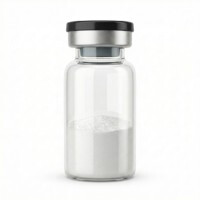
Ipamorelin
HPLC-verified lyophilised compound, UK-domestic supply. Manufactured under controlled conditions for qualified in-vitro laboratory research.
View Reagent Profile ›Key Takeaways
- High-performance liquid chromatography (HPLC) is the primary method for separating and identifying synthesis impurities.
- Mass spectrometry confirms the exact molecular weight, proving the five amino acids are assembled correctly.
- Even minor chemical by-products can trigger false signals in isolated receptor binding assays.
- Proper storage and sterile reconstitution are critical to prevent the peptide chain from degrading before the experiment begins.
The Chemistry of the Pentapeptide
Ipamorelin is classified as a pentapeptide. This means it is built from a short, precise chain of exactly five amino acids. In laboratory settings, researchers use this specific sequence to observe how the ghrelin receptor behaves when activated in isolated cell cultures. Because it is a short chain, the molecule is relatively stable compared to larger, more complex proteins. However, it still requires highly controlled chemical synthesis.
During the manufacturing process, amino acids are linked together one by one. This process is not always perfect. Sometimes, a chain stops growing early, resulting in a truncated sequence of only three or four amino acids. Other times, the harsh chemical solvents used to cleave the peptide from its synthesis resin are not fully washed away. If a researcher applies this flawed mixture to a petri dish, the target receptors might not bind at all, or they might react to the leftover chemical solvents instead of the peptide itself.
Decoding the Analytical Data
To verify that the vial contains exactly what is required, laboratories rely on two primary pieces of equipment: the HPLC machine and the mass spectrometer. These machines provide the raw data that proves the compound is pure enough for delicate in-vitro work.
HPLC works by forcing the dissolved sample through a tightly packed column under extreme pressure. Different molecules travel through this column at different speeds. As they exit, a detector records them. If the sample is highly pure, the final readout will show one massive, sharp spike, with almost zero background noise. If the sample is contaminated, the readout will show multiple smaller spikes, indicating that fragmented peptides or chemical solvents are still present.
While HPLC separates the molecules, mass spectrometry weighs them. By checking the exact molecular mass of that primary spike, researchers can confirm that all five amino acids are present and assembled in the correct order. Before beginning any cellular assay, technicians will cross-reference their own laboratory tests against the manufacturer data. They carefully review the Certificate of Analysis to verify the exact purity percentage of that specific batch. They will also check the Specification Sheet, which defines the strict physical and chemical properties the compound must meet to be classified as research-grade.
Handling, Storage, and Reconstitution
Even a perfectly synthesised and highly pure peptide can be destroyed if it is handled poorly in the laboratory. In its raw, shipped form, the compound arrives as a lyophilised powder. This freeze-dried state removes all moisture, leaving a solid white puck. In this dormant state, the peptide is highly stable as long as it is kept in a laboratory freezer, protected from light and humidity.
To apply the compound to isolated cell cultures, researchers must first dissolve the powder into a liquid state. This requires a sterile solvent, almost always a bacteriostatic reconstitution solution. The addition of this solvent wakes the molecule up, but it also makes the chemical bonds highly vulnerable to damage.
Once dissolved, the peptide chain can be sheared apart by aggressive physical shaking. Furthermore, exposure to room temperature accelerates chemical breakdown. Therefore, laboratories must store the liquid solution at strict refrigeration temperatures and monitor its age closely. Using an old or degraded solution will yield false data in receptor binding studies, wasting both time and laboratory resources.
![[URGENT SEO GAP] Draft: Ipamorelin Purity Report and Analytical Validation](https://res.cloudinary.com/dff0vt4vk/image/upload/f_auto,q_auto,w_1200,c_limit/v1787830601/blog_img_1787830598108_82.jpg)
Scientific In-Vitro FAQs
How does HPLC verify the purity of this pentapeptide?
HPLC pushes the dissolved sample through a pressurised column, causing different molecules to separate based on their chemical properties. A pure sample will produce a single, distinct peak on the detector readout, proving that no fragmented chains or leftover synthesis solvents are present in the mixture.
Why is mass spectrometry paired with HPLC in analytical validation?
While HPLC separates the molecules, it cannot identify exactly what they are. Mass spectrometry weighs the molecules inside the primary HPLC peak. By confirming the exact molecular mass, researchers prove that the sequence of five amino acids was synthesised correctly without any missing links.
What causes degradation during in-vitro storage?
Exposure to light, heat, or incorrect pH levels can cause the fragile peptide bonds to break down. Even when properly dissolved in a bacteriostatic reconstitution solvent and refrigerated, the compound slowly degrades over time, which is why laboratories strictly monitor the age of their liquid solutions.
Scientific Bibliography
- Raun, K., Hansen, B. S., Johansen, N. L., Thøgersen, H., Madsen, K., Ankersen, M., & Andersen, P. H. (1998). Ipamorelin, the first selective growth hormone secretagogue. European Journal of Endocrinology, 139(5), 552-561. View published research
- Johansen, P. B., Nowak, J., Skjaerbaek, C., Veldhuis, J. D., Fasiman, C. J., & Christiansen, J. S. (1999). Ipamorelin: a new lead in the development of growth hormone secretagogues. Endocrinology, 140(1), 331-339. View published research
- Ankersen, M., Johansen, N. L., Madsen, K., Hansen, B. S., Raun, K., Nielsen, K. K., ... & Andersen, P. H. (1998). A new series of highly efficacious growth hormone-releasing peptides derived from ipamorelin. Journal of Medicinal Chemistry, 41(19), 3699-3704. View published research
- Lall, S., Tung, L. Y., Ohlsson, C., Jansson, J. O., & Dickson, S. L. (2001). Growth hormone (GH)-independent stimulation of adiposity by GH secretagogues. Biochemical and Biophysical Research Communications, 280(1), 132-138. View published research
- Yin, H., Gao, L., Shen, J., & Wang, Z. (2014). High-performance liquid chromatography-tandem mass spectrometry for the determination of peptides in biological matrices. Journal of Chromatography B, 964, 108-121. View published research
⚠️ Research Use Only Disclaimer: All peptides and compounds are sold strictly for in-vitro laboratory research purposes only. Not intended for human or veterinary use, not a dietary supplement, and not approved to diagnose, treat, cure, or prevent any disease or condition. For use by qualified researchers in suitably equipped laboratory environments only. Amino Peptides Ltd operates in full compliance with UK MHRA regulations and applicable EU research chemical guidelines.
Independent, batch-specific documentation for Ipamorelin — reviewed prior to publication for in-vitro laboratory research and molecular stability reference.