
BPC-157 Tendon and Ligament Repair: Fact vs Fiction Behind the Safety Claims
28th Oct 2026
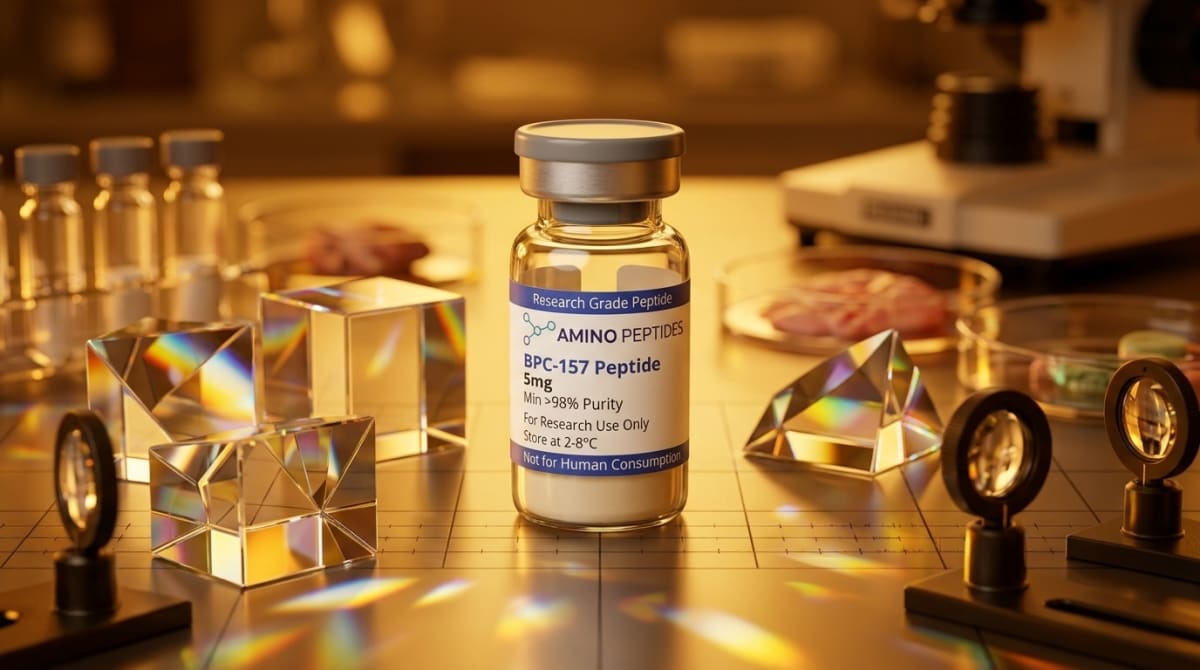
What You Need to Know About BPC-157 Peptide
- Curious readers often search online forums to see if this peptide supports faster recovery for damaged Achilles tendons and ligaments.
- In simple terms, the molecule appears to act as a cellular signalling switch that tells tendon fibroblasts to move, multiply, and build fresh collagen.
- Published laboratory studies in rodents observed faster tissue remodelling, improved blood vessel growth, and greater structural strength in severed tendons.
- Despite optimistic claims on internet message boards, all robust data comes from animal models and petri dishes rather than large-scale human research.
Why Everyone Is Talking About BPC-157 Tendon and Ligament Repair: Fact vs Fiction Behind the Safety Claims & How It Works
Published studies show that BPC-157 triggers rapid tissue recovery in preclinical models by switching on key cellular pathways for blood vessel growth and collagen building. However, separating fact from fiction means recognising that while laboratory models show impressive tendon strength, most bold safety claims online rely on animal data rather than broad human evidence.
Tendons and ligaments are notoriously slow to bounce back from strain because they have a very poor blood supply. Without steady blood flow, the body struggles to deliver the basic building blocks needed for tissue remodelling. In laboratory models examining bpc 157 peptide tendon repair, researchers observed a process called angiogenesis. This is simply the creation of fresh, tiny blood vessels that act like new delivery roads into damaged areas.
Beyond blood flow, published studies on bpc 157 peptide for achilles tendon repair highlight how this fifteen-amino-acid chain interacts with fibroblasts. Fibroblasts are the construction worker cells responsible for weaving collagen fibres together. BPC-157 appears to increase growth hormone receptors on these worker cells, helping them multiply and move faster to the site of a tear. It also balances nitric oxide signalling, which calms down excessive local swelling while keeping the recovery machinery running smoothly. When people browse forums looking at peptides for tendon repair reddit threads, this two-part action of better blood supply and faster fibroblast movement is the exact biological mechanism driving all the conversation.
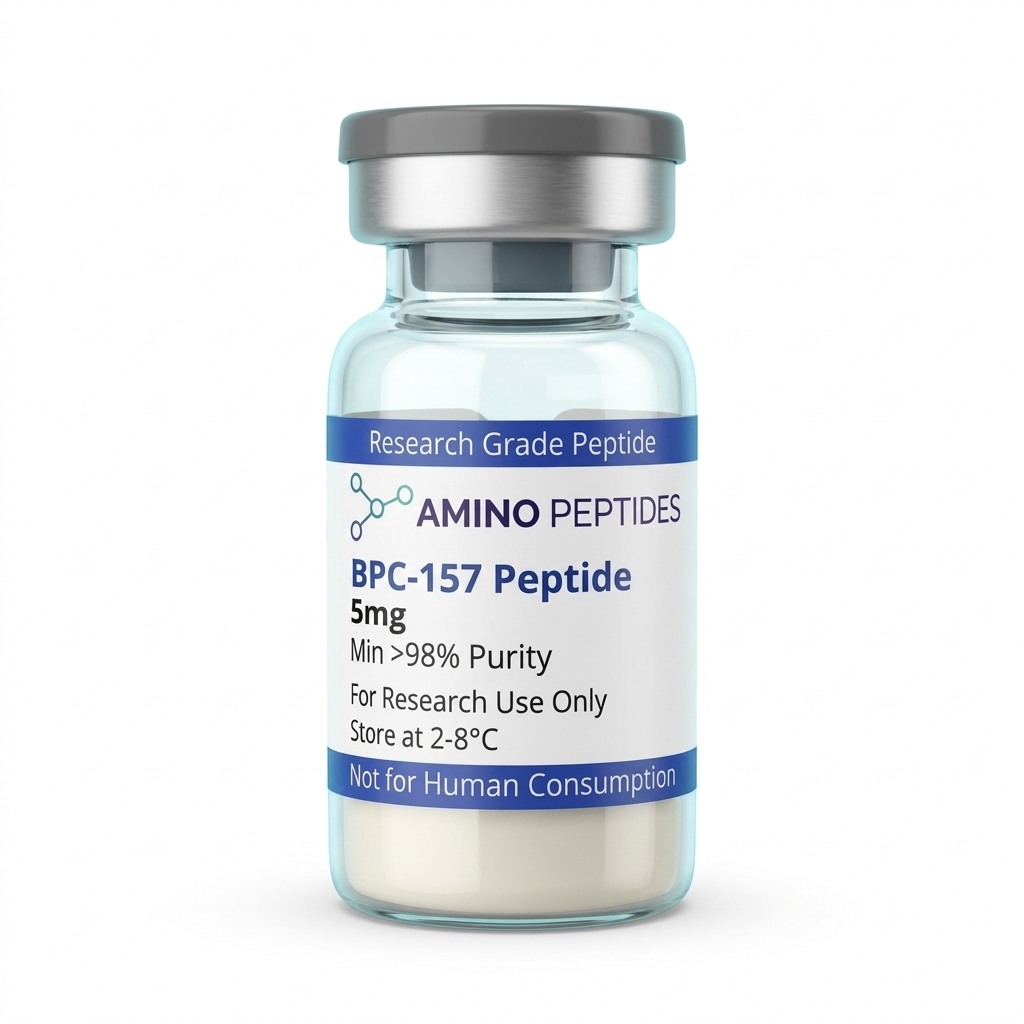
BPC-157 Peptide
From £17
Supplied as a sealed freeze-dried vial (stable 12–24 months at 2°C–8°C in a standard refrigerator).
Shop BPC-157 Peptide →What Published Studies Show on Timelines & Observed Results
When scientists analyse peptides for tendon repair in preclinical models, the observed changes happen in distinct stages rather than overnight. Understanding the difference between early cellular signalling and later structural changes helps separate realistic laboratory observations from internet hype.
During the first 24 to 72 hours of a study, the action is entirely microscopic. At this early stage, researchers measure a sharp spike in gene expression and growth factor signalling, especially Vascular Endothelial Growth Factor (VEGF). The tendon is not structurally strong yet, but the fibroblasts are waking up, migrating toward the gap, and laying down a temporary mesh of disorganised fibres. By days four to seven in rodent Achilles and medial collateral ligament models, new capillary sprouts are visibly forming across the damaged zone, bringing fresh oxygen and cellular energy to the tissue.
True structural changes take much longer to mature. Between weeks two and four in published studies, the messy initial web of type III collagen gradually reorganises into tough, neatly aligned bundles of type I collagen. This alignment is what researchers look for when testing peptides for tendon strength. In biomechanical pull tests on laboratory models, tendons exposed to a steady study amount of BPC-157 showed higher load-to-failure resistance compared to unassisted controls. The key takeaway from the literature is that early signalling sets the stage within days, while physical collagen remodelling requires weeks of steady biological work.
BPC-157 Tendon and Ligament Repair: Preclinical Facts vs Online Fiction
| Research Area | Online Forum Claims (Fiction) | Published Preclinical Observations (Fact) | Evidence Scope |
|---|---|---|---|
| Achilles Tendon Recovery | Guaranteed to rapidly rebuild torn human tendons in days. | Observed accelerated fibre alignment and mechanical load tolerance in transected rat Achilles tendons. | Rodent models only |
| Cellular Mechanism | Directly fuses broken collagen fibres back together like biological glue. | Stimulates the FAK-paxillin pathway and boosts growth hormone receptor expression on tendon fibroblasts. | In vitro cell cultures |
| Blood Vessel Formation | Creates new arteries anywhere in the body without risk. | Modulates VEGF signalling to promote localised angiogenesis in poorly vascularised connective tissue. | Preclinical animal studies |
| Ligament Strength | Permanently makes ligaments stronger than their original baseline. | Demonstrated improved biomechanics and collagen organisation in medial collateral ligament (MCL) injury models. | Rodent surgical models |
| Safety Profile | Completely free of side effects because it comes from stomach protein. | No acute toxicity noted in basic animal tests, but long-term human safety and off-target angiogenesis remain unverified. | Absence of human safety data |
Popular Synergies: Why Researchers Stack It With Partner Compounds
In laboratory settings, a single compound rarely controls every step of tissue regeneration. That is why researchers frequently study BPC-157 alongside complementary molecules to observe how different biological pathways overlap and support one another.
The most famous research pairing combines BPC-157 with TB-500, a synthetic fragment of the naturally occurring protein Thymosin Beta-4. Online communities often nickname this duo the wolverine peptide stack because of how the two mechanisms fit together like lock and key. While a standard bpc 157 5mg research vial is studied for its focused, local work on growth hormone receptors and blood vessel sprouting, TB-500 operates through a broader systemic mechanism. TB-500 regulates actin, a vital protein that forms the internal skeleton of cells and allows them to travel efficiently across tissues.
When researchers analyse these two compounds together in preclinical models, BPC-157 acts like the site foreman organising local collagen assembly, while TB-500 acts like the transport network recruiting stem-like repair cells from surrounding areas. Another popular partner in connective tissue research is GHK-Cu, a copper peptide known for stimulating collagen synthesis and modulating matrix metalloproteinases—the enzymes that clean up frayed, old tissue fibres so fresh ones can take their place. Studying these combinations allows scientists to observe multiple phases of tissue remodelling at the same time.
Reconstitution calculator
Choose a vial mass and a bacteriostatic reconstitution solution volume. The figure is the resulting concentration.
Concentration: 2.50 mg/mL
Per 0.01mL (10µL): 25.0 mcg
Open the full calculatorBacteriostatic reconstitution solutionWhy Purity, TFA Removal & 2°C–8°C Fridge Storage Matter Most
When evaluating the safety claims surrounding BPC-157, the biggest real-world variable is rarely the amino acid sequence itself—it is what else might be hiding inside a poorly made vial. Many negative anecdotes on discussion boards trace back to low-grade grey-market manufacturing rather than the peptide studied in university labs.
During solid-phase peptide synthesis, manufacturers use a harsh chemical called Trifluoroacetic Acid (TFA) to cleave the finished peptide chain from its resin base. If a supplier skips proper purification steps to cut costs, residual TFA salts stay trapped in the freeze-dried powder. In laboratory models, excess TFA is toxic to delicate cells, triggers harsh local irritation, and ruins experimental data. High-grade research peptides undergo strict counter-ion exchange or thorough lyophilisation to strip away TFA, verified by independent High-Performance Liquid Chromatography (HPLC) and Mass Spectrometry reports showing 99% or greater purity.
Proper handling after delivery is just as vital for keeping the delicate fifteen-amino-acid chain intact. Lyophilised powder is stable during transit, but once mixed with a sterile bacteriostatic reconstitution solution, the fragile peptide bonds become sensitive to heat and light. Storing reconstituted vials strictly between 2°C and 8°C in a dedicated refrigerator prevents the chain from unravelling and losing its biological activity. Avoiding repeated freeze-thaw cycles and gently swirling—never shaking—the vial ensures the measured level remains accurate from the first test to the last.
Research Questions, Answered
Why is BPC-157 widely searched for Achilles tendon repair?
People search for BPC-157 and tendon repair because early rodent studies observed faster collagen organisation and cell outgrowth in damaged connective tissue. Online forums often exaggerate these findings, turning laboratory models into grand safety claims, even though published studies only track tissue remodelling in animal subjects.
What does the study timeline look like for tendon recovery in laboratory models?
In preclinical models, researchers typically track tendon recovery over a timeline of two to four weeks. During the first fourteen days, published studies observe increased growth hormone receptor expression and early blood vessel formation, which helps scientists analyse how connective fibres align and regain structural strength.
Why do laboratory protocols often combine BPC-157 with TB-500 for tendon strength?
Researchers sometimes pair BPC-157 with TB-500 in laboratory models to examine how different cellular signalling pathways interact during tissue regeneration. While BPC-157 is studied for local fibroblast activity, TB-500 is analysed for actin regulation, allowing scientists to observe whether combined protocol ratios optimise structural recovery.
How do purity testing and fridge storage impact BPC-157 research?
High analytical purity and cold storage are essential to ensure accurate results in laboratory models. Lyophilised peptides must be verified via HPLC testing to rule out contaminants, and once mixed with a bacteriostatic reconstitution solution, samples require refrigeration at two to eight degrees Celsius to prevent degradation.
Bibliography
- Chang CH, et al. The promoting effect of pentadecapeptide BPC 157 on tendon outgrowth, cell survival, and cell migration. J Appl Physiol (2011). View published research
- Chang CH, et al. Pentadecapeptide BPC 157 enhances the growth hormone receptor expression in tendon fibroblasts. Molecules (2014). View published research
- Gwyer D, Wragg NM, Wilson SL. Gastric pentadecapeptide body protection compound BPC 157 and its role in accelerating musculoskeletal soft tissue recovery. Cell Tissue Res (2019). View published research
- Cerovecki T, et al. Pentadecapeptide BPC 157 (PL 14736) improves ligament recovery in the rat. J Orthop Res (2010). View published research
- Seiwerth S, et al. BPC 157 and Standard Angiogenic Growth Factors: Gastrointestinal Tract and Musculoskeletal Tissue Recovery. Curr Pharm Des (2018). View published research
⚠️ Research Use Only Disclaimer: All peptides and compounds are sold strictly for in-vitro laboratory research purposes only. Not intended for human or veterinary use, not a dietary supplement, and not approved to diagnose, treat, cure, or prevent any disease or condition. For use by qualified researchers in suitably equipped laboratory environments only. Amino Peptides Ltd operates in full compliance with UK MHRA regulations and applicable EU research chemical guidelines.