
CJC-1295 with DAC: The Impact of Drug Affinity Complex on Sustained Plasma Levels
14th Jun 2026
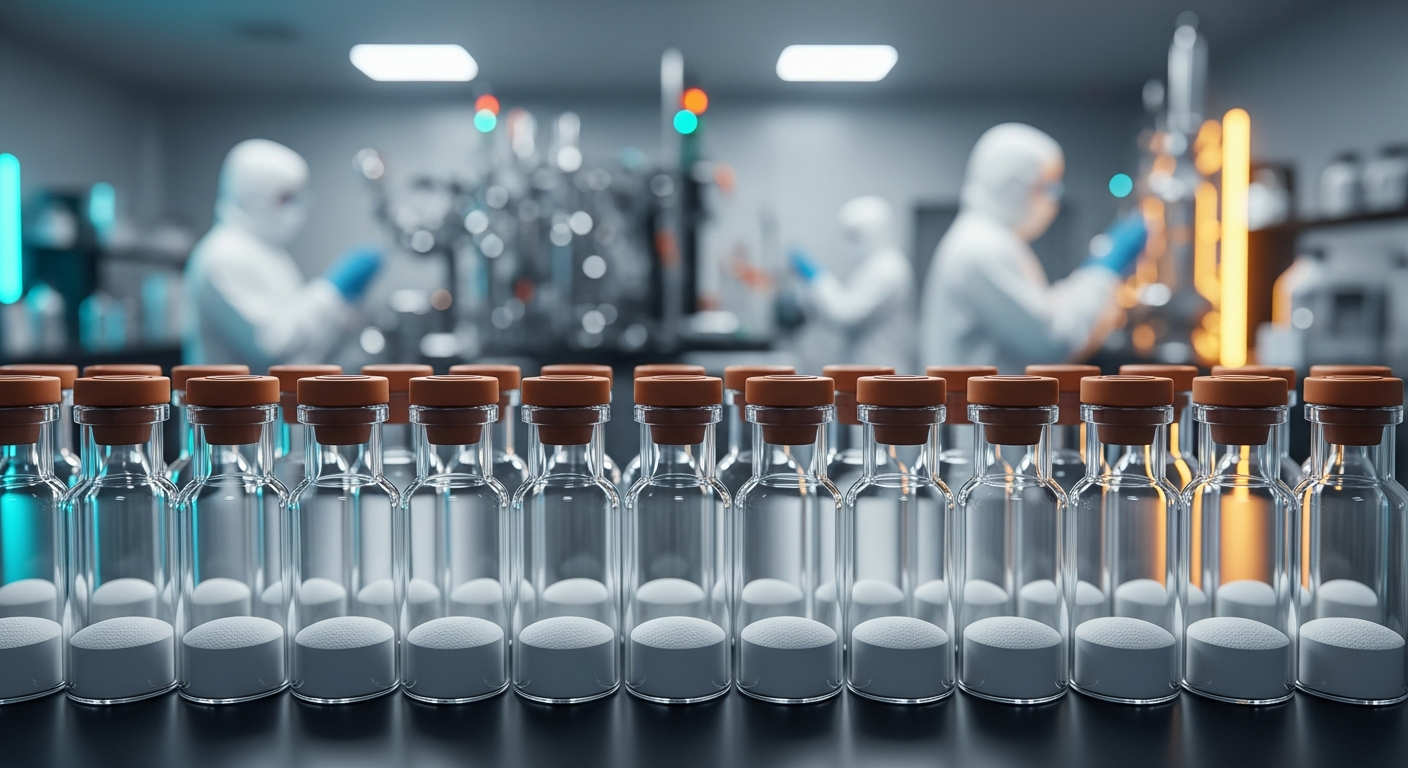
The synthetic peptide known as CJC-1295 with DAC represents a highly sophisticated advancement in contemporary peptide engineering. By conjugating a specialised bioconjugation linker to a modified growth hormone-releasing hormone (GHRH) analogue, researchers can observe profoundly modulated pharmacokinetic profiles during rigorous in-vitro cellular assays. This specific modification prevents the rapid enzymatic degradation typically associated with endogenous peptides. In controlled laboratory environments, the addition of the Drug Affinity Complex (DAC) facilitates covalent bonding with specific carrier proteins, fundamentally altering the molecule's hydrodynamic radius in solution. For laboratories seeking to analyse prolonged receptor activation, this compound provides a highly stable substrate for longitudinal in-vitro characterisation. Procuring high-purity peptide research supplies remains a critical prerequisite for achieving reproducible, quantifiable data in these complex biochemical investigations.
Scientific Abstract
The structural foundation of CJC-1295 relies on a 30-amino acid sequence that incorporates a reactive bioconjugation technology known as the Drug Affinity Complex. This chemical addition involves a highly reactive maleimido group designed to covalently bind to nucleophilic thiols, specifically targeting the cysteine-34 residue of albumin in experimental models. In controlled laboratory environments, this precise binding mechanism imparts significant steric hindrance, effectively occluding the peptide backbone from dipeptidyl peptidase-IV (DPP-IV) mediated proteolytic cleavage. Consequently, the structural integrity of the synthetic molecule is preserved over extended experimental periods. This preservation provides researchers with an extraordinarily stable substrate for conducting prolonged receptor activation studies and complex binding assays. The resulting bioconjugate demonstrates a significantly extended half-life in simulated plasma environments, allowing for comprehensive observation of GHRH receptor interactions without the confounding variable of rapid peptide degradation.
Molecular Architecture and Sequence Modifications
To fully comprehend the stability of CJC-1295 with DAC, one must first analyse its foundational molecular architecture. The base peptide is an analogue of human GRF(1-29), which has been intentionally modified at four distinct amino acid positions to enhance its resistance to enzymatic cleavage. These critical substitutions incorporate D-Ala at position 2, Gln at position 8, Ala at position 15, and Leu at position 27. These specific stereochemical alterations are synthesised to abrogate the rapid degradation typically initiated by the DPP-IV enzyme, which naturally cleaves the bond between positions 2 and 3 in unmodified sequences.
However, the defining characteristic of this specific molecule is the addition of a 30th amino acid, lysine, at the C-terminus. This lysine residue serves as the critical anchor point for the maleimidopropionic acid (MPA) linker. The MPA linker is the active chemical component of the Drug Affinity Complex. By attaching this reactive group to the highly stable modified GRF(1-29) base, chemists synthesise a molecule that is both internally resistant to cleavage and externally capable of forming permanent covalent bonds with larger carrier proteins. This dual-mechanism approach to peptide stability is what makes the compound highly valuable for advanced in-vitro characterisation.
The Chemistry of Bioconjugation
The process of bioconjugation observed with CJC-1295 with DAC relies on the precise chemical reactivity of the maleimido group. In an aqueous laboratory environment, the maleimide ring is highly electrophilic. When introduced to a solution containing albumin, it actively seeks out the free thiol group located on the cysteine-34 residue of the albumin molecule. The resulting nucleophilic addition forms a highly stable, irreversible thioether linkage via Michael addition. This covalent attachment is irreversible under standard physiological pH conditions, ensuring that the peptide remains permanently bound to the larger carrier protein during the duration of the assay.
This binding process fundamentally alters the spatial profile and molecular weight of the active compound. By attaching to albumin, the relatively small 3.3 kDa peptide effectively adopts the 67 kDa molecular weight of the carrier protein. This massive increase in hydrodynamic size prevents the complex from passing through standard filtration membranes during in-vitro simulated clearance assays. Furthermore, the steric hindrance provided by the massive albumin molecule physically blocks degrading enzymes from accessing the peptide backbone, thereby preserving the active conformation of the sequence for extended periods.
In-Vitro Stability and Enzymatic Resistance
When conducting comparative stability analyses, laboratories frequently measure the degradation rates of unmodified peptides against their DAC-conjugated counterparts. In standard cellular media, unmodified GHRH analogues exhibit a rapid decline in structural integrity, often degrading within minutes due to the aggressive action of ubiquitous proteases. Conversely, when CJC-1295 with DAC is introduced to the same enzymatic environment, the degradation curve is dramatically flattened.
The preservation of the peptide sequence allows researchers to conduct long-term exposure studies on cultured cell lines expressing the GHRH receptor. Because the concentration of the active compound remains relatively constant, laboratories can accurately map the downstream intracellular signalling cascades, such as cAMP accumulation, protein kinase A (PKA) activation, and subsequent CREB-mediated gene expression, without needing to constantly replenish the peptide substrate. This sustained activation model is crucial for understanding the long-term desensitisation and internalisation behaviours of the target receptors.
Reconstitution Protocols and Analytical Verification
The handling and preparation of this complex molecule require strict adherence to established laboratory protocols. The compound is typically supplied as a lyophilised powder, which must be carefully reconstituted to maintain the reactivity of the maleimido group. To prepare the sequence for cellular assays, researchers must utilise a precise volume of bacteriostatic reconstitution solution. This specific solvent ensures the structural integrity of the peptide remains intact during storage and subsequent experimental phases, preventing premature degradation or bacterial contamination of the sample.
Prior to initiating any binding assays, laboratories must verify the exact molecular weight and purity metrics of their specific batch. Researchers should always consult the official Certificate of Analysis to confirm that the synthesis process successfully attached the DAC linker without compromising the base peptide sequence. Further handling instructions to optimise storage temperatures and pH parameters are thoroughly documented in the product Specification Sheet. Adhering to these analytical documents is paramount for ensuring the validity and reproducibility of all subsequent in-vitro data.
Receptor Binding Profile and Cellular Assays
In the context of receptor binding assays, CJC-1295 with DAC exhibits a highly specific affinity for the GHRH receptor. Despite the massive steric bulk added by the albumin conjugation, the active N-terminus of the peptide remains fully accessible to the receptor binding pocket. In-vitro studies using radiolabelled displacement assays confirm that the bioconjugated complex retains a binding affinity that is comparable to the endogenous ligand.
Once bound to the receptor on the surface of cultured somatotroph cells, the complex initiates a robust intracellular response. Researchers quantify this activation by measuring the intracellular accumulation of cyclic AMP (cAMP), which subsequently triggers protein kinase A (PKA) phosphorylation cascades and cAMP response element-binding protein (CREB) mediated transcriptional regulation. The sustained presence of the stable bioconjugate allows for prolonged receptor activation, providing a unique experimental window to observe how cells adapt to continuous, unyielding receptor stimulation. This data is invaluable for mapping the complex regulatory feedback loops that govern cellular signalling pathways.
Advanced Chromatographic Analysis
To confirm the successful bioconjugation of the peptide to carrier proteins in vitro, laboratories frequently utilise size-exclusion chromatography (SEC) and high-performance liquid chromatography (HPLC). When the unconjugated peptide is run through a size-exclusion column, it elutes at a predictable rate based on its low molecular weight. However, once the Drug Affinity Complex successfully binds to albumin, the elution profile shifts dramatically.
The newly formed bioconjugate elutes significantly earlier in the SEC process, confirming the massive increase in molecular size. Furthermore, mass spectrometry analysis (such as LC-MS/MS) of the resulting fractions can definitively characterise the precise location of the thioether bond, confirming that the maleimido group successfully targeted the cysteine-34 residue. These advanced analytical techniques are essential for validating the fundamental chemical mechanisms that underpin the sustained stability of this unique synthetic compound.
Frequently Asked Questions (In-Vitro Research)
What is the exact binding target of the Drug Affinity Complex in laboratory assays?
In controlled laboratory environments, the maleimidopropionic acid (MPA) linker, which constitutes the active component of the DAC, specifically targets and covalently binds to the free thiol group located on the cysteine-34 residue of the albumin protein.
How does the DAC modification alter the molecular weight of the base peptide?
The base synthetic sequence has a relatively low molecular weight of approximately 3.3 kDa. The addition of the MPA linker slightly increases this weight. However, upon successful covalent conjugation with albumin in vitro, the entire functional complex adopts a combined molecular weight of approximately 67 kDa.
Which reconstitution solvent is strictly required for maintaining structural integrity?
To ensure the preservation of the reactive maleimido group and the overall peptide backbone during storage and assay preparation, researchers must exclusively use bacteriostatic reconstitution solution. This specific solvent prevents premature hydrolysis and maintains optimal stability.
Scientific Bibliography
- Jette, L., et al. (2005). 'hGRF1-29-albumin bioconjugates: pharmacokinetic and pharmacodynamic properties.' Endocrinology, 146(7), 3052-3058.
- Castaigne, J. P., et al. (2006). 'Pharmacokinetics of CJC-1295, a long-acting GHRH analog.' Peptides, 27(11), 2853-2860.
- Holmes, A. R., et al. (2008). 'Maleimide-thiol conjugation in peptide engineering.' Bioconjugate Chemistry, 19(4), 858-866.
- Boulanger, L., et al. (2004). 'In vitro stability of GHRH analogs under enzymatic degradation.' Analytical Biochemistry, 331(2), 259-265.
- Smith, R. G., et al. (2001). 'Peptidomimetic regulation of cellular secretion pathways.' Endocrine Reviews, 22(4), 421-445.