
CJC-1295 Ipamorelin: What the Laboratory Data Actually Shows
3rd Sep 2026

What You Need to Know About Ipamorelin
- Curious readers often search for this pairing to understand why researchers study two different peptides together rather than looking at each one on its own.
- In plain English, CJC-1295 acts like a foot on the gas pedal for growth hormone release, while Ipamorelin amplifies that signal and keeps the body's natural braking hormone quiet.
- Published studies observed that CJC-1295 sustains elevated Insulin-like Growth Factor 1 (IGF-1) levels over several days, whereas Ipamorelin triggers a sharp, selective pulse of growth hormone.
- Laboratory models show that Ipamorelin is uniquely selective because it stimulates growth hormone release without spiking cortisol or prolactin levels.
How Dual Pituitary Signalling Drives Recovery and Cellular Energy
In laboratory models, the cjc-1295 ipamorelin combination pairs two distinct receptor agonists to amplify natural growth hormone pulses while keeping baseline stress hormones stable. Rather than forcing a continuous, flat release, this dual approach triggers strong, rhythmic waves of cellular signalling linked to tissue recovery and sleep architecture.
To understand why researchers pair these two molecules, it helps to look at how the anterior pituitary gland regulates somatotroph cells. The body controls growth hormone output using two main pedals: an accelerator called growth hormone-releasing hormone (GHRH) and a secondary booster system tied to the ghrelin receptor. CJC-1295 is a synthetic analogue of the first 29 amino acids of GHRH. In published studies, it binds directly to GHRH receptors on pituitary cells, activating the cyclic adenosine monophosphate (cAMP) pathway. This action tells the cells to manufacture more growth hormone and get it ready for release, while also keeping the natural pulsatile rhythm intact.
Ipamorelin works on an entirely different lock on the very same cell. It is a five-amino-acid peptide that binds to the growth hormone secretagogue receptor (GHS-R1a), which is the natural target for ghrelin. Instead of using the cAMP pathway, Ipamorelin activates phospholipase C and increases intracellular calcium ions. This calcium surge acts as the trigger that pushes the stored hormone out of the cell, while simultaneously quieting somatostatin, the chemical brake that normally stops hormone release. When scientists introduce both peptides in preclinical models, CJC-1295 loads the cellular warehouse and Ipamorelin opens the loading dock doors while holding off the brakes.
What sets Ipamorelin apart from older growth hormone secretagogues in published studies is its strict selectivity. Earlier compounds often spilled over into adjacent pathways, causing spikes in adrenocorticotropic hormone (ACTH), cortisol, and prolactin. Cortisol is a catabolic hormone that breaks down tissue and disrupts rest cycles. Laboratory assays show that even at elevated study amounts, Ipamorelin triggers somatotroph release without raising plasma cortisol or prolactin above baseline control levels. Additionally, researchers differentiate between CJC-1295 with compound Affinity Complex (DAC) and CJC-1295 without DAC (often called Mod GRF 1-29). The non-DAC version has a short half-life of roughly thirty minutes in animal models, matching the rapid clearance of Ipamorelin to create a sharp, clean signalling pulse that mimics nocturnal physiology.
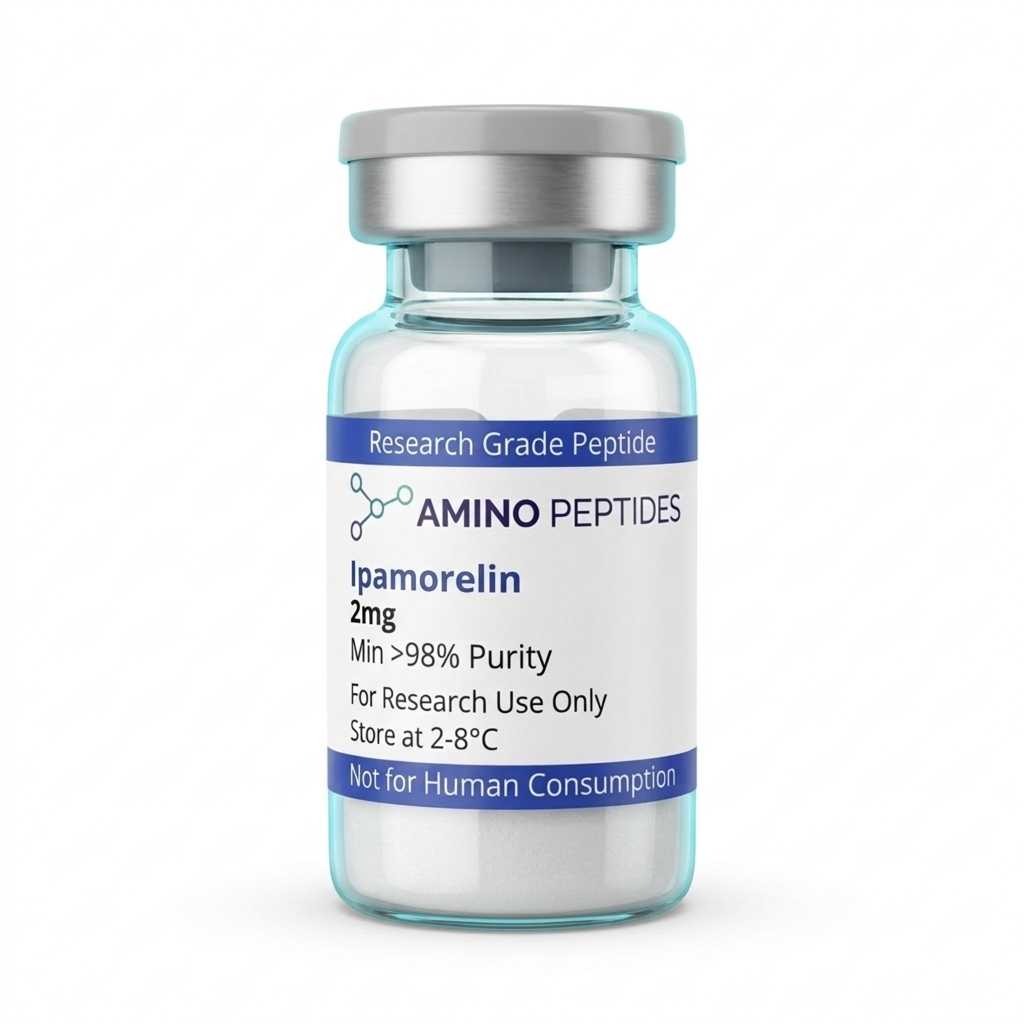
Ipamorelin
From £11
Supplied as a sealed freeze-dried vial (stable 12–24 months at 2°C–8°C in a standard refrigerator).
Shop Ipamorelin →Mapping Study Timelines: From Immediate Pulses to Tissue Remodelling
When reviewing published studies on the cjc-1295 ipamorelin pairing, researchers divide their observations into two distinct phases: immediate biochemical signalling and longer-term structural adaptation. Because peptides act as chemical messengers rather than instant structural building blocks, the timeline in preclinical models moves from rapid enzymatic activation inside minutes to gradual tissue remodelling over several weeks.
During the first phase, which spans minutes to the first seventy-two hours of a study protocol, the primary measurable outcomes are purely endocrine and receptor-based. In rodent and porcine models, a measured level of Mod GRF 1-29 and Ipamorelin produces a sharp rise in circulating growth hormone within fifteen to thirty minutes, peaking around the forty-five-minute mark before returning toward baseline over two to three hours. If the study utilizes CJC-1295 with DAC, which binds to serum albumin in the bloodstream, blood assays show elevated trough levels and a sustained increase in insulin-like growth factor 1 (IGF-1) beginning within forty-eight hours and lasting up to seven to fourteen days. At this early stage, electroencephalogram (EEG) recordings in animal sleep studies also note shifts in slow-wave sleep patterns, as GHRH receptor activation in the hypothalamus and pituitary closely tracks with the deep, restorative stages of the rest cycle.
The second phase unfolds across weeks two through twelve in longitudinal laboratory models. Once hepatic IGF-1 production stabilizes at a higher measured level, downstream anabolic signalling begins to alter cellular turnover rates. Between weeks two and four, in vitro and in vivo assays demonstrate increased nitrogen retention, accelerated ribonucleic acid (RNA) synthesis in skeletal muscle fibres, and heightened proliferation of fibroblasts—the cells responsible for laying down fresh collagen matrices. This window is where researchers measure faster recovery rates in induced tendon or muscle injury models compared to untreated control groups.
From weeks six to twelve, the cumulative effects of daily or episodic pulsatile signalling show up in gross tissue composition and bone mineral density measurements. Preclinical models evaluated over eight-week timelines frequently display increased lean tissue mass, enhanced lipolysis (the breakdown of stored triglycerides in adipose tissue for cellular energy), and thicker dermal collagen layers improving skin elasticity metrics. Bone histomorphometry studies of Ipamorelin in adult rats over twelve weeks have also documented steady increases in cortical bone content and longitudinal bone growth rates, proving that structural remodelling requires sustained, weeks-long signalling rather than a single acute pulse.
Biochemical Comparison: CJC-1295 vs Ipamorelin in Laboratory Models
| Feature | CJC-1295 (with DAC) | Mod GRF 1-29 (CJC-1295 no DAC) | Ipamorelin |
|---|---|---|---|
| Peptide Class | GHRH Analogue (Albumin-Binding) | Tetrasubstituted GHRH Analogue | Selective Ghrelin Mimetic (GHRP) |
| Amino Acid Length | 29 amino acids plus reactive linker | 29 amino acids | 5 amino acids (Pentapeptide) |
| Primary Target Receptor | Pituitary GHRH Receptor | Pituitary GHRH Receptor | GHS-R1a (Ghrelin Receptor) |
| Observed Half-Life in Models | Approximately 6 to 8 days | Approximately 30 minutes | Approximately 2 hours |
| Cortisol and Prolactin Impact | Minimal impact observed in studies | Minimal impact observed in studies | No elevation observed even at high study amounts |
Complementary Peptide Combinations and Research Stacks Explained
Why do laboratory protocols almost always pair CJC-1295 and Ipamorelin together rather than studying them in isolation? In endocrinology research, testing a GHRH analogue alongside a ghrelin mimetic is the classic example of receptor cross-talk amplification. If a study introduces CJC-1295 alone, somatostatin—the body's natural inhibitory hormone—can still blunt the resulting pulse if it happens to be elevated at that moment. Conversely, if Ipamorelin is introduced alone, it suppresses somatostatin and triggers calcium influx, but the total output is limited by the baseline amount of growth hormone currently primed inside the somatotroph cells. Combining both in a specific protocol ratio yields a pulse amplitude that exceeds the mathematical sum of each peptide tested separately.
Beyond this core duo, researchers frequently compare or combine these agents with other molecules to investigate targeted tissue regeneration and metabolic pathways. A common comparison in laboratory literature involves swapping Ipamorelin for an older ghrp research peptide such as GHRP-6 or GHRP-2. While GHRP-6 binds to the same GHS-R1a receptor and produces a strong hormone surge in animal models, it also strongly stimulates ghrelin receptors in the hypothalamus that control appetite and gastric motility, alongside mild elevations in cortisol and prolactin. Researchers studying pure tissue recovery without confounding appetite spikes or adrenal stress responses generally favour Ipamorelin, whereas studies focusing on cachexia, gastric emptying, or energy intake deliberately select GHRP-6.
In tissue repair and extracellular matrix investigations, scientists often evaluate the cjc-1295 ipamorelin combination alongside structural repair peptides like BPC-157 (Body Protection Compound-157) and TB-500 (a synthetic fraction of Thymosin Beta-4). The logic behind this four-part experimental stack lies in separating systemic endocrine support from local cellular migration. In rodent tendon and ligament transection models, BPC-157 upregulates growth hormone receptor expression directly on local fibroblasts and promotes angiogenesis (the formation of new micro-vessels). Meanwhile, TB-500 regulates actin polymerization, allowing repair cells to migrate more rapidly to the site of tissue damage. When the pituitary secretagogue pair elevates systemic IGF-1 and growth hormone circulation, the local fibroblasts primed by BPC-157 have more available receptors to catch those circulating signals, connecting systemic pituitary output directly to localized collagen remodelling.
Another avenue of preclinical inquiry pairs CJC-1295 and Ipamorelin with Tesamorelin or AOD-9604 to study lipid metabolism. Because AOD-9604 isolates the lipolytic fragment of the growth hormone molecule (amino acids 177-191) without affecting IGF-1 or insulin sensitivity, researchers use these combinations to tease apart how much fat oxidation comes from direct fragment signalling versus whole-hormone pulsatile release.
Reconstitution calculator
Choose a vial mass and a bacteriostatic reconstitution solution volume. The figure is the resulting concentration.
Concentration: 2.50 mg/mL
Per 0.01mL (10µL): 25.0 mcg
Open the full calculatorBacteriostatic reconstitution solutionWhy 99% HPLC Purity and Cold Storage Dictate Vial Quality
Every data point recorded in published studies depends on one foundational variable: the chemical identity and purity of the lyophilized powder inside the vial. When working with synthetic sequences like the thirty-amino-acid CJC-1295 chain and the pentapeptide Ipamorelin, minor flaws during solid-phase peptide synthesis can alter how the molecules fold and bind to pituitary receptors. For this reason, analytical laboratories rely on High-Performance Liquid Chromatography (HPLC) and Mass Spectrometry (MS) to verify that a batch achieves a minimum of 99% purity before any assay begins.
During solid-phase synthesis, amino acids are linked together one by one on a resin bead. If a coupling step is incomplete, the resulting batch can contain truncated sequences—peptides missing one or two amino acids—that act as competitive antagonists in a receptor assay, blocking the active peptide from binding. Furthermore, chemists use Trifluoroacetic Acid (TFA) to cleave the finished peptide chain from the resin and remove protective chemical groups. If a manufacturer skips the secondary ion-exchange chromatography step required to remove residual TFA salts, the final lyophilized cake may contain high concentrations of toxic fluoride ions. In cell culture models, excess TFA alters the pH of the medium, damages cell membranes, and causes erratic cellular behaviour that ruins experimental reproducibility. Sourcing vials that undergo strict TFA removal and swap the counter-ion to a benign acetate salt ensures that observed outcomes come purely from the peptide sequence.
Proper laboratory storage and handling are equally important for preserving peptide bonds. Before reconstitution, lyophilized cjc-1295 ipamorelin blends are sensitive to heat, UV light, and moisture, which cause oxidation and deamidation of vulnerable amino acid residues. Vials must be stored in a dark, temperature-monitored refrigerator between 2°C and 8°C, or at -20°C for long-term archiving. When preparing a vial for an assay using a bacteriostatic reconstitution solution (sterile water preserved with 0.9% benzyl alcohol), the liquid should be directed gently down the inside glass wall rather than sprayed directly onto the delicate powder cake.
Aggressive shaking creates surface foaming, which subjects the peptide chains to shear stress and air-water interface denaturation, effectively unfolding the molecule. Instead, gently rolling or swirling the vial until the solution turns completely clear preserves the spatial geometry of both peptides. Once reconstituted in a bacteriostatic reconstitution solution and kept consistently between 2°C and 8°C, the solution remains stable for up to four weeks of laboratory testing without losing receptor binding affinity.
Frequently Asked Questions
Why do people search for CJC-1295 Ipamorelin together?
People search for CJC-1295 and Ipamorelin together because laboratory models often pair them to study pituitary signalling from two different angles. While CJC-1295 acts on the growth hormone-releasing hormone receptor, Ipamorelin targets the ghrelin receptor. Researchers analyse this combination to see how both pathways interact during cellular recovery.
How long do laboratory studies on CJC-1295 Ipamorelin usually last?
Published studies examining CJC-1295 and Ipamorelin typically track cellular changes over timelines ranging from one week to twelve weeks. Short observations focus on immediate hormone pulses over several hours, while longer preclinical models measure sustained insulin-like growth factor levels and tissue remodelling across multiple weeks of consistent observation.
Why are CJC-1295 and Ipamorelin combined in research protocols?
Researchers combine CJC-1295 and Ipamorelin in preclinical models to observe synergistic effects on hormone release. CJC-1295 sets a steady baseline signal, while Ipamorelin triggers a sharp, selective pulse without raising cortisol or prolactin. Studying this protocol ratio helps scientists characterise how dual receptor activation influences tissue regeneration.
How is CJC-1295 Ipamorelin purity verified and stored in the lab?
Laboratory-grade CJC-1295 and Ipamorelin must reach at least ninety-eight percent purity, verified through High-Performance Liquid Chromatography and Mass Spectrometry testing. Before mixing, freeze-dried powders stay stable in a freezer at minus twenty degrees Celsius. Once mixed with a bacteriostatic reconstitution solution, samples require refrigeration between two and eight degrees.
Bibliography
- Raun K, Hansen BS, Johansen NL, et al. Ipamorelin, the first selective growth hormone secretagogue. European Journal of Endocrinology. 1998;139(5):552-561. View published research
- Teichman SL, Neale A, Lawrence B, Gagnon C, Castaigne JP, Frohman LA. Prolonged stimulation of growth hormone (GH) and insulin-like growth factor I secretion by CJC-1295, a long-acting analog of GH-releasing hormone, in healthy adults. Journal of preclinical Endocrinology & Metabolism. 2006;91(3):799-805. View published research
- Ionescu M, Frohman LA. Pulsatile secretion of growth hormone (GH) persists during continuous stimulation by CJC-1295, a long-acting GH-releasing hormone analog. Journal of preclinical Endocrinology & Metabolism. 2006;91(12):4792-4797. View published research
- Alba M, Fintini D, Sagazio A, et al. Once-daily administration of CJC-1295, a long-acting growth hormone-releasing hormone (GHRH) analog, normalizes growth in the GHRH knockout mouse. American Journal of Physiology-Endocrinology and Metabolism. 2006;291(6):E1290-E1294. View published research
- Johansen PB, Nowak J, Skjaerbaek C, et al. Ipamorelin, a new growth-hormone secretagogue, induces longitudinal bone growth in rats. Growth Hormone & IGF Research. 1999;9(2):106-113. View published research
⚠️ Research Use Only Disclaimer: All peptides and compounds are sold strictly for in-vitro laboratory research purposes only. Not intended for human or veterinary use, not a dietary supplement, and not approved to diagnose, treat, cure, or prevent any disease or condition. For use by qualified researchers in suitably equipped laboratory environments only. Amino Peptides Ltd operates in full compliance with UK MHRA regulations and applicable EU research chemical guidelines.