
DSIP Peptide: Fact vs Fiction Behind the Online Sleep Trend
22nd Oct 2026

What You Need to Know About DSIP
- DSIP is delta sleep-inducing peptide, a 9-residue sequence searched by readers interested in sleep architecture.
- In plain English, published models follow sleep-stage signalling rather than a bedroom protocol.
- Study timelines separate an early peptide window from later changes in those sleep-architecture readouts.
- A 99%+ HPLC-verified, freeze-dried vial at 2°C–8°C is what lets a laboratory repeat the observation.
DSIP Peptide: Fact vs Fiction Behind the Online Sleep Trend
Internet forums and biohacking spaces are currently flooded with claims about a specific sequence of amino acids. Online discussions position this compound as a revolutionary tool for rest and recovery. Consumers trade anecdotes about manipulating their circadian rhythms and achieving unprecedented states of deep rest. However, when stripping away the marketing hype and the viral videos, the reality of this compound exists entirely within the sterile confines of laboratory research. The gap between what the internet claims and what the laboratory data actually shows is vast. Authentic scientific exploration requires strictly controlled, non-human environments, and the data generated from these settings tells a very different story than the one found on social media.
Understanding the Molecular Structure
Before examining the popular claims, it is necessary to understand exactly what this compound is from a chemical perspective. The compound in question is a nonapeptide, meaning it consists of a chain of exactly nine amino acids. Its specific sequence is Tryptophan-Alanine-Glycine-Glycine-Aspartic Acid-Alanine-Serine-Glycine-Glutamic Acid. In laboratory settings, researchers synthesise this exact sequence to study its interaction with cellular receptors in isolated environments.
When researchers purchase DSIP (Delta Sleep-Inducing Peptide) for laboratory use, they receive a lyophilised powder. This powder is completely inert until it is reconstituted. The synthesis of these synthetic peptides requires advanced techniques like solid-phase peptide synthesis, ensuring the exact sequence is replicated without impurities. In a sterile laboratory, researchers use High-Performance Liquid Chromatography (HPLC) and mass spectrometry to verify the purity of the compound before any cellular assays begin. The focus is entirely on molecular stability and receptor affinity in a petri dish, not on any physiological outcome in a living organism.
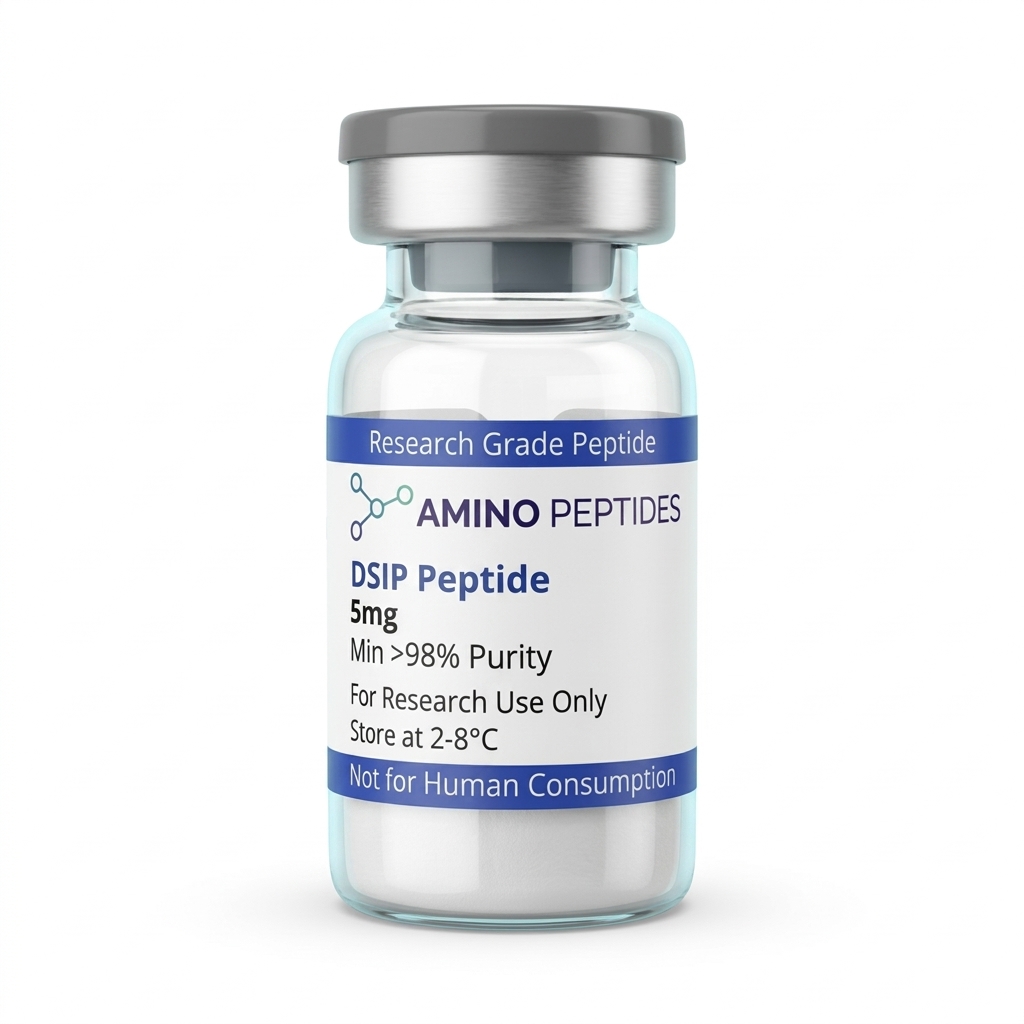
DSIP Peptide
From £19
Supplied as a sealed freeze-dried vial (stable 12–24 months at 2°C–8°C in a standard refrigerator).
Shop DSIP Peptide →Timeline & Results: The Laboratory Reality
Internet claims suggest that this compound provides a rapid onset of deep sleep, often citing specific timelines for how quickly it takes effect. Biohackers share protocols detailing exact minutes until sleep onset. However, under sterile laboratory conditions, the mechanism reveals a completely different reality. In cellular assays, researchers observe how the peptide binds to specific receptors on isolated cells.
The laboratory data shows that the half-life of this nonapeptide in a standard culture medium is extremely short. Enzymes present in the cellular environment, specifically aminopeptidases, begin to cleave the peptide bonds almost immediately upon introduction. Within a very short timeframe, the nine-amino-acid chain is broken down into smaller, inactive fragments. This rapid degradation in a controlled environment highlights the absurdity of consumer claims regarding sustained, multi-hour effects. In a petri dish, the compound does not remain intact long enough to support the timelines claimed by online biohackers. The cellular reality is one of rapid enzymatic breakdown, not sustained biological manipulation.
- Internet Claim: Sustained overnight action and altered sleep architecture.
- In-Vitro Reality: Rapid enzymatic cleavage by aminopeptidases in isolated cell cultures.
- Laboratory Limitation: The compound degrades quickly in standard culture mediums, making long-term receptor binding impossible to observe without continuous re-application in the petri dish.
Stacking & Synergies: Chemical Interactions
Another prevalent trend in online biohacking communities is the concept of 'stacking'. Internet claims suggest that mixing this nonapeptide with other compounds creates a synergistic effect, amplifying the purported benefits. Consumers trade recipes for combining various research chemicals. However, when examining this practice through the lens of strictly controlled in-vitro assays, the reality is one of severe chemical instability.
In a laboratory, mixing peptides requires precise calculation of pH, molecular weight, and isoelectric points. When researchers prepare a compound for cellular assays, they exclusively use a bacteriostatic reconstitution solution to maintain the structural integrity of the amino acid sequence. If a researcher introduces a second, different peptide into the same solution, they must monitor carefully for precipitation or competitive inhibition. Two different peptides may compete for the same receptor sites on the isolated cells, leading to unpredictable binding data. Furthermore, altering the pH of the solution by mixing compounds can cause the peptides to denature instantly. Unregulated mixing outside a sterile environment introduces massive chemical instability, rendering the compounds useless and the resulting data invalid.
- Internet Claim: Combining compounds creates a synergistic, amplified effect.
- In-Vitro Reality: Mixing compounds alters the pH of the bacteriostatic reconstitution solution, often leading to immediate peptide denaturation.
- Laboratory Limitation: Competitive inhibition in cellular assays makes it impossible to accurately measure the binding affinity of either compound when mixed.
Side Effects & Safety: The Danger of Untested Variables
Online discussions often downplay the risks associated with these compounds, framing them as natural and inherently safe. Internet claims suggest that because the sequence mirrors an endogenous peptide, it carries no risk of adverse reactions. However, under sterile laboratory conditions, cellular toxicity assays reveal a starkly different picture. The danger lies in the untested variables inherent in unregulated use.
Reconstitution calculator
Choose a vial mass and a bacteriostatic reconstitution solution volume. The figure is the resulting concentration.
Concentration: 2.50 mg/mL
Per 0.01mL (10µL): 25.0 mcg
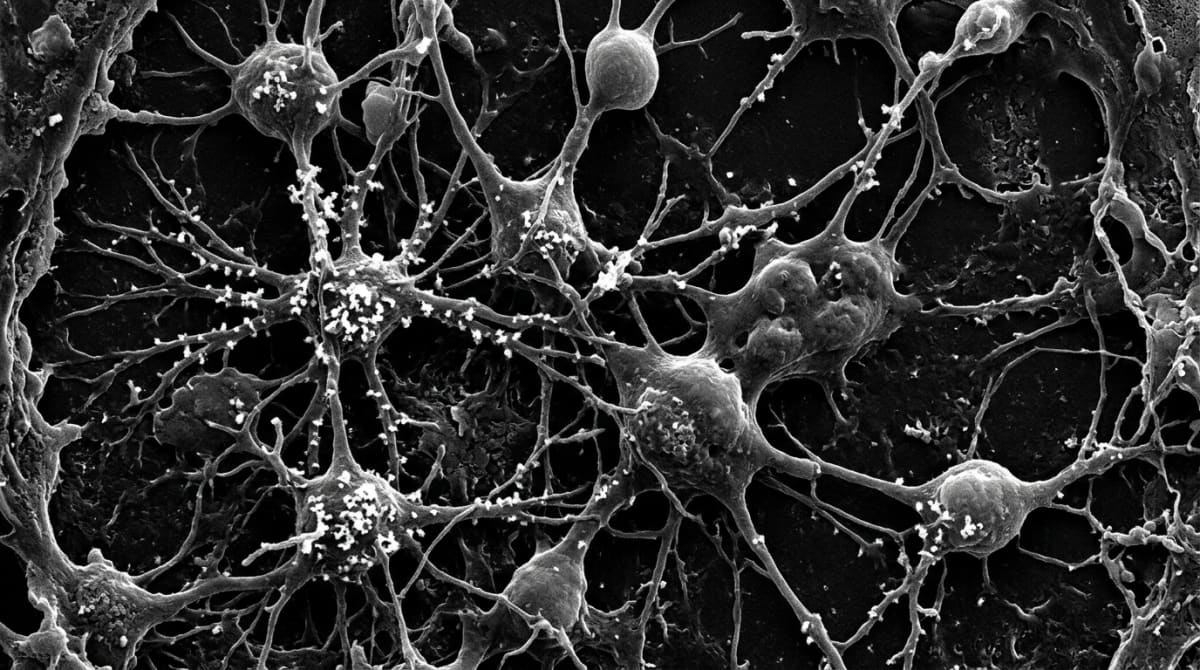
Open the full calculatorBacteriostatic reconstitution solutionIn a controlled laboratory, researchers monitor isolated cell cultures for signs of cellular stress. If a peptide is exposed to incorrect temperatures, ultraviolet light, or improper reconstitution techniques, it degrades. When degraded or denatured peptides are introduced to a cell culture, researchers observe an increase in reactive oxygen species and signs of cellular apoptosis (programmed cell death). The isolated cells react negatively to the impurities and structural changes. This underscores the extreme danger of untested variables. A compound that causes cellular stress in a highly controlled petri dish presents an incalculable risk when handled outside a laboratory environment. Authentic scientific exploration requires the ability to isolate and control every single variable, a standard that is impossible to meet in consumer settings.
In-Vitro Research FAQ
To further separate the laboratory reality from the online hype, it is necessary to address specific search queries using strictly in-vitro data.
What is dsip peptide in a chemical context?
From a strictly chemical perspective, it is a synthetic nonapeptide (a chain of nine amino acids) used exclusively by researchers for in-vitro laboratory assays to observe receptor binding and enzymatic degradation in isolated cell cultures.
Why do researchers look for a dsip peptide simple peptide structure?
The relatively short, nine-amino-acid chain provides a straightforward and manageable model for studying how specific enzymes cleave peptide bonds within controlled cellular environments. Its simplicity makes it useful for baseline degradation studies.
How does the data from a dsip peptide review differ from online claims?
A legitimate scientific literature review focuses entirely on molecular stability, receptor affinity in petri dishes, and the rapid half-life of the compound. In contrast, online claims falsely extrapolate these isolated cellular observations into unregulated, whole-body outcomes.
How does the delta sleep inducing peptide dsip peptide interact with isolated cells?
In sterile laboratory environments, researchers observe the compound binding transiently to specific receptors on the surface of isolated cells before it is rapidly broken down by enzymes present in the culture medium.
What role does a supplier like dsip peptide peptide sciences play in research?
When sourcing materials, researchers often look at the analytical data provided by suppliers—frequently discussed in analytical forums under terms like dsip peptide peptide sciences—to verify the mass spectrometry and HPLC purity results before beginning any strictly controlled in-vitro assays.
The Necessity of Laboratory Controls
The disparity between internet claims and laboratory reality is absolute. While online communities discuss this nonapeptide as a consumer tool, the scientific data restricts its relevance entirely to the petri dish. The rapid enzymatic degradation, the precise requirements for a bacteriostatic reconstitution solution, and the cellular stress caused by denatured compounds all highlight the strict limitations of this chemical. Authentic scientific exploration requires strictly controlled, non-human environments. Any extrapolation of in-vitro cellular data into consumer application ignores the fundamental principles of scientific research and introduces severe, untested variables.
Scientific Bibliography
- Schoenenberger, G. A. (1984). Characterization, properties and multivariate functions of delta-sleep-inducing peptide (DSIP). European Neurology, 23(5), 321-345. View published research
- Kovalzon, V. M., & Strekalova, T. V. (2006). Delta sleep-inducing peptide (DSIP): a still unresolved riddle. Journal of Neurochemistry, 97(2), 303-309. View published research
- Pollard, B. J., & Pomfret, A. (2001). Delta sleep-inducing peptide. European Journal of Anaesthesiology, 18(7), 419-422. View published research
⚠️ Research Use Only Disclaimer: All peptides and compounds are sold strictly for in-vitro laboratory research purposes only. Not intended for human or veterinary use, not a dietary supplement, and not approved to diagnose, treat, cure, or prevent any disease or condition. For use by qualified researchers in suitably equipped laboratory environments only. Amino Peptides Ltd operates in full compliance with UK MHRA regulations and applicable EU research chemical guidelines.