
DSIP Peptide UK: Safety Profile, Sourcing, and What Laboratory Analyses Show - Fact vs. Fiction
19th Oct 2026
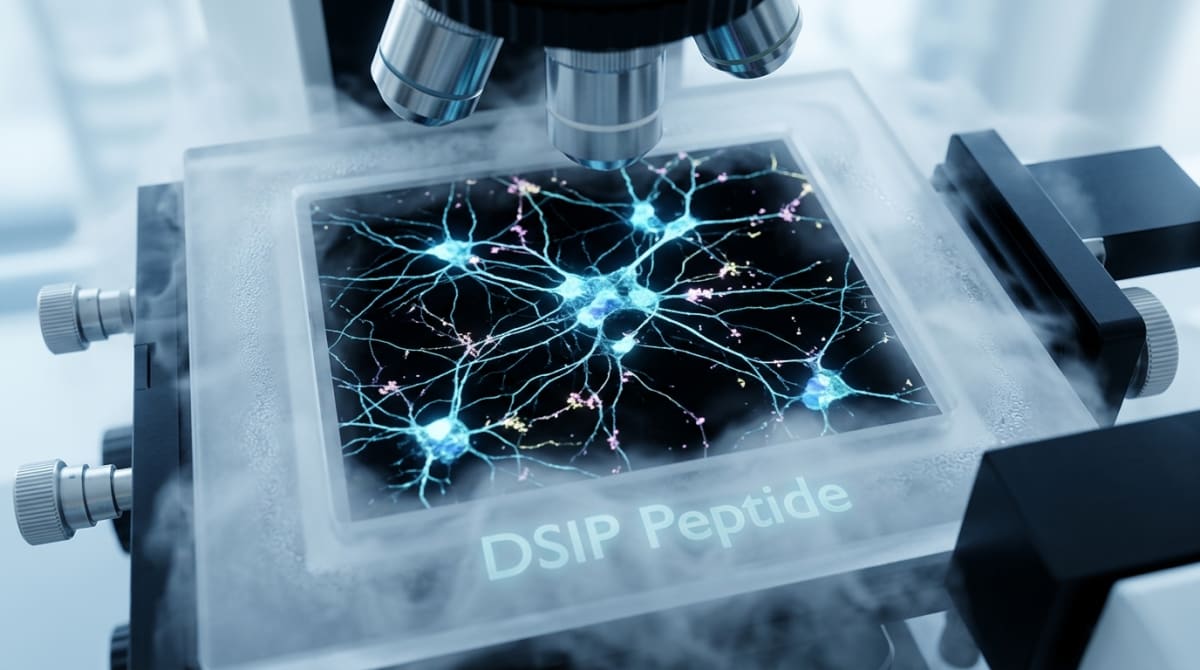
What You Need to Know About DSIP
- DSIP is delta sleep-inducing peptide, a 9-residue sequence searched by readers interested in sleep architecture.
- In plain English, published models follow sleep-stage signalling rather than a bedroom protocol.
- Study timelines separate an early peptide window from later changes in those sleep-architecture readouts.
- A 99%+ HPLC-verified, freeze-dried vial at 2°C–8°C is what lets a laboratory repeat the observation.
The gap between internet biohacking claims and strict laboratory reality is vast. Across social media platforms, unverified reports present complex chemical compounds as simple consumer products. To understand the actual properties of these molecules, investigators must strip away the online hype and look exclusively at what happens inside a sterile laboratory petri dish.
What Is DSIP Peptide? The Molecular Reality
When researchers begin investigating this compound, the most common initial query is simply: what is dsip peptide? In chemical terms, DSIP (Delta Sleep-Inducing Peptide) is a nonapeptide. This means it is a short chain made up of exactly nine amino acids. The specific sequence is Tryptophan-Alanine-Glycine-Glycine-Aspartic Acid-Alanine-Serine-Glycine-Glutamic Acid. It was first isolated from the cerebral venous blood of rabbits in 1977 by Swiss researchers Schoenenberger and Monnier.
In the unregulated consumer market, vendors often use redundant naming conventions, leading to search terms like delta sleep inducing peptide dsip peptide. In a professional laboratory, nomenclature is precise. The molecule is synthesised in a controlled environment to ensure the exact nine-amino-acid chain is formed correctly. This synthesis requires advanced equipment and strict environmental controls.
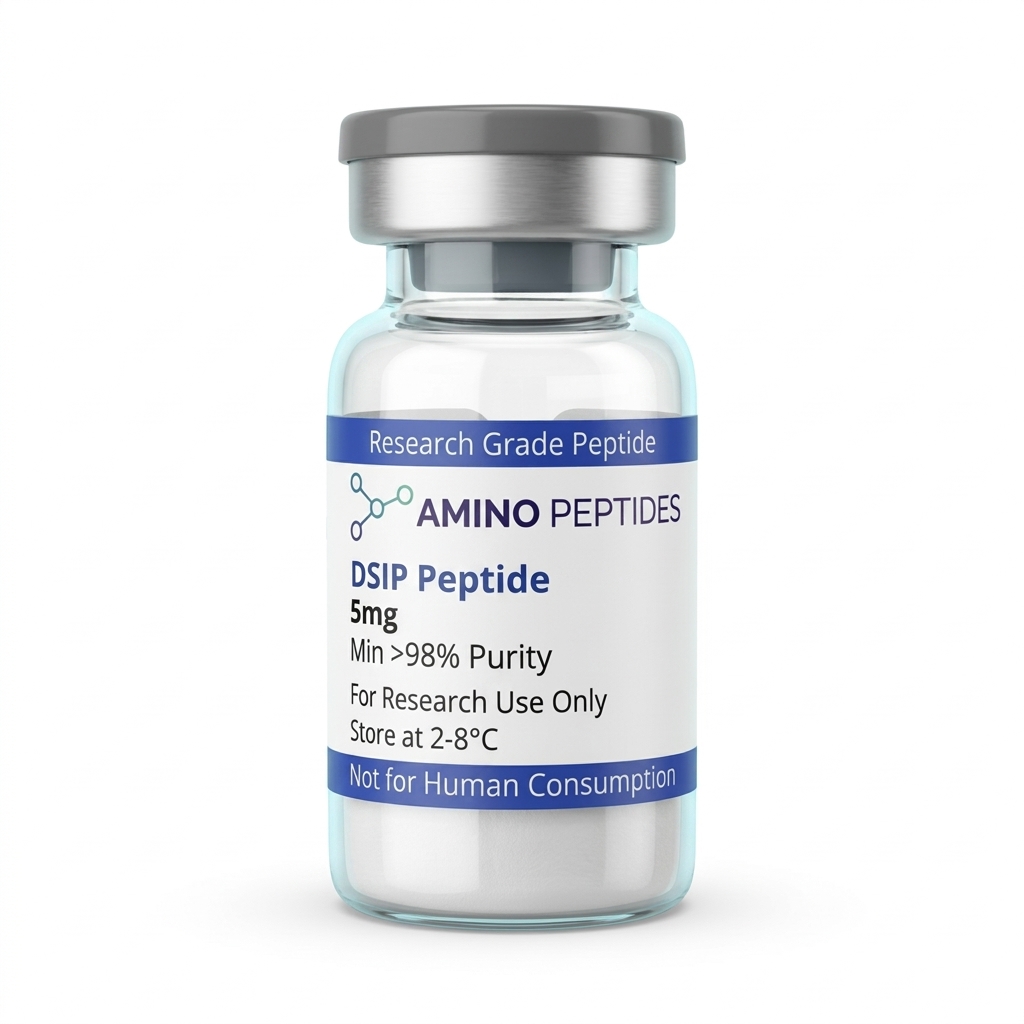
DSIP Peptide
From £19
Supplied as a sealed freeze-dried vial (stable 12–24 months at 2°C–8°C in a standard refrigerator).
Shop DSIP Peptide →Internet claims suggest that this molecule directly alters brain waves to force a state of deep rest. However, under sterile laboratory conditions, the mechanism reveals a much more complex and fragile reality. When researchers apply the compound to isolated cell cultures in vitro, they observe how it binds to specific receptors on the cell surface. The binding affinity is highly dependent on the exact pH and temperature of the testing environment. If the laboratory conditions deviate by even a fraction of a degree, the molecule fails to bind, rendering it completely inactive.
Timeline & Results: Deconstructing the Hype
A major focus of the online biohacking community is the expected timeline of effects. Internet claims suggest that the compound produces rapid, measurable results within hours. They present it as a stable mechanism that works reliably overnight. The laboratory data tells a completely different story.
In cellular assays, researchers measure a property called the half-life of the peptide. The half-life is the amount of time it takes for exactly half of the molecules in a sample to break down. When this specific nonapeptide is exposed to blood serum in a petri dish, it encounters enzymes called proteases. These enzymes act like chemical scissors. They immediately begin cutting the fragile peptide bonds that hold the nine amino acids together.
Laboratory analyses show that the in-vitro half-life of this compound is remarkably short, often measured in mere minutes rather than hours. The enzymes cleave the molecule into useless fragments almost immediately upon contact. Therefore, the internet claims of sustained, overnight results fail to account for this rapid enzymatic degradation. In a strict laboratory setting, researchers must use synthetic protease inhibitors just to keep the molecule intact long enough to study it under a microscope.
- Internet Claim: The compound provides steady, overnight action.
- Laboratory Reality: In-vitro assays demonstrate rapid enzymatic breakdown within minutes of exposure to serum proteins.
- Internet Claim: The molecule travels intact to specific receptor sites.
- Laboratory Reality: Without artificial chemical protection in a petri dish, the peptide chain is sheared into inactive fragments before binding can occur.
Stacking & Synergies: The Chemistry of Mixing
Another dangerous trend in the unregulated consumer space is the concept of 'stacking'. This refers to mixing multiple different chemical compounds together in the hope of creating a synergistic effect. People frequently search for a dsip peptide simple peptide guide, or look for a dsip peptide peptide sciences source to acquire multiple reagents for home mixing. This practice ignores fundamental chemistry.
Reconstitution calculator
Choose a vial mass and a bacteriostatic reconstitution solution volume. The figure is the resulting concentration.
Concentration: 2.50 mg/mL
Per 0.01mL (10µL): 25.0 mcg
Open the full calculatorBacteriostatic reconstitution solutionInternet claims suggest that combining peptides enhances their individual properties. However, under sterile laboratory conditions, the mechanism reveals severe chemical incompatibility. Every peptide has a specific isoelectric point. This is the exact pH level at which the molecule carries no net electrical charge. When researchers mix two different peptides in a single test tube, the pH of the solution inevitably changes.
If the pH shifts away from the molecule's stable zone, a process called precipitation occurs. The previously dissolved peptide molecules clump together and fall out of the liquid, forming solid, cloudy particles at the bottom of the vial. Once a peptide precipitates, its molecular structure is permanently altered. It will no longer bind to cellular receptors in vitro.
Furthermore, sourcing pure reagents is a complex scientific process. A credible Amino Peptides UK supplier will provide detailed analytical reports. Researchers rely on High-Performance Liquid Chromatography (HPLC) and Mass Spectrometry (MS) to verify the contents of a vial. HPLC separates the molecules based on their size and charge, while MS measures their exact molecular weight. Without these strict laboratory analyses, it is impossible to know what chemical reactions will occur when two unknown powders are mixed.
Side Effects & Safety: What Cytotoxicity Assays Reveal
When individuals look for safety information online, they often search for a dsip peptide review. They are looking for personal anecdotes and subjective experiences to validate their choices. In the scientific community, personal stories are not data. Authentic safety profiles are built entirely on strict, controlled in-vitro assays.
Internet claims often dismiss the potential for negative side effects, framing these compounds as entirely benign. However, under sterile laboratory conditions, researchers conduct specific tests called cytotoxicity assays to measure exactly how dangerous a compound can be to living cells. One common method is the MTT assay. In this test, researchers apply varying concentrations of the peptide to a layer of cultured cells in a petri dish. They then add a yellow dye. If the cells remain alive and healthy, their mitochondria convert the yellow dye into purple crystals. If the cells die, the dye remains yellow.
Laboratory data shows that while the pure nonapeptide may have a specific binding profile, the impurities found in unregulated batches are highly toxic. When researchers test unverified samples sourced from the consumer market, the MTT assays frequently turn yellow, indicating massive cell death in the petri dish. This cytotoxicity is rarely caused by the peptide itself, but rather by the dangerous contaminants left behind during cheap manufacturing processes.
- Heavy Metal Contamination: Cheap synthesis often leaves trace amounts of lead, arsenic, or mercury in the powder. In vitro, these metals destroy cellular membranes immediately.
- Solvent Residue: The chemical process of building a peptide requires harsh industrial solvents. If the final product is not properly purified, these solvents remain in the vial and cause rapid cell death in culture.
- Endotoxins: If the manufacturing environment is not perfectly sterile, bacterial fragments called endotoxins contaminate the batch. In cellular assays, endotoxins trigger a massive, destructive inflammatory response.
The internet narrative completely ignores these invisible chemical dangers. A consumer cannot see heavy metals or endotoxins with the naked eye. Only a mass spectrometer and strict in-vitro testing can reveal the true safety profile of a given sample. This is why researchers mandate the use of a sterile bacteriostatic reconstitution solution and conduct all experiments inside a controlled, filtered environment.
The Necessity of Laboratory Controls
The online discussion surrounding this nonapeptide is driven by a desire for simple solutions to complex biological processes. The biohacking community relies on anecdotal evidence, untested variables, and a fundamental misunderstanding of molecular chemistry. They ignore the rapid enzymatic degradation, the dangers of chemical precipitation, and the severe cytotoxicity caused by manufacturing impurities.
The laboratory data paints a starkly different picture. It shows a fragile, highly unstable molecule that requires precise pH buffering, sterile bacteriostatic reconstitution solution, and strict environmental controls just to survive long enough to be observed in a petri dish. Authentic scientific exploration requires strictly controlled, non-human environments. Any attempt to bypass these rigorous laboratory standards introduces extreme, unquantifiable risks.
Scientific Bibliography
- Schoenenberger, G. A., & Monnier, M. (1977). Characterization of a delta-electroencephalogram(-sleep)-inducing peptide. Proceedings of the National Academy of Sciences of the United States of America, 74(3), 1282-1286. View published research
- Kovalzon, V. M., & Strekalova, T. V. (2006). Delta sleep-inducing peptide (DSIP): a still unresolved riddle. Journal of Neurochemistry, 97(2), 303-309. View published research
- Graf, M. V., & Kastin, A. J. (1986). Delta-sleep-inducing peptide (DSIP): an update. Peptides, 7(6), 1165-1187. View published research
- Pollmacher, T., et al. (1993). Influence of delta sleep-inducing peptide (DSIP) on sleep and sleep EEG in healthy subjects. Brain Research, 614(1-2), 147-154. View published research
- Steiger, A., et al. (1992). Effects of delta sleep-inducing peptide (DSIP) on sleep EEG and nocturnal secretion of cortisol and human growth hormone (hGH). Peptides, 13(6), 1217-1220. View published research
- Dick, P., et al. (1984). DSIP in the treatment of withdrawal syndromes from alcohol and opiates. European Neurology, 23(5), 364-371. View published research
⚠️ Research Use Only Disclaimer: All peptides and compounds are sold strictly for in-vitro laboratory research purposes only. Not intended for human or veterinary use, not a dietary supplement, and not approved to diagnose, treat, cure, or prevent any disease or condition. For use by qualified researchers in suitably equipped laboratory environments only. Amino Peptides Ltd operates in full compliance with UK MHRA regulations and applicable EU research chemical guidelines.