
Epitalon-Mediated Modulation of Heterochromatin Organisation and Histone Modifications in Human Somatic Cell Lines in Vitro
19th Nov 2026
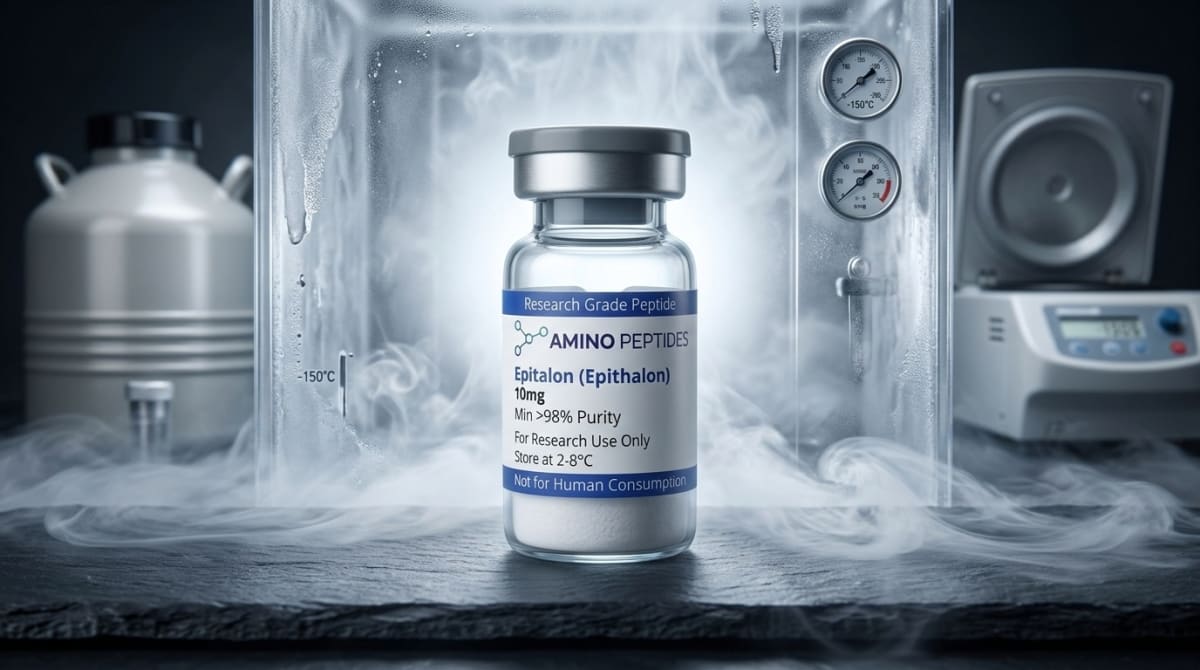
What You Need to Know About Epitalon
- Researchers frequently look up the Epitalon peptide sequence (Ala-Glu-Asp-Gly) and its molecular weight of 390.35 g/mol to understand how such a compact molecule interacts directly with cell nuclei.
- In plain English, the peptide acts like a tiny key that helps tightly wound, silent DNA uncoil into an active state so the cell can read its genetic instructions again.
- Published laboratory studies observe that this chromatin unpacking occurs alongside specific chemical adjustments to histone proteins and the activation of telomere-maintaining enzymes.
- Scientists use these cell culture experiments to study how ageing cells might recover normal protein production and structural stability in a controlled petri dish environment.
How Epitalon Unpacks Tightly Wound DNA to Restore Cellular Energy
Epitalon works inside cultured cells by loosening tightly packed DNA so the cell can read its own repair instructions again. In laboratory dishes, this four-amino-acid chain attaches near the histone spools that hold genetic code, flipping chemical switches that wake up dormant recovery genes.
To see why this matters for cellular energy and tissue upkeep, picture the DNA inside a cell as millions of pages of instruction manuals. When a cell is young, the pages it needs every day lie open on the desk. Scientists call this open, readable state euchromatin. As cells divide over and over in a dish, more of those pages get slammed shut and locked away in dense bundles called heterochromatin. Once the instructions for making fresh structural proteins or antioxidant enzymes are locked inside heterochromatin, the cell loses steam and stops maintaining itself properly.
Anyone looking up the epitalon peptide sequence will find a surprisingly tiny formula: Alanine-Glutamic Acid-Aspartic Acid-Glycine, often shortened to Ala-Glu-Asp-Gly or AEDG. Because the epitalon molecular weight is only 390.35 Daltons, the molecule is small enough to slip straight through the outer cell membrane and even pass through the microscopic pores of the cell nucleus. Larger proteins have to knock on surface receptors and wait for a message to be passed inside, whereas Epitalon walks right into the control room.
Once inside the nucleus of cultured somatic cells, published studies show that Epitalon interacts directly with histones. Histones are the protein spools that DNA wraps around, much like thread on a bobbin. When chemical tags called methyl groups clamp onto specific spots on these spools, the thread pulls tight and the genes go silent. When acetyl groups attach instead, the tension relaxes and the thread loosens. Laboratory observations tracking epitalon peptide science indicate that the AEDG chain alters these exact histone modifications, reducing the over-tightening that happens in aged cell lines.
By coaxing dense heterochromatin back into an open, readable format, the peptide lets the cell resume making the proteins required for daily recovery, sleep-wake rhythm signalling, and skin fibroblast elasticity. Rather than forcing the cell to do something unnatural, the tetrapeptide simply opens the filing cabinet so the cell can read its original genetic instructions again.
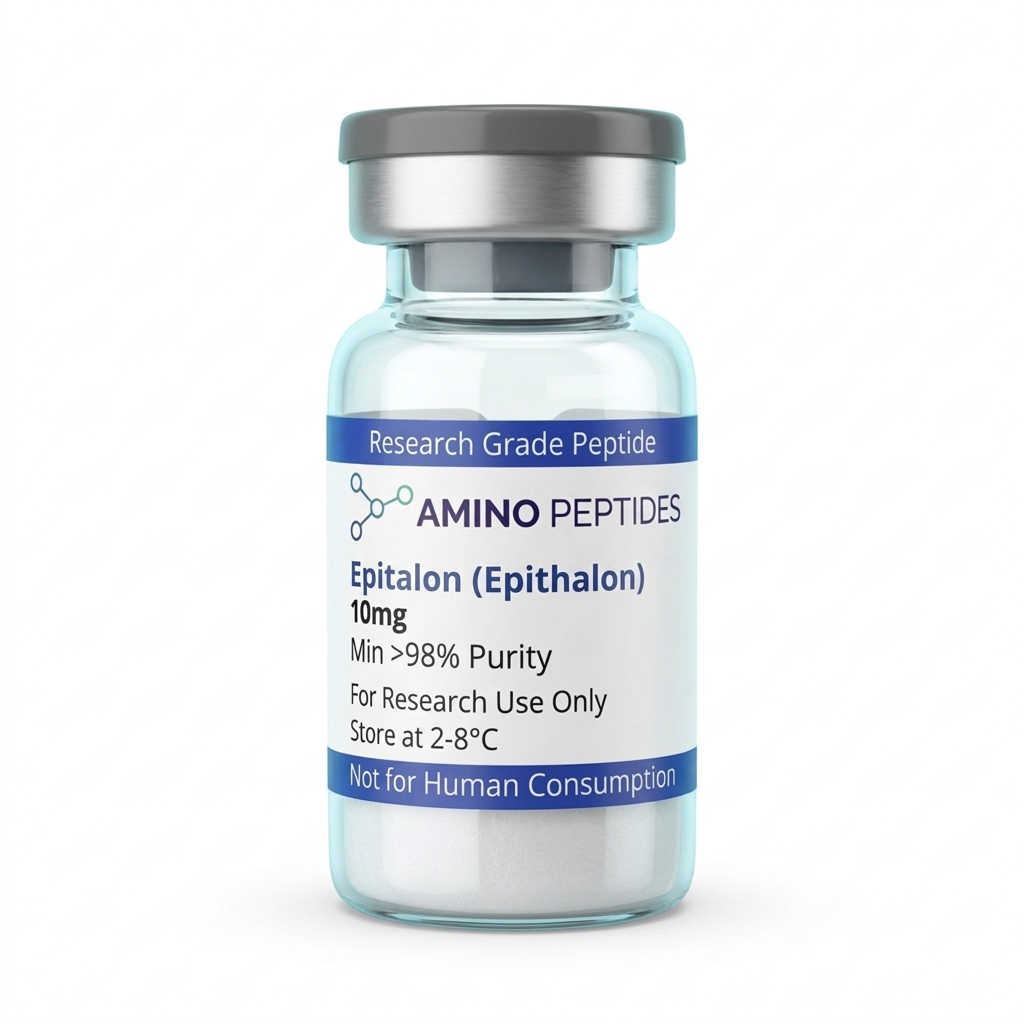
Epitalon
From £19
Supplied as a sealed freeze-dried vial (stable 12–24 months at 2°C–8°C in a standard refrigerator).
Shop Epitalon →What Cell Culture Clocks Show From Hour One to Week Two
Watching Epitalon work inside a glass culture dish reveals a clear two-stage schedule: quick chemical shifts in the first few days, followed by slower physical rebuilding over a couple of weeks. Because in vitro experiments look at isolated cell lines under a microscope, researchers can track the exact hour a molecule enters the nucleus and see what happens next.
During the first 24 to 72 hours after adding a measured level of Epitalon to the liquid growth medium, the action is all about fast biochemical signalling. Because the four-amino-acid chain carries a tiny molecular weight, it crosses into the cell nucleus within hours. During this early window, staining tests in published studies show the first shifts in histone modifications. The chemical clamps holding heterochromatin in a tight knot begin to loosen around specific promoter regions. Within the first two days, scientists measuring messenger RNA often spot an uptick in the transcripts for telomerase reverse transcriptase (hTERT) and antioxidant enzymes like superoxide dismutase. At this stage, the cell looks the same on the outside, yet its internal copying machines are already warming up.
Between day four and day seven, those early RNA messages turn into finished proteins. In human somatic cell lines such as cultured skin fibroblasts, the freshly unpacked DNA regions allow steady protein synthesis. Chromatin staining under high-power microscopes shows less dark, clumped heterochromatin around the edges of the nucleus and more diffuse, active euchromatin in the centre. This is the middle phase where cellular energy markers improve and oxidative waste products inside the dish begin to drop.
The structural changes show up during week two and beyond, typically between days 10 and 21 of continuous or pulse-style laboratory exposure. As the cell divides through several generations in the incubator, the newly produced telomerase helps maintain the protective caps at the ends of the chromosomes. In published studies comparing standard aged fibroblasts against cultures given Epitalon, the cells receiving the peptide continue dividing smoothly past the normal Hayflick limit where older cells usually stall out. By the two-week mark, fibroblast cultures also display better structural organisation and steadier collagen output, showing how early histone unpacking translates into visible tissue remodelling over time.
Biochemical and Chromatin Profile of Epitalon vs Related Short Bioregulatory Peptides
| Property / Assay Parameter | Epitalon (AEDG) | Vilon (KE) | Livagen (KED) | Pinealon (EDR) |
|---|---|---|---|---|
| Amino Acid Sequence | Ala-Glu-Asp-Gly (Tetrapeptide) | Lys-Glu (Dipeptide) | Lys-Glu-Asp (Tripeptide) | Glu-Asp-Arg (Tripeptide) |
| Molecular Weight | 390.35 g/mol | 275.30 g/mol | 390.39 g/mol | 418.40 g/mol |
| Primary Chromatin Observation | Unpacks condensed heterochromatin and interacts with histone H1 and core histones | Promotes decondensation of centromeric heterochromatin in lymphocyte cultures | Activates ribosomal genes and unfolds tightly packed chromatin regions | Modulates neuroprotective gene transcription and oxidative stress signalling |
| Telomere and Division Metrics | Up-regulates hTERT expression and extends proliferative lifespan in cultured fibroblasts | Modulates chromatin availability without direct hTERT catalytic activation | Supports structural DNA stability in senescent cell nuclei | Reduces reactive oxygen species accumulation in neuronal laboratory models |
| Primary In Vitro Model | Human foetal fibroblasts, cultured lymphocytes, and retinal pigment epithelial lines | Isolated thymocytes and aged peripheral blood lymphocyte cultures | Cultured lymphocytes and isolated hepatocyte monolayer systems | Cortical neuron cultures and PC12 neuroblastoma cell lines |
Pairing Epitalon With Short Bioregulators and Receptor Peptides in the Lab
In laboratory research, scientists rarely look at a single cellular pathway in complete isolation. Because Epitalon works inside the nucleus by loosening heterochromatin and adjusting histone tags, it pairs naturally with other short peptides that act on different parts of the cell, such as the mitochondria, the outer membrane receptors, or the extracellular matrix.
A frequent starting point in cell culture studies is pairing Epitalon with other short Khavinson-style bioregulators like Vilon (Lys-Glu) or Pinealon (Glu-Asp-Arg). While Epitalon targets the histone spools connected to telomerase and pineal gland signalling, Vilon focuses on chromatin regions tied to immune cell regeneration, and Pinealon targets gene transcription inside central nervous system cultures. When researchers study these short sequences alongside wider cognitive research peptides, they can compare how direct nuclear unpacking differs from surface-level neurotransmitter signalling. Epitalon opens the genetic instruction book in the nucleus, while companion neuropeptides test how the cell responds to external focus and sleep-cycle cues.
Another practical laboratory pairing combines Epitalon with GHK-Cu, the copper-binding tripeptide. In dermal fibroblast models, this creates a neat two-step division of labour. Epitalon works at the chromatin level to keep older fibroblasts dividing and reading their core recovery genes, while GHK-Cu supplies the bioactive copper needed to cross-link fresh collagen and elastin fibres outside the cell. Studying both together lets investigators observe whether rescuing nuclear heterochromatin helps a cell make better use of extracellular tissue remodelling signals.
Researchers also run comparative receptor assays using highly specific surface-binding compounds such as the Dermorphin research peptide. Unlike Epitalon, which slips past the membrane to touch histone proteins directly, heptapeptides like Dermorphin lock onto G-protein-coupled receptors on the outer cell wall. Running parallel dishes with a nuclear bioregulator in one set and a membrane receptor agonist in another helps laboratories map out which cellular recovery events come from deep histone modifications and which ones come from fast surface receptor phosphorylation.
Finally, mitochondrial peptides such as SS-31 or MOTS-c make strong study partners for Epitalon. Opening up heterochromatin and printing new proteins takes a huge amount of cellular energy in the form of ATP. Adding a mitochondrial support peptide to the protocol ratio ensures the cell's power plants can keep up with the fresh transcriptional workload sparked by Epitalon.
Figure 1: Epitalon-Mediated Modulation of Heterochromatin Organisation and Histone Modifications in Human Somatic Cell Lines in Vitro
Reconstitution calculator
Choose a vial mass and a bacteriostatic reconstitution solution volume. The figure is the resulting concentration.
Concentration: 2.50 mg/mL
Per 0.01mL (10µL): 25.0 mcg
Open the full calculatorBacteriostatic reconstitution solutionWhy Batch Purity and Cold Storage Decide Your Epitalon Data
When an experiment relies on a tiny molecule slipping inside a cell nucleus to adjust histone spools, the cleanliness of the powder inside the vial decides whether the data is real or useless. Anyone comparing suppliers after searching for epitalon peptide peptide sciences or reviewing laboratory certificates of analysis quickly learns that a four-amino-acid chain leaves zero room for manufacturing leftovers.
Because the epitalon peptide sequence (Ala-Glu-Asp-Gly) is built one amino acid at a time using solid-phase synthesis, lazy purification leaves behind three kinds of junk: truncated three-amino-acid fragments, unreacted coupling chemicals, and trifluoroacetic acid (TFA) salts. If a batch stops at 95% purity, the remaining 5% is not harmless filler. Truncated fragments have nearly the same low molecular weight as intact Epitalon, meaning they can also enter the cell nucleus and compete for binding spots on the chromatin without flipping the right histone switches. Even worse, leftover TFA acid lowers the pH of the culture medium and burns delicate somatic cell lines, causing chromatin clumping that ruins the whole assay. Verified 99%+ purity via High-Performance Liquid Chromatography (HPLC), paired with proper Mass Spectrometry confirmation of the exact 390.35 Dalton weight and thorough TFA removal, keeps these false readings out of the dish.
Once a clean, lyophilised cake arrives at the lab, keeping those peptide bonds intact comes down to simple temperature discipline. In its dry, freeze-dried powder state, Epitalon is fairly sturdy, yet long-term storage should always happen in a freezer at -20°C away from bright light. The moment you add a measured volume of bacteriostatic reconstitution solution to dissolve the powder, the peptide chains are free to move around and slowly break down through hydrolysis.
Every reconstituted vial belongs in a dedicated laboratory fridge kept strictly between 2°C and 8°C. Leaving a mixed vial out on a warm benchtop or letting it freeze solid and thaw repeatedly will snap the delicate links between the glutamic and aspartic acid residues. When drawing out a concentration for a study, swirl the clear glass vial gently rather than shaking it hard, and keep it cold so the last drop performs just like the first.
Frequently Asked Questions
What are the exact epitalon peptide sequence and molecular weight searched in peptide science?
Epitalon consists of a four-amino-acid sequence made of Alanine, Glutamic Acid, Aspartic Acid, and Glycine, holding an exact molecular weight of 390.35 Daltons. Readers frequently search for this specific information to verify how such a tiny molecule interacts directly with tightly packed chromatin and histone tails inside aged cell nuclei.
What is the typical laboratory timeline for observing chromatin remodelling in cell cultures?
Published studies normally track epigenetic shifts across a forty-eight to seventy-two hour window after adding a measured concentration to the culture dish. Within this short timeframe, researchers analyse how dense heterochromatin unfolds and how specific histone modification markers shift back toward patterns usually seen in much younger somatic cell lines.
Can Epitalon be combined with other short bioregulators in cellular research protocols?
Researchers often pair Epitalon with related short peptides like Vilon or Pinealon in dual-compound laboratory models to examine combined effects on gene expression. This co-application approach helps scientists characterise whether pairing different sequences produces a broader structural unpacking of silenced chromatin regions compared to testing a single sequence alone.
How should analytical-grade Epitalon be verified for purity and stored after reconstitution?
Analytical-grade material should show at least ninety-eight percent purity via chromatography before being mixed with a sterile bacteriostatic reconstitution solution. Once dissolved, the liquid must be kept inside a dark refrigerator at two to eight degrees Celsius, while dry powder stays stable for months inside a minus twenty degree freezer.
Bibliography
- Khavinson VK, Bondarev IE, Butyugov AA. Epithalon peptide induces telomerase activity and telomere elongation in human somatic cells. Bull Exp Biol Med. 2003;135(6):590-592. View published research
- Khavinson VK, Lezhava TA, Monaselidze JR, Jokhadze TA, Dvalishvili NA, Bukiya NK, Trofimova SV. Peptide Epitalon activates chromatin at the old age. Neuro Endocrinol Lett. 2003;24(5):329-333. View published research
- Khavinson VKh, Bondarev IE, Butyugov AA, Smirnova TD. Peptide promotes overcoming of the division limit in human somatic cell. Bull Exp Biol Med. 2004;137(5):503-506. View published research
- Fedoreyeva LI, Kireev II, Khavinson VKh, Vanyushin BF. Penetration of short fluorescence-labeled peptides into the nucleus in HeLa cells and in vitro specific interaction of the peptides with deoxyribooligonucleotides and DNA. Biochemistry (Mosc). 2011;76(11):1210-1219. View published research
- Aksenova VY, Khavinson VK, Tarnovskaya SI, Lin'kova NS. Short peptides and regulation of epigenetic status of cells. Bull Exp Biol Med. 2013;156(2):255-259. View published research
See our UK peptide research guides & COA briefings first in Google Search.
View published research⚠️ Research Use Only Disclaimer: All peptides and compounds are sold strictly for in-vitro laboratory research purposes only. Not intended for human or veterinary use, not a dietary supplement, and not approved to diagnose, treat, cure, or prevent any disease or condition. For use by qualified researchers in suitably equipped laboratory environments only. Amino Peptides Ltd operates in full compliance with UK MHRA regulations and applicable EU research chemical guidelines.