
GHK-Cu Peptide Benefits: Separating the Hype from Science
13th Oct 2026

ghkcu peptide: benefits - Fact vs. Fiction
The internet is currently flooded with claims about the miraculous properties of copper-binding peptides. Reading consumer forums or listening to biohacking podcasts reveals stories of reversed ageing, rapid tissue repair, and sudden hair growth. The phrase 'ghkcu peptide: benefits' has become a viral search term, promising a simple chemical solution to complex biological problems. However, when the marketing hype is stripped away and the actual scientific data is examined, a very different picture emerges.
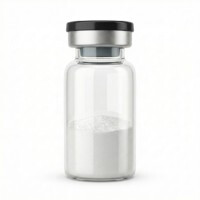
Research Reagent
Many pop-culture trends rely on untested compounds. Eliminate variables with our certified in-vitro reagents.
View Reagent Profile ›Authentic scientific research does not take place on social media. It takes place in sterile laboratories, using isolated cells, precise chemical solvents, and strictly controlled environments. To understand what this compound actually does, researchers must look at the in-vitro data. It is crucial to separate the popular myths from the microscopic reality of cellular assays.
- Sequence: Glycyl-L-histidyl-L-lysine (Gly-His-Lys) bound to a copper ion (Cu2+)
- Molecular Weight: 404.84 g/mol
- Solubility: Highly soluble in water and bacteriostatic reconstitution solution
- Primary Function: Copper transport and cellular signalling in isolated laboratory assays
GHK-Cu is a tripeptide. This means it is a short chain made of just three amino acids: glycine, histidine, and lysine. What makes it unique is its strong chemical affinity for copper ions. In a laboratory setting, the peptide chain wraps around a single copper atom, creating a stable complex. Scientists first isolated this complex from human plasma in 1973. Since then, researchers have studied how this specific molecule interacts with isolated cells in petri dishes.
An examination of the core internet claims contrasted with the actual laboratory evidence reveals significant discrepancies.
Scientific Deconstruction: The Core Claims
- The Internet Claim: Consumer platforms suggest that GHK-Cu directly reverses skin ageing and repairs damaged tissue in humans.
- The Laboratory Reality: Under sterile laboratory conditions, the mechanism reveals a highly specific, localised interaction. When researchers apply the compound to isolated human fibroblast cells in a petri dish, they observe a change in cellular behaviour. Fibroblasts are the cells responsible for building the structural framework of tissues. The in-vitro data shows that GHK-Cu upregulates the messenger RNA within these isolated cells. This chemical signal prompts the fibroblasts to synthesise more collagen and elastin proteins. The compound acts as a signalling molecule in a two-dimensional cell culture. It does not magically erase wrinkles; it triggers a specific chemical pathway in a controlled, non-human environment.
- The Internet Claim: Biohackers frequently claim the compound causes rapid hair growth and restores dead hair follicles.
- The Laboratory Reality: In-vitro studies paint a much more restricted picture. Researchers isolate dermal papilla cells (cells from the base of a hair follicle) and culture them in an incubator. When exposed to GHK-Cu, these isolated cells show increased survival rates and a reduction in apoptosis (programmed cell death). The compound also appears to stimulate the production of vascular endothelial growth factor (VEGF) in the petri dish. VEGF is a protein that encourages the formation of new blood vessels. While this is an interesting chemical interaction, observing cell survival in a plastic dish is entirely different from growing hair on a living organism.
Understanding the gap between public perception and scientific reality requires an analysis of how consumers misunderstand the nature of laboratory research. This breaks down into three specific areas: Timeline and Results, Stacking and Synergies, and Side Effects and Safety.
Timeline & Results: The Myth of the Quick Fix
Internet forums often promise rapid physical transformations, suggesting that chemical compounds work like switches that can be flipped instantly. Consumers expect to see visible changes in days or weeks.
In reality, laboratory timelines are strictly measured in hours and days within a controlled incubator, and they measure microscopic changes, not visible outcomes. When scientists add GHK-Cu to a cell culture, they follow a rigorous, multi-day protocol. First, they seed the cells into a plastic plate and allow them to attach. Then, they introduce the peptide solution. They typically measure protein expression at 24, 48, and 72-hour intervals.
To see the results, researchers must destroy the cells. They lyse (break open) the cells to extract the proteins or genetic material. They then run complex tests, like Western blots or polymerase chain reactions, to measure the exact quantity of specific molecules. The cells are bathed in a precise nutrient broth, kept at exactly 37 degrees Celsius, and protected from outside interference. Expecting these isolated, highly controlled cellular reactions to translate directly to a complex, living organism is a fundamental misunderstanding of scientific research.
Stacking & Synergies: The Danger of Chemical Mixing
Biohackers frequently promote the idea of 'stacking' GHK-Cu with other chemical agents, assuming that mixing different compounds will multiply their effects. They treat complex molecules like ingredients in a recipe.
In a laboratory setting, mixing peptides introduces severe chemical instability. GHK-Cu relies on a fragile bond between the amino acid chain and the copper ion. Every molecule has an isoelectric point, which is the pH level where it carries no net electrical charge. If the pH of the environment shifts, or if the compound interacts with other reactive molecules, the copper ion can detach.
Once the copper detaches, the peptide loses its primary structural characteristic and its ability to function in binding assays. Furthermore, mixing compounds can introduce proteases—enzymes that break down peptide bonds. This causes rapid hydrolysis, destroying the peptide chain entirely. Researchers must carefully control the pH of their solutions, often using a specific bacteriostatic reconstitution solution to maintain molecular integrity during storage. Unregulated mixing in uncontrolled environments ruins the compound and creates unknown chemical byproducts.
Side Effects & Safety: The Reality of Copper Toxicity
Consumer platforms often frame peptides as entirely safe, natural supplements. Because GHK-Cu occurs naturally in human plasma, people assume that adding more of it carries no risk.
Laboratory data shows a starkly different reality regarding safety thresholds. Copper is a heavy metal. While trace amounts are necessary for cellular function, excess copper is highly destructive. In cell cultures, exposing cells to excessive concentrations of GHK-Cu leads to copper toxicity.
This toxicity triggers a process known as the Fenton reaction. Free copper ions react with hydrogen peroxide (a natural byproduct of cellular metabolism) to create highly reactive hydroxyl radicals. These radicals cause severe oxidative stress. They smash into the cell membranes, causing lipid peroxidation, which literally tears the isolated cells apart. Researchers must calculate exact molar concentrations to avoid destroying their cell lines. Unregulated handling introduces massive risks of heavy metal accumulation and cellular damage. There is no such thing as a universally safe chemical; there is only safe handling within strict laboratory parameters.
The Extracellular Matrix and Microarray Data
To further understand the laboratory mechanisms, it is necessary to examine how scientists measure these changes. When sourcing a primary research reagent, laboratories must ensure the compound is pure enough to yield accurate data in gene expression microarrays.
A microarray is a tool that allows scientists to see which specific genes turn on or off when a cell is exposed to a compound. When researchers apply GHK-Cu to a fibroblast culture, they extract the genetic material and run it across the microarray. The data shows that the compound can upregulate (turn on) genes associated with cellular repair pathways, while downregulating (turning off) genes linked to cellular destruction.
Specifically, it alters the chemical signals that tell the cells to produce matrix metalloproteinases (enzymes that break down tissue) and tissue inhibitors of metalloproteinases (proteins that stop the breakdown). This is a microscopic, highly controlled chemical event. It demonstrates how the peptide influences the extracellular matrix—the non-cellular scaffolding that surrounds cells—in a petri dish. It is a fascinating piece of molecular biology, but it remains strictly an in-vitro observation.
Handling and Storage Protocols
The fragility of the compound dictates strict laboratory protocols. GHK-Cu is typically supplied as a lyophilised (freeze-dried) powder. In this state, it is relatively stable if kept away from light and moisture. However, once reconstituted using a bacteriostatic reconstitution solution, it becomes highly vulnerable to thermal stress and enzymatic degradation.
Researchers must store the liquid solution at -20 degrees Celsius to halt chemical breakdown. They must also avoid repeated freeze-thaw cycles, as the physical expansion and contraction of ice crystals can shear the peptide bonds and force the copper ion to dissociate. If the compound is mishandled, the resulting experimental data will be completely invalid.
Q: How does GHK-Cu interact with isolated cells in a laboratory assay?
A: It binds to specific receptors on the cell membrane, facilitating the transport of copper ions into the cell. Once inside, the copper acts as a cofactor for various enzymes, which then influences gene expression and protein synthesis in-vitro.
Q: Why is bacteriostatic reconstitution solution used in GHK-Cu research?
A: It provides a sterile, pH-stable solvent. This prevents bacterial contamination while preserving the fragile copper-peptide bond during storage, ensuring the compound remains structurally intact for binding assays.
Q: What happens if GHK-Cu is exposed to extreme temperatures during an experiment?
A: Thermal stress causes the peptide bonds to denature and the copper ion to dissociate. This structural collapse renders the compound useless for cellular signalling assays, as it can no longer bind to the target receptors.
The public fascination with this compound is understandable, but it is fundamentally misplaced. The internet takes complex, highly specific laboratory data and twists it into broad consumer promises. Authentic scientific exploration requires strictly controlled, non-human environments. The variables present in a living organism are too chaotic, too complex, and too dangerous for unregulated experimentation. The true value of GHK-Cu lies in its ability to help researchers understand cellular signalling and molecular biology in a petri dish, not as a tool for biohacking.
Scientific Bibliography
- Pickart, L., Thaler, M. M. (1973). Tripeptide in human serum which prolongs survival of normal liver cells and stimulates growth in neoplastic liver. Nature New Biology, 243(124), 85-87. View published research
- Maquart, F. X., Pickart, L., Laurent, M., Gillery, P., Monboisse, J. C., Borel, J. P. (1988). Stimulation of collagen synthesis in fibroblast cultures by the tripeptide-copper complex glycyl-L-histidyl-L-lysine-Cu2+. FEBS Letters, 238(2), 343-346. View published research
- Wegrowski, Y., Maquart, F. X., Borel, J. P. (1992). Stimulation of sulfated glycosaminoglycan synthesis by the tripeptide-copper complex glycyl-L-histidyl-L-lysine-Cu2+. Life Sciences, 51(13), 1049-1056. View published research
- Pickart, L. (2008). The human tri-peptide GHK and tissue remodeling. Journal of Biomaterials Science, Polymer Edition, 19(8), 969-988. View published research
- Pollard, J. D., Quan, S., Kang, T., Koch, R. J. (2005). Effects of copper tripeptide on the growth and expression of growth factors by normal and irradiated fibroblasts. Archives of Facial Plastic Surgery, 7(1), 27-31. View published research
- Simeon, A., Wegrowski, Y., Bontemps, Y., Maquart, F. X. (2000). Expression of glycosaminoglycans and small proteoglycans in wounds: modulation by the tripeptide-copper complex glycyl-L-histidyl-L-lysine-Cu(2+). Journal of Investigative Dermatology, 115(6), 962-968. View published research
⚠️ Research Use Only Disclaimer: All peptides and compounds are sold strictly for in-vitro laboratory research purposes only. Not intended for human or veterinary use, not a dietary supplement, and not approved to diagnose, treat, cure, or prevent any disease or condition. For use by qualified researchers in suitably equipped laboratory environments only. Amino Peptides Ltd operates in full compliance with UK MHRA regulations and applicable EU research chemical guidelines.