
Kisspeptin for Women: Fact vs Fiction Behind the Online Hormone Trend
16th Oct 2026
What You Need to Know About Kisspeptin-10
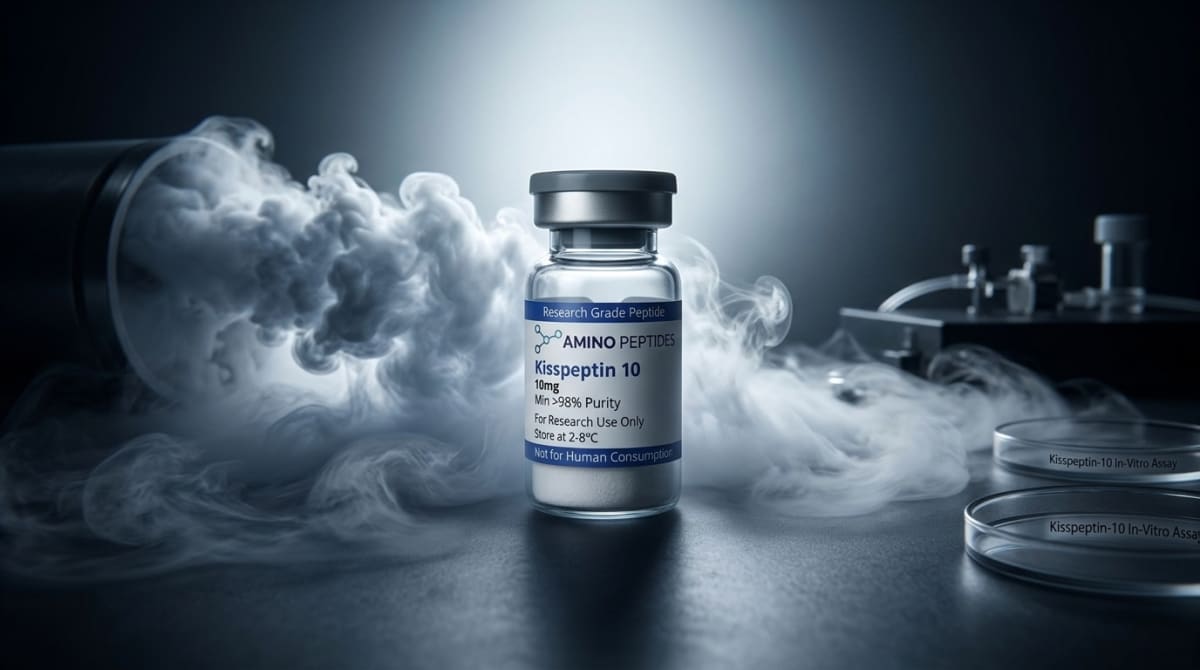
- Kisspeptin-10 is the 10-residue C-terminal fragment of the KiSS-1 peptide, and it is the sequence these assays actually use.
- In plain English, published cellular work watches how this fragment signals GnRH neurons along the reproductive axis.
- Study timelines separate an early receptor-binding window from later changes in hormone-release signalling in the model.
- Repeating those assays still depends on a 99%+ HPLC-verified, freeze-dried vial kept at 2°C–8°C.
The internet is currently flooded with claims about a compound called kisspeptin. Wellness influencers and unregulated forums present it as a biological reset button for women's health. They speak about it in terms of daily routines, physical outcomes, and systemic balance. This narrative is highly compelling, but it completely ignores how scientific research actually works.
When researchers study a compound like Kisspeptin-10, they do not look at whole-body outcomes. They look at isolated cells in plastic dishes. They measure chemical reactions that happen in fractions of a second. The gap between a cellular reaction in a laboratory and a biological outcome in a living organism is enormous. To understand what this peptide actually does, it is necessary to strip away the internet hype and look directly at the in-vitro data.
Kisspeptin is a neuropeptide. In chemical terms, it is a short chain of amino acids. It was originally discovered in 1996 by researchers studying cancer cells in Hershey, Pennsylvania. They named the gene KiSS-1, a nod to the famous chocolate kisses manufactured in the town. Initially, scientists noticed that this protein fragment stopped melanoma cells from spreading in laboratory cultures. It was only years later that researchers identified its role in cellular signalling pathways related to reproduction.
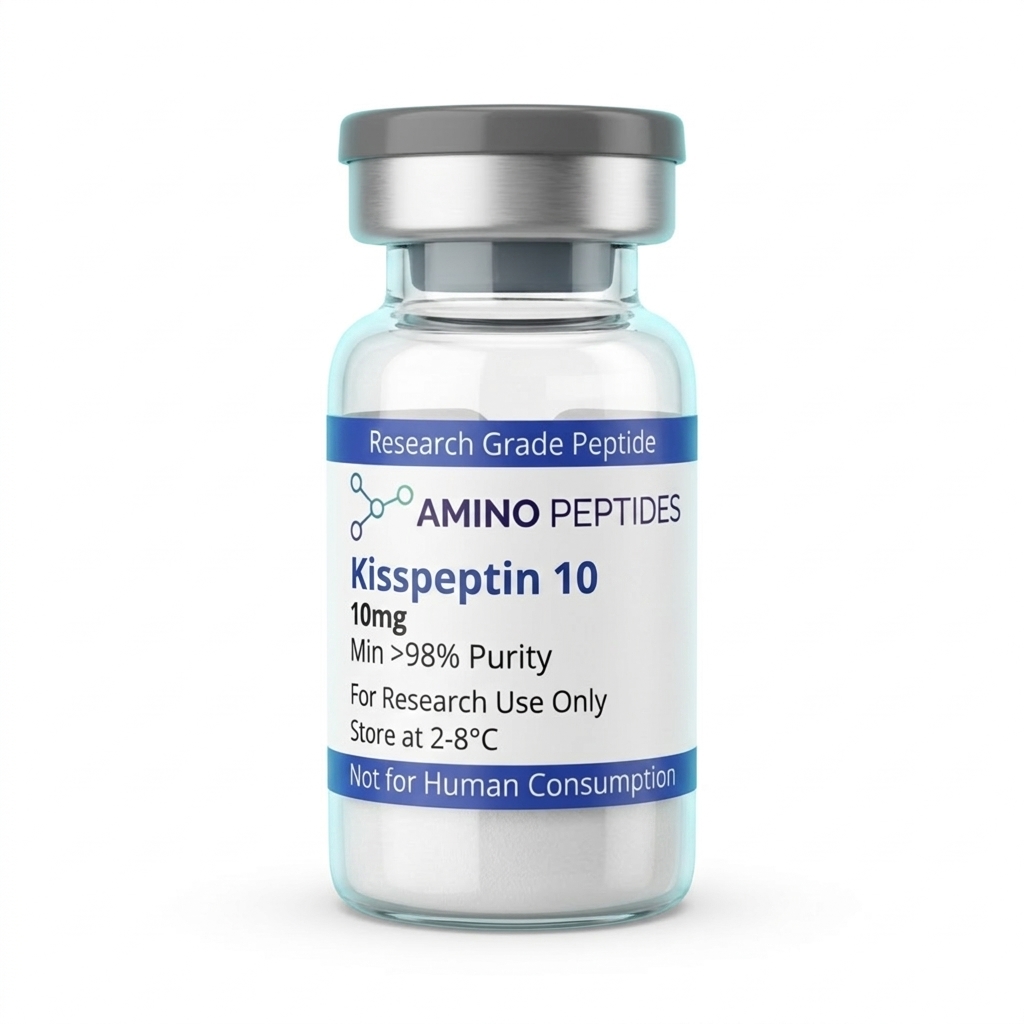
Kisspeptin 10 Peptide
From £33
Supplied as a sealed freeze-dried vial (stable 12–24 months at 2°C–8°C in a standard refrigerator).
Shop Kisspeptin 10 Peptide →In a controlled laboratory environment, kisspeptin acts as a chemical messenger. It binds to a specific receptor on the surface of cells, known as KISS1R or GPR54. When the peptide connects with this receptor, it triggers a cascade of events inside the cell. This is the reality of peptide research: it is a study of molecular mechanics, not a guide to personal wellness. The viral claims circulating online take these microscopic, highly controlled cellular events and inflate them into broad, unverified promises.
Timeline & Results: Fact vs Fiction
Internet claims suggest that kisspeptin offers a rapid, predictable reset for hormonal systems. Forums are filled with timelines detailing how quickly a person might 'feel' the effects or see physical changes. These claims imply that the compound works like a simple switch, turning biological functions on and keeping them running smoothly.
However, under sterile laboratory conditions, the mechanism reveals a completely different reality. The timeline of kisspeptin activity in vitro is measured in minutes, not days or weeks. When scientists apply the peptide to a culture of isolated cells, the initial reaction is indeed rapid. Within one to two minutes, the peptide locates the KISS1R receptors and binds to them. By minute five, the cell experiences a massive influx of calcium ions, signalling a peak in chemical activity.
But this activity does not last. The internet narrative assumes that continuous presence of the peptide means continuous biological benefit. The in-vitro data shows the exact opposite. By minute thirty of continuous exposure, the cells begin to shut down their response. The receptors on the surface of the cell physically retreat inside the cell membrane. This process is known as receptor internalisation or down-regulation.
Reconstitution calculator
Choose a vial mass and a bacteriostatic reconstitution solution volume. The figure is the resulting concentration.
Concentration: 2.50 mg/mL
Per 0.01mL (10µL): 25.0 mcg
Open the full calculatorBacteriostatic reconstitution solutionBy the twenty-four-hour mark in a laboratory assay, the cells are often completely desensitised. Even if more of the peptide is introduced to the petri dish, the cells will not react. They have exhausted their signalling capacity. The viral claim of a 'sustained hormonal reset' completely ignores this fundamental chemical reality. In a laboratory, continuous exposure leads to cellular silence, not sustained activity. Translating a five-minute chemical spike in a petri dish into a long-term bodily outcome is scientifically invalid.
Stacking & Synergies: Fact vs Fiction
Another prevalent biohacker claim is the concept of 'stacking'. Internet forums frequently advise combining kisspeptin with other peptides or compounds to create a synergistic, super-charged effect. The logic presented is simple: if one compound does something beneficial, adding a second compound will multiply the results. This approach regards complex biochemistry like mixing ingredients in a recipe.
When researchers examine peptide combinations in laboratory peptide research, the results show molecular chaos rather than predictable synergy. Peptides are incredibly fragile molecules. They are held together by delicate peptide bonds that are highly sensitive to changes in their environment. When scientists prepare these compounds for study, they must use a specific bacteriostatic reconstitution solution to maintain the correct pH and prevent bacterial contamination.
If multiple peptides are mixed together in the same reconstitution solvent, they do not simply work side-by-side. They interact. They can alter the pH of the solution, causing the delicate amino acid chains to unfold or break apart. One peptide may degrade the other before it ever reaches a cell culture. In vitro assays demonstrate that forcing different peptides into the same environment often leads to competitive binding, where they block each other from attaching to cellular receptors.
Furthermore, when scientists analyse these combinations using mass spectrometry, they frequently observe the formation of unintended byproducts. The peptides break down into smaller, inactive fragments. The internet claim that stacking creates a clean, predictable synergy is a fiction. The laboratory reality is that mixing uncharacterised compounds introduces massive, unpredictable variables that destroy the integrity of the research.
Side Effects & Safety: Fact vs Fiction
The most dangerous internet claim regarding kisspeptin is the assertion of absolute safety. Because it is a sequence of amino acids that mimics a naturally occurring protein, biohackers often label it as 'natural' and therefore harmless. Online discussions frequently dismiss the potential for negative outcomes, focusing entirely on the hypothetical benefits.
In a controlled cellular environment, the data tells a starkly different story. As mentioned earlier, continuous exposure to kisspeptin causes receptor down-regulation. But the cellular consequences go further than simply ignoring the signal. When cells in a laboratory culture are repeatedly bombarded with high concentrations of a signalling peptide, it causes cellular stress.
In-vitro studies show that overstimulation of the KISS1R pathway can lead to abnormal cellular behaviour. The internal machinery of the cell becomes exhausted trying to process the constant influx of calcium ions. In some laboratory models, this prolonged chemical stress triggers apoptosis, which is the programmed death of the cell. The cell effectively dismantles itself because the chemical environment has become too hostile to maintain normal function.
A laboratory is a strictly controlled environment. Scientists control the exact temperature, the pH of the culture medium, the specific cell line being used, and the precise concentration of the peptide. Even with all these controls, cellular stress and desensitisation occur. Unregulated application introduces massive unknown variables. Without the sterile controls of a laboratory, the risk of degradation, contamination, and unpredictable cellular responses increases exponentially. Authentic scientific exploration requires strictly controlled, non-human environments precisely because the variables are so volatile.
Conclusion: The Limits of In-Vitro Data
The surge of interest in kisspeptin highlights a common problem in the modern wellness landscape: the rapid translation of preliminary laboratory data into consumer marketing. The internet takes a complex, fragile molecule that causes brief calcium spikes in isolated cells and rebrands it as a lifestyle solution.
The rigorous reality of scientific research is much slower and much more cautious. Kisspeptin remains a fascinating subject for in-vitro study. It allows researchers to map out the intricate signalling pathways that govern cellular communication. However, observing a chemical reaction in a petri dish is not the same as understanding how a compound behaves in a complex biological system. The data is clear: kisspeptin is a powerful chemical messenger in a laboratory setting, but its mechanisms are transient, easily disrupted, and strictly limited to the cellular level.
Frequently Asked Questions (In-Vitro Research Focus)
How is the stability of kisspeptin measured in a laboratory setting?
Scientists use a technique called High-Performance Liquid Chromatography (HPLC). This process pushes the peptide solution through a column under high pressure, separating the molecules based on their chemical properties. By analysing the resulting data, researchers can determine exactly how much of the peptide remains intact and how much has degraded into useless fragments over time.
What happens to KISS1R receptors during continuous peptide exposure?
In-vitro assays show that continuous exposure leads to receptor internalisation. The cell membrane physically folds inward, pulling the KISS1R receptors inside the cell where the peptide can no longer reach them. This is a protective mechanism that stops the cell from being overstimulated by constant chemical signals.
Why is a bacteriostatic reconstitution solution required for laboratory assays?
Peptides are highly susceptible to bacterial contamination and environmental degradation. A bacteriostatic reconstitution solution contains a specific agent, usually benzyl alcohol, which prevents bacteria from multiplying in the vial. It also provides a stable pH environment, which helps to preserve the fragile peptide bonds long enough for the researchers to conduct their cellular assays.
Scientific Bibliography

- Kotani, M., Detheux, M., Vandenbogaerde, A., Communi, D., Vanderwinden, J. M., Le Poul, E., Brézillon, S., Tyldesley, R., Suarez-Huerta, N., Vandeput, F., Blanpain, C., Schiffmann, S. N., Vassart, G., & Parmentier, M. (2001). The metastasis suppressor gene KiSS-1 encodes kisspeptins, the natural ligands of the orphan G protein-coupled receptor GPR54. Journal of Biological Chemistry. View published research
- Seminara, S. B., Messager, S., Chatzidaki, E. E., Thresher, R. R., Acierno, J. S., Shagoury, J. K., Bo-Abbas, Y., Kuohung, W., Schwinof, K. M., Hendrick, A. G., Zahn, D., Dixon, J., Kaiser, U. B., Slaugenhaupt, S. A., Gusella, J. F., O'Rahilly, S., Carlton, M. B., Crowley, W. F., Aparicio, S. A., & Colledge, W. H. (2003). The GPR54 gene as a regulator of puberty. New England Journal of Medicine. View published research
- Roa, J., Aguilar, E., Dieguez, C., Pinilla, L., & Tena-Sempere, M. (2008). Kisspeptins and the control of reproduction. Neuroscience. View published research
- Oakley, A. E., Clifton, D. K., & Steiner, R. A. (2009). Kisspeptin signaling in the brain. Endocrine Reviews. View published research
⚠️ Research Use Only Disclaimer: All peptides and compounds are sold strictly for in-vitro laboratory research purposes only. Not intended for human or veterinary use, not a dietary supplement, and not approved to diagnose, treat, cure, or prevent any disease or condition. For use by qualified researchers in suitably equipped laboratory environments only. Amino Peptides Ltd operates in full compliance with UK MHRA regulations and applicable EU research chemical guidelines.