
The Frontiers of Neuro-Optimisation: Research Reagents for Neurogenesis and Synaptic Plasticity
26th Mar 2026
In the landscape of modern neuroscience, the quest for cognitive enhancement has moved beyond simple stimulants. While traditional nootropics often rely on the temporary modulation of neurotransmitter levels—frequently leading to "crashing" or receptor downregulation—a specialised class of signalling molecules known as Neuropeptides offers a more regenerative approach.
At
1. The Biomechanics of Neurotrophic Support
The most profound area of neuro-research involves Neurotrophic factors, particularly Brain-Derived Neurotrophic Factor (BDNF). This protein acts as the primary "fertiliser" for the brain, facilitating the survival of existing neurones and encouraging the growth and differentiation of new neurones and synapses.
Semax and ADAMAX: The ACTH Analogues
Research models indicate that Semax provides a multi-pronged approach to neuro-optimisation:
-
Neuroprotection: It has been shown to protect neurones from hypoxia and oxidative stress by stabilising mitochondrial function.
-
Synaptic Plasticity: By increasing BDNF levels, it enhances Long-Term Potentiation (LTP), which is the cellular basis for memory formation and learning acquisition.
-
ADAMAX Evolution: ADAMAX is an acetylated and amidated version of Semax. The addition of the adamantyl group increases its stability and lipophilicity, allowing for enhanced crossing of the blood-brain barrier (BBB) and a more prolonged duration of action in research settings.
Research Insight: Studies published in the Russian Journal of Genetics demonstrate that Semax regulates the expression of genes related to the immune system and vascular formation during focal ischemia, making it a cornerstone for stroke recovery research.
2. Anxiolytic Modulation: The Selank Mechanism
While Semax focuses on "upregulation,"
The GABAergic System and Enkephalins
Unlike conventional anxiolytics (such as benzodiazepines) which act as positive allosteric modulators of GABA-A receptors and often cause sedation or dependency, Selank modulates the GABAergic system more subtly. In laboratory observations, it has been noted to:
-
Regulate Enkephalins: Selank inhibits the enzymes that break down enkephalins (natural opioids), effectively extending the body's natural stress-response mechanism.
-
Antiviral Activity: Intriguingly, research suggests Selank possesses immunomodulatory properties, affecting the expression of Interleukin-6 (IL-6) and influencing the cytokine balance.
For researchers, Selank represents an "alert calm." In animal models, it reduces anxiety-like behaviours without compromising locomotor activity or cognitive processing, providing a unique look into the neutralisation of stress-induced damage to the hippocampus.
3. Epigenetic Bioregulation: The Khavinson Peptides
Perhaps the most futuristic vector of peptide research involves the work of Professor Vladimir Khavinson at the St. Petersburg Institute of Bioregulation and Gerontology. These short-chain peptides, often only 2 to 4 amino acids long, are researched for their Epigenetic mechanism.
Pinealon: The Circadian Regulator
-
Correct circadian rhythm disruptions and sleep-wake cycles.
-
Improve melatonin synthesis through gene expression.
-
Protect against "brain fog" associated with ageing and chronic sleep deprivation.
Epitalon: The Telomerase Activator
The mathematical model for telomere attrition is often represented as:
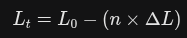
Where 'Lt' is the current telomere length, 'L0' is the initial length, 'ᥒ' is the number of cell divisions, and 'ΔL' is the loss per division. Epitalon is researched for its ability to trigger Telomerase activation, potentially elongating telomeres and extending cellular lifespan in neuronal tissues.
4. Advanced Research Protocols & Synergies
Researchers often look for synergistic effects by combining these reagents to simulate complex physiological states or to mitigate the side effects of individual compounds.
The "Cognitive Restoration" Stack
A prevalent protocol in neuro-research involves the concurrent administration of Semax and Selank. This dual-vector approach investigates the synergy between:
-
Stimulation: BDNF and Dopamine modulation from Semax, which drives focus and mental clarity.
-
Stabilisation: GABA and Enkephalin modulation from Selank, which prevents the "jitteriness" associated with traditional stimulants.
The goal is to reach a "flow state"—a model of high-functioning focus where the brain is highly plastic but protected from Excitotoxicity (cell death caused by over-excitation).
PE-22-28: The TREK-1 Antagonist
Moving away from traditional monoaminergic models, PE-22-28 is a derivative of the protein Spadin. It acts as an antagonist of the TREK-1 potassium channel. By inhibiting this channel, it induces cortical excitability and rapid neurogenesis in the hippocampus. This is a vital tool for studying "Treatment-Resistant Depression" pathways that do not respond to standard SSRIs.
5. Comparative Analysis: Peptides vs. Traditional Nootropics
| Feature | Traditional Nootropics (Caffeine/Racetams) | Neuropeptides (Semax/Selank) |
| Mechanism | Neurotransmitter reuptake/release | Gene expression & BDNF upregulation |
| Duration | Acute/Short-term | Cumulative/Long-term structural change |
| Side Effects | Potential "crash" or tolerance | Minimal reported excitotoxicity |
| Research Goal | Temporary performance boost | Neuroprotection and restoration |
6. Quality Assurance: The Scientific Standard
At Amino Peptides Ltd, we understand that in neurological research, the margin for error is zero. The brain’s sensitivity requires reagents of the highest calibre. Our commitment to quality is backed by rigorous testing protocols:
-
HPLC Verification: All batches undergo High-Performance Liquid Chromatography to ensure >98% Purity. This ensures that the "signal" sent to the neurone is not clouded by impurities.
-
Mass Spectrometry: We utilise MS to confirm the sequence integrity and molecular weight of complex analogues like ADAMAX and
BPC-157 -
LC-MS Certified (Mass Identification): While HPLC tells us a substance is pure, Liquid Chromatography-Mass Spectrometry (LC-MS) tells us exactly what that substance is. By measuring the mass-to-charge ratio of the molecules, LC-MS provides a "molecular fingerprint."
-
Sequence Integrity: Confirms the delicate structures of complex analogues like ADAMAX.
-
Stability Testing: Ensures that the peptide has not degraded into smaller, inactive fragments.
-
Certification: Every batch is LC-MS certified to provide researchers with total confidence in their experimental results.
While HPLC tells us a substance is pure, Liquid Chromatography-Mass Spectrometry (LC-MS) tells us exactly what that substance is. By measuring the mass-to-charge ratio of the molecules, LC-MS provides a "molecular fingerprint."
-
Sequence Integrity: Confirms the delicate structures of complex analogues like ADAMAX.
-
Stability Testing: Ensures that the peptide has not degraded into smaller, inactive fragments.
-
Certification: Every batch is LC-MS certified to provide researchers with total confidence in their experimental results.
-
7. Published Scientific References
For institutional researchers and independent scientists seeking primary literature on the mechanisms described, we recommend the following:
-
BDNF Regulation: Russian Journal of Genetics.
“Semax, an Analogue of ACTH(4-10) with Cognitive Effects, Regulates BDNF and NGF Expression.” -
Anxiolytic Action: Fundamental & Clinical Pharmacology.
“Selank, a heptapeptide analog of tuftsin, has anxiolytic activity.” -
Telomere Elongation: Neuro Endocrinology Letters.
“Epithalon peptide induces telomerase activity and telomere elongation.” -
TREK-1 Mechanism: Journal of Molecular Neuroscience.
“Spadin (PE-22-28) as a new antidepressant: absence of side effects.” -
General Peptide Science: [suspicious link removed].
Final Thoughts for Researchers
The reagents offered in this collection represent the bridge between traditional biology and future cognitive science. Whether investigating the epigenetic potential of Epitalon or the neurotrophic power of Semax, the goal remains the same: understanding the mechanisms that allow the human brain to heal, adapt, and evolve. As we move further into the 21st century, the ability to modulate the central nervous system with precision will remain the most critical frontier of medical science.