
Optimisation of Solid-Phase Peptide Synthesis Strategies for Complex Hydrophobic Sequences
12th Nov 2026
What You Need to Know About Optimisation of solid-phase peptide synthesis strategies for complex hydrophobic sequences
- Researchers explore this topic to understand how automated laboratory methods overcome chain clumping when building water-repelling amino acid sequences.
- The process works by anchoring the first building block to a solid resin bead and adding new amino acids one by one while keeping the growing chain unfolded.
- Published studies observe that combining mild microwave heating, low-density polyethylene glycol resins, and backbone-protecting groups dramatically improves crude purity.
- Standardised laboratory protocols demonstrate that tailored solvent blends prevent premature beta-sheet folding during the deprotection and coupling steps.
How Hydrophobic Peptide Assembly Drives Cellular Energy and Recovery Signalling
The optimisation of solid-phase peptide synthesis strategies for complex hydrophobic sequences directly dictates whether a laboratory-built chain can fold properly to trigger cellular energy and tissue recovery pathways. By preventing water-repelling amino acids from clumping together on the resin bead, chemists ensure the final molecule retains the exact three-dimensional shape required to dock with cell surface receptors.
When curious readers ask what is solid phase peptide synthesis, the simplest comparison is building a beaded necklace while one end is glued to a solid microscopic anchor. In standard solid phase peptide synthesis steps, amino acids are linked one by one from the carboxyl tail to the amino head. Each cycle involves washing away temporary protective caps, snapping the next building block into place, and rinsing the resin clean. This routine works smoothly for water-friendly chains. However, many sequences studied for cellular energy, mitochondrial resilience, and dermal elasticity are heavily loaded with water-hating, or hydrophobic, building blocks such as valine, leucine, isoleucine, and phenylalanine.
During the assembly of these oily stretches, the growing chains start sticking to one another right on the polymer bead. Instead of waving freely in the liquid solvent so the next building block can attach, the chains collapse into tight, tangled beta-sheet mats. Chemists call this premature clumping on-resin aggregation. Once a sequence tangles up, the incoming reagents cannot reach the active end of the chain. The result is a batch riddled with missing links, truncated fragments, and dead-end sequences that fail to activate target receptors in preclinical models.
To overcome this hurdle, modern laboratories focus heavily on the optimisation of solid-phase peptide synthesis strategies for complex hydrophobic sequences. By tweaking the density of the anchor points on the resin, introducing gentle microwave or conductive heating, and slipping temporary kink-inducing groups into the peptide backbone, chemists stop those premature beta-sheets from forming. This keeps the chain open and accessible through every single coupling cycle. In published studies examining cellular recovery and skin matrix remodelling, only fully intact, properly folded hydrophobic peptides can slip into lipid-rich cell membranes and spark the downstream signalling events that researchers want to measure.
This page is not tied to one stocked vial. Start with the bundles hub, BPC-157, or GHK-Cu — each is in stock for next-day UK dispatch.
View published researchObserved Reaction Timelines: Early Coupling Kinetics vs Structural Maturation
In any solid phase peptide synthesis review, time is split into two distinct phases: the rapid chemical minutes required to link amino acids together on the machine, and the longer hours or days needed to observe how those finished sequences behave in preclinical models. Understanding both timelines helps clarify why cutting corners during the assembly phase ruins the later biological readout.
During automated solid phase peptide synthesis, early cycles on a short chain happen quickly. Under standard room-temperature conditions, removing the protective Fmoc cap takes roughly ten to fifteen minutes, while snapping the next amino acid onto the chain takes thirty to sixty minutes. However, once the chain grows past ten or twelve hydrophobic residues, reaction rates slow down dramatically. The tangled chains block incoming reagents, stretching a single coupling step out to several hours with poor results. When laboratories apply elevated temperatures between fifty and ninety degrees Celsius using controlled microwave heating, those sluggish timelines shrink right back down. Deprotection finishes in just one to two minutes, and difficult hydrophobic couplings lock into place within five to ten minutes. This rapid thermal assembly prevents the chain from sitting around long enough to fold into stubborn knots.
Once the completed chain is cleaved from its solid support, purified, and introduced into isolated cell cultures, a second timeline begins. Within the first fifteen to sixty minutes of exposure at a specific study amount, intact hydrophobic sequences interact with lipid bilayers and surface receptors. Early signalling events appear quickly in laboratory models, including rapid shifts in intracellular calcium, phosphorylation of recovery kinases, and immediate spikes in mitochondrial oxygen consumption.
Structural outcomes take much longer to appear on the bench. In fibroblast and myoblast cultures, researchers track gene expression shifts over twelve to twenty-four hours, watching as the initial receptor handshake instructs the cell to build fresh structural proteins. Measurable increases in collagen matrix density, elastin fibre alignment, and full tissue remodelling typically require forty-eight to ninety-six hours of continuous observation. If the initial synthesis suffered from incomplete couplings, these later structural changes simply fail to materialise, because truncated chains degrade early and cannot sustain the long-term signalling required for cellular recovery.
Comparison of Solid-Phase Synthesis Strategies for Hydrophobic Sequences
| Strategy | Primary Mechanism | Target Bottleneck | Observed Laboratory Outcome |
|---|---|---|---|
| Pseudoproline Dipeptides | Introduces a temporary kink in the peptide backbone via oxazolidine rings | Inter-chain beta-sheet aggregation on the resin | Maintains chain solvation and boosts crude yield in published studies |
| PEG-Based Low-Loading Resins | Increases spatial distance between anchored chains and improves swelling | Steric crowding and poor reagent diffusion | Reduces deletion sequences during automated assembly of long chains |
| Microwave-Assisted Coupling | Applies thermal energy to disrupt hydrogen bonding networks | Slow coupling kinetics of bulky hydrophobic residues | Shortens reaction times to minutes while preventing racemisation |
| Chaotropic Solvent Mixtures | Uses polar aprotic blends like NMP and DMSO to solvate buried chains | Resin shrinkage and incomplete Fmoc removal | Restores efficient base penetration during deprotection steps |
| Hmb and Dmb Backbone Protection | Reversibly blocks amide protons from forming hydrogen bonds | Self-association in poly-alanine or beta-branched stretches | Improves solubility of the cleaved crude material for chromatographic analysis |
Complementary Reagent Stacks and Co-Solvent Combinations in Laboratory Models
Just as complementary peptides are often paired in laboratory assays to study overlapping recovery pathways, solid phase peptide synthesis methods rely on smart combinations of resins, coupling activators, and solvent blends working together. No single chemical trick solves severe hydrophobic clumping on its own; success comes from stacking compatible tools during the build and pairing complementary peptides during the biological evaluation.
On the synthesis side, the first critical partnership is between a low-loading resin and a high-swelling solvent system. Standard polystyrene resins pack anchor points tightly together, practically forcing oily chains to bump into their neighbours. Switching to a polyethylene glycol (PEG) hybrid resin with a low measured level of substitution gives each growing chain plenty of breathing room. When chemists pair these spacious PEG resins with binary solvent mixtures—such as combining dimethylformamide (DMF) with N-methyl-2-pyrrolidone (NMP) or dimethyl sulfoxide (DMSO)—the resin swells up like a sponge. This liquid expansion pushes the chains apart so coupling reagents can glide in without resistance.
A second chemical stack involves pairing aggressive coupling activators like Oxyma Pure and DIC with temporary backbone modifiers. By inserting pseudoproline dipeptides or dimethoxybenzyl (Dmb) groups every five or six residues, chemists put a temporary geometric kink in the peptide spine. This kink physically blocks the chain from flattening into a sticky beta-sheet, allowing the activator stack to drive reaction yields above ninety-nine percent per step.
Once these difficult hydrophobic sequences are successfully isolated, researchers frequently evaluate them alongside water-soluble signalling peptides in preclinical models. For example, a hydrophobic membrane-penetrating sequence designed to support mitochondrial energy may be tested in a protocol ratio alongside a hydrophilic copper-binding tripeptide such as GHK-Cu, or a structural fragment like BPC-157. While the hydrophobic sequence anchors into lipid-rich compartments to stabilise cellular energy production, its water-loving partner circulates freely in the surrounding fluid to encourage extracellular matrix repair and collagen deposition. Studying these distinct classes together allows laboratory models to capture both intracellular energy recovery and external tissue remodelling at the same time.
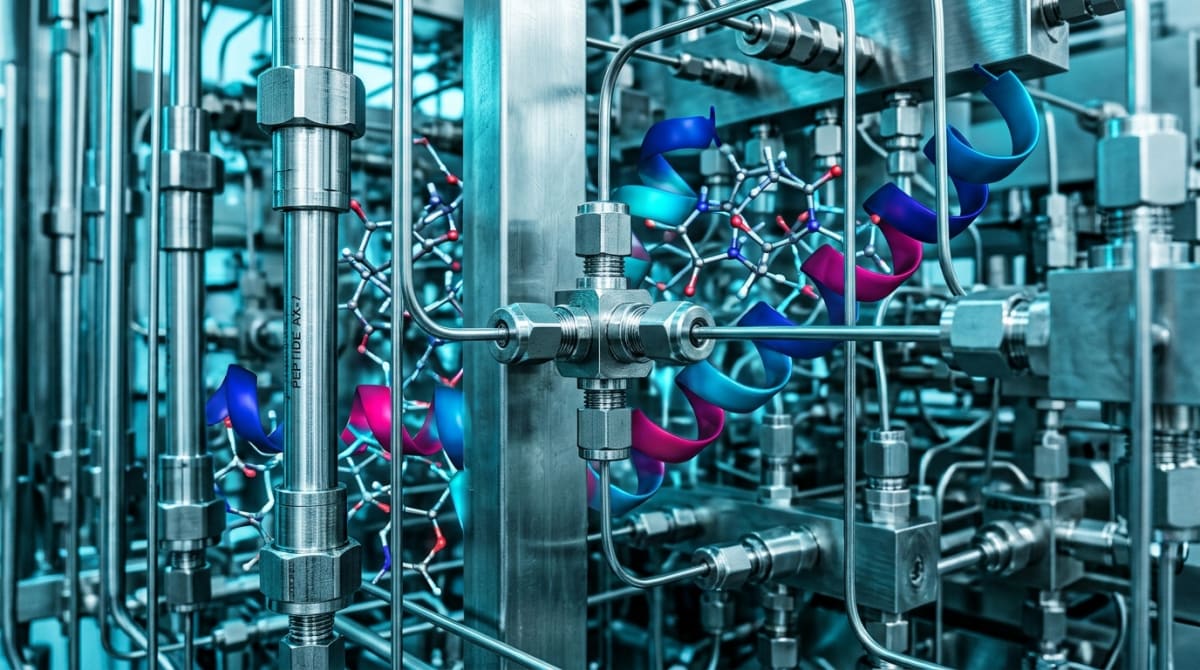
Figure 1: Optimisation of solid-phase peptide synthesis strategies for complex hydrophobic sequences
Verifying 99%+ HPLC Purity, TFA Cleavage, and Cold Storage Stability
Even with the cleverest optimisation of solid-phase peptide synthesis strategies for complex hydrophobic sequences, the raw material washed off a resin bed is never ready for immediate laboratory use. Hydrophobic chains are notorious for hiding truncated deletion sequences that look almost identical to the target peptide, making strict analytical verification the only way to guarantee reliable bench data.
After the final amino acid is attached, chemists use concentrated trifluoroacetic acid (TFA) alongside radical scavengers to cleave the peptide from the resin and strip away all temporary side-chain protectors. Because hydrophobic peptides naturally repel water, purifying them via reverse-phase High-Performance Liquid Chromatography (RP-HPLC) requires specialised columns, warm column ovens, and alternative mobile phases like isopropanol blended with acetonitrile. A trustworthy research vial must reach at least 99%+ purity verified by both HPLC and mass spectrometry. If a poorly purified batch sits at 85% or 90% purity, that remaining ten percent is not harmless filler—it is a soup of one-residue-short deletion fragments. In cell culture assays, these nearly identical fragments compete for the exact same receptors, jamming the biological lock without turning the key and ruining the concentration readout.
Equally important is the removal of residual TFA salts left behind from the cleavage bath. Free TFA clings tightly to positively charged spots on the peptide chain. If left in the vial, excess TFA lowers the pH of the assay medium, damages delicate cell membranes, and skews metabolic proliferation counts. Premium analytical preparation swaps harsh TFA counter-ions for gentle acetate or hydrochloride salts before freeze-drying the powder into a crisp cake.
Once a verified 99%+ pure lyophilised vial arrives at the laboratory, proper cold storage keeps the sequence intact. Dry vials should be stored in a dedicated freezer at minus twenty degrees Celsius to prevent slow oxidation. When the powder is mixed with a bacteriostatic reconstitution solution or a specialized co-solvent buffer for bench work, the liquid vial must be kept in a refrigerator between 2°C and 8°C. Hydrophobic sequences dissolved in liquid can slowly self-assemble into cloudy gels if left on a warm benchtop, so keeping reconstituted solutions cold and avoiding repeated freeze-thaw cycles preserves the exact monomer concentration required for reproducible experiments.
Frequently Asked Questions
Why do researchers search for solid-phase peptide synthesis methods for hydrophobic sequences?
Researchers search for these methods because water-repelling amino acid chains easily clump together on the solid resin, stopping the build process early. Published studies show that chemists must optimise solvents, heat, and resin swelling to obtain clean, full-length chains for laboratory models without losing material during assembly.
What is the typical timeline for solid-phase peptide synthesis steps in the lab?
An automated solid-phase synthesis run takes roughly 4 to 24 hours, depending on chain length and coupling difficulty. After the main assembly, chemists spend another 2 to 3 days cleaving the crude sequence from the resin, freeze-drying the powder, and running purification checks before laboratory studies begin.
What does stacking strategies mean when building complex hydrophobic sequences?
Stacking synthesis strategies means combining multiple technical fixes in one protocol rather than relying on a single change. Published studies show that pairing microwave heating with low-loading resins and pseudoproline building blocks stops beta-sheet clumping far better than using any single method alone during difficult assembly runs.
How do purity and fridge storage affect complex hydrophobic peptides after synthesis?
High purity above 95 percent and cold storage are essential to stop hydrophobic chains from clumping into useless gels. Chemists store freeze-dried powders at minus 20 degrees Celsius, and once mixed with a bacteriostatic reconstitution solution or organic solvent, they keep samples at 4 degrees Celsius for short-term assays.
Bibliography
- Merrifield RB. Solid Phase Peptide Synthesis. I. The Synthesis of a Tetrapeptide. Journal of the American Chemical Society. 1963;85(14):2149-2154. View published research
- Coin I, Beyermann M, Bienert M. Solid-phase peptide synthesis: from standard procedures to the synthesis of difficult sequences. Nature Protocols. 2007;2(12):3247-3256. View published research
- Behrendt R, White P, Offer J. Advances in Fmoc solid-phase peptide synthesis. Journal of Peptide Science. 2016;22(1):4-27. View published research
- Pedersen SL, Tofteng AP, Malik L, Jensen KJ. Microwave heating in solid-phase peptide synthesis. Chemical Society Reviews. 2012;41(5):1826-1844. View published research
- Isidro-Llobet A, Alvarez M, Albericio F. Amino Acid-Protecting Groups. Chemical Reviews. 2009;109(6):2455-2504. View published research
⚠️ Research Use Only Disclaimer: All peptides and compounds are sold strictly for in-vitro laboratory research purposes only. Not intended for human or veterinary use, not a dietary supplement, and not approved to diagnose, treat, cure, or prevent any disease or condition. For use by qualified researchers in suitably equipped laboratory environments only. Amino Peptides Ltd operates in full compliance with UK MHRA regulations and applicable EU research chemical guidelines.