
Optimising the HPG Axis: Advanced Reagents for Neuroendocrine and Gonadal Research
18th Mar 2026
The study of the Hypothalamic-Pituitary-Gonadal (HPG) Axis represents one of the most dynamic frontiers in modern endocrinology. Unlike traditional exogenous hormone replacement, which often results in a "shutdown" of natural systems, current research focuses on secretagogues and mimetics. These compounds are designed to restart, maintain, or optimise the body’s endogenous signalling pathways.
This guide explores the specialised selection of peptides and glycoprotein hormones utilised by researchers to investigate the complex feedback loops governing reproduction, sexual behaviour, and adrenal function.
The Master Regulator: The Kisspeptin Pathway (The Trigger)
At the apex of the HPG axis sits Kisspeptin-10, widely referred to in literature as the "Master Switch" of the reproductive system. Before the discovery of Kisspeptin, researchers focused primarily on GnRH; however, we now know that Kisspeptin is the upstream signal that tells the hypothalamus to release GnRH in the first place.
-
Mechanism of Action: Kisspeptin acts directly on GPR54 receptors in the hypothalamus.
-
Research Implications: In laboratory models, Kisspeptin-10 triggers a natural, pulsatile release of Luteinising Hormone (LH) and Follicle-Stimulating Hormone (FSH). This is a critical area of study for fertility restoration, as it avoids the "flatline" effect of synthetic hormones by preserving the body's natural rhythm.
Gonadal Maintenance: The HCG Pathway (The Engine)
While Kisspeptin works at the "command centre", Human Chorionic Gonadotropin (HCG) works directly at the "factory" level. HCG is a complex glycoprotein that shares a nearly identical alpha subunit with LH, allowing it to "trick" the testes into staying active.
The Role of the Leydig Cell
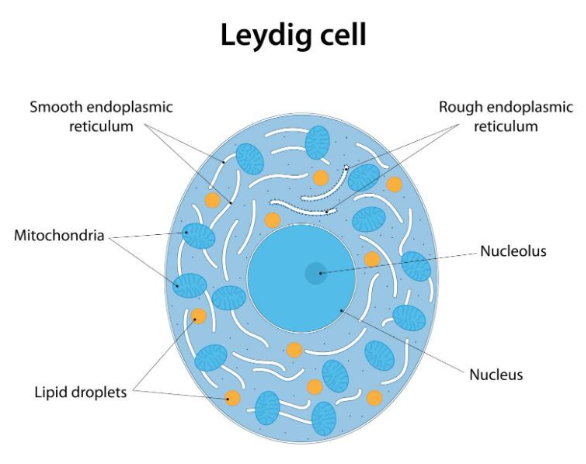
As seen in the provided cellular diagram, the Leydig cell is a specialised unit packed with smooth endoplasmic reticulum and lipid droplets—essential machinery for converting cholesterol into testosterone.
-
Mimicry: HCG acts as a surrogate for LH, binding to the LH/hCG receptors on Leydig cells.
-
Preventing Atrophy: In research involving exogenous steroid administration (which suppresses the pituitary), HCG acts as a "keep-alive" signal. It maintains intratesticular testosterone levels and prevents the physical atrophy of the gonads, providing a vital tool for studying hormonal recovery protocols.
CNS-Driven Arousal: The PT-141 Pathway (The Drive)
Traditional treatments for sexual dysfunction focus on the vascular system (blood flow). However, PT-141 (Bremelanotide) represents a paradigm shift by targeting the Central Nervous System (CNS).
-
The Melanocortin Connection: PT-141 is a non-selective agonist of the MC3R and MC4R receptors located in the hypothalamus.
-
Behavioural Research: Scientists use PT-141 to distinguish between "appetitive behaviour" (the psychological desire or "drive") and "consummatory behaviour" (the physical act). This makes it a unique reagent for studying Hypoactive Sexual Desire Disorder (HSDD) and the synergy between melanocortin signalling and dopamine pathways.
Adrenal Regulation: The ACTH Pathway
Beyond the gonads, the Hypothalamic-Pituitary-Adrenal (HPA) Axis is essential for managing the stress response and metabolic energy. ACTH 1-39 (Adrenocorticotropic Hormone) is the primary peptide governing this axis.
-
Function: ACTH stimulates the adrenal cortex to synthesise and secrete cortisol and various androgens.
-
Research Focus: It is an indispensable tool for investigating adrenal insufficiency and the mitochondrial energy metabolism within the adrenal glands, providing insight into how the body manages chronic stress and systemic inflammation.
Comparative Research Vectors
| Compound | Target Site | Primary Research Goal | Key Mechanism |
| Kisspeptin-10 | Hypothalamus | Upstream Restart | Stimulates GnRH Pulse |
| HCG | Leydig Cells | Gonadal Maintenance | LH Receptor Agonism |
| PT-141 | CNS / Hypothalamus | Libido & Drive | MC3R/MC4R Activation |
| ACTH 1-39 | Adrenal Cortex | Stress Response | Cortisol/Androgen Release |
Quality Assurance: Why Purity is Paramount
In neuroendocrine research, dose-dependency is everything. If a reagent's purity is compromised, researchers risk receptor desensitisation (downregulation) or off-target effects that can skew data.
-
HPLC Verification: We ensure >98% purity to maintain the integrity of pulsatile simulation.
-
Cold Chain Integrity: Complex glycoproteins like HCG and ACTH are fragile. Lyophilised (freeze-dried) formats are utilised to ensure the tertiary structure remains intact during transit.
-
Mass Spectrometry: This confirms the exact molecular weight and amino acid sequence, ensuring that the "Master Switch" you are researching is exactly what it claims to be.
Primary Scientific References
-
The Journal of Clinical Investigation:
Kisspeptin-10 stimulates LH secretion in men. -
Annals of the New York Academy of Sciences:
Bremelanotide (PT-141) for the treatment of sexual dysfunction. -
Endocrinology:
Regulation of Leydig cell function by HCG. -
Frontiers in Endocrinology:
The role of ACTH in adrenal regulation.