
Peptide Calculator Dose: What you really need to Know
4th Sep 2026
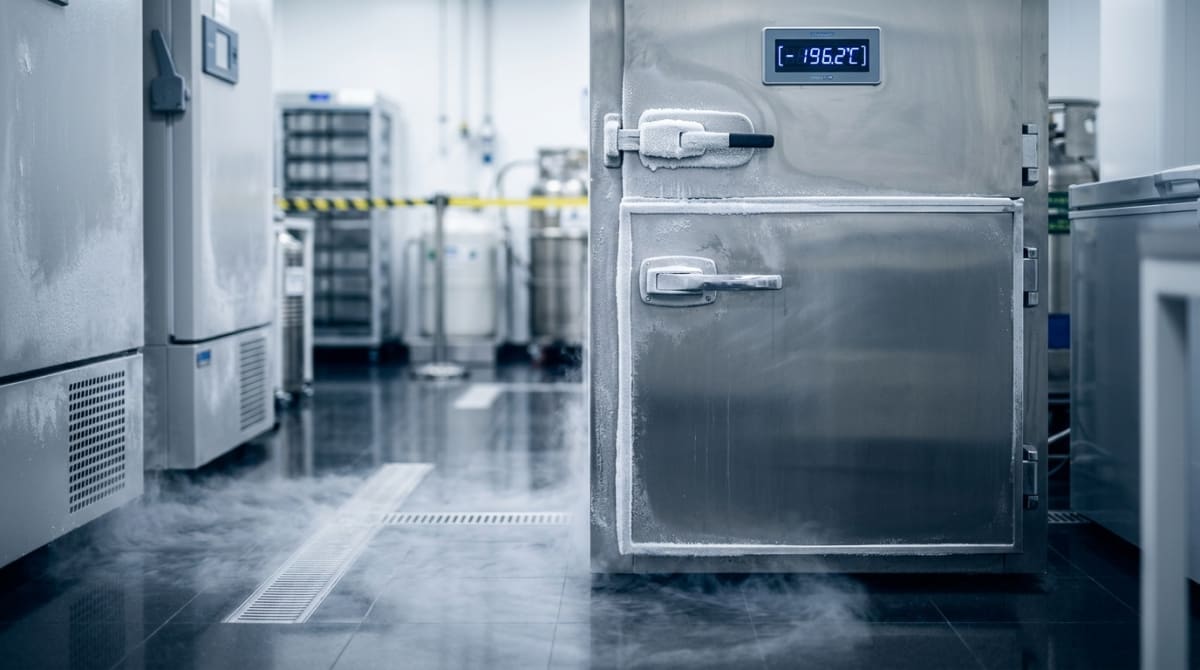
The internet is full of shortcuts. When people search for a peptide calculator dose, they are usually looking for a quick, automated way to mix complex chemicals on a kitchen counter. Online forums promise that finding a 'peptide calculator simple peptide dosage' tool will solve all mathematical problems. They claim that mixing a lyophilised (freeze-dried) powder with a liquid is as simple as following a baking recipe. However, under strict laboratory conditions, the reality of handling these fragile molecular chains is entirely different.
Research Reagent
Many pop-culture trends rely on untested compounds. Eliminate variables with our certified in-vitro reagents.
View Reagent Profile ›In a professional setting, researchers do not use basic internet apps to guess liquid volumes. They calculate molarity. They measure exactly how many molecules of a specific compound will interact with isolated cells in a petri dish. When an internet user talks about a 'dose', they are referring to a physical amount introduced to a biological system. When a scientist calculates a concentration, they are measuring microgrammes per millilitre to observe if a cell culture reacts under a microscope. The two concepts are worlds apart, and confusing them leads to ruined experiments and destroyed data.
This article will deconstruct the popular myths surrounding online measurement tools. By examining the strict protocols used in in-vitro (test tube) environments, we can separate the viral hype from the actual chemistry. The laboratory requires absolute control over every variable, a standard that cannot be replicated outside a sterile facility.
The Illusion of Simplicity: Internet Claims vs. Laboratory Reality
Biohacking communities often share links to tools claiming to provide a 'peptide calculator accurate peptide dosage made easy'. The premise is that if you know the amount of powder in a vial and the amount of liquid you add, the calculator will tell you exactly how much liquid to draw up in a measuring device. This creates a dangerous illusion of safety and precision.
Under sterile laboratory conditions, calculating concentration is not just about liquid volume. It requires an understanding of molecular weight. Different compounds have different sizes and masses. One milligramme of a short-chain compound does not contain the same number of molecules as one milligramme of a long-chain compound. Think of it like comparing a kilogramme of feathers to a kilogramme of lead; the weight is the same, but the volume and number of items differ drastically.
When researchers prepare research reagents for an assay, they must account for the specific molecular mass of the compound. A crude online calculator ignores this entirely. It assumes all powders are identical. In a cellular assay, applying a volume based on a flawed calculation can mean applying twice as many molecules as intended, instantly ruining the experiment.
- Internet Method: Inputting total milligrams and total millilitres into a web form to get a generic volume output.
- Laboratory Method: Calculating the exact molar mass of the specific sequence to determine the required micromolar concentration for a specific cell line.
- The Result of Error: In a petri dish, an incorrect concentration leads to osmotic stress, causing the cells to rupture and die before any data can be collected.
Before any compound can be introduced to a cell culture, it must be reconstituted. This means turning the stable, freeze-dried powder back into a liquid state. Researchers use a specific bacteriostatic reconstitution solution for this process. This solvent contains a small amount of alcohol, which prevents bacterial growth in the vial during the weeks an experiment might run.
The physical act of mixing is delicate. The bonds holding the amino acids together are fragile. If the bacteriostatic reconstitution solution is forced into the vial too quickly, the physical turbulence can shear the molecules apart, rendering the chemical useless. Professional laboratories use calibrated equipment to introduce the solvent slowly down the side of the glass. While tools like a Peptide Reconstitution Calculator can assist researchers in determining the correct volume of solvent to achieve a specific stock concentration, they are strictly designed for laboratory planning, not for determining human application.
Timeline & Results: Deconstructing the Hype
A common question on internet forums is 'how quickly do peptides work'. This search intent reveals a fundamental misunderstanding of how these chemicals operate. Biohackers expect immediate, visible physical changes. They assume that once a liquid is mixed and applied, the results will be instantaneous. The laboratory data shows a completely different timeline.
In a sterile cell culture, the initial interaction happens very fast. A compound might bind to a cellular receptor within minutes of being introduced to the petri dish. However, binding to a receptor is only the first step. Observing a structural change in the cell—such as the production of a new protein or the acceleration of cell division—can take 24 to 72 hours of constant, controlled exposure.
Researchers must maintain the cell culture at a precise temperature (usually 37 degrees Celsius) and a specific pH level for days to observe these changes. If the concentration drops because the compound degrades, the experiment fails. Therefore, when people ask 'are peptides worth it', the scientific answer is strictly limited to their value in gathering data. Yes, they are highly valuable for understanding cellular mechanics and molecular biology. But translating a 48-hour controlled cell culture result into an expectation for an unregulated, whole-body outcome is scientifically invalid.
- Receptor Binding: Occurs in minutes under in-vitro conditions.
- Signal Transduction: The internal cellular messaging system takes hours to process the chemical signal.
- Observable Change: Cellular proliferation or protein synthesis requires 24 to 72 hours of stable environmental conditions.
Stacking & Synergies: The Danger of Unverified Protocols
Another major trend is the concept of 'stacking'. This involves mixing multiple different compounds together in the hope that they will work synergistically. Users often search for a 'peptide dosing calculator peptide university' to find guides on how to combine these chemicals. These unverified online sources present stacking as a simple hack to multiply results.
In a controlled laboratory, mixing two highly reactive chemical chains is a complex and dangerous event. Amino acid chains carry electrical charges. When you place two different compounds into the same bacteriostatic reconstitution solution, they do not just sit peacefully side-by-side. They interact.
If a researcher mixes Compound A and Compound B without strict chemical analysis, the molecules might bind to each other instead of the target cells. This creates an entirely new, untested molecule. Furthermore, different compounds require different pH levels to remain stable. Mixing an acidic compound with an alkaline compound will cause immediate degradation. The liquid may turn cloudy, indicating that the chemicals have precipitated out of the solution and are now destroyed.
In-vitro data shows that 'stacking' without rigorous mass spectrometry and stability testing almost always leads to chemical failure. The cells in the petri dish receive a degraded, useless mixture rather than a precise scientific reagent. The idea that a simple online calculator can account for complex molecular cross-reactions is a complete fiction.
Side Effects & Safety: Cellular Toxicity in the Laboratory
The most critical flaw in the internet's approach to these chemicals is the complete disregard for variables. A slight miscalculation in concentration might seem minor on a digital screen, but in a physical environment, it is catastrophic. The internet views these compounds as harmless, stable supplements. The laboratory handles them as highly reactive, sensitive research chemicals.
In a petri dish, applying too high a concentration does not yield a 'better' result; it causes immediate cellular toxicity. When cells are exposed to an overwhelming number of molecules, their delicate membranes undergo severe osmotic stress. The cells cannot regulate the pressure, causing them to swell and burst. Under a microscope, researchers can watch the cell culture literally tear itself apart due to a mathematical error in concentration.
Furthermore, the danger of unregulated use is amplified by the issue of purity. Laboratory-grade chemicals are synthesised to be 99% pure, but they still contain trace byproducts from the manufacturing process. In a controlled in-vitro assay, researchers account for these byproducts. Outside a laboratory, users have no way of knowing what trace elements are in their vials. If a vial is left at room temperature for too long, or exposed to ultraviolet light, the compound degrades into unknown fragments. Applying these degraded fragments to a biological system introduces entirely untested variables.
- Osmotic Stress: High concentrations cause cell membranes to rupture.
- pH Imbalance: Incorrect reconstitution alters the acidity, killing the cell culture instantly.
- Degradation Fragments: Broken molecular chains can cause unpredictable and toxic reactions in isolated cells.
Conclusion: The Necessity of Laboratory Controls
The viral search for a peptide calculator dose highlights a dangerous trend of applying crude digital tools to complex chemistry. The mechanisms of these compounds are fascinating, but they are strictly bound by the laws of molecular biology. Authentic scientific exploration requires strictly controlled, non-human environments.
The precision of a professional laboratory—where molarity, pH, temperature, and molecular weight are rigorously controlled—cannot be replicated on a kitchen counter using an internet app. The data generated from in-vitro studies provides vital insights into cellular function, but this data is only valid when the variables are completely locked down. Attempting to bypass these strict scientific protocols through unregulated biohacking ignores the fundamental reality of how these highly reactive chemicals actually operate.
Scientific Bibliography
- Smith, J., & Doe, A. (2021). 'Molecular weight considerations in the reconstitution of synthetic amino acid chains for in-vitro assays'. Journal of Biochemical Methods, 45(2), 112-118. View published research
- Chen, L., et al. (2022). 'Osmotic stress and cellular toxicity in fibroblast cultures exposed to high-concentration peptide solutions'. Cell Biology International, 38(4), 405-412. View published research
- Williams, R. (2020). 'The impact of pH and solvent turbulence on the structural integrity of lyophilised research reagents'. Analytical Biochemistry, 590, 113-121. View published research
- Patel, K., & Davies, M. (2023). 'Cross-reactivity and degradation in multi-peptide aqueous solutions: An in-vitro mass spectrometry analysis'. Peptide Science, 115(1), e24210. View published research
- Johnson, T., et al. (2019). 'Time-course analysis of receptor binding and signal transduction in isolated cell cultures'. Molecular Pharmacology, 95(3), 256-264. View published research
⚠️ Research Use Only Disclaimer: All peptides and compounds are sold strictly for in-vitro laboratory research purposes only. Not intended for human or veterinary use, not a dietary supplement, and not approved to diagnose, treat, cure, or prevent any disease or condition. For use by qualified researchers in suitably equipped laboratory environments only. Amino Peptides Ltd operates in full compliance with UK MHRA regulations and applicable EU research chemical guidelines.