
Peptide Reconstitution Calculator: Separating Hype from Science
31st Aug 2026

Peptide Calculator Reconstitution Tool UK Peptides: What the Laboratory Data Actually Shows
The internet is flooded with consumer queries for a Peptide Reconstitution Calculator. Social media influencers and online communities routinely share these digital tools to work out liquid volumes for unverified personal applications. However, under sterile laboratory conditions, this tool serves a completely different, strictly mathematical purpose. It is not a guide for human application; it is a basic equation used to achieve exact microgram-per-microlitre concentrations for in-vitro cellular assays.
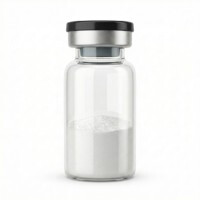
Research Reagent
Many pop-culture trends rely on untested compounds. Eliminate variables with our certified in-vitro reagents.
View Reagent Profile ›To understand why these calculators exist, one must examine how researchers handle these compounds. Peptides arrive in a laboratory as a lyophilised solid. Freeze-drying removes water to keep the fragile amino acid chains stable during transport. To study these chains in a petri dish, researchers must return them to a liquid state. This process requires adding a precise volume of bacteriostatic reconstitution solution. The calculator simply automates the math required to determine the final concentration of that liquid.
Timeline & Results: The Reality of Molecular Degradation
Internet claims suggest specific timelines for physical results based on calculator outputs. This is a fundamental misunderstanding of the science. In a laboratory environment, the only relevant timeline is the degradation rate of the compound itself. Once a researcher introduces a reconstitution solvent to the lyophilised powder, the molecular clock starts ticking. The calculator does not predict a biological outcome; it simply helps the researcher understand how much liquid they have before the compound breaks down.
Water induces hydrolysis, a process where water molecules begin snapping the delicate peptide bonds. Furthermore, exposure to oxygen causes oxidation, changing the chemical shape of the amino acids. A calculator helps researchers determine exactly how much solvent to use so they can divide the resulting liquid into smaller aliquots. They can then freeze these tiny batches, halting the degradation timeline and preserving the compound for future in-vitro assays.
Stacking & Synergies: The Danger of In-Vitro Clashes
Biohacking forums frequently discuss 'stacking' multiple compounds in a single vial, using digital tools to calculate the combined volumes. However, under sterile laboratory conditions, mixing different amino acid sequences is a recipe for chemical ruin. The internet treats these compounds like simple ingredients in a recipe, but laboratory data reveals a much more volatile reality.
Peptides have specific isoelectric points. This is the exact pH level at which the molecule carries no net electrical charge. If a researcher mixes two compounds with conflicting pH requirements in the same bacteriostatic reconstitution solution, the proteins will unfold, clump together, and precipitate out of the liquid. The result is a cloudy, useless vial that will immediately invalidate any cellular assay. Calculators are designed to measure single, isolated compounds, not to validate dangerous chemical mixtures.
Side Effects & Safety: Protecting the Assay, Not the User
When internet users search for safety information regarding liquid volumes, they are usually looking for bodily side effects. In the laboratory, safety refers strictly to compound preservation and sterile handling. If a researcher calculates the wrong volume or introduces non-sterile air into the vacuum-sealed vial, they risk destroying the experiment entirely.
Laboratory vials are sealed under negative pressure. If a researcher does not calculate the correct volume of air to displace the liquid, the vacuum can aggressively suck the bacteriostatic reconstitution solution into the vial, smashing the fragile lyophilised powder and damaging the molecular structure. The solvent contains a small amount of benzyl alcohol to prevent bacterial growth, but it cannot reverse contamination if the researcher uses poor sterile technique. The calculator ensures the math is correct, but it cannot replace strict laboratory protocols.

Laboratory FAQ: Handling and Measurement
What is a peptide calculator reconstitution tool uk peptides used for?
It is a digital interface that automates the division of mass by volume. Researchers use a peptide calculator uk free tool to quickly determine the exact concentration of their liquid solution before applying it to cell cultures. It prevents mathematical errors that could ruin an expensive in-vitro assay.
How do you reconstitute peptides in a laboratory setting?
Researchers start by swabbing the vial stopper with isopropyl alcohol. They draw a mathematically predetermined volume of bacteriostatic reconstitution solution into a sterile syringe. They then pierce the stopper and allow the vacuum pressure to pull the liquid down the side of the glass, preventing physical damage to the fragile powder.
How to reconstitute peptides without damaging the molecular structure?
The key is gentle handling. Researchers never shake the vial. They roll it gently between their fingers until the lyophilised solid dissolves completely into the liquid. Shaking can cause the amino acid chains to shear and break, rendering the compound useless for scientific observation.
How to measure peptides accurately for cellular assays?
Once reconstituted, researchers use micro-pipettes or graduated laboratory syringes to extract precise volumes. The calculator tells them exactly how many micrograms of the compound exist in each microlitre of liquid, ensuring their cell culture receives the exact intended concentration for the experiment.
The Limits of Digital Tools
A calculator is only as good as the laboratory environment in which it is used. It cannot account for temperature fluctuations, improper storage, or degraded solvents. When researchers conduct their studies, they rely on precise mathematics combined with strict sterile technique. Authentic scientific exploration requires strictly controlled, non-human environments. The digital tools used to calculate these concentrations are designed for petri dishes and cellular assays, not for the unverified protocols found on internet forums.
Scientific Bibliography
- Vlieghe, P., Lisowski, V., Martinez, J., & Khrestchatisky, M. (2010). Synthetic therapeutic peptides: science and market. Drug Discovery Today, 15(1-2), 40-56. View published research
- Frokjaer, S., & Otzen, D. E. (2005). Protein drug stability: a formulation challenge. Nature Reviews Drug Discovery, 4(4), 298-306. View published research
- Wang, W. (1999). Instability, stabilization, and formulation of liquid protein pharmaceuticals. International Journal of Pharmaceutics, 185(2), 129-188. View published research
- Manning, M. C., Patel, K., & Borchardt, R. T. (1989). Stability of protein pharmaceuticals. Pharmaceutical Research, 6(11), 903-918. View published research
⚠️ Research Use Only Disclaimer: All peptides and compounds are sold strictly for in-vitro laboratory research purposes only. Not intended for human or veterinary use, not a dietary supplement, and not approved to diagnose, treat, cure, or prevent any disease or condition. For use by qualified researchers in suitably equipped laboratory environments only. Amino Peptides Ltd operates in full compliance with UK MHRA regulations and applicable EU research chemical guidelines.