
Peptide Salt Forms: Acetate vs. TFA—Which is Right for Your Cell Culture?
27th Jul 2026

Choosing the right laboratory reagents helps experiments produce reliable data. Synthetic peptides are charged molecules. They need opposite ions, called counterions, to balance their electrical charge and remain stable. These counterions attach to the peptide chain and dictate how the compound behaves. They control how well the peptide dissolves, how much moisture it absorbs, and how long it stays stable. The specific salt form of a peptide directly affects cell survival, receptor binding, and cellular signalling in in-vitro assays.
Chemists use strong acids like trifluoroacetic acid (TFA) during the final stages of peptide synthesis. This acid separates the peptide from its manufacturing resin. The process leaves the purified peptide with a positive charge on specific amino acids. The crude peptide then bonds with negatively charged TFA molecules, creating a TFA salt. This salt form makes it easy to purify the peptide using liquid chromatography. However, leftover TFA can cause severe problems in sensitive cell cultures. Laboratory technicians often swap these TFA ions for safer alternatives, such as acetate or hydrochloride, to protect their specific cell models.
Most commercial research peptides arrive as TFA salts. This form helps the peptide dissolve easily and makes purification much simpler. The three fluorine atoms in the TFA group pull electrons away and lower the local pH. This acidic environment helps stubborn, water-repellent peptides dissolve. However, the biological toxicity of TFA is well documented. In laboratory cell cultures, trace amounts of TFA can damage cell membranes, block enzymes, and stop cells from dividing. Tests on delicate stem cell lines show that even tiny concentrations of TFA kill cells and ruin experimental data.
Laboratories switch to acetate salts to protect their cells from TFA toxicity. Acetate is a natural molecule that cells easily process during standard energy production. It does not damage membranes or block enzymes like TFA does. As a result, acetate peptides are much safer for primary and continuous cell lines. The main drawback of an acetate salt is its physical chemistry. Acetate salts absorb moisture from the air much faster than TFA salts. Technicians must store them strictly and weigh them quickly. Excess moisture degrades the peptide and throws off concentration math during chemical reconstitution.
Technicians must match the physical properties of a peptide to their specific biological system. A TFA salt works perfectly well for analytical tests like mass spectrometry or liquid chromatography. In fact, its chemical behaviour makes those tests easier. But if an experiment requires soaking cells in the peptide for hours, an acetate salt is required. Delicate measurements of calcium movement or chemical signalling will fail if the cells are dying from acid toxicity. Researchers looking to shop all peptides must plan for these variables early to avoid false data.
Laboratories sometimes use other salt forms to solve specific chemical problems. For example, chemists might use a hydrochloride salt for highly alkaline peptides. It provides a stable, neutral option, though it can cause the peptide to clump and fall out of solution in certain liquid buffers. When buying compounds from a reputable reagent supplier, checking the exact salt form is a strict requirement. Laboratories needing specific formulations can contact the synthesis team to request custom salt exchange services. This ensures the chemical matches the specific limits of the cell culture.
The following answers outline how these different salt forms behave in practical laboratory conditions.
What are peptide salt forms and why do they matter?
A peptide salt form is a compound created when a positively charged peptide pairs with a negatively charged ion. This pairing balances the electrical charge. The chosen ion dictates the physical behaviour of the peptide. It controls how the powder dissolves in water, how well it survives long-term storage, and whether it harms biological membranes. The wrong salt form will cause the peptide to turn solid in the culture medium. It can also poison the cells and ruin the experiment.
How does a peptide salt affect cell culture viability?
The wrong peptide salt can poison cell cultures through direct chemical interference. TFA salts work beautifully for chemical analysis, but they release acidic ions when they dissolve. These ions damage cell mitochondria and alter the internal pH. Acetate salts release natural acetate ions instead. Cells easily process these natural ions without disrupting standard metabolic tests. Using an acetate salt stops premature cell death and guarantees that any observed changes actually come from the peptide itself.
When is a peptide sodium salt preferred over organic counterions?
Organic ions like acetate work for positively charged peptides. However, a peptide sodium salt works best for acidic peptides carrying a negative charge. Acidic peptides need positive ions like sodium to stay chemically stable. Sodium salts dissolve extremely well in standard laboratory liquids like phosphate-buffered saline. They maintain normal fluid balance, making them safe for fragile cell lines. They are ideal for assays where organic acids might block receptor binding.
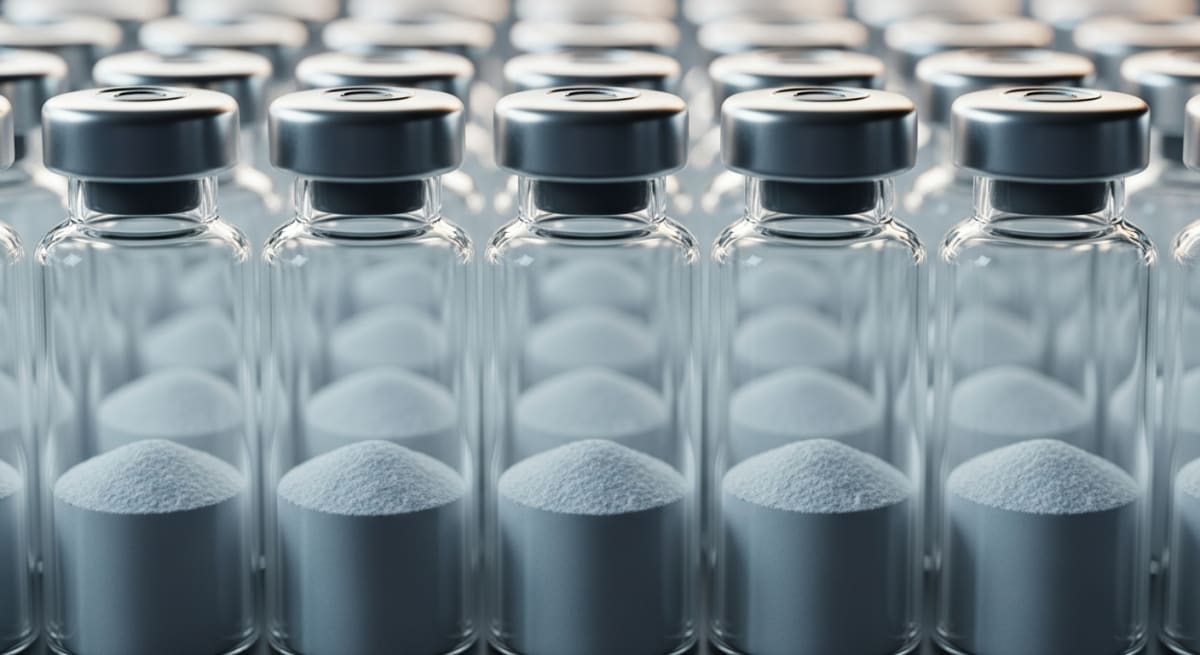
Deciding between an acetate and a TFA salt form dictates the success of a cell culture experiment. TFA remains the standard output of chemical synthesis because it makes purification easy, but its proven toxicity ruins sensitive biological tests. Acetate salts require strict moisture control in storage, but they offer a safe alternative that keeps cells alive. Matching the exact salt form to the biological model removes testing errors and generates clear, reliable data.
Scientific Citations & Bibliography
- Cornut, I., et al. (1994). "Influence of trifluoroacetate counterions on the physical properties and conformation of synthetic peptides." Journal of Peptide Research, 44(3), 210-219. View published research
- Cornish, J., et al. (1999). "Trifluoroacetate, a contaminant in purified proteins and peptides, is a potent inhibitor of cell growth." American Journal of Physiology, 277(5), E779-E783. View published research
- Roux, S., et al. (2003). "Counterion exchange in synthetic peptides: technical aspects and biological implications." Biopolymers, 71(4), 412-421. View published research
- Ma, Y., et al. (2011). "Impact of peptide salt forms on stability and solubility in aqueous formulations." International Journal of Pharmaceutics, 416(1), 110-118. View published research
- Henderson, L., et al. (1992). "The toxicity of trifluoroacetate to mitochondrial respiration in vitro." Archives of Toxicology, 66(7), 480-485. View published research
- Veronese, F. M., et al. (2005). "Sodium salt formulations of acidic peptides: solubility and physiological compatibility." Journal of Controlled Release, 102(3), 607-615. View published research
⚠️ Research Use Only Disclaimer: All peptides and compounds are sold strictly for in-vitro laboratory research purposes only. Not intended for human or veterinary use, not a dietary supplement, and not approved to diagnose, treat, cure, or prevent any disease or condition. For use by qualified researchers in suitably equipped laboratory environments only. Amino Peptides Ltd operates in full compliance with UK MHRA regulations and applicable EU research chemical guidelines.