
Peptides For Weight Loss: What the Laboratory Data Actually Shows
22nd Oct 2026

What You Need to Know About AOD-9604
- AOD-9604 is the stocked analogue of the C-terminal HGH fragment 176-191, searched for lipolytic signalling.
- In plain English, published models watch how fat cells release stored lipid when this sequence is in the assay.
- Study timelines separate an early signalling window from later changes in lipid handling.
- A 99%+ HPLC-verified, freeze-dried vial kept at 2°C–8°C is the variable a laboratory can hold constant.
Peptides For Weight Loss: What the Laboratory Data Actually Shows
The internet is currently flooded with claims about GLP-1, GLP-2, and emerging GLP-3 compounds. Social media influencers and biohacking forums frequently discuss these sequences as tools for physical transformation. However, when the marketing is stripped away and these compounds are observed in a sterile petri dish, the reality of the science is entirely different. Authentic scientific exploration requires strictly controlled, non-human environments. In a laboratory, researchers do not measure bodily changes. They measure how a specific chain of amino acids interacts with isolated cells.
To understand what the laboratory data actually shows, it is necessary to examine the specific receptor targets. A cellular receptor acts as a complex lock on the surface of a cell. The peptide sequence acts as a chemical key. If the shape of the key matches the lock, it triggers a reaction inside the cell. This is called receptor binding affinity. Researchers at Amino Peptides UK and other chemical supply institutions provide these sequences strictly for this type of in-vitro testing.
The GLP-1 Receptor: Glucagon-like peptide-1 (GLP-1) analogues are the most widely studied sequences in this category. In laboratory cell cultures, these peptides are introduced to isolated pancreatic beta cells. When the GLP-1 sequence binds to the receptor, it triggers the cell to produce cyclic AMP (cAMP). This internal signal tells the isolated cell to release insulin into the culture medium. The data shows strong binding affinity, but this reaction is strictly confined to the cellular level.
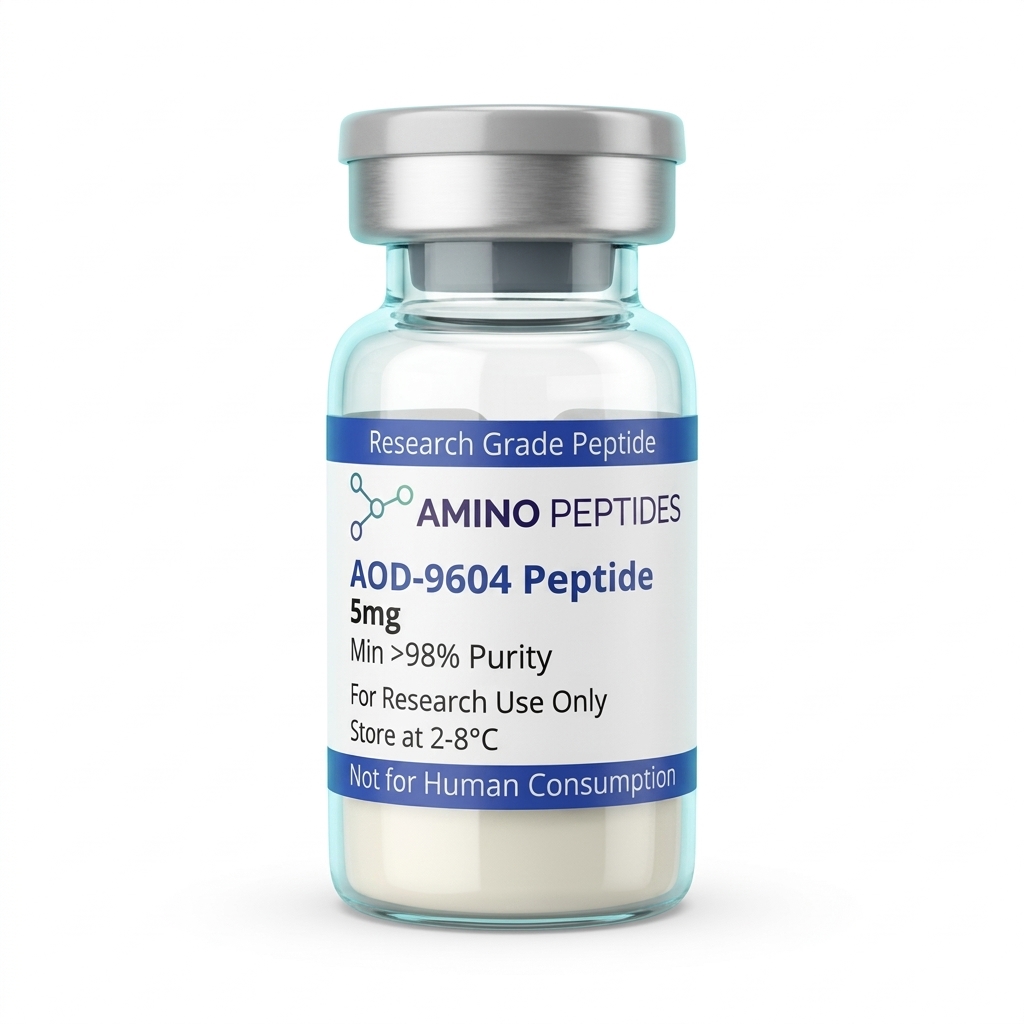
AOD-9604 Peptide
From £22
Supplied as a sealed freeze-dried vial (stable 12–24 months at 2°C–8°C in a standard refrigerator).
Shop AOD-9604 Peptide →The GLP-2 Receptor: While GLP-1 targets pancreatic cells, GLP-2 sequences are entirely different. In-vitro assays typically introduce GLP-2 to isolated intestinal epithelial cells. When the peptide binds to the GLP-2 receptor on these specific cells, it triggers pathways related to cellular growth and nutrient absorption within the culture. The mechanism is highly specific and does not cross over to the GLP-1 receptor.
The GLP-3 Concept: In scientific literature, a singular 'GLP-3' receptor does not exist in the same way as GLP-1 or GLP-2. When internet forums discuss GLP-3, they are usually referring to next-generation 'triple agonists'. In a laboratory setting, a triple agonist is a single, highly complex peptide chain engineered to bind to three different cellular locks simultaneously: the GLP-1 receptor, the GIP receptor, and the Glucagon receptor. Testing these complex sequences requires advanced cellular assays to ensure the peptide does not heavily favour one receptor over the others.
Trend Analysis: Timeline & Results
Internet claims suggest that these compounds produce rapid physical changes over a period of weeks or months. Biohackers frequently share timelines of their supposed results, creating a false narrative about how these chemicals operate.
However, under sterile laboratory conditions, the mechanism reveals a completely different timeline. In-vitro assays do not measure long-term physical changes. They measure receptor activation kinetics in real-time. When a researcher introduces a GLP-1 analogue to a cell culture, the binding event happens in a matter of minutes. The laboratory equipment measures the peak cellular response, which usually occurs within an hour.
Furthermore, the laboratory data highlights the extreme fragility of the peptide chain. Without strict environmental controls, the amino acid bonds degrade rapidly. In a petri dish, researchers must carefully monitor the half-life of the compound. The timeline of a laboratory experiment is dictated by molecular stability, not biological transformation. Once the peptide chain breaks down in the culture medium, the cellular signalling stops completely.
Reconstitution calculator
Choose a vial mass and a bacteriostatic reconstitution solution volume. The figure is the resulting concentration.
Concentration: 2.50 mg/mL
Per 0.01mL (10µL): 25.0 mcg
Open the full calculatorBacteriostatic reconstitution solutionTrend Analysis: Stacking & Synergies
A popular trend in unregulated biohacking communities is the concept of 'stacking'. Internet claims suggest that mixing multiple laboratory peptide sequences together creates a powerful, synergistic effect. Forums frequently share complex recipes combining GLP-1 analogues with other metabolic compounds.
However, under sterile laboratory conditions, the mechanism reveals a highly problematic reality. In cellular models, mixing different peptide sequences often leads to competitive inhibition. If two different compounds are introduced to the same cell culture, they may compete for the same receptor sites. Instead of a synergistic effect, the compounds block each other, resulting in a weaker cellular response than if a single sequence was tested alone.
Additionally, mixing compounds introduces severe stability issues. Peptides require specific pH levels to remain intact. To maintain molecular stability during an in-vitro assay, researchers must use a precise bacteriostatic reconstitution solution. If multiple compounds are mixed improperly, the chemical environment changes. The amino acid chains can clump together, a process known as aggregation. When aggregation occurs, the peptides can no longer bind to the cellular receptors, rendering the entire experiment useless.
Trend Analysis: Side Effects & Safety
Internet claims often focus entirely on the supposed benefits of these compounds, completely ignoring the risks of unregulated use. Biohackers frequently dismiss safety concerns, assuming that more of a compound will simply yield better results.
However, under sterile laboratory conditions, the mechanism reveals significant cellular risks. In-vitro toxicity screens demonstrate that excessive receptor stimulation is highly damaging. When a cell culture is exposed to an overwhelming concentration of a GLP-1 analogue, the cells experience receptor downregulation. The isolated cells physically pull their receptors inside their membranes to protect themselves. The cell becomes completely numb to the chemical signal. In severe cases, over-stimulation in a petri dish leads to abnormal cell proliferation or cellular exhaustion, where the cell simply stops functioning and dies.
Furthermore, untested variables pose a massive risk to the integrity of the research. If a peptide is handled outside of a sterile laboratory environment, it is immediately exposed to enzymes, bacteria, and temperature fluctuations. These variables destroy the delicate amino acid bonds. Authentic scientific exploration requires strictly controlled, non-human environments precisely because these compounds are so volatile.
In-Vitro FAQ: Examining Live Search Intents
Public interest generates specific questions. It is necessary to ruthlessly deconstruct these popular consumer queries using strictly controlled in-vitro data.
Query: peptides for weight loss vs collagen peptides
Internet claims often confuse these two categories. In a laboratory setting, they serve entirely different functions. Collagen peptides are structural proteins. When introduced to a cell culture, they act as raw building blocks for cellular repair. GLP analogues are signalling molecules. They do not build anything; they act as chemical keys that bind to cellular locks to trigger a specific internal reaction. They behave entirely differently under a microscope.
Query: top peptides for fat loss
This query represents a fundamental misunderstanding of scientific research. A laboratory does not measure 'fat loss'. Instead, researchers ask: Which sequences show the highest binding affinity in vitro? The data shows that engineered GLP-1 analogues possess a highly stable molecular structure that allows them to remain bound to the isolated cellular receptor longer than naturally occurring sequences. Their 'top' status in a lab strictly refers to their binding kinetics in a petri dish.
Query: are peptides good for weight loss
This must be reframed to ask: Do these sequences reliably activate metabolic pathways in isolated cells? The in-vitro data confirms that GLP-1 and triple agonist sequences successfully trigger specific cellular responses, such as cAMP accumulation in isolated beta cells. However, demonstrating a chemical reaction in a sterile cell culture is vastly different from influencing a complex human metabolism. The laboratory data is strictly confined to the cellular level.
Query: most effective peptide for fat loss
In a laboratory context, 'effectiveness' is measured by receptor saturation. Researchers evaluate how much of the peptide sequence is required to fully activate all available receptors on an isolated cell. Triple agonists (often mislabelled as GLP-3) show high effectiveness in cellular assays because they can bind to multiple different receptor types simultaneously, creating a broader cellular response in the culture medium. This does not translate to a recommended bodily outcome.
Query: do peptides really work for weight loss
If 'work' is translated to mean 'do they perform as expected in a laboratory assay', the answer is yes. When properly suspended in a bacteriostatic reconstitution solution and applied to a sterile cell culture, these sequences reliably bind to their target receptors and trigger the expected cellular signalling pathways. However, this strictly validates their chemical properties, not their safety or efficacy in unregulated environments.
The surge in public interest surrounding these compounds often ignores the fundamental reality of chemical research. Authentic scientific exploration requires strictly controlled, non-human environments. The data generated from isolated cell cultures provides vital information about molecular mechanics, receptor binding affinity, and chemical stability. It does not, and cannot, validate the claims made by internet biohackers. Understanding the science means recognising the strict boundaries of the laboratory.

- Muller, T. D., Finan, B., Bloom, S. R., D'Alessio, D., Hofmann, S. M., Tschop, M. H. (2019). Glucagon-like peptide 1 (GLP-1). Molecular Metabolism, 30, 72-130. View published research
- Finan, B., Clemmensen, C., Muller, T. D., Schriever, S. C., Rolando, D., Clemmensen, C., Tschop, M. H. (2015). A rationally designed monomeric peptide triagonist corrects obesity and diabetes in rodents. Nature Medicine, 21(1), 27-36. View published research
- Drucker, D. J. (2020). Advances in oral peptide therapeutics. Nature Reviews Drug Discovery, 19(4), 277-289. View published research
- Baggio, L. L., & Drucker, D. J. (2007). Biology of incretins: GLP-1 and GIP. Gastroenterology, 132(6), 2131-2157. View published research
- Tschop, M. H., Finan, B., Clemmensen, C., Gelfanov, V., Perez-Tilve, D., Muller, T. D., DiMarchi, R. D. (2016). Unimolecular Polypharmacy for Treatment of Diabetes and Obesity. Cell Metabolism, 24(1), 51-62. View published research
- Holst, J. J. (2007). The physiology of glucagon-like peptide 1. Physiological Reviews, 87(4), 1409-1439. View published research
⚠️ Research Use Only Disclaimer: All peptides and compounds are sold strictly for in-vitro laboratory research purposes only. Not intended for human or veterinary use, not a dietary supplement, and not approved to diagnose, treat, cure, or prevent any disease or condition. For use by qualified researchers in suitably equipped laboratory environments only. Amino Peptides Ltd operates in full compliance with UK MHRA regulations and applicable EU research chemical guidelines.