
Pineal Gland Health: The Science Behind Epithalon
28th Aug 2026
What You Need to Know About Epitalon
- Researchers study Epithalon to understand how the ageing pineal gland loses its ability to regulate sleep-wake cycles and hormone rhythms.
- It works in laboratory settings by interacting with DNA to encourage telomerase activity and support natural melatonin production.
- Published studies in ageing animal models observed restored night-time melatonin peaks and improved antioxidant defences.
- Cell culture investigations also noted longer telomeres and extended division limits in aged somatic cells.
How Epithalon Interacts with the Pineal Gland and Sleep Cycles
Epithalon is a synthetic four-amino-acid peptide studied for its direct influence on pineal gland cell activity and night-time melatonin output. Published studies show it supports natural circadian rhythm signalling while also activating telomerase, the enzyme that maintains the protective caps at the ends of chromosomes.
Deep in the centre of the brain sits a tiny, pine-cone-shaped structure called the pineal gland. Its main job is to read light and dark cues from the eyes and release melatonin when darkness falls. As biological systems age, the pineal gland often accumulates calcium deposits and loses its crisp daily rhythm. Night-time melatonin peaks flatten out, sleep architecture fragments, and the body's internal clock begins to drift. Researchers looking into pineal gland health: the science behind Epithalon focus on how this tiny molecule talks to aging pinealocytes, the specialized cells that manufacture melatonin.
Epithalon—built from the simple amino acid sequence Alanine-Glutamic Acid-Aspartic Acid-Glycine (Ala-Glu-Asp-Gly)—was developed after decades of Russian laboratory research into natural pineal tissue extracts known as Epithalamin. Scientists wanted to isolate the exact sequence responsible for resetting pineal gland output. Because Epithalon consists of only four amino acids, it is small enough to pass through cell membranes and nuclear pores with very little resistance. Once inside the cell, it interacts directly with specific DNA promoter regions and histone proteins.
In laboratory models, this interaction wakes up two major pathways. First, it increases the expression of arylalkylamine N-acetyltransferase (AANAT), the rate-limiting enzyme that converts serotonin into melatonin. Rather than forcing a flat, artificial spike, the peptide helps pineal cells restore their natural night-time production curve in response to darkness. Second, published studies demonstrate that the epitalon peptide stimulates telomerase activity in somatic cells. Telomeres act like the plastic tips on shoelaces, keeping chromosomes from fraying each time a cell divides. By supporting telomere length alongside circadian signalling, Epithalon gives researchers a clear model for studying how sleep timing and cellular longevity connect at the genetic level.
Even more interesting to sleep researchers is how this four-amino-acid chain behaves when pineal tissue is exposed to stress or erratic light cycles. Instead of overriding the brain's clock, it appears to sensitise the gland's own enzymatic machinery so it can respond cleanly when the lights go out. That distinction is why biochemists classify Epithalon as a bioregulator rather than a sedative: it works on the cellular equipment that builds the hormone, not on the downstream drowsiness receptors themselves.
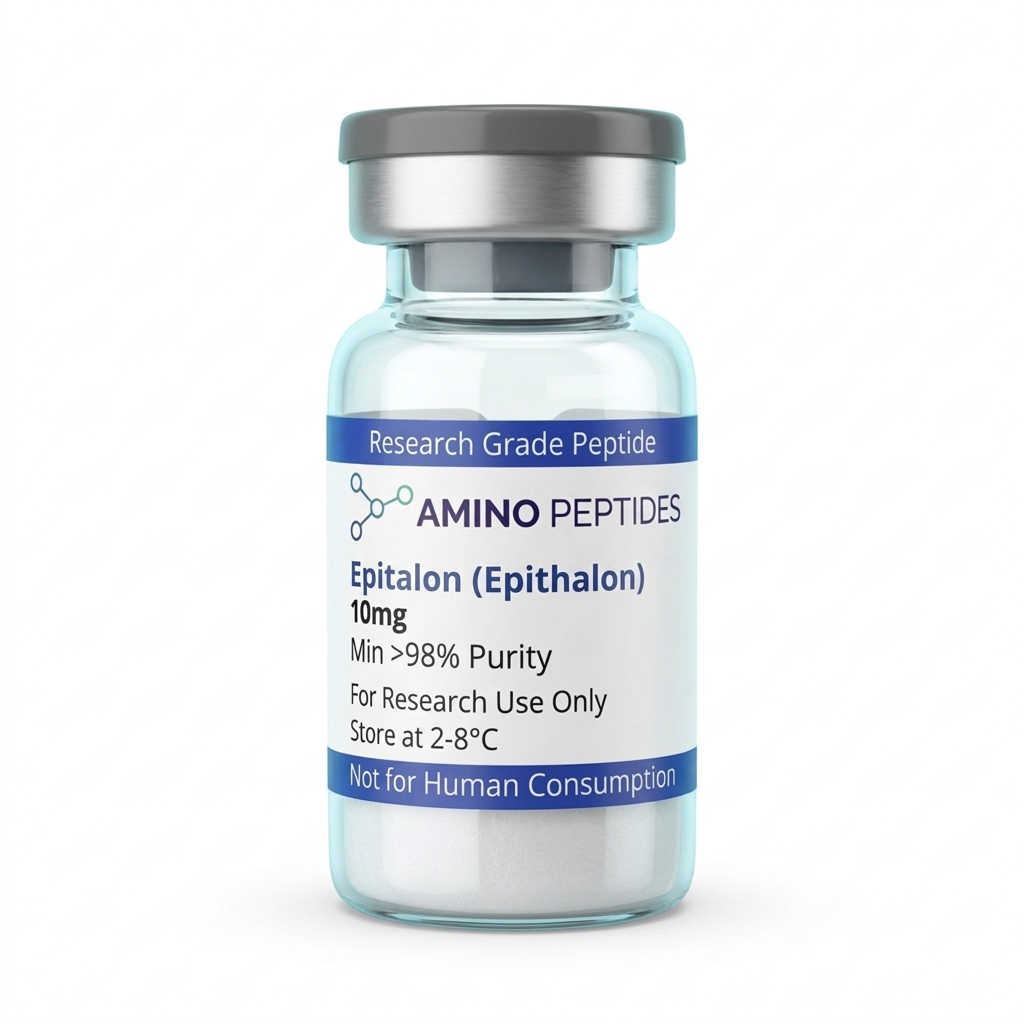
Epitalon
From £19
Supplied as a sealed freeze-dried vial (stable 12–24 months at 2°C–8°C in a standard refrigerator).
Shop Epitalon →What Published Studies Observe Over Days, Weeks, and Months
When scientists design a laboratory study around Epithalon, they do not expect every biological change to happen during the same twenty-four-hour window. Biochemical signalling moves quickly, whereas structural shifts in tissue behaviour or chromosome maintenance take considerably longer to show up on lab assays. Breaking down these published timelines helps explain why most research protocols run in distinct phases rather than continuous, year-round exposure.
During the first forty-eight to seventy-two hours of in vitro and animal model exposure, the earliest measurable changes involve gene transcription and enzyme activation. Laboratory assays track a rapid rise in mRNA expression for the enzymes that build melatonin inside pinealocytes. In preclinical models with blunted circadian curves—such as aged primates and rodents—researchers frequently record a noticeable rebound in nocturnal melatonin blood levels within the first five to ten days. Alongside this night-time hormone shift, early data points often show a steadier daily rhythm of cortisol, meaning morning alertness signals and evening wind-down signals stop overlapping quite so much.
Between days ten and twenty, the focus in published studies shifts from immediate hormone spikes to broader circadian entrainment and antioxidant defence. Melatonin is not just a sleep timer; it is also one of the body's most active scavengers of free radicals inside mitochondria. As night-time pineal output stabilises over a two-to-three-week window, laboratory models display lower markers of lipid peroxidation and improved cellular energy handling across neural and endocrine tissues. This is the window where many pulsed protocols finish their initial cycle, as the transcriptional signal has already been delivered to the nucleus.
Longer-term structural observations—such as measurable changes in telomere length, chromatin remodelling, and tissue regeneration markers—follow a much slower clock. In cell culture studies using human fetal fibroblasts, researchers observed telomerase activation early on, yet actual elongation of telomere repeats and extended population doublings were measured across weeks and months of cell division cycles. Similarly, in longitudinal rodent studies where short ten-to-twenty-day study cycles were repeated twice a year, shifts in retina preservation, immune cell balance, and overall lifespan curves only became clear after many months of follow-up. In short, pineal enzyme signalling responds in days, while chromosomal and tissue remodelling unfolds across successive cellular generations.
Comparison of Pineal and Circadian Research Compounds
| Compound | Structure | Primary Research Focus | Observed Mechanism in Models |
|---|---|---|---|
| Epithalon | Synthetic tetrapeptide (Ala-Glu-Asp-Gly) | Pineal gland regulation and telomere length | Stimulates telomerase expression and normalises melatonin synthesis in aged pinealocytes |
| Epithalamin | Crude bovine pineal polypeptide extract | Endocrine ageing and circadian rhythms | Provides broad polypeptide signalling to support pineal gland tissue recovery |
| Melatonin | Indoleamine neurohormone | Direct sleep-wake timing and antioxidant defence | Binds to MT1 and MT2 receptors to signal darkness without repairing pineal cells |
| Pinealon | Synthetic tripeptide (Glu-Asp-Arg) | Central nervous system cellular protection | Interacts with neuronal DNA to reduce oxidative stress in brain tissue models |
| Cortagen | Synthetic tetrapeptide (Ala-Glu-Asp-Pro) | Cerebral cortex regeneration and gene expression | Modulates chromatin structure and supports structural recovery in neural tissues |
Pairing Epithalon with Complementary Peptides in Lab Protocols
Because the pineal gland does not work in isolation, laboratory researchers frequently examine how Epithalon interacts with other short-chain bioregulators and neural peptides. The brain's master clock in the hypothalamus, the pineal gland, the stress axis, and the cellular energy systems are constantly trading chemical messages. Combining peptides that target complementary nodes in this network allows investigators to observe how multiple pathways support recovery and circadian stability at the same time.
One of the most common pairings in Russian bioregulator literature combines Epithalon with Pinealon, a three-amino-acid peptide (Glu-Asp-Arg) isolated to target cerebral cortex neurons directly. While Epithalon focuses on pinealocyte enzyme expression and night-time melatonin synthesis, Pinealon is studied for its ability to reduce oxidative stress in central nervous system cells and support focus and memory pathways. When evaluated together in aging brain models, the two short peptides cover both sides of the sleep-wake coin: nocturnal hormonal recovery via the pineal gland and daytime neural resilience in the cortex.
Another frequent laboratory combination pairs Epithalon with DSIP (Delta Sleep-Inducing Peptide). These two molecules approach rest architecture from completely different angles. Epithalon works upstream at the genetic level to normalise the darkness-triggered release of melatonin over a multi-day period. DSIP, by contrast, is a nine-amino-acid neuropeptide studied for its direct influence on slow-wave delta sleep patterns, GABAergic signalling, and acute stress hormone suppression. Studying them side by side helps researchers compare slow circadian clock adjustments against immediate sleep-stage modulation.
Researchers looking at whole-body cellular energy and tissue recovery also pair Epithalon with mitochondrial and thymic peptides such as MOTS-c or Thymalin. Historically, Epithalamin (the natural precursor to Epithalon) and Thymalin (a thymus extract equivalent) were studied together in landmark longevity experiments because the pineal gland and the thymus age in tandem. As pineal melatonin drops, thymic immune output often declines right behind it. Adding a clean amolist research peptide like Thymogen or MOTS-c alongside Epithalon allows preclinical models to test whether restoring night-time pineal signalling amplifies daytime metabolic energy and immune cell renewal across the wider organism.
In each of these multi-peptide designs, the goal is never to overwhelm a single receptor. Instead, researchers select small sequences with non-overlapping targets so each compound can do its quiet transcriptional work without competing for the same cellular transport channels.

Figure: Pineal Gland Health: The Science Behind Epithalon
Reconstitution calculator
Choose a vial mass and a bacteriostatic reconstitution solution volume. The figure is the resulting concentration.
Concentration: 2.50 mg/mL
Per 0.01mL (10µL): 25.0 mcg
Open the full calculatorBacteriostatic reconstitution solutionWhy 99% HPLC Purity and Cold Storage Matter for Tetrapeptides
Working with a tiny four-amino-acid chain like Epithalon might sound straightforward, yet its small size makes analytical verification and storage habits extra important. When a peptide is only four residues long, even a single missing amino acid, an incomplete coupling step during synthesis, or a lingering chemical salt can skew the molecular weight and alter how the sample behaves in a laboratory dish.
That is why verified High-Performance Liquid Chromatography (HPLC) and Mass Spectrometry (MS) testing at 99% purity or higher is the baseline standard for serious research. During solid-phase synthesis, raw batches can accumulate truncated sequences—three-amino-acid fragments that look similar on paper but fail to bind the correct DNA promoter sites in pineal cells. A proper HPLC chromatogram confirms that the lyophilized cake in the vial is almost entirely intact Ala-Glu-Asp-Gly, rather than a cloudy mix of unfinished fragments and synthesis byproducts.
Equally important is the removal of trifluoroacetic acid (TFA). TFA is a strong acid routinely used to cleave peptides from their resin supports during manufacturing. If excess TFA is left behind in the final freeze-dried powder, it drops the pH of the liquid once mixed and can irritate or damage delicate cell cultures, masking the gentle transcriptional effects of the peptide itself. High-grade batches undergo secondary ion-exchange polishing to swap out harsh TFA counter-ions for milder acetate or hydrochloride salts, keeping the solution biocompatible for sensitive pinealocyte assays.
Once a high-purity vial arrives, temperature discipline keeps those four peptide bonds intact. In its dry, lyophilized powder state, Epithalon is quite stable, but it should still be stored in a dark refrigerator between 2°C and 8°C (or frozen at -20°C for long-term archiving) away from UV light. After mixing the powder with a sterile bacteriostatic reconstitution solution, the liquid vial must live strictly at 2°C to 8°C and never be shaken violently. Gently swirling the vial against the glass wall dissolves the cake cleanly without shearing the bonds, ensuring every measured level drawn over a two-to-three-week study window matches day one.
Frequently Asked Questions
Why is Epithalon so widely researched for pineal gland health?
Researchers study Epithalon because it is a synthetic version of epithalamin, a natural extract from the pineal gland. Published studies show it helps regulate melatonin production, normalise circadian rhythms, and activate telomerase. These actions allow scientists to analyse how the pineal gland influences cellular ageing and tissue recovery in laboratory models.
What is the typical timeline observed in Epithalon laboratory studies?
In published studies, researchers typically observe measurable changes in melatonin signalling and antioxidant activity within ten to twenty days of starting an experimental cycle. Long-term preclinical models often repeat these short protocols twice a year to characterise ongoing cellular regeneration, telomere maintenance, and biological rhythm stability over an organism's lifespan.
Can Epithalon be combined with other bioregulators in research protocols?
Yes, laboratory protocols frequently pair Epithalon with other Khavinson peptide bioregulators like Thymalin or Pinealon to analyse synergistic effects. Published studies suggest that combining pineal and thymic peptides helps researchers observe broader immune system recovery, neuroprotection, and coordinated cellular signalling across multiple organ systems in ageing preclinical models.
How should research-grade Epithalon be stored to maintain purity?
Unreconstituted, freeze-dried Epithalon powder should be kept in a freezer at minus 20 degrees Celsius away from bright light to preserve at least 98 percent purity. Once mixed with a bacteriostatic reconstitution solution for laboratory testing, the liquid compound must be stored in a standard refrigerator and utilised within three weeks.
Bibliography
- Khavinson VK, Bondarev IE, Butyugov AA. Epithalon peptide induces telomerase activity and telomere elongation in human somatic cells. Bull Exp Biol Med. 2003;135(6):590-592. View published research
- Korkushko OV, Lapin BA, Goncharova ND, et al. Normalizing effect of the pineal gland peptides on the daily melatonin rhythm in old monkeys and elderly people. Adv Gerontol. 2007;20(1):74-85. View published research
- Anisimov VN, Khavinson VK. Peptide bioregulation of aging: results and prospects. Biogerontology. 2010;11(2):139-149. View published research
- Goncharova ND, Vengerin AA, Khavinson VK, Lapin BA. Pineal peptides restore the age-related disturbances in hormonal functions of the pineal gland and the pancreas. Exp Gerontol. 2005;40(1-2):51-57. View published research
- Araj SK, Brzezik J, Murlikiewicz K, et al. Overview of Epitalon—Highly Bioactive Pineal Tetrapeptide with Promising Properties. Int J Mol Sci. 2025;26(6):2691. View published research
⚠️ Research Use Only Disclaimer: All peptides and compounds are sold strictly for in-vitro laboratory research purposes only. Not intended for human or veterinary use, not a dietary supplement, and not approved to diagnose, treat, cure, or prevent any disease or condition. For use by qualified researchers in suitably equipped laboratory environments only. Amino Peptides Ltd operates in full compliance with UK MHRA regulations and applicable EU research chemical guidelines.