
Reconstitution 101: A Guide to Bacteriostatic Solution Ratios
22nd Jul 2026

Lyophilised synthetic peptides arrive in dry, vacuum-sealed glass vials to ensure long-term stability during transit and laboratory storage. Transforming these freeze-dried solid matrices into stable, homogenous liquid samples for spectrophotometric analysis or in-vitro cell line assays requires careful volumetric mathematical calculation and rigorous laboratory protocols. The addition of a sterile aqueous medium converts the lyophilised cake into a liquid state suitable for accurate micro-pipetting. Achieving consistent, accurate analytical concentrations relies entirely upon employing precise solvent-to-solute ratios.
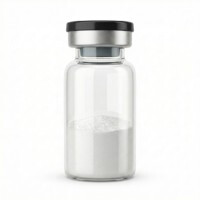
Bacteriostatic Reconstitution Solution (0.9% Benzyl Alcohol) | 10ml
HPLC-verified lyophilised compound, UK-domestic supply. Manufactured under controlled conditions for qualified in-vitro laboratory research.
View Reagent Profile ›Reconstitution Dynamics and Solubilisation Chemistry
Lyophilisation extracts moisture through sublimation under sub-zero temperatures and high vacuum pressure, preserving the structural integrity of the peptide backbone and maintaining primary molecular folding. Reintroducing fluid demands a chemical vehicle that prevents microbial proliferation during extended analytical multi-use protocols. Standard sterile water lacks preservative compounds, rendering it suitable strictly for immediate, single-use assay procedures. Conversely, a dedicated reconstitution solvent containing 0.9% benzyl alcohol offers sustained stability by suppressing bacterial cell replication within aqueous solutions.
Benzyl alcohol functions as an effective preservative agent, disrupting bacterial cell membrane permeability without denaturing peptide tertiary structures when maintained within standard neutral pH ranges. During solubilisation, solvent molecules encapsulate the lyophilised cake, gradually disrupting intermolecular hydrogen bonds within the crystalline lattice. Preserving molecular conformation during this structural transition requires minimal mechanical stress. High-shear force or aggressive mechanical agitation can induce protein folding errors, causing irreversible molecular aggregation or hydrolytic cleavage of sensitive peptide bonds.
Volumetric Calculation Ratios and Concentration Mathematics
Calculating accurate liquid concentrations demands strict adherence to basic mass-volume chemistry equations: C = m / V, where C represents final mass concentration, m equals solute mass in milligrams, and V represents liquid volume in millilitres. Establishing standardised working concentrations simplifies experimental calculations during liquid aliquot transfer steps.
For instance, introducing 2.5 mL of liquid into a vial containing 5 mg of solid lyophilised solute produces a uniform working concentration of 2.0 mg/mL (equivalent to 2000 mcg/mL). Under this concentration profile, withdrawing a 0.1 mL micro-pipette volume yields precisely 200 mcg of active solute. Alternatively, introducing 5.0 mL of liquid to a 5 mg sample creates a 1.0 mg/mL concentration, doubling the required transfer volume for an equivalent mass transfer.
Selecting an appropriate volumetric ratio depends on analytical assay sensitivity requirements and liquid handling precision limits. Excessively dilute solutions increase pipetting margins of error when dispensing micro-quantities, whereas hyper-concentrated mixtures increase the risk of solubility saturation and precipitation. Investigators often employ an automated peptide reconstitution calculator to rapidly verify liquid volume calculations prior to manual fluid introduction. Similar volumetric precision is required when evaluating growth factor analogues or complex peptides in lab settings, such as during Tesamorelin analysis.
Standardised In-Vitro Reconstitution Protocol
Executing reconstitution without compromising sample purity or inducing physical degradation demands adherence to a structured, highly controlled sequence:
- Thermal Balancing: Allow the lyophilised glass vial to equilibrate to ambient laboratory room temperature (20°C to 22°C) prior to fluid introduction. Introducing cold liquid into a cold vacuum environment can alter dissolution rates and create localized temperature gradients.
- Surface Sanitisation: Sanitise the outer rubber septum using a 70% isopropyl alcohol wipe and allow complete evaporation to prevent solvent contamination.
- Controlled Fluid Transfer: Draw the exact calculated volume of bacteriostatic reconstitution solution using a sterile laboratory syringe. Incline the glass vial at a 45-degree angle, directing the fluid stream against the internal glass wall rather than directly onto the lyophilised cake to mitigate mechanical stress.
- Pressure Neutralisation: Equalise internal atmospheric pressure by withdrawing a volume of air equal to the introduced liquid volume prior to removing the needle.
- Passive Dissolution: Allow the liquid solvent to absorb passively into the matrix. Gently roll or swirl the glass vial between the palms. Never shake, vortex, or aggressively agitate the container, as turbulent forces generate shear stress that can cleave delicate disulfide linkages.
Thermal Stability, Storage, and Degradation Pathways
Once transformed into an aqueous state, synthetic peptides display significantly reduced chemical stability compared to freeze-dried solid powders. In liquid form, peptide molecules become susceptible to primary degradation pathways, including cleavage, deamidation of asparagine residues, and oxidation of methionine or cysteine residues.
To retard decomposition kinetics, reconstituted liquid samples must be stored within controlled thermal boundaries. Refrigeration maintained between 2°C and 8°C slows molecular motion, extending viable research timelines up to 28 days when preserved with benzyl alcohol. Freezing reconstituted liquid samples in multi-use containers is generally disadvised, as repeated freeze-thaw cycles induce cryo-concentration effects and mechanical shearing from ice crystal formation.
Scientific In-Vitro FAQs
What occurs if a lyophilised peptide fails to dissolve completely in bacteriostatic reconstitution solution?
Incomplete dissolution typically indicates high sequence hydrophobicity or strong intermolecular electrostatic interactions within the peptide matrix. If gentle manual swirling fails to achieve complete solubilisation, adjusting the solution pH by introducing microscopic amounts of sterile 0.1M acetic acid or dilute ammonium hydroxide can alter the net charge, promoting complete dissolution without compromising molecular stability.
Why is standard sterile water unsuitable for multi-use research protocols?
Sterile water lacks antimicrobial preservatives. Once the rubber septum is punctured, airborne microbes introduced during sampling can proliferate rapidly in aqueous media. Bacteriostatic reconstitution solution contains 0.9% benzyl alcohol, which inhibits microbial growth and maintains sample integrity across multiple assays over a 28-day window.
How does temperature impact reconstituted peptide stability during analytical storage?
Elevated ambient temperatures increase thermodynamic activity, accelerating chemical hydrolysis and molecular oxidation pathways. Storing liquid reconstituted samples at 2°C to 8°C significantly lowers kinetic energy, reducing chemical degradation rates and maintaining molecular purity throughout extended testing protocols.
References:
- Manning MC, Chou DK, Murphy BM, Payne RW, Katayama DS. Stability of protein pharmaceuticals: chemical pathways of degradation. Pharm Res. 2010;27(4):544-575. View published research
- Patel J, Kulkarni P, Singh S, Naag A, Roy S. Evaluation of benzyl alcohol stability and antimicrobial efficacy in aqueous peptide formulations. Int J Pharm. 2015;496(2):502-511. View published research
- Wang W. Instability, stabilization, and formulation of liquid protein pharmaceuticals. Int J Pharm. 1999;185(2):129-188. View published research
- Carpenter JF, Pikal MJ, Chang BS, Randolph TW. Rational design of stable lyophilized protein formulations: theory and practice. Pharm Res. 1997;14(8):969-975. View published research
- Cleland JL, Powell MF, Shire SJ. The development of stable protein formulations: a review. Crit Rev Ther Drug Carrier Syst. 1993;10(4):307-377. View published research
- Jorgensen L, van de Weert M, Nielsen HM, Mukaida Y. Aggregation of peptides and proteins in pharmaceutical formulations: mechanisms and control. Eur J Pharm Sci. 2009;38(5):412-422. View published research
- Zheng K, Yao X, Chen Y, Gupta S. Physical stability and reconstitution parameters of synthetic peptide cakes. J Pharm Sci. 2018;107(2):611-620. View published research
⚠️ Research Use Only Disclaimer: All peptides and compounds are sold strictly for in-vitro laboratory research purposes only. Not intended for human or veterinary use, not a dietary supplement, and not approved to diagnose, treat, cure, or prevent any disease or condition. For use by qualified researchers in suitably equipped laboratory environments only. Amino Peptides Ltd operates in full compliance with UK MHRA regulations and applicable EU research chemical guidelines.