
Reconstitution Mathematics: Avoiding Concentration Errors in Laboratory Settings
11th Sep 2026

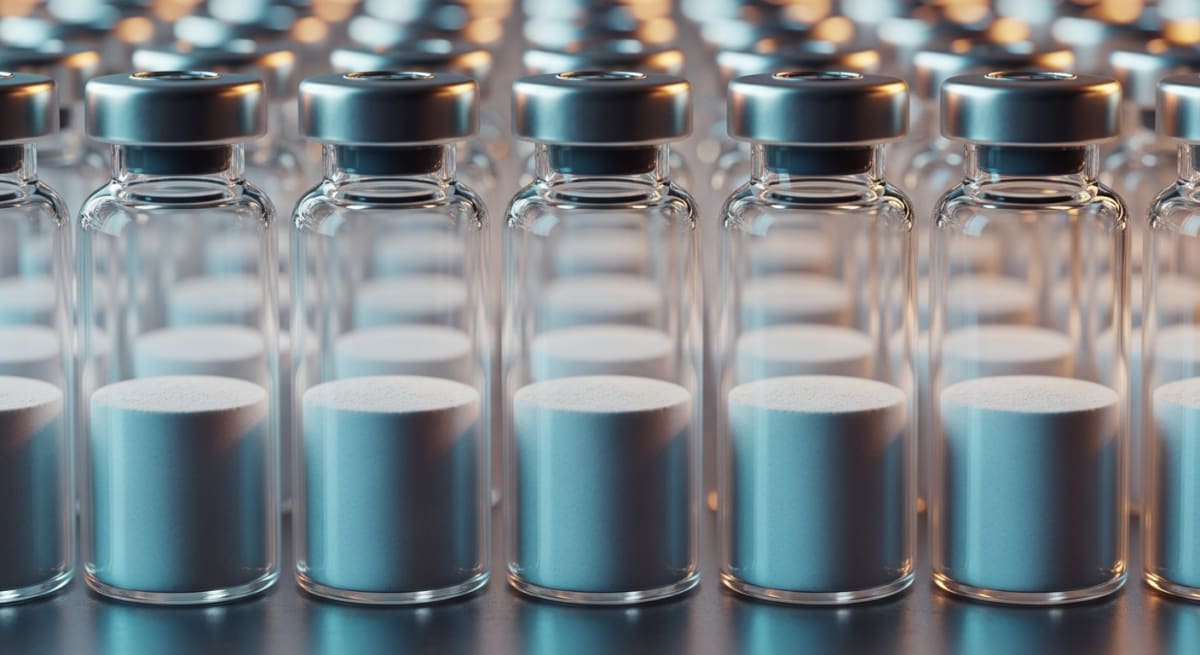
In the field of in-vitro biochemical research, the precision of quantitative assays depends heavily on the accuracy of reagent preparation. Lyophilised peptides are typically supplied as highly purified, desiccated powders within an amorphous solid-state cake matrix to preserve chemical stability and prevent thermodynamic degradation during transport and storage. The transition from this solid state to a liquid phase—known as reconstitution—demands rigorous mathematical precision. Even minor calculation errors during this phase can compromise the validity of subsequent experimental assays, leading to inconsistent data, accelerated peptide hydrolysis, and wasted research resources.
To ensure reproducible experimental conditions, researchers must master the basic algebraic relationship governing concentration, mass, and volume. The fundamental equation is expressed as: Mass = Concentration x Volume. When working with research peptides, mass is typically measured in milligrams (mg), volume in millilitres (ml) or microlitres (µl), and concentration in micrograms per microlitre (µg/µl) or milligrams per millilitre (mg/ml). Understanding this stoichiometry is critical for maintaining consistent molar concentrations across experimental replicates.
For example, if a laboratory vial contains 5 mg of a lyophilised peptide, and the target concentration for the stock solution is 2 µg/µl, the researcher must calculate the exact volume of reconstitution solvent required. First, convert milligrams to micrograms: 5 mg = 5000 µg. Next, rearrange the formula to solve for volume: Volume = Mass / Concentration. This yields: Volume = 5000 µg / 2 µg/µl = 2500 µl (or 2.5 ml). To prevent manual transcription errors or mathematical miscalculations, researchers frequently employ a digital peptide calculator to verify their results before initiating the physical reconstitution process.
A single microlitre deviation can completely invalidate an entire multi-week assay by altering the thermodynamic equilibrium of receptor-ligand interactions.
Beyond basic algebra, the physical properties of the solvent and the solute must be carefully considered. The choice of reconstitution solvent is critical for maintaining peptide stability, preserving secondary structure, and preventing degradation pathways such as deamidation or oxidation. Researchers should consult a comprehensive solvent selection protocol to determine whether sterile water, a weak acid, or a buffered saline solution is appropriate for the specific peptide sequence, taking into account its isoelectric point (pI). For multi-use vials, a bacteriostatic reconstitution solution containing a preservative (such as 0.9% benzyl alcohol) is often preferred to prevent bacterial proliferation during storage. Furthermore, researchers must account for displacement volume. When a solid powder is dissolved in a liquid, the final volume of the solution may be slightly larger than the volume of the added solvent. While this displacement is often negligible for low-concentration solutions, it can introduce measurable errors in highly concentrated stock solutions.
Pipetting technique remains a primary source of concentration variance. Calibrated micropipettes must be used at room temperature, as temperature differences between the liquid and the pipette tip can alter the volume dispensed. Additionally, the physical method of dissolution affects the final concentration. Vigorous shaking can cause mechanical shearing of sensitive peptide chains, disrupt disulfide bonds, or generate excessive foam, which traps a portion of the peptide in the bubbles and alters the concentration of the remaining liquid. Gentle swirling is always recommended to preserve the structural integrity of the peptide backbone. Hydrophobic peptides present another challenge, as they may not dissolve readily in aqueous solvents due to steric hindrance and non-polar side chains. In such cases, a minute amount of an organic co-solvent (such as dimethyl sulfoxide [DMSO] or sterile dilute acetic acid) must be introduced first to initiate dissolution, followed by the gradual addition of the primary aqueous solvent.
Laboratory FAQ: Reconstitution Protocols
What is the fundamental formula for reconstituting peptides math?
The core equation is Concentration = Mass / Volume. For ease of use, remember that 1 mg/ml is mathematically identical to 1 µg/µl. This equivalence simplifies conversions when preparing stock solutions from milligram-scale vials, ensuring high precision during reconstitution calculations.
How do you reconstitute peptides in a sterile laboratory environment?
To reconstitute peptides safely, first allow the lyophilised vial to equilibrate to room temperature to prevent condensation. Sanitise the rubber septum with an isopropyl alcohol wipe. Using a calibrated micropipette, slowly dispense the reconstitution solvent down the inner glass wall of the vial to avoid direct impact on the delicate powder. Gently swirl the vial in a circular motion until the powder is fully dissolved. Always ensure that high-quality research reagents are handled within a certified laminar flow hood to maintain sterility.
How long do peptides last once reconstituted under standard storage conditions?
The stability of reconstituted peptides depends on their primary sequence, pH, and storage temperature. Once in solution, peptides are far more vulnerable to hydrolysis, deamidation, and enzymatic cleavage. At standard refrigeration temperatures (4°C), most reconstituted peptides remain stable for approximately 2 to 4 weeks. For extended preservation, store the solution in single-use aliquots at -20°C or -80°C to prevent degradation caused by repeated freeze-thaw cycles, which can disrupt secondary structures.
Why should researchers use a digital reconstitution peptide calculator?
A digital reconstitution peptide calculator provides a reliable, automated double-check for laboratory calculations. It minimises the risk of human error when converting complex units, ensuring that the final concentrations are highly accurate and reproducible across different experimental batches.
Scientific References
- Powell, M. F., et al. (1995). Peptide stability in aqueous solutions. Journal of Pharmaceutical Sciences, 84(2), 217-223. View published research
- Manning, M. C., et al. (1989). Stability of protein pharmaceuticals. Pharmaceutical Research, 6(11), 903-918. View published research
- Shirley, B. A. (1995). Protein conformational stability. Methods in Molecular Biology, 40, 177-190. View published research
- Cleland, J. L., et al. (1993). The development of stable protein formulations: a close look at alternative lyophilization technologies. Critical Reviews in Therapeutic Drug Carrier Systems, 10(4), 307-377. View published research
- Wang, W. (1999). Instability, stabilization, and formulation of liquid protein pharmaceuticals. International Journal of Pharmaceutics, 185(2), 129-188. View published research
- Zheng, J. Y., et al. (1998). Influence of reconstitution volume and solvent on the physical stability of lyophilized formulations. Journal of Pharmaceutical Sciences and Technology, 52(5), 210-215. View published research
- Carpenter, J. F., et al. (1997). Rational design of stable lyophilized protein formulations: some practical advice. Pharmaceutical Research, 14(8), 969-975. View published research
⚠️ Research Use Only Disclaimer: All peptides and compounds are sold strictly for in-vitro laboratory research purposes only. Not intended for human or veterinary use, not a dietary supplement, and not approved to diagnose, treat, cure, or prevent any disease or condition. For use by qualified researchers in suitably equipped laboratory environments only. Amino Peptides Ltd operates in full compliance with UK MHRA regulations and applicable EU research chemical guidelines.