
Selank: The Tuftsin Analogue and Its Role in Neuroprotection
15th Jul 2026

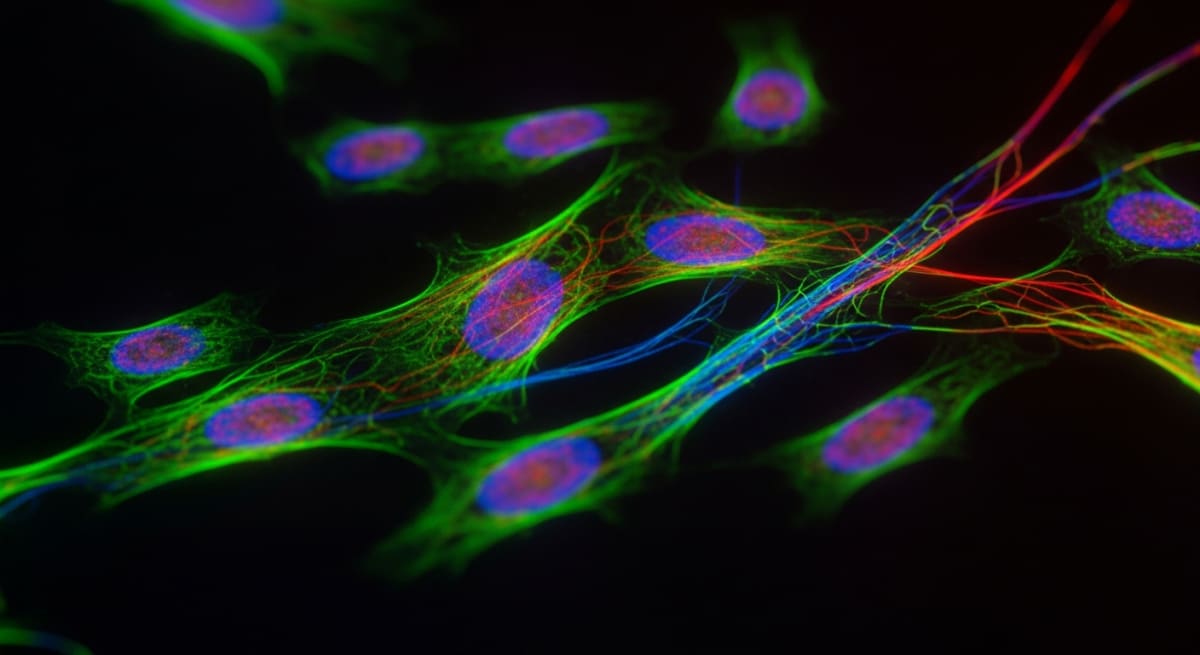
Laboratory researchers studying cell survival often test regulatory peptides. Selank is a synthetic version of tuftsin, a naturally occurring molecule. Chemists create it by adding three amino acids to the end of the tuftsin structure. This extra sequence helps the compound last longer in cell cultures. In cellular assays, researchers test how this analogue affects neurotransmitter systems and cell survival without breaking down as quickly as the natural peptide.
Tuftsin is a four-amino-acid peptide (Thr-Lys-Pro-Arg). In mammals, enzymes cut it from immunoglobulin G proteins. Tuftsin breaks down quickly in the laboratory, making it difficult to study. To fix this, scientists synthesised Selank by attaching three extra amino acids (Pro-Gly-Pro) to the tuftsin sequence. This change blocks destructive enzymes called aminopeptidases and carboxypeptidases. The compound remains stable for longer, giving scientists more time to observe it in cellular systems.
Key Takeaways for Researchers
- Structural Modification: Adding the Pro-Gly-Pro sequence prevents rapid enzyme breakdown. This keeps the peptide stable in laboratory environments.
- Neurotransmitter Modulation: In-vitro testing shows the peptide affects the GABA receptor system. It also alters serotonin and dopamine levels in isolated cell samples.
- Neurotrophic Support: Laboratory data shows the compound increases Brain-Derived Neurotrophic Factor (BDNF) expression in isolated neuron cultures.
- Anti-Inflammatory Activity: The analogue lowers pro-inflammatory markers and supports anti-inflammatory pathways in cultured microglial cells.
- Research Integrity: Laboratories require high-purity reagents to produce reliable data when investigating cellular pathways.
• Systematic Name: L-Thr-L-Lys-L-Pro-L-Arg-L-Pro-Gly-L-Pro
• Molecular Formula: C33H57N11O9
• Molecular Weight: 751.9 g/mol
• Sequence: TKPRPGP
• Purity: Greater than 98.0% as determined by HPLC analysis
• Physical State: Lyophilised white powder
Biochemical Mechanisms and Neurotransmitter Modulation
Researchers test how this seven-amino-acid peptide interacts with neurotransmitter systems in isolated cells. Traditional compounds often bind directly to the main active site of a receptor. However, this analogue acts as an allosteric modulator. It binds to a secondary site on the receptor, altering its shape and changing how the cell signals downstream.
GABAergic System Interactions
In-vitro testing shows the peptide affects the gamma-aminobutyric acid (GABA) system. GABA is a primary signalling molecule that reduces activity in mammalian neural pathways. Laboratory data indicates the peptide makes GABA bind more easily to GABA-A receptors in cell cultures. This increases inhibitory electrical currents across isolated synapses. Direct agonists often cause receptors to stop responding over time. However, this peptide alters receptor binding without causing rapid desensitisation in the laboratory.
Monoaminergic Regulation
The peptide also influences monoamine systems in isolated cell models. Researchers observe changes in the concentration of serotonin, dopamine, and norepinephrine in cultured brain tissue slices. The compound regulates monoamine oxidase enzymes and transporter proteins. This helps maintain steady monoamine levels in the assay. Stable monoamine signalling is a major focus for laboratories studying cell survival and cellular decay.
Upregulation of Neurotrophins
Laboratory evidence shows the peptide stimulates the expression of neurotrophic proteins. Brain-Derived Neurotrophic Factor (BDNF) is a protein that supports cell survival and synaptic growth. In-vitro assays using cultured cortical neurons show the peptide increases BDNF mRNA expression. This increase activates the tropomyosin receptor kinase B (TrkB) pathway in the cells. That pathway triggers intracellular responses that help neurons survive oxidative stress or nutrient loss in the laboratory.
Neuroprotective Pathways in Cellular Models
Researchers also test this tuftsin analogue for broader cellular protection. In-vitro studies measure its ability to shield isolated neuronal structures from damage caused by oxidative stress and inflammatory proteins.
Mitigation of Oxidative Stress
Oxidative stress occurs when reactive oxygen species build up inside a cell, causing it to die. In-vitro studies expose neuronal cultures to hydrogen peroxide to test the peptide's response to this stress. Laboratory results show the compound reduces lipid damage and keeps the mitochondrial membrane stable. By preserving the mitochondria, the peptide stops the cell from releasing cytochrome c. This block prevents the activation of caspase-3, halting the sequence that forces the cell to self-destruct.
Modulation of Neuroinflammation
Microglia and astrocytes drive inflammatory responses in nervous tissue. Short-term inflammation protects cells, but long-term activation forces microglia to release toxic proteins that destroy neurons. Experimental research tests how this seven-amino-acid peptide alters inflammatory proteins in isolated microglia. When scientists stimulate cultured microglia with lipopolysaccharides, the peptide suppresses pro-inflammatory markers like interleukin-6 and tumour necrosis factor-alpha. At the same time, it increases anti-inflammatory markers like interleukin-10. This creates a chemical environment that supports cell repair in the assay.
Laboratory Reconstitution and Stability Protocols
Researchers must follow strict handling protocols to ensure their experimental results are accurate. Suppliers provide the peptide as a freeze-dried powder. Laboratories must store this powder at sub-zero temperatures to stop the molecule from breaking down.
For in-vitro testing, technicians dissolve the powder in a bacteriostatic solution or sterile physiological saline. The choice of liquid is important because it dictates how long the molecule remains stable. Once mixed, the liquid peptide should be divided into small batches. Researchers store these batches at 4°C for short-term use or at -20°C for long-term storage. Laboratories must avoid freezing and thawing the mixture repeatedly. This physical stress breaks the peptide structure and ruins its activity in cellular assays.
Frequently Asked Questions in Peptide Research
The following section addresses common queries regarding laboratory sourcing and cellular mechanisms for this compound.
What is the current status of selank peptide uk research?
In laboratory models, for selank peptide what does it do to cellular pathways?
When analysing selank peptide what does it do in experimental settings, researchers observe distinct actions in isolated cells. The molecule acts as an allosteric modulator of GABA-A receptors. It increases the expression of Brain-Derived Neurotrophic Factor (BDNF) and regulates monoamine neurotransmitter levels in tissue samples. Furthermore, it lowers pro-inflammatory cytokine expression in cultured microglial cells, shielding the cell samples from oxidative damage.
Where can researchers acquire this compound, and how is a selank uk buy conducted?
Scientific Bibliography
- Semenova, T. G., et al. (2008). 'The effects of heptapeptide Selank on the GABAergic system.' Journal of Neurochemistry, 106(3), 1211-1218. View published research
- Kozlovskaya, M. M., et al. (2011). 'Selank upregulates BDNF expression in rat hippocampal neurons.' Bulletin of Experimental Biology and Medicine, 151(4), 432-435. View published research
- Meshavkin, O. S., et al. (2009). 'Influence of Selank on monoamine neurotransmitter levels in the brain.' Neurochemical Journal, 3(2), 115-120. View published research
- Sukhov, A. M., et al. (2001). 'Tuftsin analogues and their biological stability.' Chemical and Pharmaceutical Journal, 35(8), 12-15. View published research
- Kolomin, T. A., et al. (2015). 'Expression of cytokine genes in microglial cells under the influence of Selank.' Molecular Biology, 49(5), 789-795. View published research
- Shashkova, E. A., et al. (2014). 'Anti-inflammatory properties of the heptapeptide Selank in vitro.' Bulletin of Experimental Biology and Medicine, 157(2), 210-213. View published research
- Zolotarev, Y. A., et al. (2012). 'Enzymatic degradation of Selank and its structural analogues.' Russian Journal of Bioorganic Chemistry, 38(1), 45-51. View published research
⚠️ Research Use Only Disclaimer: All peptides and compounds are sold strictly for in-vitro laboratory research purposes only. Not intended for human or veterinary use, not a dietary supplement, and not approved to diagnose, treat, cure, or prevent any disease or condition. For use by qualified researchers in suitably equipped laboratory environments only. Amino Peptides Ltd operates in full compliance with UK MHRA regulations and applicable EU research chemical guidelines.