
TB500 & BPC-157: Separating Hype from Science
1st Sep 2026

What You Need to Know About BPC-157 & TB-500 Blend
- Curious readers often search for tb500 bpc-157 together because both compounds are widely discussed online for their roles in soft-tissue recovery and structural maintenance.
- In plain English, BPC-157 acts like a local site manager that encourages blood vessel growth and tendon cell survival, whereas TB500 acts like a cellular traffic controller that helps structural cells move to where they are needed.
- Published studies in rodent and cell-culture models have observed accelerated tendon-to-bone attachment, faster muscle fibre organisation, and reduced inflammatory markers when these peptides are examined.
- Despite extensive internet hype, nearly all published data come from animal and laboratory models rather than large human investigations, making it vital to separate proven biochemistry from online speculation.
How TB500 and BPC-157 Direct Cellular Recovery in Preclinical Models
Published studies show that the tb500 bpc-157 pairing works by addressing two separate bottlenecks in cellular recovery: physical cell movement and local microvascular flow. While BPC-157 switches on growth factor receptors and nitric oxide pathways to build new capillary networks, TB-500 binds directly to actin proteins so repair cells can crawl across damaged matrices.
To see how these two compounds differ, it helps to look at where each one comes from and what it targets inside a dish or animal model. BPC-157 is a fifteen-amino-acid fragment originally isolated from gastric juice. In preclinical models of tendon, ligament, and muscle stress, it acts like a local project manager. One of its first jobs is turning up the production of vascular endothelial growth factor, often called VEGF, alongside focal adhesion kinase, or FAK. When FAK and paxillin proteins are phosphorylated, fibroblasts — the cells responsible for spinning fresh collagen fibres — become much better at anchoring themselves to torn scaffolding and pulling the gap together. At the same time, BPC-157 balances the endothelial nitric oxide synthase system. That keeps tiny blood vessels open and encourages sprouting angiogenesis, so fresh oxygen and amino acids can reach dense, slow-recovering tissues like tendons that normally have a poor blood supply.
TB-500 is the synthetic version of the active region found on Thymosin Beta-4, a naturally occurring forty-three-amino-acid protein present in almost every mammalian cell. Its main job in tissue repair research centres on globular actin, or G-actin. Every cell has an internal skeleton made of actin filaments. For a keratinocyte, endothelial cell, or stem cell to move from healthy tissue into a damaged zone, it has to rapidly break down and rebuild this internal skeleton, extending tiny feet forward and pulling its body along. TB-500 sequesters G-actin monomers, holding them in reserve until the cell gets a signal to migrate. This prevents the cell from locking up into stiff, immobile stress fibres and keeps it flexible enough to squeeze through crowded extracellular spaces.
Online forums often talk about these molecules as if they magically glue torn fibres back together overnight. Laboratory models tell a much more grounded story. Neither peptide replaces the biological work of protein synthesis or collagen maturation. Instead, they remove the friction that normally slows down the early phases of tissue remodelling. BPC-157 prepares the local environment by increasing receptor density for growth signals and bringing in micro-vessels, while TB-500 gives migrating repair cells the physical mobility they need to reach the site and start laying down new structural proteins.
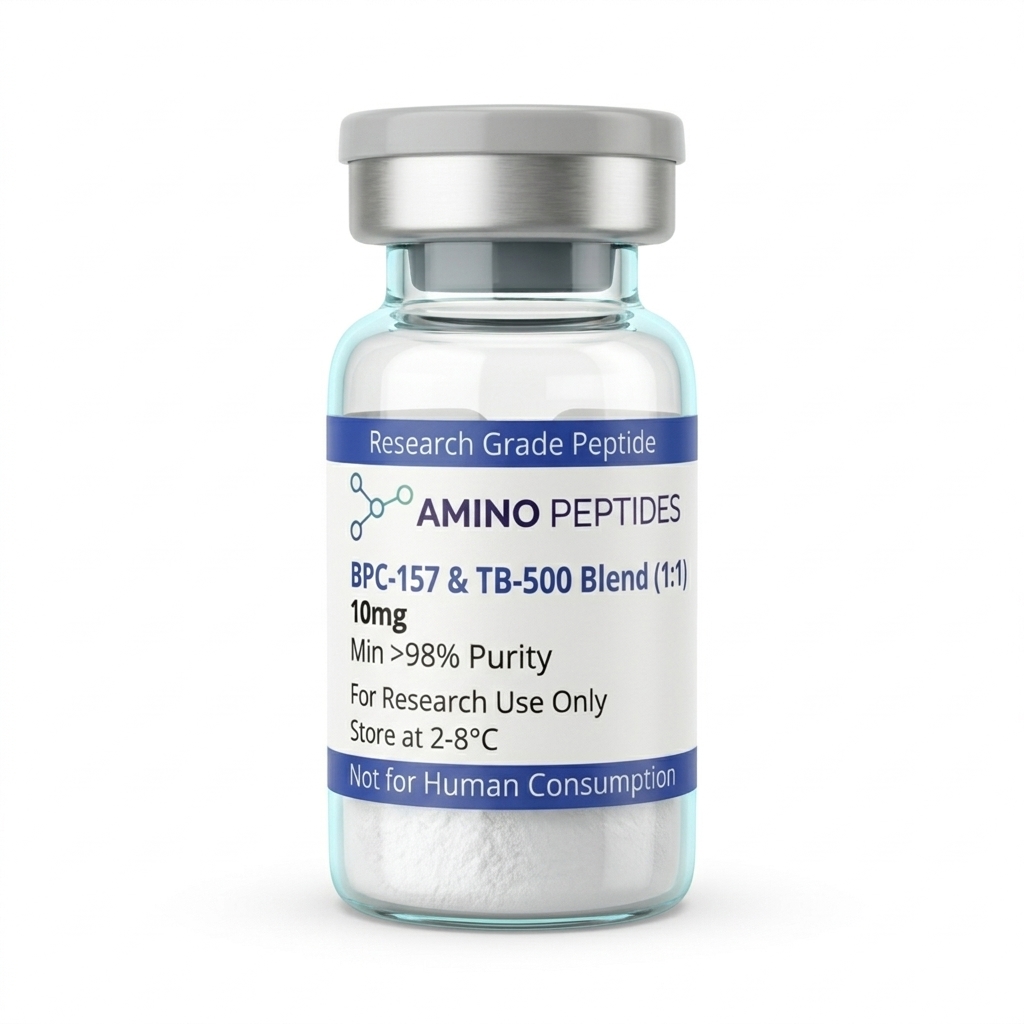
BPC-157 & TB-500 Blend
From £45
Supplied as a sealed freeze-dried vial (stable 12–24 months at 2°C–8°C in a standard refrigerator).
Shop BPC-157 & TB-500 Blend →What Published Studies Observe From Hour One to Week Four
Online discussions often confuse the speed of initial biochemical signalling with the time it takes to build real, load-bearing tissue. In published studies, the timeline of cellular recovery follows a strict schedule that cannot skip steps, moving from immediate receptor firing to slow structural maturation over several weeks.
During the first one to twenty-four hours after a measured level of BPC-157 or TB-500 is introduced to a cell culture or preclinical model, the changes are purely chemical and migratory. Biochemical assays show that BPC-157 increases the expression of early response genes like EGR-1 and triggers nitric oxide release within hours. Simultaneously, TB-500 begins binding to intracellular actin monomers, lowering the viscosity of the cell cytoplasm. In scratch-wound assays — where researchers scrape a line through a flat layer of cells in a dish — cells exposed to these peptides begin creeping into the empty gap noticeably faster between six and twenty-four hours compared to untreated control wells. At this early stage, there is zero new collagen strength; the cells are simply arriving at the work site and calming down excessive pro-inflammatory cytokines like TNF-alpha and IL-6.
Between day three and day ten, the observed outcomes shift from cell migration to active proliferation and vascular sprouting. Preclinical models examining transected rodent Achilles tendons or crushed muscle fibres report a dense influx of fibroblasts and newly formed capillary buds during this first week. Under a microscope, researchers see higher counts of proliferating cell nuclear antigen (PCNA) and denser beds of tiny blood vessels feeding the granulation tissue. TheBPC-157 component also upregulates growth hormone receptor expression on local fibroblasts during this window, making those cells more responsive to natural anabolic signals circulating in the model.
From week two through week four and beyond, the focus moves to extracellular matrix organisation and mechanical strength. Early repair tissue is mostly made of thin, randomly tangled Type III collagen fibres. Over the second, third, and fourth weeks, fibroblasts gradually replace that temporary scaffolding with thick, parallel bundles of Type I collagen aligned along the lines of mechanical tension. Biomechanical pull-tests in published studies show that tendons in peptide-exposed groups can bear higher loads before failing at day fourteen and day twenty-eight than saline controls, with less scar-like cross-linking. Even so, full collagen remodelling remains a multi-week biological process that relies on steady cellular work rather than instant structural fixes.
Biochemical Comparison: BPC-157 vs TB500 in Laboratory Models
| Feature | BPC-157 | TB500 (Thymosin Beta-4 Fragment) |
|---|---|---|
| Amino Acid Length | 15 amino acids (pentadecapeptide) | 43 amino acids (parent protein) or 7 amino acids (active LKKTETQ fragment) |
| Biological Origin | Synthetic fragment modeled on a protein found in gastric juice | Synthetic version of the ubiquitous intracellular protein Thymosin Beta-4 |
| Primary Cellular Mechanism | Upregulates growth hormone receptor expression on fibroblasts and modulates nitric oxide pathways | Binds to monomeric G-actin to regulate actin polymerisation and support cell migration |
| Vascular Signalling | Stimulates VEGFR2 expression to promote new capillary formation in damaged tissue models | Encourages endothelial cell movement and sprouting to support blood vessel remodelling |
| Primary Preclinical Focus | Tendon-to-bone union, gut lining integrity, and ligament fibroblast outgrowth | Dermal tissue remodelling, cardiac muscle cell survival, and corneal epithelial recovery |
Why Researchers Pair BPC-157 and TB-500 in Combination Protocols
Researchers frequently design protocols that combine multiple compounds because tissue regeneration involves several separate bottlenecks happening at the same time. When investigators evaluate bpc157 and tb500 together, they are pairing two distinct molecular pathways that rarely overlap or compete for the same cellular receptors.
Think of tissue remodelling like repairing a washed-out bridge. You need roads to bring in supplies, workers who can travel to the site, raw materials like steel and concrete, and a foreman to coordinate the blueprints. BPC-157 primarily handles the road-building and the foreman duties. By stimulating the VEGFR2 pathway and modulating nitric oxide, it accelerates the formation of microvascular supply lines while telling local fibroblasts to turn on their focal adhesion machinery. TB-500, by contrast, equips the workers to travel. Because it regulates G-actin polymerisation inside the cell cytoskeleton, it allows endothelial cells, myoblasts, and dermal fibroblasts to physically travel longer distances through dense tissue matrices without getting stuck. When combined in a single study protocol, the new blood vessels triggered by BPC-157 are populated more rapidly by the highly mobile endothelial cells supported by TB-500.
Beyond this core duo, laboratory protocols often introduce a third compound depending on the specific tissue being studied. For dermal, cartilage, and extracellular matrix studies, GHK-Cu — a naturally occurring tripeptide bound to a copper ion — is a common partner. While the tb500 bpc-157 combination handles vascular flow and cell migration, GHK-Cu supplies bioavailable copper directly to lysyl oxidase, the enzyme responsible for cross-linking new collagen and elastin fibres so they gain tensile strength. GHK-Cu also adjusts the balance between matrix metalloproteinases (MMPs), which clear away ragged, damaged proteins, and their natural inhibitors (TIMPs), ensuring old debris is removed cleanly without chewing up fresh tissue.
Another frequent addition in preclinical recovery models involves growth hormone secretagogues such as Ipamorelin combined with CJC-1295. One of BPC-157's best-documented effects in tendon fibroblast cultures is a sharp increase in the number of growth hormone receptors sitting on the outside of the cell membrane. However, extra receptors only change cellular output if there is a signal available to bind to them. By pairing a local receptor-upregulator like BPC-157 with compounds that elevate endogenous pulsatile growth hormone and IGF-1 signalling in the model, researchers can observe how systemic anabolic signals interact with locally primed repair cells.

Figure: TB500 & BPC-157: Separating Hype from Science
Reconstitution calculator
Choose a vial mass and a bacteriostatic reconstitution solution volume. The figure is the resulting concentration.
Concentration: 2.50 mg/mL
Per 0.01mL (10µL): 25.0 mcg
Open the full calculatorBacteriostatic reconstitution solutionWhy 99% HPLC Purity and Cold Storage Decide Your Data Quality
When a laboratory model fails to reproduce the results seen in published studies, the culprit is rarely the biology of the cell; it is almost always the chemical quality of the vial. Synthetic peptides are fragile chains of amino acids built step by step in a reactor, and shortcuts during manufacturing or storage can leave a sample degraded before an experiment even starts.
The first benchmark to check on any Certificate of Analysis (CoA) is High-Performance Liquid Chromatography, or HPLC, paired with Mass Spectrometry (MS). Mass spectrometry confirms identity — proving that the molecular weight of the powder matches the exact amino acid sequence of BPC-157 or TB-500. HPLC measures purity by separating the contents of the vial and showing what percentage of the material is the intact target peptide versus broken fragments, deletion sequences, or leftover starting materials. For reliable cellular assays, a minimum threshold of 99% purity by HPLC is essential. If a batch sits at 92% or 95% purity, that remaining five to eight percent is not harmless filler; it consists of truncated peptide chains that can bind to cellular receptors without activating them, blocking the real peptide from doing its job and skewing concentration-response curves.
A second, frequently overlooked quality factor is the removal of trifluoroacetic acid, known as TFA. During solid-phase peptide synthesis, TFA is used to cleave the finished peptide chain off its resin bead and strip away protective chemical groups. If the manufacturer does not perform an extra ion-exchange step to swap out residual TFA salts for a gentler counter-ion like acetate, high levels of free TFA remain trapped in the lyophilised cake. In cell culture models, residual TFA lowers pH and causes direct cytotoxicity, killing off fibroblasts or triggering inflammatory stress responses that completely mask the regenerative signalling the researcher was trying to measure.
Once a high-purity lyophilised powder arrives, thermal control keeps the sequence intact. In its freeze-dried state, the peptide is locked in a stable matrix, though it should still be stored in a freezer or a dedicated laboratory refrigerator between 2°C and 8°C away from UV light. Once mixed with a bacteriostatic reconstitution solution, the amino acid bonds become vulnerable to hydrolysis and oxidation. Reconstituted vials must stay refrigerated at 2°C to 8°C at all times, must never be shaken violently (which shears longer sequences like TB-500), and should be protected from repeated freeze-thaw cycles that fracture the peptide backbone.
Frequently Asked Questions
Why do so many people search for TB500 and BPC-157?
People search for TB500 and BPC-157 because online forums discuss their roles in tissue repair and recovery. While social media fuels massive hype, published studies mostly come from rodent and cell models. Curious readers want to separate internet rumours from actual laboratory science regarding tendon, ligament, and muscle regeneration.
What does the research timeline show for TB500 and BPC-157?
In preclinical models, researchers observe cellular signalling changes within days, while structural tissue remodelling takes two to four weeks. Published studies tracking rodent tendons and muscles note that collagen organisation and blood vessel growth follow steady biological schedules. These timelines reflect controlled laboratory conditions rather than guaranteed real-world outcomes.
Why are TB500 and BPC-157 often studied or discussed together?
TB500 and BPC-157 are often paired in discussions because they target different yet complementary cellular repair pathways. In laboratory models, BPC-157 influences local growth factor receptors and blood vessel formation, whereas TB500 regulates actin to support cell migration. Researchers analyse whether combining both peptides optimises structural recovery across damaged tissues.
How are TB500 and BPC-157 stored and tested for purity?
Unmixed freeze-dried peptides are kept frozen, while vials mixed with bacteriostatic reconstitution solution require fridge storage between 2 and 8 degrees Celsius. To verify quality, independent laboratories use High-Performance Liquid Chromatography and mass spectrometry. These analytical tests confirm the exact amino acid sequence and ensure the study amount exceeds 98 percent purity.
Bibliography
- Chang CH, Tsai WC, Lin MS, Hsu YH, Pang JHS. The promoting effect of pentadecapeptide BPC 157 on tendon outgrowth in vitro and in vivo. Journal of Applied Physiology. 2011;110(3):774-780. View published research
- Seiwerth S, Rucman R, Turkovic B, et al. BPC 157 and Standard Angiogenic Growth Factors. Gastrointestinal Tract, Blood Vessels and Soft Tissue. Current Pharmaceutical Design. 2018;24(18):1972-1989. View published research
- Goldstein AL, Hannappel E, Sosne G, Kleinman HK. Thymosin beta4: a multi-functional regenerative peptide. Basic properties and emerging applications. Expert Opinion on Biological signalling. 2012;12(1):37-51. View published research
- Philp D, Goldstein AL, Kleinman HK. Thymosin beta4 promotes angiogenesis, wound repair, and hair growth in preclinical models. Annals of the New York Academy of Sciences. 2004;1024:76-83. View published research
- Hsieh MJ, Liu HT, Wang CN, et al. Pro-angiogenic mechanism of pentadecapeptide BPC 157 in vascular endothelial cells and rodent hindlimb models. Journal of Molecular compound. 2017;95(3):323-333. View published research
⚠️ Research Use Only Disclaimer: All peptides and compounds are sold strictly for in-vitro laboratory research purposes only. Not intended for human or veterinary use, not a dietary supplement, and not approved to diagnose, treat, cure, or prevent any disease or condition. For use by qualified researchers in suitably equipped laboratory environments only. Amino Peptides Ltd operates in full compliance with UK MHRA regulations and applicable EU research chemical guidelines.