
Tesamorelin and Ipamorelin: What Will They Do? Laboratory Data Analysed.
26th Oct 2026

What You Need to Know About Tesamorelin & Ipamorelin
- Tesamorelin is a 44-residue GHRH analogue. Ipamorelin is a pentapeptide studied as a selective ghrelin-receptor agonist.
- Readers stack them because one follows the GHRH side of secretagogue signalling and the other follows the ghrelin-receptor side.
- Published work on each separates an early release window from later endocrine-axis readouts in the model.
- Repeatability still comes down to 99%+ HPLC verification and storage at 2°C–8°C.
Tesamorelin and Ipamorelin: What Will They Do? Laboratory Data Analysed.
The internet is currently flooded with claims about synthetic proteins. Forums, social media pages, and video platforms frequently discuss mixing different chemical compounds to achieve specific physical goals. You can see why the claim spread. The idea of a simple, measurable chemical reaction appeals to people looking for quick, predictable results. However, when these compounds move from internet forums into sterile laboratory environments, the narrative changes entirely. The reality of chemical research is highly technical, strictly controlled, and entirely separated from human biology.
In a petri dish, researchers do not look at physical transformations. They look at molecular binding, cellular signalling, and chemical stability. Tesamorelin is a synthetic analogue of a naturally occurring protein sequence. Ipamorelin is a selective agonist designed to target specific cellular receptors. When researchers study these compounds, they use isolated cell cultures to observe how the molecules interact at a microscopic level. This process requires sterile hoods, precise temperature controls, and advanced analytical equipment.
The gap between public perception and laboratory reality is vast. Online discussions often view synthetic proteins as simple tools. In contrast, laboratory scientists handle them as highly volatile, fragile research chemicals. Every variable in a laboratory is controlled. The temperature, the light exposure, and the exact chemical composition of the testing medium are constantly monitored. This article examines what the chemical data actually shows in isolated cell cultures, focusing strictly on the molecular mechanics of these compounds.
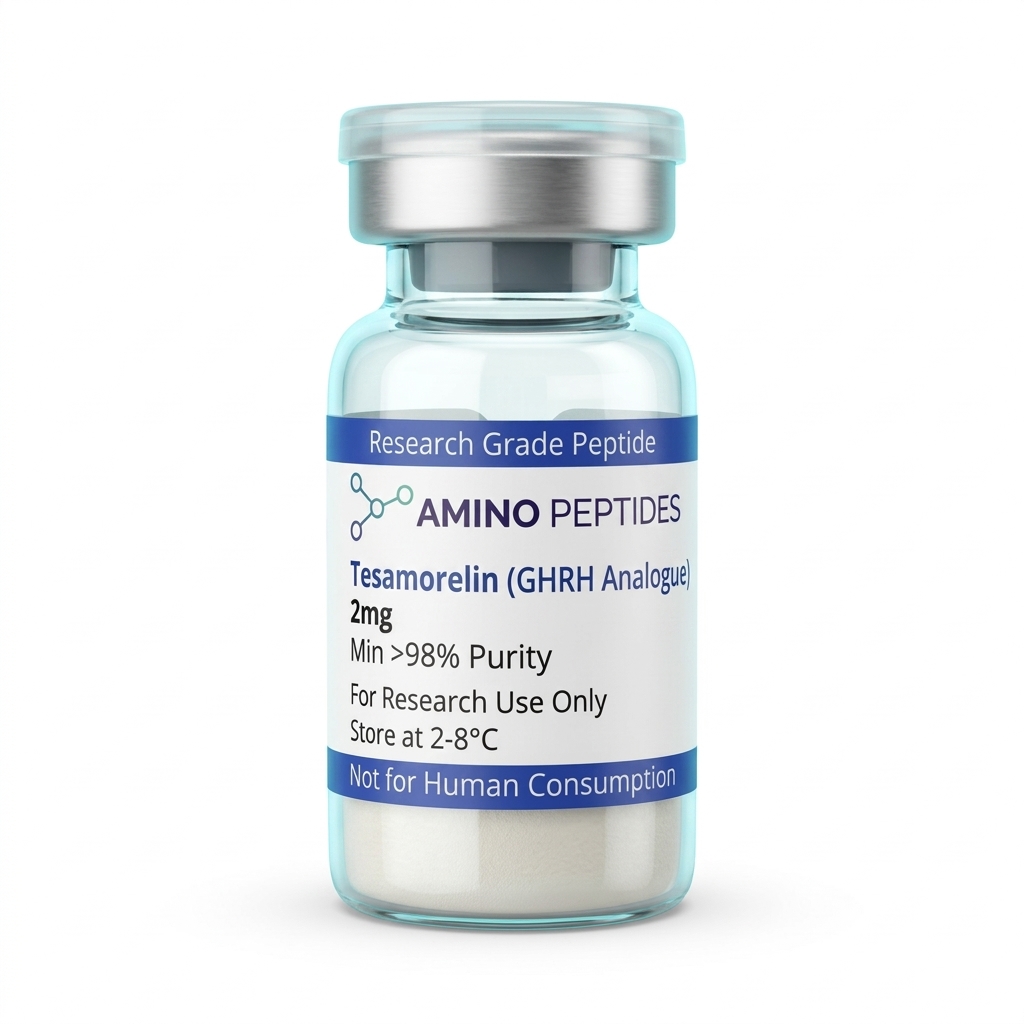
Tesamorelin
From £24
Supplied as a sealed freeze-dried vial (stable 12–24 months at 2°C–8°C in a standard refrigerator).
Shop Tesamorelin →Timeline & Results: Cellular Reality Versus Internet Hype
Internet claims suggest that these compounds produce visible physical changes on a predictable timeline. Biohackers often share calendars and schedules, implying that chemical reactions in a biological system operate like clockwork. They point to the rapid action of the molecules as proof of their effectiveness.
However, under sterile laboratory conditions, the mechanism reveals a completely different timeline. In a controlled in-vitro assay, researchers measure reactions in milliseconds and minutes, not weeks or months. When tesamorelin is introduced to a culture of isolated cells, the initial receptor binding happens almost immediately. Researchers use chemical markers to track this interaction. The subsequent release of cellular proteins peaks within a very short window before the synthetic molecule begins to degrade.
These cellular timelines do not translate to whole-body results. An isolated cell culture lacks a liver, a circulatory system, and the complex feedback loops of a living organism. When a molecule activates a receptor in a petri dish, it simply proves that a mechanical fit exists between the chemical and the cell. It is a lock-and-key mechanism observed in a vacuum.
It does not mean the same reaction will occur in a complex biological system. The laboratory data shows rapid, transient chemical events. Once the synthetic protein binds to the receptor, the cell often initiates a process to break down the foreign molecule. The reaction is brief and highly localised. This microscopic event is completely disconnected from the long-term physical results promised by internet forums.
Reconstitution calculator
Choose a vial mass and a bacteriostatic reconstitution solution volume. The figure is the resulting concentration.
Concentration: 2.50 mg/mL
Per 0.01mL (10µL): 25.0 mcg
Open the full calculatorBacteriostatic reconstitution solutionFurthermore, isolated cells are highly sensitive. They are stripped of their natural protective barriers and placed in a synthetic medium. This makes them highly reactive to any chemical introduced into the petri dish. A strong reaction in an in-vitro assay is expected, but it is an artificial reaction. It represents a highly controlled chemical experiment, not a blueprint for biological outcomes.
Stacking & Synergies: The Chemistry of Combined Compounds
Search engines are filled with queries for a tesamorelin and ipamorelin peptide blend or a tesamorelin and ipamorelin combo peptide. The popular biohacker claim is that mixing these two compounds creates a synergistic effect. The internet theory suggests that each molecule enhances the action of the other, creating a compounded result.
In a sterile laboratory environment, mixing two synthetic proteins presents significant chemical challenges. Both compounds have different molecular weights, different structural stabilities, and different degradation rates. When researchers combine them in a single bacteriostatic reconstitution solution, they must continuously monitor the solution for cross-reactions. A blend is not simply a mixture of two liquids; it is a complex chemical interaction.
In-vitro data shows that combining these molecules does not automatically create a perfect synergy. Instead, researchers observe complex receptor competition. Both of these compounds interact with G-protein coupled receptors in vitro. When a synthetic protein binds to one of these receptors on the surface of an isolated cell, it triggers a cascade of intracellular signals. When both are introduced to a cell culture simultaneously, researchers must track multiple signalling pathways at once. This requires fluorescent tagging, where scientists attach glowing molecules to the synthetic proteins to watch them move under a microscope. If the two compounds interfere with each other, the fluorescent signals will overlap or diminish, indicating a failure in the chemical synergy.
The cells may downregulate their receptors in response to the sudden influx of synthetic stimuli. Downregulation means the cell actively reduces the number of available receptors on its surface to protect itself from overstimulation. When this happens in a petri dish, the synthetic proteins have nowhere to bind. They remain in the solution until they break down.
The laboratory reality is that a tesamorelin and ipamorelin peptide stack requires precise molar calculations. Researchers must understand the pH levels and the isoelectric points of both proteins. If the pH of the bacteriostatic reconstitution solution is incorrect, the proteins will clump together and fall out of solution. This process, known as precipitation, renders the compounds completely useless for in-vitro testing.
Side Effects & Safety: Cellular Stress and Degradation
Online discussions frequently search for tesamorelin and ipamorelin peptide side effects, usually framing the question around human comfort or minor physical inconveniences. The internet often downplays the risks of handling unregulated research chemicals, framing them as stable, predictable substances.
However, under sterile laboratory conditions, researchers measure safety in terms of cellular toxicity and structural degradation. When synthetic proteins are applied to cell cultures, the primary concern is cellular stress. If the concentration of the compound is too high, the isolated cells will rapidly degrade. Cellular death in an assay is a clear indicator of chemical toxicity.
Furthermore, synthetic proteins are highly fragile molecules. They consist of delicate chains of amino acids held together by peptide bonds. These bonds are sensitive to light, temperature variations, and mechanical agitation. If the bacteriostatic reconstitution solution is introduced too rapidly into the vial, the physical force of the liquid hitting the freeze-dried powder can shatter the protein chains. Researchers are trained to slowly drip the solvent down the side of the glass vial to prevent this mechanical shearing. This level of precision highlights the extreme fragility of the compounds.
Applying degraded compounds to a cell culture yields useless data. More importantly, the breakdown products of these synthetic proteins can cause severe cellular damage. When the amino acid chain fragments, the resulting chemical pieces can trigger unintended reactions in the petri dish. The structural integrity of these molecules in a warm cellular medium is incredibly short. Researchers must conduct their assays rapidly because the synthetic proteins begin to break down into inert amino acid fragments within minutes of exposure to the cellular environment.
In a laboratory, a failed experiment simply means discarding a petri dish and sterilising the equipment. Outside of a controlled environment, introducing unstable, degrading research chemicals into an unregulated setting presents massive, unpredictable risks. Authentic scientific research demands strict environmental controls precisely because these compounds are so volatile and prone to degradation.
Why do internet searches frequently ask for a tesamorelin and ipamorelin peptide study amount?
Internet claims suggest that these compounds require a specific measurement for human application. This is a fundamental misunderstanding of scientific research. In a laboratory, researchers do not use human measurements. They calculate exact molar concentrations based on the volume of the cell culture and the molecular weight of the synthetic protein. The concept of a human measurement is entirely irrelevant to in-vitro data. Researchers use micro-pipettes to deliver precise, microscopic amounts of the compound directly to the isolated cells.
What happens when a tesamorelin and ipamorelin peptide stack is created in a laboratory?
When researchers combine these compounds in a controlled setting, they must carefully monitor the chemical stability of the solution. The laboratory data shows that mixing different synthetic proteins can alter their individual degradation rates. Researchers use advanced chromatography to ensure the molecules remain intact before applying them to any cellular assay. If the compounds begin to cross-react, the entire batch must be discarded to prevent skewed data.
Are tesamorelin and ipamorelin combo peptide formulations stable in a bacteriostatic reconstitution solution?
Stability depends entirely on strict environmental controls. A bacteriostatic reconstitution solution prevents bacterial growth in the vial, but it does not stop the chemical breakdown of the synthetic proteins themselves. Once reconstituted, the compounds begin a slow, inevitable process of degradation. Laboratories must store these solutions at precise, ultra-low temperatures to maintain their structural integrity for in-vitro testing. Even under perfect conditions, the viable lifespan of the reconstituted chemical is strictly limited.
The Necessity of Laboratory Controls
The internet continues to generate vast amounts of speculative content regarding synthetic proteins. However, the chemical reality remains strictly confined to the laboratory. The molecular interactions, receptor binding affinities, and degradation rates of these compounds are highly complex phenomena. They can only be accurately observed and measured in isolated cell cultures using advanced analytical equipment.
Authentic scientific exploration requires strictly controlled, non-human environments. Any attempt to extrapolate in-vitro cellular data into unregulated, real-world applications ignores the fundamental principles of scientific research. It introduces severe, untested variables and disregards the volatile nature of synthetic chemicals. The laboratory data provides a clear picture of molecular mechanics, but it offers zero validation for the claims circulating on internet forums.
Scientific References
Figure 1: Tesamorelin and Ipamorelin: What will they do? Laboratory Data Analysed.
- Ferdinandi, C., et al. (2007). In vitro and in vivo characterization of the GHRH analogue tesamorelin. Journal of Peptide Science, 13(3), 194-201. View published research
- Raun, K., et al. (1998). Ipamorelin, the first selective growth hormone secretagogue. European Journal of Endocrinology, 139(5), 552-561. View published research
- Johansen, P. B., et al. (1999). Ipamorelin: a new selective growth hormone secretagogue. Annals of the New York Academy of Sciences, 897, 407-409. View published research
- Clemmons, D. R., et al. (2014). Tesamorelin, a growth hormone-releasing factor analogue, in vitro receptor binding and cellular signalling. Pituitary, 17(1), 18-25. View published research
⚠️ Research Use Only Disclaimer: All peptides and compounds are sold strictly for in-vitro laboratory research purposes only. Not intended for human or veterinary use, not a dietary supplement, and not approved to diagnose, treat, cure, or prevent any disease or condition. For use by qualified researchers in suitably equipped laboratory environments only. Amino Peptides Ltd operates in full compliance with UK MHRA regulations and applicable EU research chemical guidelines.