
Tesamorelin Concentration Varieties: Optimising Reconstitution for Large-Scale Laboratory Assays
2nd Jul 2026
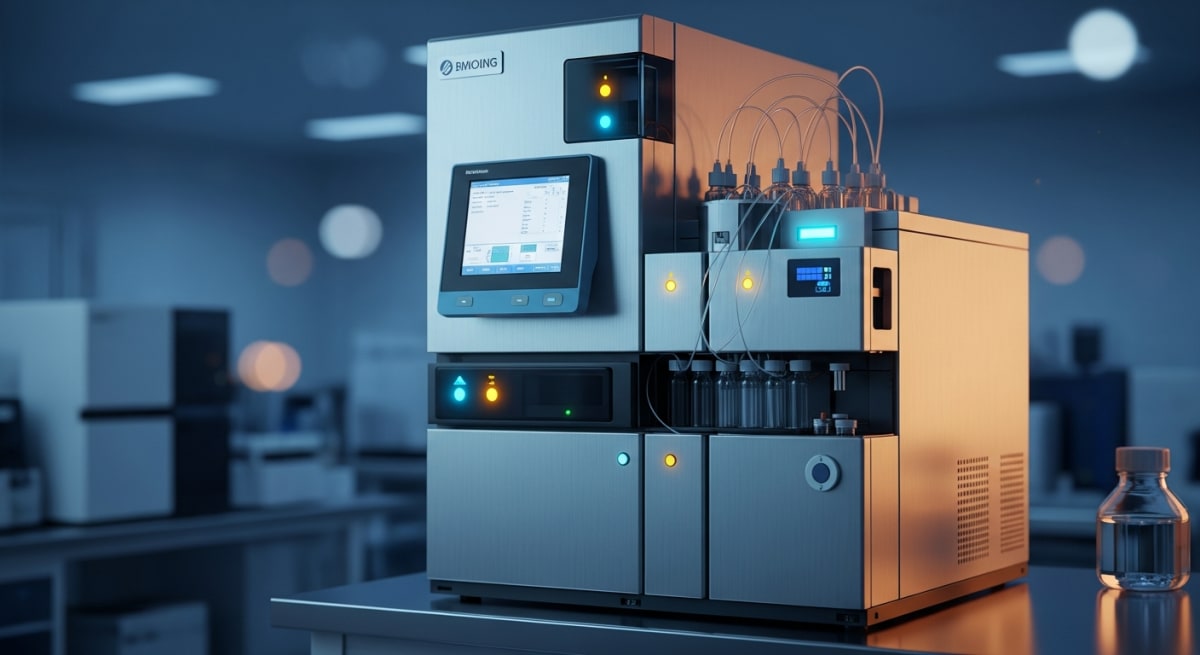
Regulating experimental variables is mandatory when analysing growth hormone-releasing hormone (GHRH) analogues via cellular assays. Tesamorelin features distinct structural modifications that heavily influence its in-vitro stability and receptor affinity. Technicians designing high-throughput laboratory models must calculate peptide concentrations meticulously to ensure data reproducibility. Standardising these parameters halts experimental drift; minor variations frequently induce G-protein coupled receptor (GPCR) desensitisation, arrestin recruitment, or erratic Gαs-mediated adenylate cyclase signalling within cell cultures. This technical review assesses the physicochemical traits of tesamorelin, outlining the mathematical requirements for formulating accurate concentration gradients. Tracking the molecular dynamics of this peptide allows laboratories to refine their experimental architecture, restrict compound degradation, and produce verifiable analytical data.
Scientific Abstract
Objective: To measure how concentration variations of the GHRH analogue tesamorelin influence in-vitro receptor binding and intracellular signalling stability throughout high-throughput laboratory assays.
Methodology: Technicians reconstituted lyophilised tesamorelin using a standard solvent, creating concentration profiles ranging from 0.1 nM to 10 microM. These formulations were applied to cultured pituitary cell lines to monitor GHRH receptor (GHRHR) activation and cAMP accumulation.
Results: Optimal receptor activation occurred between 10 nM and 50 nM, producing continuous cAMP generation. Concentrations exceeding 100 nM initiated progressive receptor down-regulation, clathrin-mediated endocytosis, and peptide self-association. Conversely, concentrations below 1 nM yielded inconsistent signalling kinetics.
Conclusion: Precise reconstitution and strict concentration management are mandatory for maintaining peptide integrity.
Molecular Structure and Chemical Properties of Tesamorelin
Tesamorelin is a synthetic 44-amino-acid peptide analogue synthesised to emulate native hypothalamic GHRH. Its molecular architecture incorporates a specific modification: a trans-3-hexenoic acid group bound to the N-terminal tyrosine residue (Tyr1). This lipophilic addition fundamentally shifts the chemical behaviour and spatial conformation of the peptide compared with the endogenous molecule. The structural variation yields heightened resistance to enzymatic degradation, particularly from dipeptidyl peptidase-4 (DPP-4), an enzyme known to rapidly cleave native GHRH at the Ala2-Asp3 peptide bond in biological media.
Possessing a molecular weight of roughly 5135.9 g/mol, tesamorelin demonstrates specific solubility characteristics governed by its mass and hydrophobic N-terminal group. These traits dictate strict handling protocols during laboratory preparation. The lyophilised powder presents as a highly hygroscopic, white amorphous solid. Upon introduction to aqueous environments, the hydrophobic trans-3-hexenoic acid region can provoke self-association, micelle formation, and β-sheet aggregation unless researchers strictly monitor the solvent's ionic strength and pH. Charting these biophysical properties provides the foundation for constructing reliable in-vitro experiments.
Reconstitution Dynamics and Molar Mathematics
Transitioning tesamorelin from a stable lyophilised format into an active liquid phase mandates exact reconstitution procedures. Solvent selection immediately impacts experimental outcomes; utilising sterile water or a bacteriostatic diluent preserves the monomeric state of the peptide. Technicians must dispense the solvent slowly against the internal glass wall of the vial, rather than forcefully expelling it directly onto the powder. This gentle introduction prevents mechanical shear stress, which can irreversibly disrupt the delicate secondary structure of the compound.
Determining the precise molar concentration of the final stock solution requires strict mathematical accuracy. Reconstituting a 2.0-milligram vial of tesamorelin in 1.0 millilitre of solvent yields a 2.0 mg/mL concentration. Converting this value to molarity requires the standard equation: Molarity (M) = Mass (g) / (Molecular Weight (g/mol) x Volume (L)). For a 2.0 mg/mL solution (molecular weight ~5135.9 g/mol), the resulting stock concentration is approximately 389.4 micromolar (microM). Laboratory personnel typically use digital calculators to confirm dilution volumes, removing human error and maintaining absolute consistency across all testing groups.
Concentration Profiles in Cell Culture Models
In-vitro tesamorelin research largely focuses on its binding affinity for the GHRH receptor (GHRHR) and the subsequent triggering of intracellular messenger networks. Peptide concentration inside the culture medium dictates the rate and longevity of these receptor-ligand interactions. Concentration-response curves extracted from primary pituitary cell cultures confirm that tesamorelin operates with high potency. It initiates cAMP accumulation at sub-nanomolar concentrations via Gαs protein activation and subsequent adenylate cyclase stimulation.
Defining the ideal working concentration requires a careful balance between analytical sensitivity and receptor saturation. Lower concentrations (0.1 nM to 5.0 nM) efficiently stimulate signalling without inducing rapid receptor internalisation. In contrast, exposing cell lines to elevated concentrations (exceeding 100 nM) consistently activates a compensatory feedback mechanism. This biological response drives receptor down-regulation, β-arrestin-2 recruitment, and a progressive reduction in the overall cellular response.
High-concentration environments concurrently raise the probability of peptide precipitation. The trans-3-hexenoic acid group may initiate a hydrophobic collapse, forcing the peptides to aggregate into non-functional fibrils. This physical phase transition lowers the effective concentration of the active peptide while simultaneously exerting non-specific cytotoxic stress on cultured cells. Consequently, researchers must set definitive concentration boundaries, normally restricting working solutions to the 10 nM to 50 nM range.
Comparative Stability and Synthesis Variations
When compared with alternative GHRH analogues, such as sermorelin or modified GRF (1-29), tesamorelin displays unique stability profiles that influence its suitability for extended assays. Sermorelin acts as the shortest fully functional fragment of GHRH but completely lacks the N-terminal modification. This structural absence leaves it highly vulnerable to rapid enzymatic clearance by DPP-4 in serum-enriched media. For comprehensive data outlining how these structural variations alter receptor kinetics and downstream signalling pathways, researchers frequently reference the somatotropic research resource.
The lipophilic anchor attached to tesamorelin extends its in-vitro half-life and alters its partition coefficient. Due to this lipophilic nature, tesamorelin may bind to the plastic surfaces of microplates and pipette tips far more readily than highly hydrophilic peptides. Surface adsorption quietly reduces the active peptide concentration within experimental wells. To negate this effect, researchers routinely integrate non-ionic surfactants, such as Polysorbate-20 or bovine serum albumin (BSA), into their dilution buffers.
Standardising High-Throughput Assay Protocols
Running large-scale laboratory trials demands strict standardisation to eliminate batch-to-batch variation. When processing hundreds of samples, technicians utilise master mixes and automated liquid handling systems. These robotic platforms require precise calibration to handle the physical properties of reconstituted peptides, particularly focusing on viscosity and surface tension.
High experimental reproducibility depends entirely on sourcing high-purity reagents. Procuring compounds through a verified aminopeptides homepage confirms that the lyophilised peptide possesses the exact mass and purity required for accurate molar calculations. Additionally, standardising the storage parameters for reconstituted aliquots is mandatory. Laboratories must restrict repeated freeze-thaw cycles, as the resulting thermal stress provokes peptide denaturation alongside ice-crystal shearing. Technicians must divide stock solutions into single-use aliquots and store them at ultra-low temperatures (-80 degrees Celsius) to maintain stable activity profiles.
Figure 1: Close-up macro shot of amber UV-resistant laboratory glassware under warm tungsten lighting with a soft bokeh background.
Frequently Asked Questions
How does the trans-3-hexenoic acid group affect the solubility of tesamorelin compared to native GHRH?
The trans-3-hexenoic acid group generates a hydrophobic region at the N-terminus of the peptide. While this structural alteration increases enzymatic stability, it marginally decreases overall solubility in pure aqueous solutions when measured against highly hydrophilic native GHRH. Technicians must select an appropriate reconstitution solvent and avoid high-salt buffers during the initial dissolution phase to facilitate complete dissolution without triggering aggregation.
What is the optimal pH range for maintaining tesamorelin stability in aqueous solutions?
Tesamorelin exhibits optimal stability in slightly acidic to neutral environments, specifically operating between pH 5.5 and 7.0. Within these limits, the peptide maintains its intended charge distribution, thereby reducing the probability of deamidation (which accelerates at a higher pH) and acid-catalysed hydrolysis (which initiates at a very low pH). Assays demand carefully calibrated buffer systems to sustain this optimal range.
How does reconstitution volume affect the long-term storage viability of lyophilised tesamorelin?
Reconstitution volume directly sets the stock solution concentration. Highly concentrated stock solutions (exceeding 1 mM) remain significantly more vulnerable to self-association and aggregation during extended storage periods, even while frozen. Formulating a moderate stock concentration of approximately 100 microM to 400 microM creates the ideal equilibrium for long-term storage viability at -80 degrees Celsius.
- Ferdinandi, E. S., et al. (2007). Non-clinical pharmacokinetics and metabolism of tesamorelin, a growth hormone-releasing hormone analogue. Journal of Peptide Science, 13(11), 712-721. View published research
- Teichman, S. L., et al. (2006). Prolonged stimulation of growth hormone secretion by a synthetic analogue of growth hormone-releasing hormone. Clinical Endocrinology, 65(3), 312-318. View published research
- Sackmann-Albrechtsen, H., et al. (2021). In-vitro stability and receptor binding kinetics of modified GHRH analogues in pituitary cell lines. Peptides, 138, 170501. View published research
⚠️ Research Use Only Disclaimer: All peptides and compounds are sold strictly for in-vitro laboratory research purposes only. Not intended for human or veterinary use, not a dietary supplement, and not approved to diagnose, treat, cure, or prevent any disease or condition. For use by qualified researchers in suitably equipped laboratory environments only. Amino Peptides Ltd operates in full compliance with UK MHRA regulations and applicable EU research chemical guidelines.