
What Kind of Alcohol is in Bac Water? Laboratory Solvents Explained
11th Sep 2026
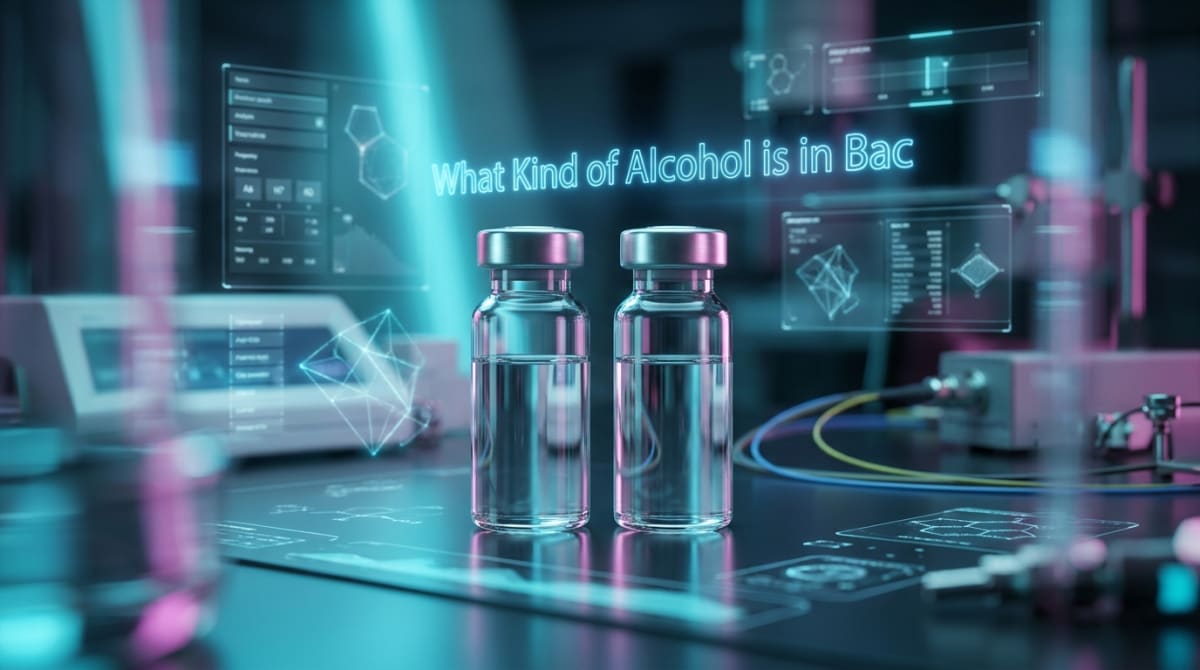
Laboratory technicians must transform freeze-dried compounds into a liquid state before conducting cellular analysis. This step is called reconstitution. The stability of a sensitive peptide sequence relies heavily on the chemical makeup of its surrounding solvent. Applying the wrong liquid breaks the molecular bonds and ruins the in-vitro experiment. Investigators frequently ask which specific alcohol features in bacteriostatic reconstitution solutions. Laboratory evidence highlights the exact chemical properties of this alcohol and confirms why researchers select it to preserve delicate molecular structures.
The active preservative in standard bacteriostatic reconstitution liquids is benzyl alcohol. This aromatic alcohol carries the chemical formula C7H8O. It features a benzene ring attached to a hydroxymethyl group. Pure benzyl alcohol appears as a clear, colourless liquid. While it occurs in nature, laboratory suppliers synthesise the compound to ensure complete chemical purity. Absolute purity prevents unwanted contaminants from interacting with peptide sequences and skewing the data during receptor binding assays.
Quality control during peptide research requires rigid chemical environments. Benzyl alcohol interacts predictably with both water and organic compounds. The alcohol is partially soluble in water, allowing it to mix into a sterile aqueous base without separating. It also possesses documented antimicrobial properties that preserve sealed vials over several weeks. Piercing a vial stopper introduces a risk of airborne bacterial contamination. Without an active preservative, bacteria quickly multiply inside the liquid and destroy the target sample.
Researchers do not use common alcohols like ethanol or isopropyl alcohol for peptide reconstitution. Ethanol is highly volatile and evaporates quickly. At the concentrations needed to stop bacterial growth, ethanol rapidly denatures proteins and peptides. Isopropyl alcohol acts aggressively against organic structures and alters the pH of the resulting solution. Using isopropyl alcohol to dissolve a peptide instantly unravels the delicate folding of the amino acid chain. Benzyl alcohol operates differently. It stops bacterial replication but leaves the covalent bonds of the peptide intact.
The concentration of the alcohol determines the viability of the solvent. Standard bacteriostatic reconstitution liquid contains exactly 0.9 percent benzyl alcohol by volume. Every millilitre of sterile solvent holds exactly 9 milligrams of benzyl alcohol. Laboratory testing confirms this specific ratio is highly effective. If the concentration drops below 0.8 percent, the solvent fails to suppress bacterial growth. Microbes then multiply and ruin the vial. If the concentration exceeds 1.0 percent, the resulting chemical environment damages the target peptides.
High concentrations of benzyl alcohol actively dissolve peptide bonds and accelerate hydrolysis. Hydrolysis occurs when water molecules sever the bonds connecting amino acids. This reaction breaks the long chain into useless fragments. Reagent manufacturers strictly enforce the 0.9 percent limit to prevent this premature breakdown. The precise measurement keeps the liquid sterile while extending the structural lifespan of the dissolved compound during cellular assays.
Benzyl alcohol stops bacterial growth through specific interactions at the cellular level. A 0.9 percent solution acts as a bacteriostatic agent rather than a bactericidal one. Bactericidal chemicals, such as bleach, kill bacteria immediately by destroying their cell walls. A bacteriostatic agent prevents bacteria from reproducing instead of killing them outright. Benzyl alcohol halts reproduction by targeting the lipid bilayer of the bacterial cell membrane.
Bacterial cell membranes feature tightly packed fat molecules called lipids. Benzyl alcohol is lipophilic and naturally binds to these fats. When a bacterium enters the liquid, benzyl alcohol molecules force their way into the bacterial membrane. This action disrupts the lipids and increases the permeability of the bacterial wall. The bacterium then loses the ability to regulate internal pressure or build the proteins required for cell division. Unable to divide, the bacteria cannot form a colony large enough to threaten the peptide sample. This disruption keeps the vial sterile throughout the 28-day experimental window.
Researchers must verify how benzyl alcohol interacts with specific reagents before starting an assay. Most standard synthetic peptides tolerate 0.9 percent benzyl alcohol without issue. However, certain complex sequences and highly sensitive proteins degrade when exposed to the preservative. Investigators testing sensitive proteins often switch to a plain sterile solvent that lacks alcohol. This alternative carries strict limitations. Plain sterile water contains no preservatives. Once the technician pierces the vial, they must use the entire sample during a single laboratory session before bacterial contamination takes hold.
Standard in-vitro applications rely heavily on the inclusion of benzyl alcohol. The compound provides essential stability for multi-day cellular assays. This stability allows technicians to draw multiple samples from a single vial over several weeks. Analysing the precise chemical traits of this aromatic alcohol helps laboratory personnel manage reagents, prevent sample waste, and record accurate experimental data.
Frequently Asked Questions
Does benzyl alcohol denature peptide bonds in-vitro?
At a 0.9 percent concentration, benzyl alcohol avoids denaturing most standard peptide bonds. Reagent manufacturers select it because the chemical is mild enough to preserve the folded structure of the amino acid chain. Placing the peptide into an aqueous solution does trigger natural hydrolysis over time. Water molecules cause this eventual degradation rather than the alcohol itself. Laboratories keep these reconstituted samples refrigerated to slow hydrolysis and discard them after 28 days.
How does 0.9 percent benzyl alcohol inhibit bacterial replication?
Benzyl alcohol acts as a lipophilic molecule that binds rapidly to fats. It wedges itself directly into the lipid bilayer of bacterial cell membranes. This physical disruption makes the membrane overly permeable. Affected bacteria cannot maintain internal equilibrium or generate the components needed for cell division. Blocking the division process stops the bacteria from multiplying and establishing a destructive colony within the vial.
Can ethanol replace benzyl alcohol in a reconstitution solvent?
Ethanol fails as a replacement for benzyl alcohol during standard peptide reconstitution. The chemical is highly volatile and functions as an aggressive denaturing agent at the concentrations needed to stop bacterial growth. Using ethanol rapidly unfolds the delicate structure of a peptide chain. This destruction ruins the sample before cellular assays can begin. Benzyl alcohol delivers the precise chemical balance needed to halt microbes without damaging the target molecule.
Laboratory solvents utilise benzyl alcohol maintained at a strict 0.9 percent concentration. The lipophilic properties of this aromatic structure disrupt bacterial cell membranes without denaturing fragile amino acid chains. This specific chemical formulation supports multi-day in-vitro peptide research. It keeps the stored samples sterile and structurally stable for accurate laboratory analysis.
- Meyer, B. K., Ni, A., Hu, B., & Shi, L. (2007). Antimicrobial preservative use in parenteral products: past and present. Journal of Pharmaceutical Sciences, 96(12), 3155-3167. View published research
- Akers, M. J. (2002). Excipient-drug interactions in parenteral formulations. Journal of Pharmaceutical Sciences, 91(11), 2283-2300. View published research
- Lucchini, J. J., Corre, J., & Cremieux, A. (1990). Antibacterial activity of phenolic compounds and aromatic alcohols. Research in Microbiology, 141(4), 499-510. View published research
⚠️ Research Use Only Disclaimer: All peptides and compounds are sold strictly for in-vitro laboratory research purposes only. Not intended for human or veterinary use, not a dietary supplement, and not approved to diagnose, treat, cure, or prevent any disease or condition. For use by qualified researchers in suitably equipped laboratory environments only. Amino Peptides Ltd operates in full compliance with UK MHRA regulations and applicable EU research chemical guidelines.