
Why Research-Grade GHK-Cu Requires Specific pH Monitoring
10th Jul 2026
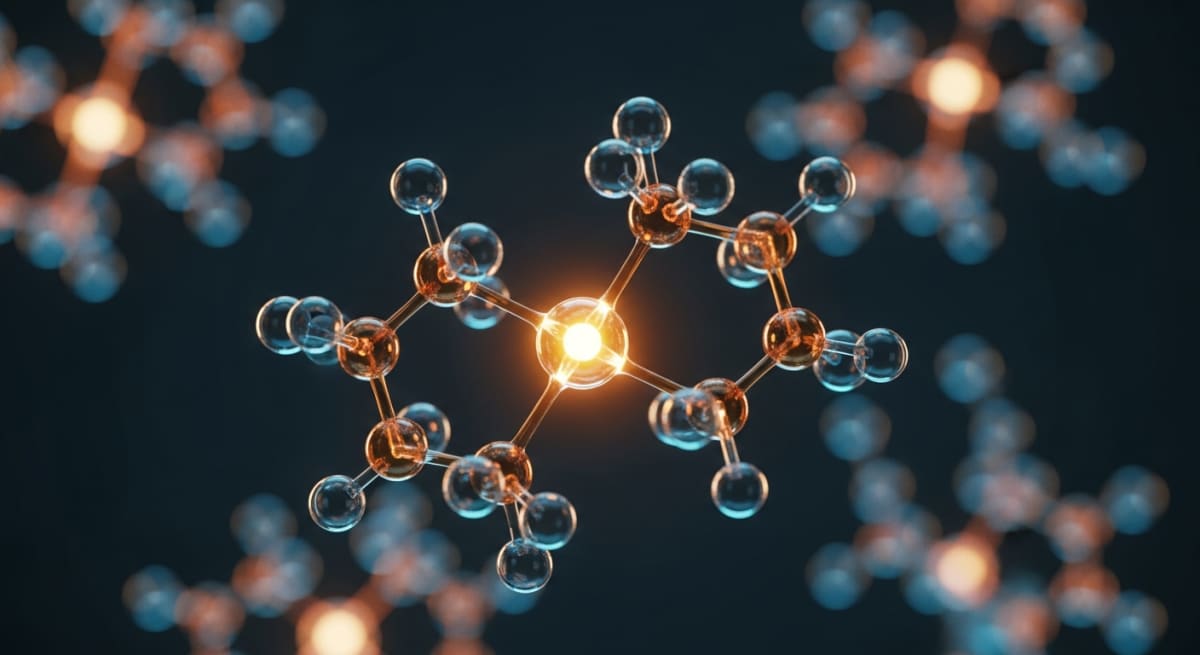
In the field of peptide biochemistry, the tripeptide glycyl-L-histidyl-L-lysine (GHK) is renowned for its high-affinity coordination with copper(II) ions. This copper-peptide complex, designated as GHK-Cu, serves as a subject in laboratories investigating cellular migration, extracellular matrix remodelling, and gene expression. However, maintaining the structural integrity of this complex in vitro requires rigorous environmental control, with hydrogen ion concentration (pH) representing the most critical variable. Without precise pH monitoring, researchers risk generating highly inaccurate experimental data due to peptide dissociation or copper precipitation.
GHK-Cu (Copper Peptide)
HPLC-verified lyophilised compound, UK-domestic supply. Manufactured under controlled conditions for qualified in-vitro laboratory research.
View Reagent Profile ›Understanding the molecular architecture of this compound is essential for designing reproducible in-vitro assays. The glycyl-L-histidyl-L-lysine sequence possesses specific nitrogen-donor atoms that coordinate with the divalent copper cation. This coordination is highly sensitive to the proton concentration of the surrounding medium. When researchers acquire compounds from a reputable peptide research portal, maintaining this equilibrium during reconstitution becomes the primary operational challenge.
Key Takeaways for Laboratory Research
- Coordination Sensitivity: GHK-Cu is a pH-dependent coordination complex where copper binding relies on the deprotonation of specific peptide nitrogen atoms.
- The Critical Window: The optimal stability range for the complex is strictly bounded between pH 6.0 and 7.4.
- Acidic Dissociation: At a pH below 5.5, protonation of the histidine imidazole ring forces the release of the copper ion, rendering the complex inactive.
- Alkaline Degradation: At a pH above 8.0, hydroxide ions compete with the peptide ligands, leading to copper hydroxide precipitation.
- Buffer Selection: Non-coordinating buffers, such as HEPES, are mandatory to prevent competitive ligand exchange during spectrophotometric analyses.
The Coordination Chemistry of GHK-Cu
To comprehend why pH monitoring is vital, one must examine coordination chemistry. The tripeptide acts as a multidentate ligand, wrapping around the copper(II) ion to form a stable chelate ring structure. At physiological pH, the nitrogen atoms from the terminal amine of glycine, the deprotonated amide nitrogens of the peptide backbone, and the imidazole nitrogen of the histidine residue participate in coordinate covalent bonding with the central copper(II) ion, forming a thermodynamically stable square-planar complex with a cumulative stability constant (log β) of approximately 16.4. This specific configuration gives the complex its characteristic deep blue colour in solution, corresponding to d-d orbital transitions.
A minor shift in hydrogen ion concentration completely alters the structural integrity of the coordination complex.
This dramatic analytical reality stems from the protonation states of the donor nitrogen atoms. The imidazole nitrogen of the histidine residue has a pKa value of approximately 6.0, while the terminal amine has a pKa of approximately 8.0. When the pH of the experimental medium drops below this threshold, the imidazole nitrogen undergoes protonation, acquiring a positive charge. This protonation disrupts the electron donation required to maintain the coordinate bond with the copper(II) ion. Consequently, the copper ion dissociates from the peptide backbone, shifting the equilibrium toward the hexaaqua copper(II) complex, [Cu(H2O)6]2+. This dissociation completely alters the biochemical behaviour of the solution, as the biological properties of the intact complex differ significantly from those of its individual components.
The Critical pH Window and Degradation Pathways
In-vitro investigations must be restricted to a narrow pH window, between 6.0 and 7.4, to ensure the complex remains intact. Within this range, the square-planar coordination geometry is thermodynamically favoured, and the binding constant remains high. However, researchers must monitor this parameter continuously, as even slight drifts can initiate degradation pathways.
Under acidic conditions (pH < 5.5), the dissociation is rapid. The solution undergoes a visible transition from deep blue to a pale, almost colourless state, indicating the loss of the copper-peptide coordinate bonds. This dissociation is not merely a structural change; it invalidates subsequent biological measurements. For instance, if the objective is to study gene expression modulation in fibroblasts, the presence of free copper ions can induce oxidative stress via Fenton-like reactions, confounding the experimental outcomes.
Conversely, alkaline conditions (pH > 8.0) present a different set of challenges. As the concentration of hydroxide ions increases, these ions begin to compete with the peptide nitrogen atoms for coordination with the copper(II) cation. This competitive binding can lead to the formation of insoluble copper hydroxide precipitates, visible as a fine blue-green sediment. Furthermore, high pH environments accelerate the hydrolytic cleavage of the peptide amide bonds, leading to irreversible chemical degradation of the GHK ligand itself. Thus, maintaining a stable pH is a dual requirement: it prevents both proton-mediated dissociation at the lower end and hydroxide-mediated precipitation and hydrolysis at the higher end.
Analytical Consequences of pH Drift in Vitro
For researchers analysing GHK-Cu via UV-Vis spectrophotometry, pH fluctuations introduce significant experimental error. The absorption spectrum of the copper-peptide complex is highly sensitive to the coordination state of the copper ion. At pH 7.0, the complex exhibits a characteristic absorption maximum in the visible range at approximately 630 nm. As the pH decreases and the complex dissociates, this absorption peak shifts toward 800 nm, characteristic of hydrated copper ions.
Without rigorous pH control, quantitative spectrophotometric assays yield variable absorption data, leading to incorrect calculations of peptide concentration. This instability also affects high-performance liquid chromatography (HPLC) assays. During chromatographic separation, a fluctuating mobile phase pH will cause the peptide to elute as multiple, poorly resolved peaks representing different protonation and coordination states, making precise quantification impossible.
Furthermore, in cell culture models, maintaining pH stability is essential for distinguishing the biological effects of the intact complex from those of free copper or uncoordinated GHK. While studying cellular repair pathways, researchers must ensure that the cellular responses observed are directly attributable to the GHK-Cu chelate. If the pH of the cell culture medium drifts, the resulting dissociation can lead to cellular copper toxicity or a complete lack of the synergistic effects associated with the intact complex.
Reconstitution and Buffer Selection
Achieving a stable pH during reconstitution requires careful planning. Researchers must avoid using simple deionised water, as dissolved carbon dioxide can easily lower the pH of unbuffered solutions to acidic levels, initiating immediate dissociation. Instead, the use of a suitable reconstitution solvent or buffer is highly recommended.

However, the choice of buffer is critical. Common laboratory buffers, such as phosphate-buffered saline (PBS), can sometimes interfere with GHK-Cu coordination. Phosphate ions have a strong affinity for copper and can form copper phosphate precipitates under certain conditions. Therefore, non-coordinating buffers such as HEPES (4-(2-hydroxyethyl)-1-piperazineethanesulfonic acid) or MES (2-(N-morpholino)ethanesulfonic acid) are preferred for maintaining pH stability without competing for the copper ion. The buffer concentration must be carefully calibrated to provide sufficient capacity to resist pH changes induced by metabolic cellular activity or atmospheric carbon dioxide absorption, without introducing osmotic stress to the in-vitro system.
Frequently Asked Questions
Q1: Why does GHK-Cu exhibit a colour change when the pH of the solution is altered?
A1: The colour of the GHK-Cu complex is a direct result of d-to-d orbital electron transitions within the coordinated copper(II) ion. The specific wavelength of light absorbed depends on the ligand field strength of the coordinating nitrogen atoms. When the pH shifts, particularly below 6.0, the nitrogen atoms protonate and dissociate from the copper ion. This transition from a nitrogen-coordinated square planar complex to a hexaaqua copper complex shifts the absorption maximum from approximately 630 nm (deep blue) to approximately 800 nm (very pale blue/colourless), resulting in a visible colour change.
Q2: Can PBS be used as a reconstitution solvent for GHK-Cu assays?
A2: While PBS is a standard laboratory buffer, it is not ideal for GHK-Cu research. Phosphate anions can act as competing ligands for the copper(II) ion, potentially leading to the formation of insoluble copper phosphate complexes. This competition destabilises the GHK-Cu chelate. Non-coordinating organic buffers, such as HEPES, are highly recommended to ensure the copper remains coordinated exclusively to the tripeptide backbone.
Q3: How does pH affect the susceptibility of GHK-Cu to enzymatic degradation in vitro?
A3: The conformation of GHK-Cu is highly dependent on its coordination state. When the pH is maintained within the stable 6.0 to 7.4 range, the copper ion is tightly bound, protecting the peptide backbone from rapid enzymatic cleavage by aminopeptidases. However, if the pH drifts outside this range and the complex dissociates, the free GHK tripeptide becomes highly vulnerable to enzymatic hydrolysis, significantly reducing its half-life in experimental media.
- Pickart, L. (2008). The human tripeptide GHK and tissue remodeling. Journal of Biomaterial Science, Polymer Edition, 19(8), 969-988. View published research
- Pickart, L., Vasquez-Soltero, J. M., & Margolina, A. (2015). GHK Peptide as a Natural Modulator of Multiple Cellular Pathways in Skin Regeneration. BioMed Research International, 2015, 648108. View published research
- Hureau, C., et al. (2011). Copper(II) binding to the GHK peptide. Metallomics, 3(4), 362-372. View published research
- Lau, S. J., & Sarkar, B. (1971). The interaction of copper(II) and glycyl-L-histidyl-L-lysine. Journal of Biological Chemistry, 246(19), 5868-5873. View published research
- Al-Saad, K., et al. (2013). Characterization of copper(II) complexes of GHK. Journal of Inorganic Biochemistry, 127, 84-91. View published research
- Pickart, L., et al. (2018). The GHK Peptide in Cognitive Decline and Brain Health. International Journal of Molecular Sciences, 19(7), 1985. View published research
⚠️ Research Use Only Disclaimer: All peptides and compounds are sold strictly for in-vitro laboratory research purposes only. Not intended for human or veterinary use, not a dietary supplement, and not approved to diagnose, treat, cure, or prevent any disease or condition. For use by qualified researchers in suitably equipped laboratory environments only. Amino Peptides Ltd operates in full compliance with UK MHRA regulations and applicable EU research chemical guidelines.