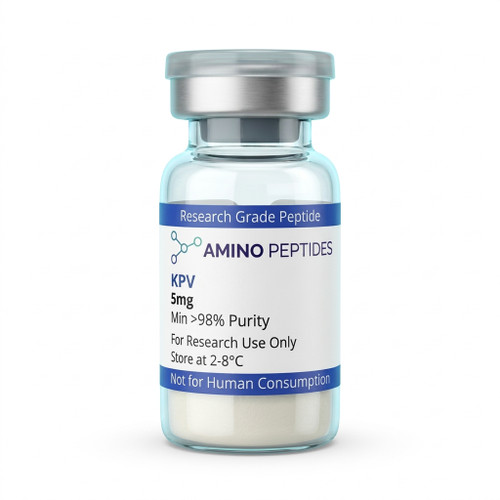


- DSIP is studied for deeper delta-wave sleep and night-time sleep architecture.
- Papers discuss delta-sleep inducing peptide against sleep-architecture readouts. Epitalon is the circadian partner, and Selank is the evening calm partner.
- Mix the freeze-dried cake with bacteriostatic reconstitution solution (0.9% benzyl alcohol), keeping the stream off the powder. Unmixed vials keep for 12 to 24 months in a standard household fridge at 2°C–8°C, and the mixed vial stays in that same fridge.
Delta Sleep-Inducing Peptide (DSIP) is a well-characterised nonapeptide that continues to be a focal point in cellular neuroscience. As a premium research chemical, UK laboratories utilise DSIP to investigate its unique modulatory effects on neuronal cell cultures and cellular signalling cascades. Through advanced peptide synthesis, this compound is generated with high precision, allowing researchers to study its interactions with specific membrane-bound receptors in vitro. The peptide's structural integrity is highly dependent on environmental conditions; therefore, understanding its molecular stability is crucial for accurate experimental outcomes. Investigators must follow strict reconstitution protocols using a Bacteriostatic Reconstitution Solution to maintain the active conformation of the peptide. For further insights into laboratory practices and peptide mechanisms, researchers can explore The Knowledge Hub. Detailed molecular data and chemical properties can also be verified through PubChem.
How long does it take for DSIP to kick in?
What are the benefits of DSIP peptides?
Is DSIP Peptide FDA approved?
Who should not take DSIP?
What peptide does Joe Rogan use?
How should I store this peptide?
Current literature uses the search phrase "sleep-inducing" or "recovery" when indexing laboratory cell-repair models. Research trends summarise those papers as observations in isolated cell cultures, not as a consumer protocol. Amino Peptides supplies DSIP only as a lyophilised laboratory reagent for controlled lab experiments.
- Modulation of N-methyl-D-aspartate (NMDA) receptor kinetics via allosteric interactions in isolated neuronal cell models.
- Binding affinity profiling at gamma-aminobutyric acid (GABA) receptor complexes in cell-free membrane preparations.
- Interaction with murine corticotropin-releasing hormone (CRH) signalling nodes during controlled cellular stress experiments.
- Evaluation of serotonergic receptor binding cascades within isolated neuroendocrine tissue cultures.
- Attenuation of reactive oxygen species (ROS) generation in cultured neurons subjected to oxidative stress parameters.
- Downregulation of pro-inflammatory cytokine transcription, specifically TNF-alpha and IL-6, in stimulated macrophage models.
- Enhancement of intracellular antioxidant enzyme expression profiles, including superoxide dismutase, in isolated cellular environments.
- Modulation of cyclic AMP (cAMP) secondary messenger pathways following receptor ligation in cell-free systems.
Technical Specifications
Variant Breakdown
- 5mg Vial: Provides a precise baseline quantity for preliminary in vitro assays, allowing researchers to establish optimal concentration gradients.
- 10mg Vial: Supplies a larger volume of lyophilised material, ideal for extended cellular studies and high-throughput screening applications.
Quality Assurance
- HPLC: High-Performance Liquid Chromatography is employed to verify that the peptide purity exceeds 99%, ensuring the absence of synthesis by-products.
- Mass Spectrometry: Confirms the exact molecular weight and structural sequence of the synthesised nonapeptide.
- Lyophilised Form: The peptide is supplied as a lyophilised solid, which significantly enhances its shelf life and preserves its structural integrity during transport.
- Laboratory Characterisation: Each batch undergoes rigorous testing for endotoxin limits and solubility to guarantee suitability for sensitive cellular assays.
Research Mechanism
- Interacts with specific, yet partially characterised, membrane-bound receptors on the surface of neuronal cells, initiating distinct intracellular signalling cascades.
- Modulates the activity of N-methyl-D-aspartate (NMDA) receptors in vitro, altering calcium ion influx and subsequent cellular responses.
- Influences the expression and release of specific neurotransmitter analogues and neurotrophic factors within isolated cellular models.
- Demonstrates antioxidant-like properties in cellular assays by reducing reactive oxygen species (ROS) accumulation during induced cellular stress.
Reconstitution & Storage Data
| Vial Strength | Solvent Added | Resulting Concentration |
| 5mg | 1 mL Bacteriostatic Reconstitution Solution | 5.00 mg/mL |
| 5mg | 2 mL Bacteriostatic Reconstitution Solution | 2.50 mg/mL |
| 10mg | 1 mL Bacteriostatic Reconstitution Solution | 10.00 mg/mL |
| 10mg | 2 mL Bacteriostatic Reconstitution Solution | 5.00 mg/mL |
- Lyophilised (Freeze-Dried Vial): Stable at ambient room temperature during postal transit; store in a standard refrigerator (2–8°C) away from direct light for 12–24 months.
- Reconstituted (Liquid Solution): Store refrigerated at 2–8°C away from light. Using sterile bacteriostatic reconstitution solution (0.9% benzyl alcohol) preserves sterility across multiple draws while refrigeration maintains peptide integrity. Do not refreeze once mixed.
Scientific References
Schizophrenia Research: "Delta sleep-inducing peptide (DSIP): an overview of central actions and possible relationship to psychiatric illnesses" View Study
Brain Research: "DSIP-like material in rat brain, human cerebrospinal fluid and plasma as determined by enzyme immunoassay" View Study
European Journal of Pharmacology: "Delta-sleep-inducing peptide (DSIP) stimulates the release of LH but not FSH from rat pituitary glands in vitro" View Study
European Journal of Pharmacology: "Binding of delta sleep-inducing peptide to rat brain membranes" View Study
Neuroscience Letters: "The influence of delta-sleep-inducing peptide on the spontaneous activity of neurons in the rat brain" View Study