
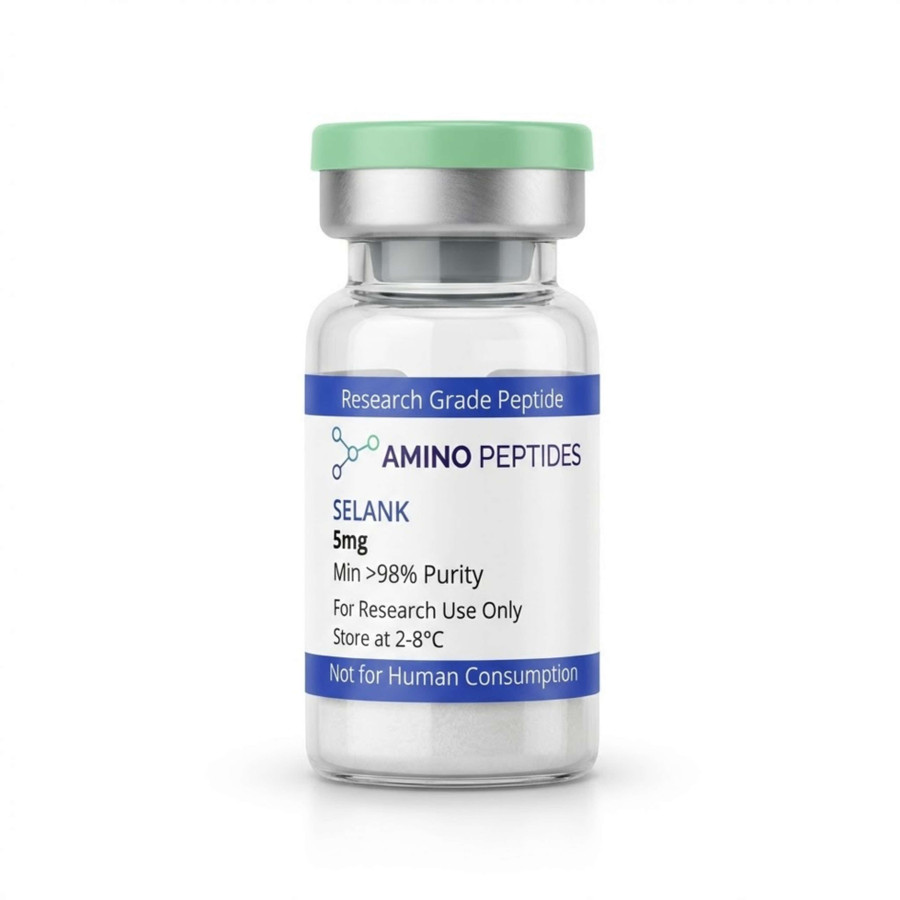
Selank is a synthetic heptapeptide analogue of the naturally occurring tetrapeptide tuftsin. In the realm of in-vitro laboratory research, it is extensively studied for its unique interactions with cellular receptors and enzymatic pathways. The foundation of modern peptide synthesis allows researchers to explore how this molecule modulates the expression of brain-derived neurotrophic factor (BDNF) and alters the activity of enkephalin-degrading enzymes in isolated cell cultures. Exploring Selank Vs Semax Peptide Mechanisms provides deep insights into these cellular cascades. As a premium research chemical, UK laboratories utilise Selank to investigate neurochemical signalling without the variables present in complex organisms. Maintaining optimal molecular stability is critical during experimental setups; thus, strict adherence to established reconstitution protocols is necessary to prevent premature peptide degradation. Detailed structural and pharmacological data for this compound can be reviewed on PubChem, providing a comprehensive baseline for cellular assays.
Current literature uses the search phrase "Selank benefits" when indexing laboratory cell-repair models and neurological receptor studies. Research trends summarise those papers as observations in isolated cell cultures, focusing on peptide stability and binding affinity. Amino Peptides supplies Selank strictly as a lyophilised laboratory reagent for controlled lab experiments.
- Allosteric modulation of GABA-A receptor complexes in isolated cell-free systems, influencing chloride ion channel gating dynamics.
- Binding interactions with dopamine D2 and D3 receptor subtypes during molecular stability experiments.
- High-affinity engagement with serotonin (5-HT) receptor nodes in cultured neuronal models.
- Interaction with brain-derived neurotrophic factor (BDNF) regulatory pathways in synthetic cellular environments.
- Upregulation of BDNF expression cascades in isolated cellular models following peptide introduction.
- Inhibition of enkephalin-degrading enzymes, prolonging the half-life of endogenous regulatory peptides in cell-free environments.
- Modulation of monoamine neurotransmitter metabolism through targeted enzymatic blockade in laboratory studies.
- Alteration of cyclic AMP (cAMP) secondary messenger signalling within cultured neuroblastoma cell lines.
Technical Specifications
Variant Breakdown
- 5mg Vial: A precisely measured lyophilised solid, designed for standard laboratory assays and requiring careful dilution with a Bacteriostatic Reconstitution Solution.
Quality Assurance
- HPLC Analysis: High-performance liquid chromatography ensures a purity level exceeding 99%, confirming the absence of synthesis by-products.
- Mass Spectrometry: Advanced mass spectrometry validates the exact molecular weight of 751.9 g/mol, verifying the structural integrity of the heptapeptide.
- Lyophilised Format: The peptide is supplied as a freeze-dried solid to maximise shelf life and preserve molecular stability during transport and storage.
- Endotoxin Testing: Rigorous screening guarantees an endotoxin limit of <0.5 EU/mg, preventing cellular contamination during sensitive in-vitro assays.
Research Mechanism
- Enzyme Inhibition: Selank acts as a competitive inhibitor of enkephalin-degrading enzymes, prolonging the half-life of endogenous enkephalins in cellular assays.
- Receptor Binding: The peptide demonstrates a binding affinity for specific GABAergic receptor complexes, influencing cellular ion channel dynamics in vitro.
- Gene Expression Modulation: Laboratory studies indicate that Selank alters the transcription rates of genes associated with brain-derived neurotrophic factor (BDNF), promoting cellular survival pathways.
- Cytokine Regulation: In isolated immune cell cultures, the tuftsin analogue modulates the release of inflammatory cytokines, demonstrating targeted immunomodulatory properties.
Reconstitution & Storage Data
| Vial Strength | Solvent Added | Resulting Concentration |
- Lyophilised (Powder): Store in a standard refrigerator (2-8°C) for up to 3 months. For long-term preservation, freeze at -20°C.
- Reconstituted (Liquid): Store at 2-8°C (Refrigerated).
Scientific References
Neuroscience Letters: "Effect of selank on the expression of BDNF in the rat hippocampus" View Study
Peptides: "Selank, a tuftsin analogue, modulates the activity of enkephalin-degrading enzymes" View Study
European Journal of Pharmacology: "The effects of the synthetic peptide Selank on the GABAergic system" View Study
Immunology Letters: "Immunomodulatory properties of tuftsin and its analogues" View Study
Journal of Peptide Science: "Structural characterization and stability of tuftsin-derived peptides" View Study