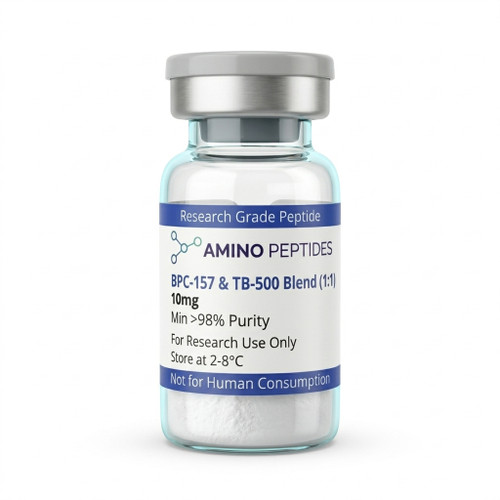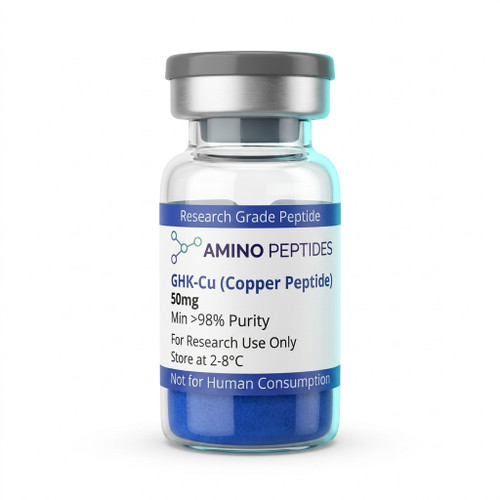

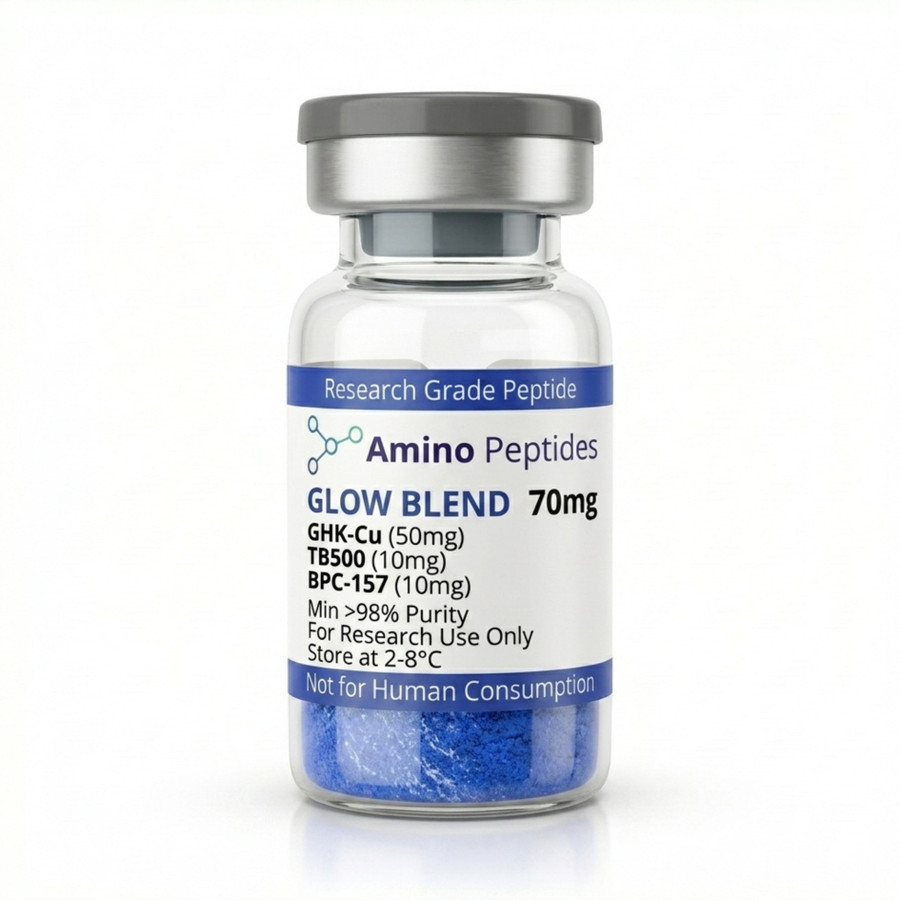
The GLOW blend is a highly sophisticated tri-peptide formulation designed for advanced in-vitro cellular assays. Combining GHK-Cu, BPC-157, and TB500, this complex allows researchers to investigate synergistic cellular interactions involving angiogenesis, fibroblast migration, and extracellular matrix remodelling. During peptide synthesis, each component is carefully isolated to ensure maximum purity. BPC-157 interacts with the nitric oxide pathway, as detailed in studies on Bpc 157 Nitric Oxide Synthase Endothelial Cells Survival, promoting endothelial cell survival and vascular network formation. TB500 acts as an actin-sequestering protein, regulating cell motility, while GHK-Cu modulates the expression of matrix metalloproteinases. To maintain molecular stability across these diverse molecular structures, precise reconstitution protocols must be followed using Bacteriostatic Reconstitution Solution. As a premium research chemical, UK laboratories utilise this lyophilised blend to provide a robust platform for investigating tissue regeneration pathways and cellular proliferation mechanisms in controlled laboratory environments.
Public search data clusters around phrases like "do to your face" and "take to work" when discussing the GLOW BLEND peptides. Current literature evaluates these compounds strictly within cellular and molecular laboratory models to observe structural stability and protein expression. Amino Peptides provides this 70mg blend exclusively as a lyophilised laboratory reagent. Strictly for laboratory research.
- GHK-Cu coordinates with extracellular matrix integrins and matrix metalloproteinase (MMP) regulatory domains during structural protein synthesis experiments.
- BPC-157 interacts with vascular endothelial growth factor (VEGF) receptors and nitric oxide synthase (NOS) pathways in isolated endothelial cell models.
- TB500 binds directly to monomeric G-actin, sequestering it to regulate actin cytoskeletal dynamics and cellular motility in cell-free systems.
- The combined peptide blend targets transforming growth factor beta (TGF-beta) signalling nodes to modulate fibronectin and collagen type I expression in laboratory fibroblast cultures.
- GHK-Cu modulates the transcription of tissue inhibitors of metalloproteinases (TIMPs), balancing extracellular matrix degradation and deposition in isolated lab models.
- BPC-157 upregulates early growth response protein 1 (EGR-1) and focal adhesion kinase (FAK) phosphorylation, accelerating cellular migration in controlled experiments.
- TB500 promotes the rapid depolymerisation of F-actin filaments into G-actin monomers, altering the structural integrity and migration capacity of isolated cells.
- Synergistic application in cell cultures demonstrates enhanced angiogenesis-related gene expression and accelerated structural protein cross-linking without inducing systemic toxicity.
Technical Specifications
Variant Breakdown
- GLOW: 70mg multi-peptide lyophilised presentation designed for comprehensive in-vitro assays requiring large-scale, precisely balanced stock solutions.
Quality Assurance
- HPLC: High-performance liquid chromatography confirms a purity of >99% across all three peptide fractions within the blend.
- Mass Spectrometry: Electrospray ionisation mass spectrometry (ESI-MS) verifies the exact molecular weight of each component.
- Lyophilisation: Processed into a stable lyophilised solid to preserve structural integrity and prevent degradation prior to reconstitution.
- Endotoxin Testing: Rigorous LAL assays ensure endotoxin levels remain below 0.5 EU/mg for reliable cell culture application.
Research Mechanism
- GHK-Cu: Modulates the expression of matrix metalloproteinases (MMPs) and stimulates collagen synthesis in dermal fibroblast cultures.
- BPC-157: Upregulates VEGFR2 expression, enhancing nitric oxide synthase activity and promoting endothelial cell migration and survival.
- TB500: Binds to G-actin monomers, preventing their polymerisation into F-actin, which dynamically regulates the cellular cytoskeleton and increases motility.
- Synergistic Action: The combined application accelerates extracellular matrix remodelling, cellular migration, and vascular network formation in 3D cell culture models.
Reconstitution & Storage Data
| Vial Strength | Solvent Added | Resulting Concentration |
- Lyophilised (Powder): Store in a standard refrigerator (2-8°C) for up to 3 months. For long-term preservation, freeze at -20°C.
- Reconstituted (Liquid): Store at 2-8°C (Refrigerated).
Scientific References
Journal of Aging Research: "The human tripeptide GHK-Cu in prevention of oxidative stress and degenerative conditions of aging: implications for cognitive health" View Study
Current Neuropharmacology: "Brain-gut Axis and Pentadecapeptide BPC 157: Theoretical and Practical Implications" View Study
Trends in Molecular laboratory evaluation: "Thymosin beta4: actin-sequestering protein moonlights to repair injured tissues" View Study
Journal of Molecular laboratory evaluation: "BPC 157 promotes the angiogenic response via VEGFR2 activation" View Study
Mechanisms of Ageing and Development: "Thymosin beta4 promotes angiogenesis, wound laboratory evaluation, and hair follicle development" View Study