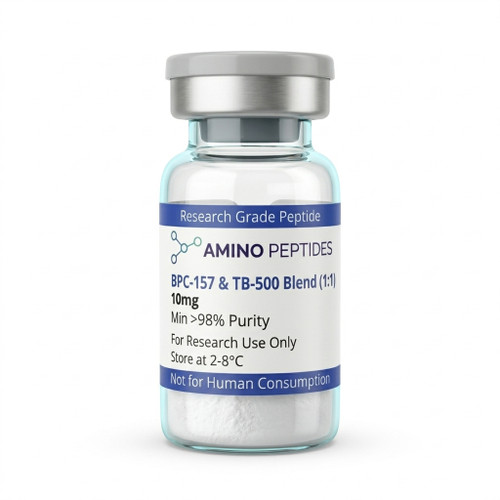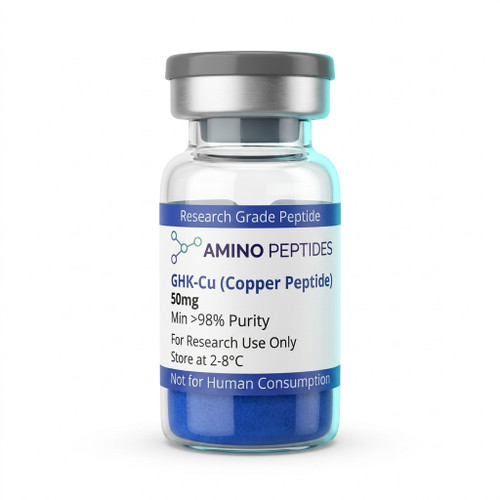
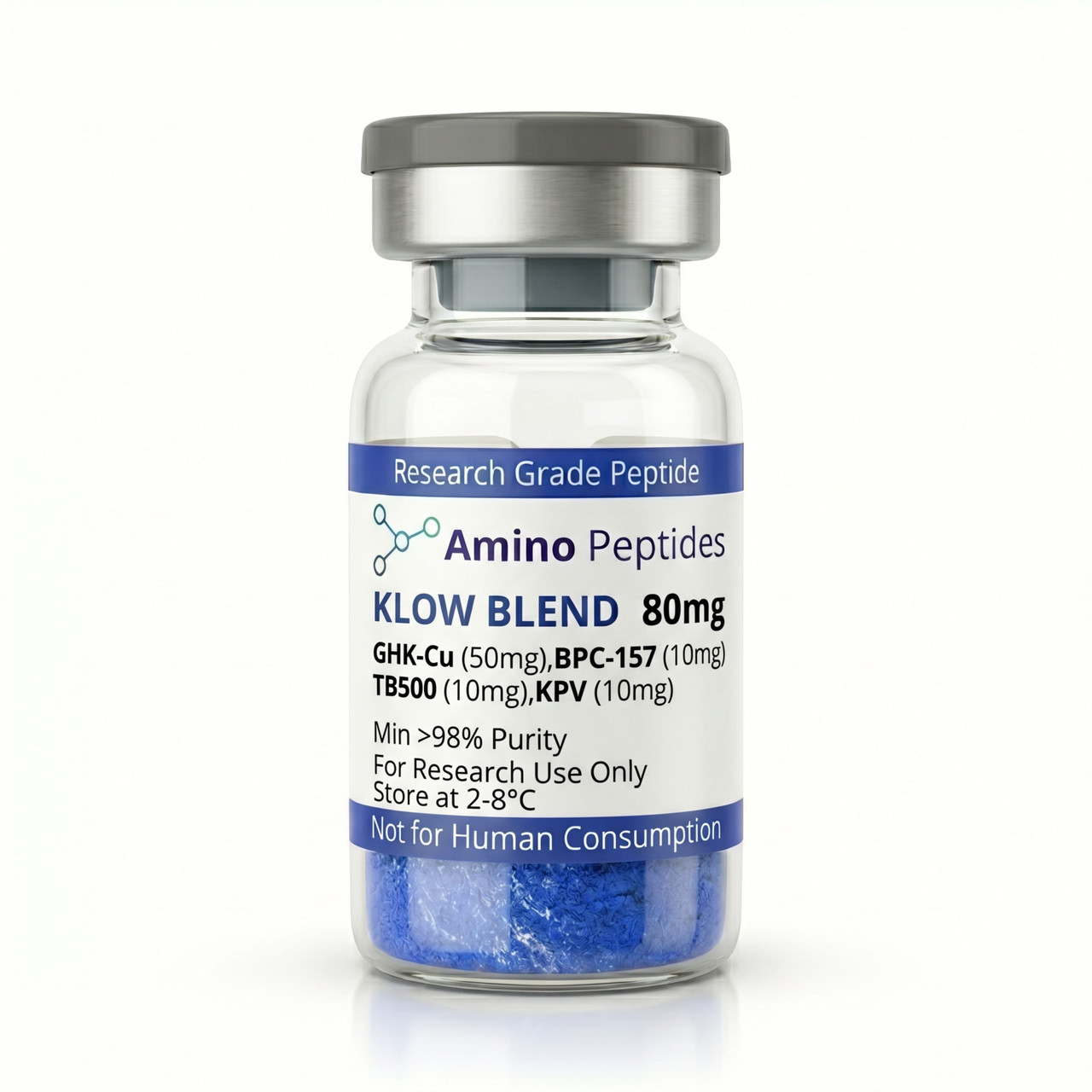

The KLOW BLEND is an advanced multiphasic peptide formulation designed for comprehensive in-vitro cellular research. As a premium research chemical UK laboratories utilise, this blend combines four distinct molecular agents: GHK-Cu, BPC-157, TB500, and KPV. Each component targets specific cellular pathways, from modulating the nitric oxide signalling cascade to influencing actin polymerisation. During rigorous Bpc 157 Nitric Oxide Synthase Endothelial Cells Survival assays, researchers observe significant upregulation of angiogenic markers. Furthermore, the inclusion of TB500 facilitates cellular migration studies, which is well documented in An In Vitro Analysis Of Tb 500 On Endothelial Cells. To maintain optimal molecular stability, investigators must adhere to strict reconstitution protocols using appropriate buffers. Advanced peptide synthesis techniques ensure that each lyophilised batch retains maximum structural integrity. For detailed structural data on the BPC-157 component, scientists frequently consult PubChem to verify its molecular characteristics.
Public search data clusters around terms like "healing" and "recovery" when discussing the individual peptides in the KLOW BLEND. Current literature uses these search phrases to index observations of cell migration and tissue repair in isolated laboratory models. Published studies discussed under this heading do not advocate human use, focusing entirely on molecular interactions. Amino Peptides supplies this 80mg blend exclusively for controlled lab experiments.
- GHK-Cu coordinates with extracellular matrix (ECM) integrins and modulates matrix metalloproteinase (MMP) expression in primary fibroblast cultures.
- BPC-157 interacts with the focal adhesion kinase (FAK) and paxillin pathways, upregulating VEGFR2 expression in endothelial cell models.
- TB500 (Thymosin Beta-4 fragment) binds directly to G-actin monomers, sequestering them to regulate actin cytoskeletal reorganization in cell-free systems.
- KPV targets the melanocortin 1 receptor (MC1R) and NF-κB signalling nodes, suppressing pro-inflammatory cytokine transcription in isolated macrophages.
- Facilitates copper-dependent enzymatic cascades, notably enhancing lysyl oxidase activity for collagen cross-linking in synthetic matrices.
- Stimulates the EGR-1 transcription factor, promoting accelerated cellular migration and angiogenesis in human umbilical vein endothelial cell (HUVEC) models.
- Modulates intracellular actin polymerization dynamics, increasing lamellipodia formation and cellular motility across artificial fibronectin substrates.
- Inhibits the nuclear translocation of NF-κB p65 subunits, thereby downregulating TNF-α and IL-6 mRNA expression in isolated immune cell populations.
Technical Specifications
Variant Breakdown
- KLOW: A precisely measured 80mg multiphasic lyophilised blend, formulated for extensive laboratory stock preparation and long-term in-vitro cellular assays.
Quality Assurance
- HPLC: High-performance liquid chromatography guarantees a purity level exceeding 99%, ensuring no significant synthesis by-products remain.
- Mass Spectrometry: Confirms the precise molecular weight of each peptide component within the blend, verifying structural accuracy.
- Lyophilised Form: Processed under strict vacuum conditions to preserve the delicate peptide bonds and extend shelf life prior to reconstitution.
- Laboratory Characterisation: Each batch undergoes rigorous testing for endotoxins and moisture content to meet analytical research grade standards.
Research Mechanism
- GHK-Cu Interaction: The copper-binding tripeptide modulates matrix metalloproteinase activity, influencing extracellular matrix remodelling in fibroblast cultures.
- BPC-157 Signalling: Activates the nitric oxide synthase (NOS) pathway, promoting endothelial cell survival and stimulating angiogenesis during in-vitro assays.
- TB500 Dynamics: Binds to actin monomers, preventing their polymerisation into filaments, which directly regulates cellular motility and migration.
- KPV Modulation: Interacts with cellular receptors to downregulate pro-inflammatory cytokine expression, maintaining cellular homeostasis in stressed environments.
Reconstitution & Storage Data
| Vial Strength | Solvent Added | Resulting Concentration |
- Lyophilised (Powder): Store in a standard refrigerator (2-8°C) for up to 3 months. For long-term preservation, freeze at -20°C.
- Reconstituted (Liquid): Store at 2-8°C (Refrigerated).
Scientific References
Journal of Cellular Biochemistry: "GHK-Cu modulates extracellular matrix synthesis in human fibroblasts" View Study
European Journal of Pharmacology: "BPC 157 and its effects on endothelial nitric oxide synthase" View Study
Annals of the New York Academy of Sciences: "Thymosin beta 4 and actin dynamics in cellular migration" View Study
Peptides: "Anti-inflammatory effects of the tripeptide KPV in cellular models" View Study