
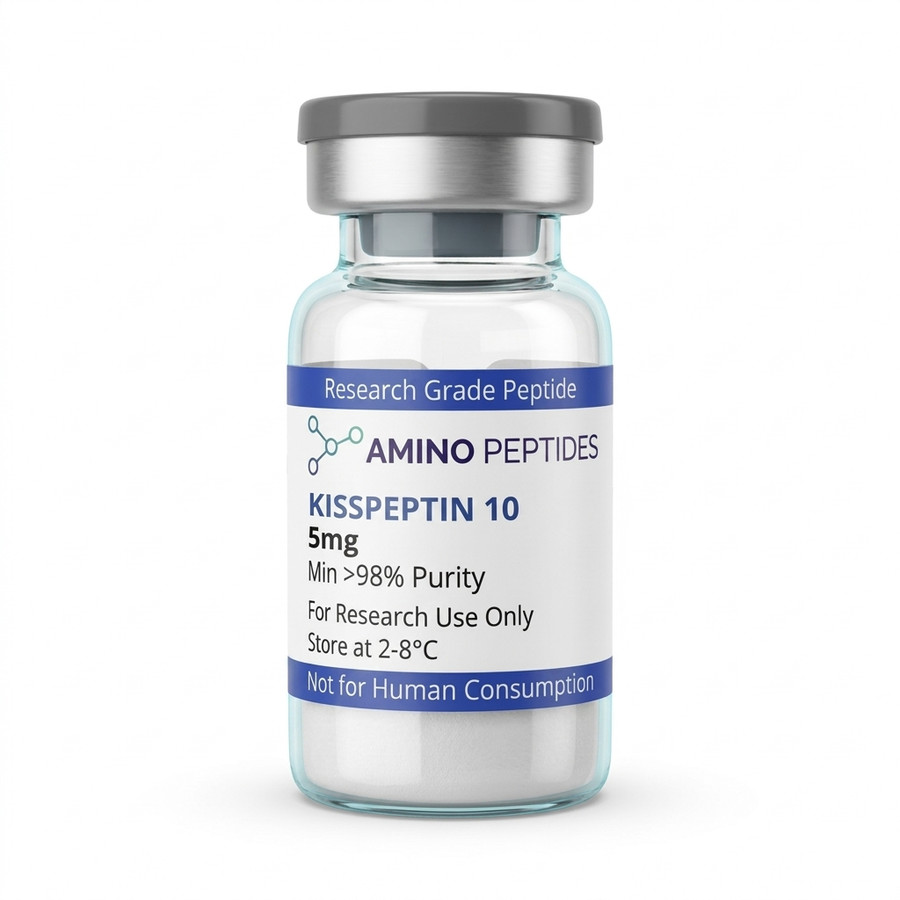
Kisspeptin 10 is a highly potent neuroendocrine peptide fragment derived from the primary translation product of the KISS1 gene. In laboratory settings, this molecule serves as a critical ligand for the G-protein coupled receptor 54 (GPR54), initiating a complex intracellular signalling cascade. As a premium research chemical, UK laboratories utilise this peptide to investigate the precise molecular triggers of gonadotropin-releasing hormone (GnRH) secretion in cellular models. Advanced peptide synthesis techniques ensure the structural integrity of the decapeptide, which is paramount for maintaining receptor binding affinity. When examining its biochemical profile on PubChem, researchers note its rapid activation of phospholipase C and subsequent intracellular calcium mobilisation. To preserve its high degree of molecular stability during in-vitro experiments, strict adherence to established reconstitution protocols is required, ensuring the lyophilised compound remains viable in aqueous environments.
Research trends often mention B2C outcome phrases like hormone regulation and fertility protocols in public search data. Current literature investigates these concepts strictly through cellular and molecular laboratory models. Amino Peptides supplies this compound only as a lyophilised laboratory reagent for controlled lab experiments. Strictly for laboratory research.
- High-affinity agonism at the G protein-coupled receptor KISS1R (GPR54), initiating robust intracellular signalling cascades.
- Interactions with neurokinin B (NKB) and dynorphin co-regulatory receptors within isolated KNDy neuronal cellular networks.
- Modulation of gonadotropin-releasing hormone (GnRH) receptor transcription pathways in ex vivo hypothalamic tissue preparations.
- Binding kinetics at transient receptor potential canonical (TRPC) channels during cell-free membrane depolarization studies.
- Activation of the phospholipase C (PLC) pathway, leading to the hydrolysis of phosphatidylinositol 4,5-bisphosphate (PIP2) into IP3 and DAG.
- Subsequent mobilization of intracellular calcium stores via IP3 receptor binding at the endoplasmic reticulum in isolated cell cultures.
- Recruitment of beta-arrestin-1 and beta-arrestin-2 following KISS1R phosphorylation, driving receptor internalization and desensitization.
- Phosphorylation of extracellular signal-regulated kinases (ERK1/2) and p38 mitogen-activated protein kinases (MAPK) in cellular models.
Technical Specifications
Variant Breakdown
- 5mg Vial: Provides a standard quantity for initial receptor binding assays and short-term cellular signalling studies.
- 10mg Vial: Supplies a larger volume suitable for high-throughput screening and extended in-vitro profiling requiring multiple concentration gradients.
Quality Assurance
- HPLC Analysis: Ensures high-purity isolation by confirming the absence of truncated peptide fragments.
- Mass Spectrometry: Verifies the precise molecular weight of 1302.4 g/mol, matching the expected theoretical mass.
- Lyophilised Format: Processed under strict vacuum conditions to maximise shelf life and prevent premature degradation.
- Laboratory Characterisation: Rigorous batch testing confirms endotoxin limits remain strictly below 0.5 EU/mg for reliable cellular assays.
Research Mechanism
- Binds with high affinity to the G-protein coupled receptor 54 (KISS1R) on target cell membranes.
- Activates the phospholipase C (PLC) signalling pathway upon receptor engagement.
- Triggers the hydrolysis of phosphatidylinositol 4,5-bisphosphate into inositol triphosphate (IP3) and diacylglycerol (DAG).
- Stimulates the rapid release of intracellular calcium stores, elevating cytosolic calcium levels.
- Induces the phosphorylation and activation of extracellular signal-regulated kinases (ERK1/2).
- Promotes the transcription and subsequent secretion of GnRH in isolated neuronal cell cultures.
Reconstitution & Storage Data
| Vial Strength | Solvent Added | Resulting Concentration |
| 5mg | 1 mL Bacteriostatic Reconstitution Solution | 5.00 mg/mL |
| 5mg | 2 mL Bacteriostatic Reconstitution Solution | 2.50 mg/mL |
| 10mg | 1 mL Bacteriostatic Reconstitution Solution | 10.00 mg/mL |
| 10mg | 2 mL Bacteriostatic Reconstitution Solution | 5.00 mg/mL |
- Lyophilised (Powder): Store in a standard refrigerator (2-8°C) for up to 3 months. For long-term preservation, freeze at -20°C.
- Reconstituted (Liquid): Store at 2-8°C (Refrigerated).
Scientific References
Journal of Endocrinology: "Kisspeptins and reproduction: physiological roles and regulatory mechanisms" View Study
Peptides: "Kisspeptin-10, a KiSS-1/metastin-derived decapeptide, is a physiologically relevant endocrine ligand" View Study
Neuroendocrinology: "Kisspeptin signaling in the brain: its role in the regulation of GnRH secretion" View Study
Endocrine Reviews: "The kisspeptin receptor GPR54: discovery and physiological significance" View Study
Journal of Biological Chemistry: "Intracellular signaling pathways activated by kisspeptin through the G-protein coupled receptor 54" View Study