
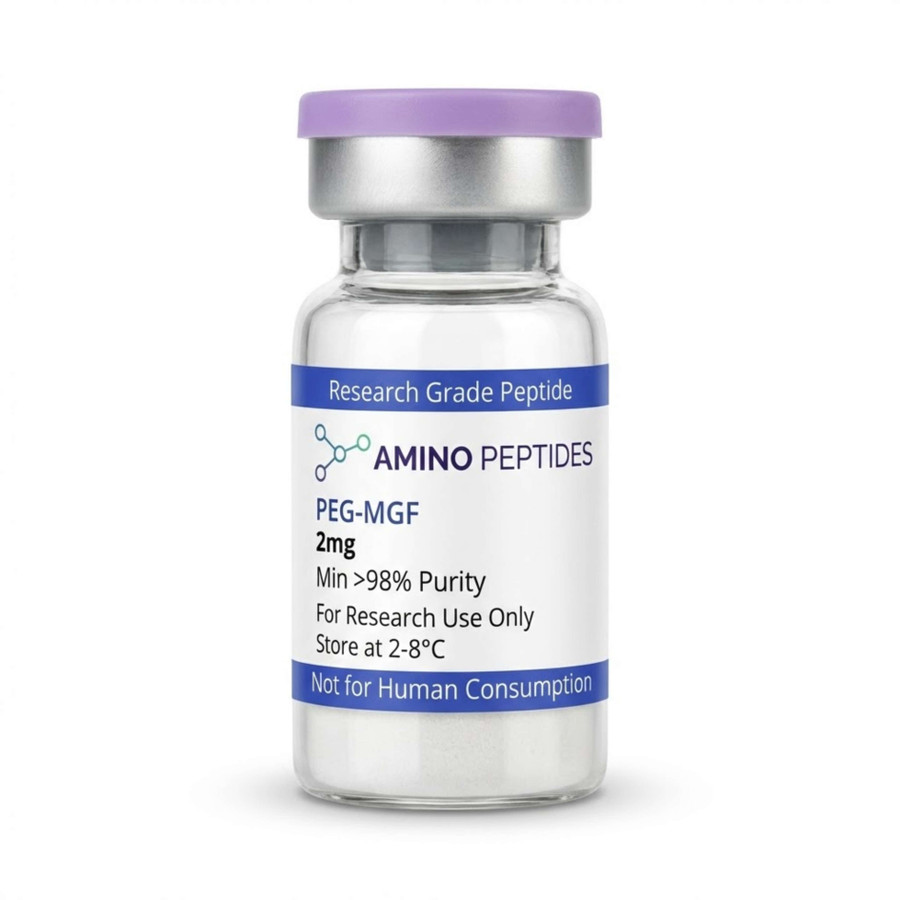
PEG-MGF (Pegylated Mechano Growth Factor) | 2mg
Technical Specifications
- Sequence: IGF-1Ec Splice Variant + Polyethylene Glycol (PEG)
- Modification: N-Terminal Pegylation (20 kDa PEG)
- Format: Lyophilised Cake/Powder
- Purity: >99% (HPLC Verified)
- Half-Life: Extended (approx. 48-72 hours)
- Solubility: High (Aqueous)
- Solvent: Solvent not included (Sold Separately)
- Grade: Analytical Research Grade
Variant Breakdown
- 2mg Vial: Contains 2mg PEG-MGF
Product Overview
PEG-MGF is a chemically modified version of Mechano Growth Factor (MGF), an isoform of IGF-1.
Native MGF has a biological half-life of only a few minutes, limiting its research application to immediate, localised signaling. PEG-MGF overcomes this limitation through the process of Pegylation—the attachment of a Polyethylene Glycol (PEG) polymer chain to the peptide molecule.
This PEG coating acts as a protective shield, preventing enzymatic degradation in the bloodstream. This modification extends the plasma half-life of the peptide from minutes to several days. Consequently, PEG-MGF is the primary reagent used for investigating systemic satellite cell activation and tissue repair, whereas native MGF is reserved for localised autocrine studies.
Quality Assurance
This compound has undergone rigorous third-party analysis.
- HPLC Verified: Independent analysis confirms peptide purity exceeds 99%.
- Mass Spectrometry: Confirms the presence of the peptide sequence and the associated PEG mass.
- Stability Testing: Verified for resistance to enzymatic breakdown compared to non-pegylated controls.
Research Mechanism
In laboratory settings, PEG-MGF is utilised to investigate:
- Systemic Myogenesis: The activation of muscle stem cells (satellite cells) throughout muscle tissue, rather than just at the site of administration.
- Fusion Signaling: The mechanism by which MGF promotes the fusion of satellite cells into existing muscle fibers to donate nuclei for repair.
- Neuroprotection: Research indicating that systemic MGF availability may reduce neuronal loss in models of cerebral ischemia.
Safety and Handling
WARNING: This product is exclusively for laboratory research and in vitro use.
- Research Only: Not intended for human consumption, bodybuilding, or therapeutic use.
- Handling: Wear appropriate personal protective equipment (PPE).
Storage: Store lyophilised vials in a cool, dry place. For long-term preservation, freezing at -20°C is recommended.
Scientific References
Journal of Applied Physiology (2004) – "Expression of IGF-I splice variants in muscle during recovery from resistance exercise." (Foundational MGF research). View Article
The Journal of Physiology (2010) – "Mechano Growth Factor: a new splice variant of IGF-1." View Article
Biotechnology Letters (2006) – "Pegylation of therapeutic proteins." (General reference on the mechanism of Pegylation for extending peptide half-life). View Article
Neuroscience Letters (2009) – "Mechano Growth Factor (MGF) protects against neuronal injury." View Article