

- Combines complementary mitochondrial cofactors and peptides studied together for cellular ATP energy, AMPK activation, and healthy-ageing pathways.
- SS-31 is discussed at the mitochondrial membrane, MOTS-c at AMPK, and NAD+ as the cofactor those enzymes spend. Together they cover the energy story from three sides.
- Mix each vial on its own with bacteriostatic reconstitution solution (0.9% benzyl alcohol). Do not combine the powders in one vial. Unmixed vials keep for 12 to 24 months at 2°C–8°C, and every mixed vial stays in that fridge.
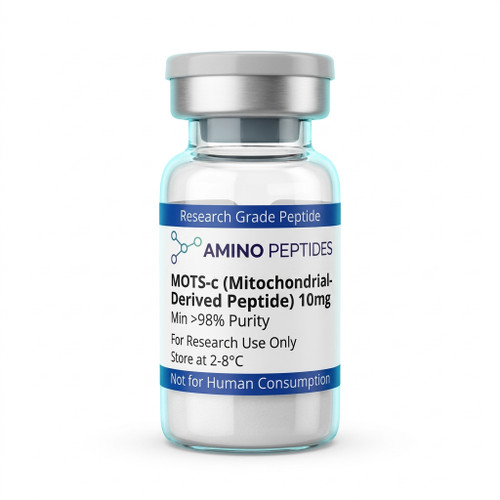
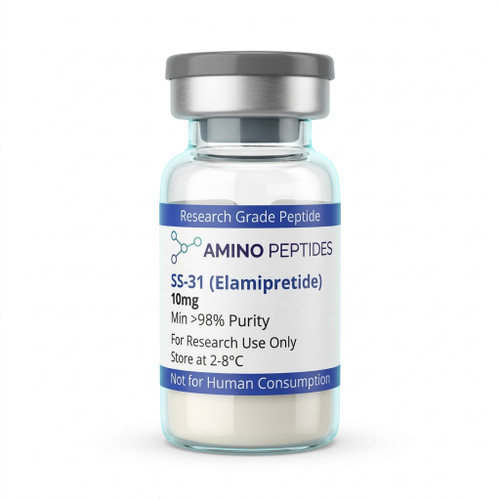
Laboratory researchers frequently procure SS-31 (Elamipretide), MOTS-C (Mitochondrial-Derived Peptide), and NAD+ (Nicotinamide Adenine Dinucleotide) together to investigate interconnected mitochondrial energy and cellular repair and regeneration pathways. In isolated cell systems, mitochondrial bioenergetics rely on structural membrane integrity, metabolic enzyme signalling, and redox cofactor availability all functioning in parallel. While SS-31 (Elamipretide) is studied for its direct binding to cardiolipin on the inner mitochondrial membrane, MOTS-C (Mitochondrial-Derived Peptide) is observed to regulate nuclear gene expression via the folate-purine-AMPK axis, and NAD+ (Nicotinamide Adenine Dinucleotide) provides the essential electron carrier capacity required for oxidative phosphorylation and sirtuin enzyme activity. By examining these three compounds in parallel-arm or sequential co-incubation designs, laboratories can observe how structural cristae stabilisation intersects with metabolic flux and cofactor supply.
Published in-vitro timelines show that these three pathways operate across complementary temporal phases in cultured myoblasts, fibroblasts, and isolated mitochondria. Acute observations within 1 to 6 hours typically track how SS-31 (Elamipretide) reduces mitochondrial oxidative stress by preventing cytochrome c peroxidase shifts, which preserves the respiratory chain complexes that depend on NAD+ (Nicotinamide Adenine Dinucleotide) redox cycling. Over extended 24 to 72 hour incubation windows, MOTS-C (Mitochondrial-Derived Peptide) is documented to accumulate intracellular AICAR and activate AMPK, driving mitochondrial biogenesis and upregulating NAMPT, the rate-limiting enzyme that salvages NAD+ (Nicotinamide Adenine Dinucleotide) alongside the cristae architecture maintained by SS-31 (Elamipretide). Together, these mechanisms allow investigators to model both immediate electron transport efficiency and multi-day adaptive organelle turn-over within a single experimental framework.
When sourcing each reagent as an analytical research chemical, UK laboratories require strict compositional verification to prevent confounding variables across multi-arm assays. Because isolated mitochondrial membranes and AMPK signalling cascades are highly sensitive to acidic contaminants, rigorous peptide synthesis and complete trifluoroacetic acid (TFA) removal are critical for both SS-31 (Elamipretide) and MOTS-C (Mitochondrial-Derived Peptide) alongside high-purity NAD+ (Nicotinamide Adenine Dinucleotide). Achieving 99%+ HPLC purity ensures that observed changes in oxygen consumption rates or ATP concentration derive solely from the target sequences rather than synthesis byproducts or residual counter-ions.
Each compound in this bundle is supplied in its own separate lyophilised vial to preserve individual molecular stability prior to assay preparation. Researchers must apply separate reconstitution protocols using Bacteriostatic Reconstitution Solution for each distinct vial of SS-31 (Elamipretide), MOTS-C (Mitochondrial-Derived Peptide), and NAD+ (Nicotinamide Adenine Dinucleotide), as accounted for in studies examining the degradation kinetics of NAD in aqueous buffer solutions. Maintaining all three vials at a consistent 2°C to 8°C inside a standard household or laboratory fridge prevents hydrolytic cleavage and oxidation, ensuring reproducible molar concentration accuracy across multi-week cellular experiments.
What does the SS-31 (Elamipretide) and MOTS-C (Mitochondrial-Derived Peptide) stack refer to in laboratory research?
How are SS-31 (Elamipretide) and MOTS-C (Mitochondrial-Derived Peptide) characterised together in laboratory research?
Can SS-31 (Elamipretide) and MOTS-C (Mitochondrial-Derived Peptide) be blended together?
What laboratory work groups SS-31 (Elamipretide) and MOTS-C (Mitochondrial-Derived Peptide) together?
Can I buy a SS-31 (Elamipretide) and MOTS-C (Mitochondrial-Derived Peptide) bundle in the UK?
How should these vials be stored?
Public search data clusters around phrases like "mitochondrial peptide stack" and "SS-31 MOTS-C NAD+ blend" because readers are curious about how cellular energy systems work from multiple angles. Current literature explores these three molecules across parallel lab timelines since one supports membrane structure, one guides metabolic signalling, and one supplies the raw cofactor for energy transfer. Amino Peptides provides all three as separate, high-purity lyophilised vials so researchers can study each distinct pathway without chemical interference.
- SS-31 (Elamipretide) selectively partitions into the inner mitochondrial membrane to bind 1,3-bis(sn-3'-phosphatidyl)-sn-glycerol (cardiolipin) via electrostatic and hydrophobic interactions, independent of transmembrane potential.
- MOTS-C (Mitochondrial-Derived Peptide) targets enzymatic nodes within the folate-methionine cycle and translocates to the nucleus under metabolic stress to bind antioxidant response elements (ARE) alongside transcription factor NRF2.
- NAD+ (Nicotinamide Adenine Dinucleotide) acts as an obligatory cosubstrate for Silent Information Regulator 2 (Sirtuin) deacetylases (SIRT1–SIRT7), poly(ADP-ribose) polymerases (PARPs), and cyclic ADP-ribose synthases (CD38).
- Structural and enzymatic target convergence occurs at the inner mitochondrial membrane-matrix interface, where SS-31-mediated cardiolipin stabilisation optimises Complex I–IV supercomplex geometry for NADH oxidation driven by NAD+ availability and MOTS-C-regulated substrate flux.
- In isolated mitochondrial preparations, SS-31 (Elamipretide) inhibits cytochrome c peroxidase activity by preventing hydrophobic disruption of the haem pocket, thereby preserving electron transport chain efficiency and attenuating reactive oxygen species generation.
- In cellular models, MOTS-C (Mitochondrial-Derived Peptide) inhibits de novo purine biosynthesis at the folate cycle, causing intracellular accumulation of 5-aminoimidazole-4-carboxamide ribonucleotide (AICAR) and subsequent allosteric activation of 5'-AMP-activated protein kinase (AMPK).
- In cell-free and cellular bioenergetic systems, NAD+ (Nicotinamide Adenine Dinucleotide) mediates hydride transfer across dehydrogenase reactions while activating SIRT1 and SIRT3, driving the deacetylation and activation of peroxisome proliferator-activated receptor-gamma coactivator 1-alpha (PGC-1α).
- Signalling cascades converge in vitro upon the AMPK–SIRT1–PGC-1α transcriptional axis and the electron transport chain, pairing MOTS-C-induced AMPK phosphorylation with NAD+-dependent sirtuin activation and SS-31-preserved cristae electrochemistry.
Technical Specifications
Variant Breakdown
- SS-31 (Elamipretide) (10mg): Supplied as a separate lyophilised research vial containing the synthetic tetrapeptide D-Arg-Dmt-Lys-Phe-NH2 for independent laboratory preparation and inner mitochondrial membrane assays.
- MOTS-C (Mitochondrial-Derived Peptide) (10mg): Supplied as a separate lyophilised research vial containing the 16-amino-acid mitochondrial-derived peptide sequence for independent metabolic and AMPK signalling investigations.
- NAD+ (Nicotinamide Adenine Dinucleotide) (500mg): Supplied as a separate lyophilised research vial containing the oxidised dinucleotide cofactor for independent redox, sirtuin, and bioenergetic assay preparation, bringing the total combined bundle mass to 520mg.
Quality Assurance
- HPLC Purity Verification: Every batch of SS-31 (Elamipretide), MOTS-C (Mitochondrial-Derived Peptide), and NAD+ (Nicotinamide Adenine Dinucleotide) undergoes reverse-phase High-Performance Liquid Chromatography to confirm a minimum 99%+ purity profile.
- Mass Spectrometry Identity: Electrospray Ionisation Mass Spectrometry (ESI-MS) is performed on each individual compound to verify exact molecular weight and sequence fidelity against reference standards.
- TFA Counter-Ion Removal: Strict post-synthesis purification removes residual trifluoroacetic acid salts, preventing artificial pH shifts or membrane toxicity during sensitive in-vitro mitochondrial incubations.
- Separate Lyophilised Format: All three compounds are freeze-dried in individual sterile vials under inert gas to maximise solid-state shelf life and prevent cross-reactivity prior to reconstitution.
Research Mechanism
- Electron Transport Chain & Redox Coupling: In isolated mitochondrial preparations, SS-31 (Elamipretide) binds exclusively to cardiolipin to optimise cristae curvature and supercomplex assembly, which directly facilitates the rapid NADH/NAD+ (Nicotinamide Adenine Dinucleotide) electron transfer across Complex I and Complex III.
- AMPK-NAMPT Salvage Convergence: In cultured mammalian myoblasts, MOTS-C (Mitochondrial-Derived Peptide) inhibits the folate cycle to elevate endogenous AICAR and phosphorylate AMPK, a signalling node that upregulates intracellular NAD+ (Nicotinamide Adenine Dinucleotide) salvage pathways and sirtuin-mediated deacetylation.
- Mitoprotective Stress Buffering: Under in-vitro oxidative challenge models, SS-31 (Elamipretide) suppresses reactive oxygen species generation at the inner membrane while MOTS-C (Mitochondrial-Derived Peptide) translocates to the nucleus to regulate ARE-dependent stress response genes, jointly preserving organelle viability.
- Bioenergetic ATP Synthesis Continuity: Parallel-arm cellular respirometry assays demonstrate that combining structural membrane stabilisation via SS-31 (Elamipretide), cofactor replenishment via NAD+ (Nicotinamide Adenine Dinucleotide), and glycolytic-mitochondrial coordination via MOTS-C (Mitochondrial-Derived Peptide) supports sustained ATP synthesis rates.
Reconstitution & Storage Data
| Peptide | Vial Strength | Solvent Added | Resulting Concentration |
| Vessel: 3mL Borosilicate Crimp Vial (10mg lyophilised mass — max vessel capacity 3.0 mL) | |||
| SS-31 | 10mg | 1.0 mL Bacteriostatic Reconstitution Solution | 10 mg/mL |
| SS-31 | 10mg | 2.0 mL Bacteriostatic Reconstitution Solution | 5 mg/mL |
| Vessel: 3mL Borosilicate Crimp Vial (10mg lyophilised mass — max vessel capacity 3.0 mL) | |||
| MOTS-C | 10mg | 1.0 mL Bacteriostatic Reconstitution Solution | 10 mg/mL |
| MOTS-C | 10mg | 2.0 mL Bacteriostatic Reconstitution Solution | 5 mg/mL |
| Vessel: 10mL UV-Amber Crimp Vial (500mg lyophilised mass) | |||
| NAD+ | 500mg | 5.0 mL Bacteriostatic Reconstitution Solution | 100 mg/mL |
| NAD+ | 500mg | 10.0 mL Bacteriostatic Reconstitution Solution | 50 mg/mL |
- Lyophilised (Freeze-Dried Vial): Stable at ambient room temperature during postal transit; store in a standard refrigerator (2–8°C) away from direct light for 12–24 months.
- Reconstituted (Liquid Solution): Store refrigerated at 2–8°C away from light. Using sterile bacteriostatic reconstitution solution (0.9% benzyl alcohol) preserves sterility across multiple draws while refrigeration maintains peptide integrity. Do not refreeze once mixed.
Scientific References
Cell Metabolism: "The mitochondrial-derived peptide MOTS-c promotes metabolic homeostasis and reduces obesity and insulin resistance" View Study
Journal of the American Society of Nephrology: "High-fat diet-induced renal damage is ameliorated by a mitochondrial-targeted antioxidant" View Study
Cell Metabolism: "NAD+ repletion improves mitochondrial and stem cell function and enhances life span in mice" View Study
Proceedings of the National Academy of Sciences: "Interaction of the mitochondria-targeted peptide SS-31 with cardiolipin and its role in inhibiting cytochrome c peroxidase activity" View Study