
ADAMAX: Enhancing the Bioavailability of Semax Through Adamantane Conjugation
11th Sep 2026
What You Need to Know About Semax Peptide
- Researchers investigate Adamax to understand how dual terminal modifications improve the metabolic stability of classic neuropeptide sequences.
- The addition of a lipophilic adamantane cage at the carboxyl terminus works alongside an N-terminal acetyl group to help the molecule cross lipid membranes more efficiently.
- In laboratory models, the parent Semax scaffold is known to upregulate brain-derived neurotrophic factor (BDNF) and tropomyosin receptor kinase B (TrkB) signalling.
- Published studies on adamantane-conjugated peptides demonstrate significantly prolonged resistance against enzymatic degradation by blood and tissue peptidases.
How Adamantane Armour Upgrades Classic Semax for Focus Signalling
Adamax is a modified version of the classic Semax heptapeptide that features an acetyl group on one end and a bulky adamantane ring on the other. In laboratory models, this dual capping shields the fragile amino acid chain from rapid enzymatic breakdown while helping it cross fatty cell membranes far more efficiently.
To understand the topic of ADAMAX: Enhancing the Bioavailability of Semax Through Adamantane Conjugation, it helps to look at the original molecule first. Standard Semax is a short fragment derived from adrenocorticotropic hormone,specifically the 4-10 amino acid sequence paired with a Pro-Gly-Pro tail. In published studies, standard Semax boosts brain-derived neurotrophic factor, or BDNF, which supports synaptic plasticity and focus signalling. However, natural enzymes in biological fluids chew through exposed peptide ends within minutes. By attaching an N-terminal acetyl cap and a C-terminal adamantane group, chemists created a molecule that resists aminopeptidase and carboxypeptidase enzymes.
The adamantane structure itself is a rigid, three-dimensional cage made of ten carbon atoms arranged like a microscopic diamond. Because this carbon cage is highly lipophilic, meaning fat-loving, it changes how the peptide interacts with lipid bilayers. Preclinical models investigating cognitive research peptides show that adding a lipophilic group helps water-soluble peptides slip past tight lipid barriers that normally block them. Once inside the target region, Adamax triggers a stronger and longer-lasting release of BDNF and tyrosine kinase receptor B signalling than unmodified Semax at an equivalent concentration. This structural tweak turns a short-lived messenger into a durable research compound with superior cellular energy and focus-related signalling profiles.
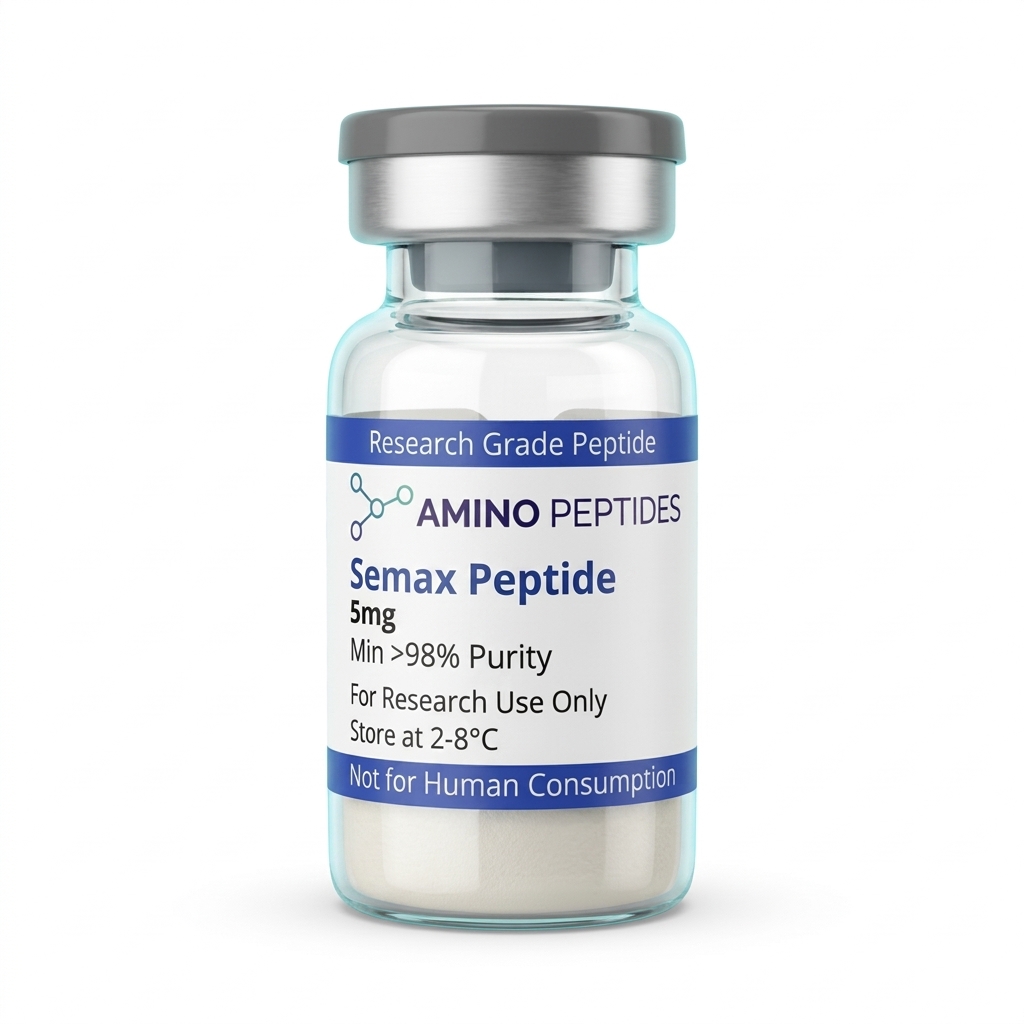
Semax Peptide
From £19
Supplied as a sealed freeze-dried vial (stable 12–24 months at 2°C–8°C in a standard refrigerator).
Shop Semax Peptide →Observed Signalling Timelines in Preclinical Models: Minutes Versus Weeks
When researchers compare Adamax against older analogues in preclinical models, the timeline of observed activity splits clearly into an immediate phase and a sustained structural phase. During the first fifteen to sixty minutes after introduction in laboratory models, the primary event is rapid gene transcription. Because the adamantane group speeds up membrane transport, intracellular signalling begins quickly. Published studies on melanocortin and neurotrophic fragments show an early spike in mRNA expression for BDNF and nerve growth factor inside hippocampal and cortical cell lines. At this early stage, no physical changes have occurred in the tissue; the cells are simply reading genetic instructions and assembling proteins.
Between two and twenty-four hours, the secondary phase unfolds. This is where the dual capping of Adamax separates itself from uncapped sequences. Where an unmodified peptide might be cleared by peptidases within an hour, the acetyl and adamantane ends keep the core heptapeptide intact for much longer. Laboratory models record elevated TrkB receptor phosphorylation lasting several hours past the initial spike, supporting ongoing neurotransmitter turnover among dopamine and serotonin pathways.
Over multi-day or multi-week study timelines, repeated exposure at a consistent measured level leads to observable structural remodelling in cultured neurons. Published studies note increased dendritic branching and denser synaptic connections after seven to fourteen days of sustained neurotrophic signalling. Researchers tracking recovery after oxidative stress in cell assays also observe improved mitochondrial survival during this later window. In short, early hours reflect fast chemical signalling, while week-long protocols reveal physical tissue remodelling and structural adaptation.
Structural and Biochemical Comparison of Semax Analogues
| Peptide Analogue | N-Terminus Modification | C-Terminus Modification | Lipophilicity and Membrane Permeability | Enzymatic Stability in Preclinical Models |
|---|---|---|---|---|
| Unmodified Semax | Free amine (H-Met) | Free carboxyl (Pro-OH) | Low (primarily hydrophilic heptapeptide) | Baseline (rapidly cleaved by endogenous aminopeptidases) |
| N-Acetyl Semax | Acetylated (Ac-Met) | Free carboxyl (Pro-OH) | Moderate (reduced N-terminal polarity) | Elevated (protected against N-terminal exopeptidase degradation) |
| N-Acetyl Semax Amidate | Acetylated (Ac-Met) | Amidated (Pro-NH2) | High (neutralised terminal charges) | High (dual capping slows both aminopeptidases and carboxypeptidases) |
| Adamax | Acetylated (Ac-Met) | Adamantane group | Very High (bulky lipophilic cage optimises lipid bilayer partitioning) | Maximum (steric hindrance from the adamantane cage shields the C-terminus) |
Pairing Adamax With Complementary Peptides in Laboratory Protocols
In laboratory protocols designed to study multiple neural pathways at once, investigators often pair Adamax with complementary sequences that act on different receptor families. Because Adamax primarily drives BDNF expression and melanocortin-related focus pathways, combining it with anxiolytic or mitochondrial peptides allows researchers to observe broader cellular recovery without overloading a single receptor type. For instance, many teams who buy semax as a baseline control also test Selank alongside Adamax. While Adamax pushes excitatory neurotrophic growth and TrkB activity, Selank modulates GABAergic signalling and slows the breakdown of natural enkephalins. Observing both together in preclinical models shows how excitatory plasticity and calm inhibitory signalling balance one another under simulated stress.
Another frequent laboratory combination pairs Adamax with P21 or cerebrolysin-derived fragments. P21 works predominantly by inhibiting leukaemia inhibitory factor signalling and reducing tau hyperphosphorylation in aged cell models, complementing the direct BDNF surge triggered by Adamax. Together, they cover both neurogenesis stimulation and structural protein protection in long-term cell cultures.
Finally, researchers examining cellular energy often stack Adamax with NAD+ precursors or mitochondrial peptides like SS-31 in vitro. High synaptic activity and rapid protein synthesis demand heavy adenosine triphosphate output from neural mitochondria. When Adamax increases the rate of synaptic remodelling, having a mitochondrial support compound in the same protocol ratio prevents energy depletion in the cultured cells. Each compound handles its own distinct biochemical lane, allowing cleaner data collection across focus, sleep-wake regulation, and cellular recovery assays.

Figure: ADAMAX: Enhancing the Bioavailability of Semax Through Adamantane Conjugation
Reconstitution calculator
Choose a vial mass and a bacteriostatic reconstitution solution volume. The figure is the resulting concentration.
Concentration: 2.50 mg/mL
Per 0.01mL (10µL): 25.0 mcg
Open the full calculatorBacteriostatic reconstitution solutionWhy Analytical Purity and Cold Storage Protect the Adamantane Cap
Because Adamax relies on two specific terminal modifications—an N-acetyl group and a C-terminal adamantane cage—the synthesis process involves extra chemical coupling steps compared to plain seven-amino-acid chains. If a manufacturer rushes solid-phase synthesis, incomplete coupling leaves behind truncated sequences or uncapped Semax fragments in the vial. High-Performance Liquid Chromatography verification at 99% purity or higher ensures that the lyophilized powder actually contains the fully conjugated Adamax molecule rather than a messy soup of unfinished precursors. Mass spectrometry confirmation is equally important to verify the exact molecular weight of the heavy adamantane attachment.
Beyond sequence accuracy, removing trifluoroacetic acid is essential for sensitive neural cell assays. Trifluoroacetic acid is a harsh solvent used to cleave peptides from synthesis resins. If left behind as a counter-ion, residual TFA alters the pH of the liquid medium and causes direct cytotoxicity in delicate neuronal cultures, ruining BDNF readouts. Premium research batches undergo ion-exchange chromatography to swap toxic TFA salts for benign acetate salts before freeze-drying.
Once the vial arrives at the laboratory, proper thermal care keeps the adamantane amide bond stable. Dry, lyophilized Adamax should be stored in a dark refrigerator between 2°C and 8°C, or frozen at -20°C for long-term archiving. When preparing the powder for an assay, researchers use sterile bacteriostatic reconstitution solution and swirl the vial gently rather than shaking it, which prevents shearing the peptide chains. After reconstitution, keeping the liquid strictly between 2°C and 8°C prevents hydrolysis and preserves consistent concentration metrics across every test run.
Frequently Asked Questions
Why is Adamax searched so often alongside Semax in neuroscience literature?
Researchers frequently search for Adamax because it modifies the classic Semax peptide with two distinct molecular caps to improve stability. Published studies and laboratory models examine whether adding an acetyl group and an adamantane group helps the molecule cross biological barriers more efficiently whilst resisting rapid enzymatic breakdown during neural signalling assessments.
What does a typical study timeline look like for Adamax in preclinical models?
In laboratory models, a typical observation timeline runs from seven to fourteen days to evaluate acute receptor activity and neurotrophic factor expression. Scientists monitor changes in brain-derived neurotrophic factor levels within hours of introduction, followed by multi-day tracking to characterise how the adamantane group influences longer-term cellular recovery and receptor sensitivity.
Do laboratory protocols ever combine Adamax with other research peptides?
Yes, preclinical models occasionally pair Adamax with complementary neuropeptides like Selank to analyse overlapping pathways in neural signalling. When designing these combined protocols, investigators carefully adjust the protocol ratio of each compound to prevent receptor saturation and to clearly isolate how each specific peptide affects gene expression and tissue remodelling.
What purity standards and fridge storage rules apply to Adamax reference materials?
Laboratory-grade Adamax should meet a minimum purity standard of ninety-eight percent, verified through high-performance liquid chromatography and mass spectrometry. Unmixed lyophilised powder stays stable in a freezer at minus twenty degrees Celsius, whilst any sample mixed with bacteriostatic reconstitution solution requires dark fridge storage between two and eight degrees Celsius.
Bibliography
- Dolotov OV, Karpenko EA, Inozemtseva LS, et al. Semax, an analog of ACTH(4-10) with cognitive effects, regulates BDNF and trkB expression in the rat hippocampus. Brain Res. 2006;1117(1):54-60. View published research
- Wanka L, Iqbal K, Schreiner PR. The lipophilic bullet hits the targets: laboratory chemistry of adamantane derivatives. Chem Rev. 2013;113(5):3516-3604. View published research
- Medvedeva EV, Dmitrieva VG, Povarova OV, et al. The peptide semax affects the expression of genes related to the immune and vascular systems in rat brain focal ischemia: genome-wide transcriptional analysis. BMC Genomics. 2014;15:228. View published research
- Ashmarin IP, Nezavibatko VN, Myasoedov NF, et al. A nootropic adrenocorticotropin analog 4-10-semax (15 years experience in its design and study). Zh Vyssh Nerv Deiat Im I P Pavlova. 1997;47(2):420-430. View published research
⚠️ Research Use Only Disclaimer: All peptides and compounds are sold strictly for in-vitro laboratory research purposes only. Not intended for human or veterinary use, not a dietary supplement, and not approved to diagnose, treat, cure, or prevent any disease or condition. For use by qualified researchers in suitably equipped laboratory environments only. Amino Peptides Ltd operates in full compliance with UK MHRA regulations and applicable EU research chemical guidelines.