
Bryan Johnson Blueprint NAD+ and Longevity Peptides: Separating Hype from Science
21st Aug 2026

What You Need to Know About NAD+
- NAD+ is nicotinamide adenine dinucleotide, a dinucleotide cofactor rather than a peptide.
- It is searched because it feeds redox reactions that cellular-energy assays actually measure.
- MOTS-c and 5-Amino-1MQ are the stocked partners when a laboratory wants a peptide and an NNMT inhibitor beside it.
- The cofactor still has to be 99%+ HPLC-verified and kept at 2°C–8°C if the redox readout is going to be repeatable.
How NAD+ and Longevity Peptides Power Cellular Energy
Tech entrepreneur Bryan Johnson has made nicotinamide adenine dinucleotide (NAD+) and longevity peptides famous through his anti-ageing routines, yet laboratory science focuses on how these molecules actually power cells. In published studies, NAD+ acts as a vital helper molecule that carries electrons inside mitochondria to keep cellular energy production running smoothly.
Every living cell relies on tiny power plants called mitochondria to turn food into adenosine triphosphate, or ATP. NAD+ sits right at the centre of this process. Without enough of this coenzyme, cells struggle to generate energy, and their normal repair routines slow down. Preclinical models show that natural NAD+ levels drop steadily as tissues age, leaving older cells with less fuel to handle daily stress.
Beyond simple energy generation, NAD+ fuels a family of specialised proteins called sirtuins. Researchers often call sirtuins the guardians of the genome because they manage DNA repair, quiet down cellular inflammation, and keep chromosomes stable. Sirtuins cannot work unless NAD+ is present in the right study amount. When scientists restore NAD+ to youthful measured levels in aged cell cultures, sirtuin activity rebounds and mitochondrial output improves.
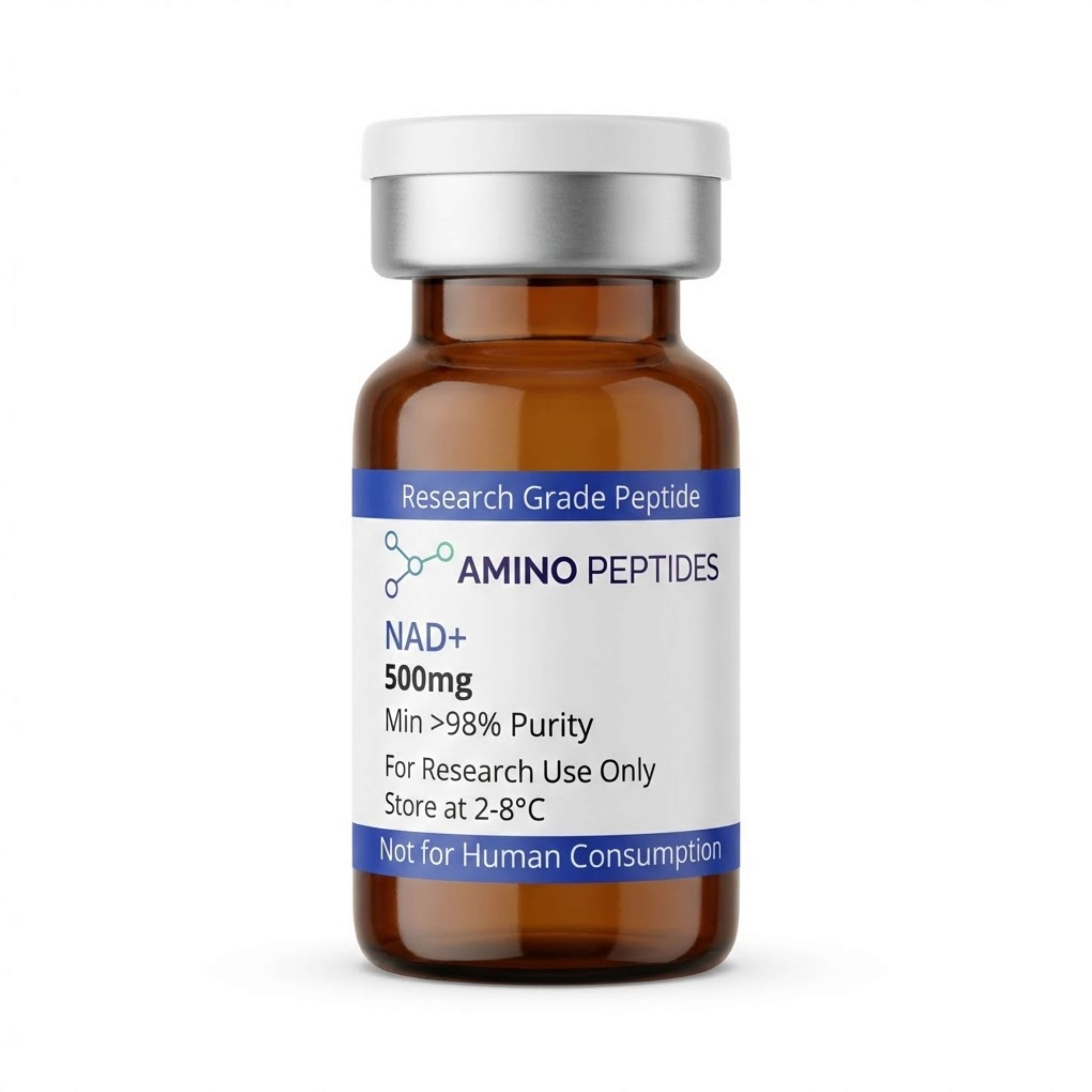
NAD+
From £45
Supplied as a sealed freeze-dried vial (stable 12–24 months at 2°C–8°C in a standard refrigerator).
Shop NAD+ →Longevity peptides enter this picture as targeted messengers. While NAD+ provides the raw coenzyme fuel, short amino acid chains like Epitalon, MOTS-c, and SS-31 send specific instructions to the cell nucleus and mitochondrial membranes. Instead of forcing a whole organ to work harder, these small chains gently nudge specific metabolic switches. By separating celebrity anti-ageing claims from controlled benchtop biology, we can see what these compounds actually do: they help tired cells manage energy, clear out damaged proteins, and maintain crisp genetic signalling under laboratory observation.
Study Timelines: Fast Signalling Versus Slow Tissue Remodelling
Online videos often make anti-ageing routines look like an overnight transformation, but published studies tell a much slower, staged story. When researchers introduce NAD+ or longevity peptides into preclinical models, the biological response splits into two clear phases: rapid chemical signalling followed by gradual structural adaptation.
During the first 24 to 72 hours, the changes are purely metabolic. Once NAD+ concentrations rise inside a cell culture, redox ratios shift almost immediately. Mitochondria start pumping protons more efficiently, and ATP output ticks upward within hours. Similarly, when mitochondrial peptides like MOTS-c bind to their targets, early signalling pathways such as AMPK switch on during the first few days. At this early point, nothing looks different under a standard microscope, even though the cell is already burning fuel more cleanly.
Visible tissue remodelling and structural recovery take weeks of steady protocol ratios. In rodent and cell-culture studies examining skin elasticity, telomere maintenance, or muscle recovery, measurable physical shifts rarely appear before week four to week eight. For instance, fibroblasts need several weeks of clean sirtuin signalling and steady amino acid supply to lay down fresh collagen networks. Telomere length assays with pineal peptides like Epitalon also require multiple cell divisions before any protective effect on chromosome ends can be measured.
Understanding this gap between fast biochemical sparks and slow structural building keeps expectations grounded in reality. A single high concentration does not rewrite cellular age in an afternoon. Laboratory models consistently show that steady, repeatable exposure over four to twelve weeks is what allows early energy signalling to turn into lasting tissue resilience and cleaner cellular housekeeping.
Reconstitution calculator
Choose a vial mass and a bacteriostatic reconstitution solution volume. The figure is the resulting concentration.
Concentration: 2.50 mg/mL
Per 0.01mL (10µL): 25.0 mcg
Open the full calculatorBacteriostatic reconstitution solutionBiochemical Comparison of Blueprint-Associated Longevity Compounds
| Compound | Molecular Class | Primary Biological Target | Observed Effect in Laboratory Models | Evidence Level |
|---|---|---|---|---|
| NAD+ (and Precursors NR/NMN) | Dinucleotide Coenzyme / Vitamin B3 Derivatives | Sirtuins (SIRT1-7) and PARP enzymes | Supports mitochondrial electron transport and DNA repair signalling in aged rodent tissues | Extensive preclinical models and human biomarker studies |
| GHK-Cu (Copper Tripeptide-1) | Metallopeptide (3 amino acids + Cu2+) | Extracellular matrix genes and TGF-beta pathways | Stimulates collagen synthesis and modulates thousands of genes linked to tissue remodelling | In vitro cell cultures and topical skin studies |
| BPC-157 | Synthetic Pentadecapeptide (15 amino acids) | VEGFR2 signalling and nitric oxide pathways | Accelerates blood vessel formation and tendon fibroblast migration in rodent injury models | Preclinical animal models only |
| Epitalon (AEDG) | Synthetic Tetrapeptide (4 amino acids) | Telomerase enzyme and pineal gland signalling | Elongates telomeres in cultured human somatic cells and regulates melatonin rhythms in aged monkeys | Cell culture and limited regional preclinical studies |
| MOTS-c | Mitochondrial-Derived Peptide (16 amino acids) | AMPK pathway and folate-methionine cycle | Enhances glucose uptake in skeletal muscle and improves physical capacity in aged mice | Preclinical rodent models and early metabolic profiling |
Smart Lab Stacks: Pairing NAD+ With Mitochondrial Peptides
In longevity research, scientists rarely look at a single pathway in isolation because cellular ageing happens across several systems at once. A major focus in current benchtop work is combining MOTS-c and NAD+ to study how fuel supply and metabolic signalling support one another inside the mitochondria.
NAD+ acts like high-grade oil in an engine, allowing the electron transport chain to spin without friction. However, if the mitochondrial engine itself is stressed or poorly regulated, extra fuel alone only goes so far. That is where MOTS-c fits in. Encoded directly within mitochondrial DNA, this 16-amino-acid peptide activates the AMPK pathway, helping cells take up glucose and burn fatty acids more cleanly. When laboratory models evaluate both compounds together, NAD+ supplies the coenzyme needed for energy transfer while MOTS-c organises how the cell uses that energy.
Another popular research pairing combines SS-31 (Elamipretide) with NAD+ precursors or coenzymes. SS-31 binds directly to cardiolipin, a special lipid that holds the inner mitochondrial membrane in the right shape. If cardiolipin oxidises and warps, electrons leak out and create damaging free radicals before NAD+ can catch them. By stabilising the physical membrane with SS-31 first, researchers observe much cleaner electron flow when NAD+ is added to the study protocol.
Some investigators also pair pineal peptides like Epitalon alongside GHK-Cu in fibroblast cultures. While Epitalon is studied for its influence on telomerase and circadian gene expression, copper peptides focus on extracellular matrix repair and skin elasticity. Studying these complementary pairs allows labs to observe how internal energy management and external structural recovery work side by side.
Figure: Bryan Johnson Blueprint NAD+ and Longevity Peptides: Separating Hype from Science
Why 99%+ HPLC Purity and Cold Storage Rule the Lab
Whether a laboratory is testing a viral anti-ageing theory or running a standard cell assay, the data is only as reliable as the material inside the vial. Sourcing an amolist research peptide or a lyophilised NAD+ standard requires strict attention to High-Performance Liquid Chromatography (HPLC) testing and salt removal.
Every batch used in serious research should carry an independent certificate showing 99%+ HPLC purity. During solid-phase synthesis, truncated amino acid chains and unreacted fragments can easily remain in the raw powder. If a vial sits at only 85% or 90% purity, those leftover fragments can bind to cell receptors, block normal signalling, or trigger unexpected stress responses in delicate cultures. High purity ensures that the observed cellular energy shift comes from the target sequence and nothing else.
Trifluoroacetic acid (TFA) removal is just as important. Chemists use TFA to cleave peptides from their resin beads during manufacturing, but residual TFA salts are highly acidic and toxic to living cells, especially fragile mitochondria. Premium research suppliers swap out harsh TFA for gentler acetate or hydrochloride salts, keeping the pH profile clean when the powder meets a bacteriostatic reconstitution solution.
Once a vial arrives at the lab, temperature control protects the investment. Lyophilised freeze-dried powders stay stable for long periods in a freezer at minus 20°C, away from bright light. After mixing with a sterile bacteriostatic reconstitution solution, the liquid must live in a standard refrigerator between 2°C and 8°C. Shaking the vial or leaving it on a warm benchtop breaks fragile peptide bonds, turning an expensive study reagent into inactive amino acid soup within days.
Frequently Asked Questions
Why are so many people searching for Bryan Johnson Blueprint NAD+ and longevity peptides?
People search this topic because Bryan Johnson tracks every biomarker publicly while exploring ways to slow cellular ageing. Curiosity around his Blueprint routine drives interest in how NAD+ and longevity peptides function in laboratory models. Readers want to separate viral media hype from actual published studies on cellular recovery.
What does the study timeline look like for NAD+ and longevity peptides in the lab?
In preclinical models, researchers observe shifts in cellular energy signalling within hours, while tissue remodelling takes several weeks. Short-term assays measure immediate enzyme activity, whereas longer investigations track mitochondrial resilience over months. Scientists analyse these distinct phases to characterise how specific protocol ratios affect ageing pathways over time.
Can researchers combine NAD+ with longevity peptides in laboratory models?
Yes, researchers frequently pair NAD+ with peptides like Epitalon or MOTS-c in laboratory models to study overlapping pathways. While NAD+ supports cellular energy and DNA repair, specific peptides target telomere maintenance or metabolic signalling. Combining them allows scientists to observe whether dual mechanisms optimise overall cellular regeneration.
How should NAD+ and research peptides be stored to maintain purity?
Lyophilised peptides and NAD+ powders must be kept in a freezer at minus 20 degrees Celsius to remain stable. Once mixed with a bacteriostatic reconstitution solution for laboratory testing, the liquid vials require fridge storage between 2 and 8 degrees Celsius. High purity prevents unwanted variables during sensitive assays.
Bibliography
- Covarrubias AJ, Perrone R, Grozio A, Verdin E. NAD+ metabolism and its roles in cellular processes during ageing. Nat Rev Mol Cell Biol. 2021;22(2):119-141. View published research
- Pickart L, Margolina A. Regenerative and Protective Actions of the GHK-Cu Peptide in the Light of the New Gene Data. Int J Mol Sci. 2018;19(7):1987. View published research
- Khavinson VK, Bondarev IE, Butyugov AA. Epithalon peptide induces telomerase activity and telomere elongation in human somatic cells. Bull Exp Biol Med. 2003;135(6):590-592. View published research
- Lee C, Zeng J, Drew BG, et al. The mitochondrial-derived peptide MOTS-c promotes metabolic homeostasis and reduces obesity and insulin resistance. Cell Metab. 2015;21(3):443-454. View published research
- Seiwerth S, Rucman R, Turkovic B, et al. BPC 157 and Standard Angiogenic Growth Factors. Gastrointestinal Tract, Blood Vessels and Soft Tissue. Curr Pharm Des. 2018;24(18):1972-1989. View published research
⚠️ Research Use Only Disclaimer: All peptides and compounds are sold strictly for in-vitro laboratory research purposes only. Not intended for human or veterinary use, not a dietary supplement, and not approved to diagnose, treat, cure, or prevent any disease or condition. For use by qualified researchers in suitably equipped laboratory environments only. Amino Peptides Ltd operates in full compliance with UK MHRA regulations and applicable EU research chemical guidelines.