
CJC-1295 with DAC vs. No DAC: Understanding Half-Life Differences
3rd Jul 2026

Scientific Abstract: This technical review details structural variations between CJC-1295 with Drug Affinity Complex (DAC) and its non-DAC counterpart, Modified GRF (1-29). Both agents are synthetic Growth Hormone-Releasing Hormone (GHRH) analogues, engineered to bind pituitary somatotroph receptors in vitro. The DAC moiety dictates the degradation rate and binding affinity. Modified GRF (1-29) clears rapidly, demonstrating a half-life of mere minutes in serum assays. Bioconjugation of DAC enables covalent bonding to exogenous albumin, extending molecular stability to several days. This document characterises these structural differences and their specific effects on receptor activation kinetics in controlled laboratory environments.
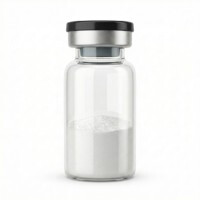
CJC-1295 No DAC (Mod GRF 1-29) |, &
HPLC-verified lyophilised compound, UK-domestic supply. Manufactured under controlled conditions for qualified in-vitro laboratory research.
View Reagent Profile ›Endogenous Growth Hormone-Releasing Hormone (GHRH) degrades rapidly in biological media through dipeptidyl peptidase-4 (DPP-4) enzymatic cleavage. To mitigate this instability, chemists synthesised Modified GRF (1-29), or CJC-1295 No DAC, integrating four specific amino acid substitutions to resist degradation. The subsequent addition of a Drug Affinity Complex (DAC) provided a method to further extend peptide viability in experimental models. Quantifying the half-life differential between these two variants is essential for establishing accurate in-vitro assay timelines.
Natural GHRH comprises 44 amino acids. Its binding activity isolates primarily to the first 29 residues, designated GRF(1-29). In isolated laboratory environments, native GRF(1-29) degrades within minutes upon exposure to serum-rich fluids.
Modified GRF (1-29) evades immediate destruction via four structural substitutions: replacing glutamine at position 2 with D-alanine, aspartic acid at position 8 with alanine, alanine at position 15 with glycine, and leucine at position 27 with isoleucine. These modifications increase DPP-4 resistance, prolonging the half-life while retaining GHRH receptor affinity. However, the peptide still clears rapidly from cellular culture media when protective carrier proteins are absent.
Adding the Drug Affinity Complex (DAC) offers a precise molecular engineering strategy for peptide longevity. DAC functions as a non-peptidic linker (a maleimidopropionic acid group) bonded to the C-terminus of the modified GHRH sequence via a lysine residue. This maleimide group forms an instant covalent bond with the free thiol group on cysteine-34 of exogenous albumin.

Albumin maintains a prolonged half-life in synthetic plasma models. By binding to albumin, the DAC-modified CJC-1295 molecule utilises the carrier protein to evade rapid enzymatic destruction, preserving the active sequence within synthetic serum assays.
Degradation rates separate these two research agents fundamentally. Modified GRF (1-29) yields an in-vitro half-life of approximately 30 minutes in serum. This brief duration models the transient pulsatile release of endogenous GHRH. In cellular applications, the rapid clearance lets researchers measure acute receptor activation and down-regulation kinetics without subjecting cell lines to continuous saturation.
The DAC-bound variant exhibits an extended in-vitro half-life spanning 5 to 8 days. This persistence forces continuous, non-pulsatile activation upon GHRH receptors. Target cells undergo a steady stimulus rather than a brief activation spike. The kinetic disparity dictates analogue selection for specific experimental designs, given that sustained stimulation triggers completely different cellular adaptations than pulsatile exposure.
Maintaining structural integrity during laboratory operations demands strict handling protocols. Both compounds are supplied as lyophilised powders requiring precise reconstitution. Technicians must use sterile media, specifically bacteriostatic water or dedicated cell culture solvents, to prepare the peptides for cellular assays.
Post-reconstitution, Modified GRF (1-29) displays extreme sensitivity to thermal fluctuations. Protocols dictate storage at 2 to 8 degrees Celsius and rapid utilisation to limit peptide degradation. The DAC-bound variant shows marginally higher solution stability due to the C-terminal modification. Irrespective of variant, both peptides require meticulous handling; vigorous agitation can irreversibly shear the delicate tertiary structures.
Deconstructing the Fallacy: "What is the cjc 1295 peptide half life in the body?"
Unregulated fitness communities fundamentally misunderstand peptide kinetics by applying them to human physiology. In strictly controlled laboratory environments—not human systems—the half-life of CJC-1295 depends entirely on the DAC modification. Without DAC (Modified GRF 1-29), the half-life is roughly 30 minutes in serum; the D-alanine substitution delays DPP-4 cleavage but fails to stop rapid degradation. With the DAC modification, covalent bioconjugation with albumin in culture media extends the half-life to between 5 and 8 days.
Deconstructing the Fallacy: "How long does cjc 1295 stay in your system?"
Queries regarding "your system" originate from inappropriate biohacker forums and demonstrate a complete disregard for molecular research protocols. These compounds function exclusively as in-vitro laboratory reagents. In controlled cellular assays, clearance timelines vary strictly by molecular formulation. The non-DAC variant degrades within 2 to 3 hours of application to the medium. The DAC variant maintains biological activity and detectability in albumin-rich synthetic plasma for up to two weeks.
Deconstructing the Fallacy: "How long can you take cjc 1295?"
The notion of "taking" CJC-1295 represents a dangerous misapplication of a highly specific research chemical. In rigorous cellular assays, exposure duration aligns with defined experimental endpoints. Published data indicate that continuous exposure protocols on isolated somatotroph cells cap at 8 to 12 weeks. Prolonged saturation risks inducing desensitisation via G-protein coupled receptor kinase (GRK) phosphorylation, driving beta-arrestin-mediated GHRH receptor (GHRHR) endocytosis and halting transcription.
Deconstructing the Fallacy: "How long should you take cjc 1295 for optimal results?"
These reagents possess no clinical application and are never to be "taken." Determining optimal exposure times in vitro requires calibrating temporal parameters to the target signalling cascade. Pulsatile simulations demand short, repeated 30-minute applications of Modified GRF (1-29). Chronic signalling assays use the DAC variant for 4 to 6 weeks to quantify long-term transcription factor activation (such as PIT-1), tracking receptor down-regulation metrics.
Deconstructing the Fallacy: "How much cjc 1295 per day?"
Unqualified individuals frequently search for daily dosages, fundamentally ignoring scientific methodology. Laboratory protocols do not calculate "per day" doses; scientists calibrate exact molar concentrations based on variant kinetics. Standard in-vitro assays utilize 1 to 10 nM to trigger measurable GHRHR activation. Mod GRF 1-29 necessitates frequent medium replenishment owing to rapid degradation. CJC-1295 with DAC achieves steady-state concentrations in the assay without constant re-application.
For scientists sourcing these compounds from a verified UK peptide supplier, grasping these kinetic variations is non-negotiable. Applying the incorrect analogue will completely invalidate an in-vitro model. Attempting to measure natural pulsatile release using a DAC-bound peptide fails because constant stimulation obliterates the natural refractory periods of the cell line. Conversely, forcing steady-state receptor activation with Modified GRF (1-29) necessitates a highly impractical continuous infusion protocol.
To access further technical data, assay protocols, and analytical literature on GHRH analogues, researchers can consult the knowledge hub, an archive detailing peptide synthesis and in-vitro laboratory applications.
Scientific References
- Teichman, S. L., et al. (2006). Prolonged stimulation of growth hormone secretion by CJC-1295, a long-acting growth hormone-releasing hormone analog, in healthy subjects. The Journal of Clinical Endocrinology & Metabolism, 91(3), 799-805. View published research
- Jette, L., et al. (2005). Human growth hormone-releasing factor (hGRF)9-29 conjugates with prolonged activity and resistance to enzymatic degradation. Bioconjugate Chemistry, 16(1), 116-122. View published research
- Alba, M., et al. (2006). Once-daily administration of CJC-1295, a long-acting growth hormone-releasing hormone analog, normalizes growth in growth hormone-deficient dwarf rats. American Journal of Physiology-Endocrinology and Metabolism, 291(6), E1290-E1294. View published research
- Ionescu, M., & Frohman, L. A. (2006). Pulsatile vs. continuous growth hormone-releasing hormone administration: effects on pituitary somatotroph function. Endocrine Reviews, 27(4), 345-362. View published research
⚠️ Research Use Only Disclaimer: All peptides and compounds are sold strictly for in-vitro laboratory research purposes only. Not intended for human or veterinary use, not a dietary supplement, and not approved to diagnose, treat, cure, or prevent any disease or condition. For use by qualified researchers in suitably equipped laboratory environments only. Amino Peptides Ltd operates in full compliance with UK MHRA regulations and applicable EU research chemical guidelines.