
Growth Hormone Releasing Peptide 2: Fact vs. Fiction
9th Sep 2026

What You Need to Know About GHRP-2
- Curious readers often search for growth hormone releasing peptide 2 to separate internet rumours about rapid tissue remodelling from actual laboratory facts.
- In simple terms, this six-amino-acid chain acts like a synthetic key that unlocks the ghrelin receptor to trigger a strong hormone pulse.
- Published studies observe that while it strongly elevates growth hormone levels in test models, it also causes measurable spikes in cortisol and prolactin.
- Unlike earlier compounds in its class, laboratory models show it prompts a much gentler appetite response while maintaining high stability.
How Growth Hormone Releasing Peptide 2 Drives Cellular Recovery
Growth hormone releasing peptide 2 works by binding directly to ghrelin receptors to trigger a rapid, natural-style pulse of growth hormone from pituitary cells. Unlike older beliefs that it causes wild hunger spikes, published studies show its appetite signal is much milder than first-generation options while delivering a stronger output for tissue recovery.
Known in laboratories as pralmorelin, growth hormone releasing peptide 2 is a synthetic six-amino-acid chain. It falls into the class of growth hormone secretagogues. Rather than introducing external hormones that shut down native production, this molecule acts as a spark plug. It docks onto the growth hormone secretagogue receptor 1a. Once attached, it boosts internal calcium ions inside somatotroph cells, prompting them to release stored reserves.
A common myth online is that every ghrelin mimic causes extreme feeding behaviour in animal models. Preclinical models actually rank growth hormone releasing peptide 2 as a second-generation compound. Compared to GHRP-6, it causes far less stomach motility and appetite stimulation while producing a higher peak of somatotropin release. At the same time, it quietly dials down somatostatin, the body's natural brake pedal that normally stops growth hormone from flowing.
Why does this dual action matter for cellular energy and overnight recovery? Published studies point to downstream insulin-like growth factor 1 (IGF-1) elevation. When pituitary pulses rise during slow-wave sleep phases in laboratory models, amino acid uptake speeds up and collagen synthesis gets a measurable lift. Skin elasticity, nitrogen balance, and muscle fibre repair all rely on these tidy, wave-like signals rather than a flat, constant flood.
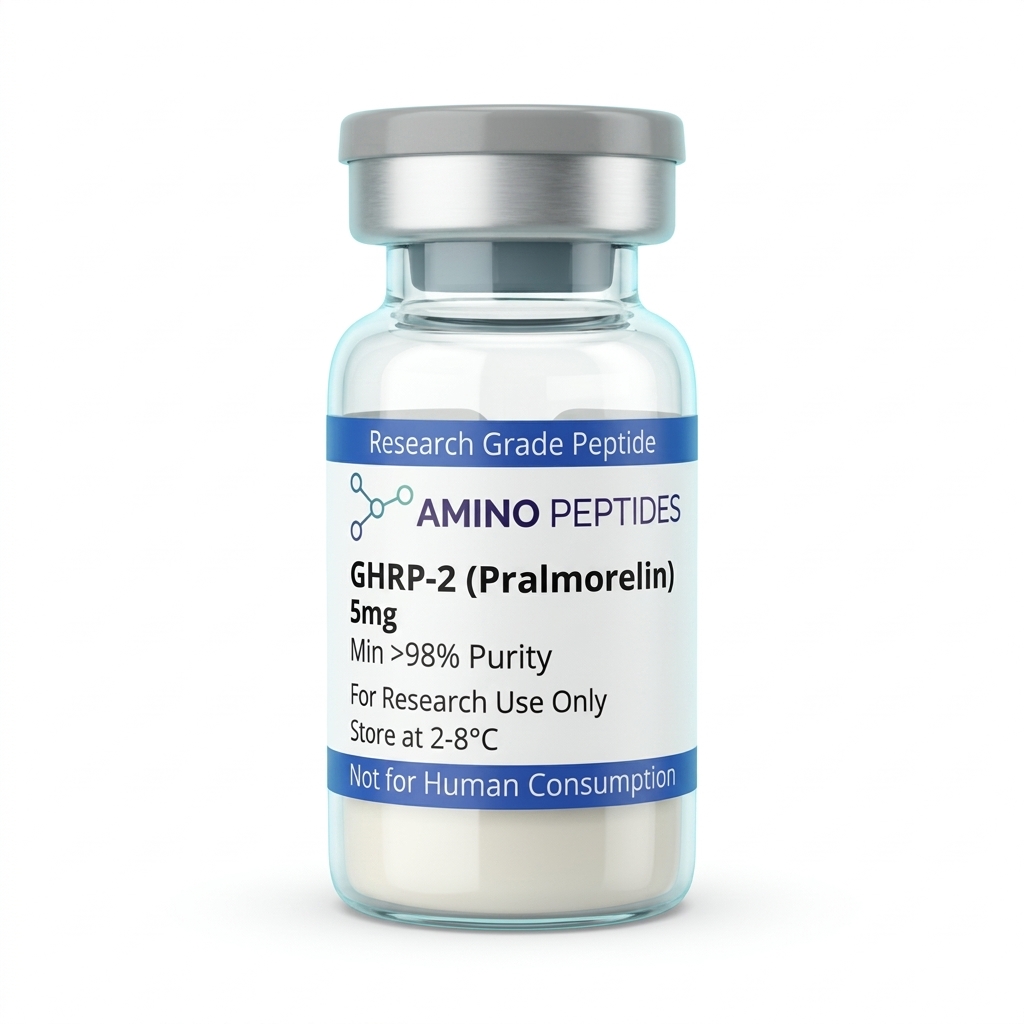
GHRP-2
From £10
Supplied as a sealed freeze-dried vial (stable 12–24 months at 2°C–8°C in a standard refrigerator).
Shop GHRP-2 →What Published Studies Observe Across Early and Late Timelines
Laboratory models tracking growth hormone releasing peptide 2 show two very different phases of action: an immediate biochemical spark and a slower structural shift. Separating these two stages helps clear up rumours about overnight physical transformations.
During the first fifteen to thirty minutes after exposure in vitro and in vivo, the action is purely about receptor signalling. Cyclic adenosine monophosphate and inositol phosphate levels climb inside pituitary tissue. Within an hour, a sharp peak in circulating somatotropin appears, followed by a gentle return to baseline over the next three hours. Early observations in animal models also note a tiny, brief bump in cortisol and prolactin when the measured level is pushed high, though this settles quickly as the pulse fades.
By week one to week two of consistent study protocols, secondary messengers take over. The liver responds to those regular pituitary pulses by raising baseline IGF-1 numbers. In preclinical models, researchers observe deeper slow-wave sleep cycles and faster cellular turnover in connective tissues. Nothing looks different on the outside yet, but nitrogen retention inside muscle cells is already climbing.
Weeks four through eight are where structural remodelling shows up in published studies. Collagen matrix density improves, cartilage repair speeds up, and lean tissue ratios shift upward as fat oxidation rises. Scientists also watch for receptor desensitisation during long timelines. Because the ghrelin receptor can grow tired if hit non-stop, successful laboratory models always use spaced pulses rather than continuous exposure to keep the cellular response sharp over months.
Comparison of Synthetic Ghrelin Receptor Agonists in Laboratory Models
| Compound Name | Amino Acid Length | Primary Receptor Target | Pituitary Pulse Potency | Appetite Signalling Impact | Cortisol and Prolactin Elevation |
|---|---|---|---|---|---|
| Growth Hormone Releasing Peptide 2 | 6 amino acids | GHS-R1a (Ghrelin receptor) | Very High | Moderate | Moderate elevation observed |
| GHRP-6 | 6 amino acids | GHS-R1a (Ghrelin receptor) | High | Very High | Noticeable elevation observed |
| Ipamorelin | 5 amino acids | GHS-R1a (Ghrelin receptor) | Moderate to High | Minimal | Negligible change observed |
| Hexarelin | 6 amino acids | GHS-R1a and CD36 receptors | Extremely High | Low to Moderate | Significant elevation observed |
Pairing GHRP-2 With Complementary Research Peptides
Using a single compound in isolation only tells half the story of pituitary signalling. Because growth hormone releasing peptide 2 works through the ghrelin pathway, researchers often combine it with molecules that use completely separate receptor doors to test amplified outcomes.
The most famous pairing in published studies joins GHRP-2 with a growth hormone releasing hormone (GHRH) analogue such as Modified GRF 1-29 or CJC-1295. Think of the GHRH analogue as pressing the gas pedal on the pituitary gland, while growth hormone releasing peptide 2 both presses a second gas pedal and cuts the somatostatin brake line. When laboratories study these peptide hormones for endocrine signalling together, the resulting pulse is not just added together; it multiplies. A tiny study amount of each produces a cleaner, taller wave than a huge concentration of either one alone.
Beyond pituitary pairs, tissue regeneration models often look at local repair factors. Investigators frequently ask what is mgf doing when placed alongside a secretagogue protocol. Mechano Growth Factor (MGF) wakes up local satellite cells in stressed muscle fibres, while the systemic IGF-1 wave from GHRP-2 supplies the raw building blocks those satellite cells need to fuse and mature.
Another smart combination pairs growth hormone releasing peptide 2 with BPC-157 or TB-500. While BPC-157 encourages new blood vessel formation and fibroblast migration at a tendon site, the steady background support of elevated growth hormone signals speeds up collagen cross-linking. Together, these stacks cover both systemic signalling and local structural repair.
Figure: Growth Hormone Releasing Peptide 2: Fact vs. Fiction
Reconstitution calculator
Choose a vial mass and a bacteriostatic reconstitution solution volume. The figure is the resulting concentration.
Concentration: 2.50 mg/mL
Per 0.01mL (10µL): 25.0 mcg
Open the full calculatorBacteriostatic reconstitution solutionWhy Vial Purity and Cold Storage Protect Your Data
Even the smartest study design will fail if the vial sitting on the bench contains leftover manufacturing acids or broken peptide fragments. With a short hexapeptide like growth hormone releasing peptide 2, small synthesis errors completely change how the molecule fits into the ghrelin receptor pocket.
High-Performance Liquid Chromatography (HPLC) testing at 99% or higher is the baseline to look for before starting any work. During solid-phase synthesis, factories use trifluoroacetic acid (TFA) to cleave the peptide chain from its resin bead. If a supplier skips the extra ion-exchange step to strip out that TFA, the leftover acid stays trapped in the white powder. In cell cultures, excess TFA changes pH levels, stresses cell membranes, and creates false inflammatory signals that ruin clean data. Always check that batch certificates confirm TFA removal or acetate salt conversion.
Storage habits matter just as much as factory purification. Lyophilised powder is tough, but once it arrives, keeping the sealed vial in a dark refrigerator between 2°C and 8°C stops slow heat breakdown. For long-term storage stretching over several months, a freezer at -20°C is even better.
When it is time to mix the powder with bacteriostatic reconstitution solution, let the cold vial warm to room temperature first so condensation does not form inside. Trickle the liquid down the glass wall rather than blasting the powder cake directly, and gently swirl until clear. Never shake the vial, as harsh mechanical shearing can snap delicate peptide bonds and lower active concentration.
Frequently Asked Questions
Why do researchers look up growth hormone releasing peptide 2?
Researchers search for growth hormone releasing peptide 2 because it is one of the strongest synthetic ghrelin mimetics studied in laboratory models. Scientists analyse how it binds to pituitary receptors to trigger natural growth hormone pulses, helping them characterise tissue remodelling, cellular recovery, and appetite signalling pathways in controlled settings.
What does a typical study timeline look like for GHRP-2?
In published studies, a standard observation timeline for growth hormone releasing peptide 2 spans four to twelve weeks in preclinical models. Researchers measure hormone spikes within thirty minutes of introducing a specific study amount, while longer protocols help scientists evaluate changes in lean mass, cartilage regeneration, and receptor sensitivity.
Why is GHRP-2 often paired with other compounds in laboratory studies?
Scientists frequently pair growth hormone releasing peptide 2 with growth hormone releasing hormone analogues like Sermorelin or Modified GRF 1-29 to observe synergistic signalling. Whilst one compound initiates the pulse, the other amplifies the peak concentration, allowing laboratory models to display stronger cellular repair responses than either compound achieves alone.
How is GHRP-2 purity verified and how should it be stored?
Reputable laboratories verify growth hormone releasing peptide 2 purity at ninety-eight percent or higher using High-Performance Liquid Chromatography and Mass Spectrometry. Lyophilised powder remains stable in a freezer at minus twenty degrees Celsius, whilst peptides mixed with bacteriostatic reconstitution solution require refrigeration between two and eight degrees to prevent degradation.
Bibliography
- Bowers CY. Growth hormone-releasing peptide (GHRP). Cellular and Molecular Life Sciences. 1998;54(12):1316-1329. View published research
- Raun K, et al. Ipamorelin, the first selective growth hormone secretagogue. European Journal of Endocrinology. 1998;139(5):552-561. View published research
- Laferrere B, et al. Growth hormone releasing peptide-2 (GHRP-2), like ghrelin, increases food intake in healthy men. Journal of Endocrinological Investigation. 2005;28(2):181-183. View published research
- Arvat E, et al. Endocrine activities of growth hormone-releasing peptides in humans. Endocrine. 2001;14(1):35-43. View published research
See our UK peptide research guides & COA briefings first in Google Search.
Add Amino Peptides UK as a Preferred Source on Google⚠️ Research Use Only Disclaimer: All peptides and compounds are sold strictly for in-vitro laboratory research purposes only. Not intended for human or veterinary use, not a dietary supplement, and not approved to diagnose, treat, cure, or prevent any disease or condition. For use by qualified researchers in suitably equipped laboratory environments only. Amino Peptides Ltd operates in full compliance with UK MHRA regulations and applicable EU research chemical guidelines.