
The Importance of High-Purity SLU-PP-332 in Metabolic Research
13th Jul 2026

What You Need to Know About SLU-PP-332
- Researchers search for high-purity SLU-PP-332 because leftover synthesis solvents or structural isomers can ruin sensitive cellular energy assays.
- In plain English, this compound acts like a molecular switch that tricks muscle cells into turning on their endurance and fat-burning machinery without physical movement.
- Published studies in rodent models observed increased type IIa oxidative muscle fibres, improved running endurance, and higher fatty acid oxidation rates.
- Strict analytical verification via HPLC and mass spectrometry ensures that observed metabolic shifts come solely from the active pan-ERR agonist rather than uncharacterised byproducts.
How SLU-PP-332 Fires Up Cellular Energy Through ERR Receptors
SLU-PP-332 is a synthetic small-molecule agonist that activates estrogen-related receptors to mimic the cellular energy demands of aerobic exercise in laboratory models. Recognising the importance of high-purity SLU-PP-332 in metabolic research starts with understanding how cleanly it binds to these nuclear receptors to drive mitochondrial fuel use.
Inside almost every mammalian cell, three specific proteins sit waiting for energy signals: Estrogen-Related Receptor alpha (ERR-alpha), beta (ERR-beta), and gamma (ERR-gamma). Despite their name, these proteins have nothing to do with estrogen hormones. Instead, they act as fuel gauges and power managers for the cell. They are most abundant in tissues that burn huge amounts of energy, such as skeletal muscle, the heart, and brown fat. For decades, scientists called them orphan receptors because no natural molecule inside the body was known to switch them on directly.
SLU-PP-332 was built to fit straight into the binding pocket of all three ERR subtypes, with its strongest pull on ERR-alpha. When a clean, well-verified sample of SLU-PP-332 locks onto ERR-alpha in a cell culture or rodent model, the receptor changes shape and travels to the cell nucleus. Once there, it turns on specific genes that tell the cell to act as if it is in the middle of a long endurance run. The cell begins burning fatty acids at a higher rate and builds fresh mitochondria to handle the workload.
In published studies on rodent skeletal muscle, this receptor activation shifts muscle fibres toward an oxidative, slow-twitch profile. Slow-twitch fibres rely on oxygen and fat stores rather than quick sugar burn, meaning they resist fatigue during long periods of work. Researchers also observe an uptick in a partner protein called PGC-1alpha, which helps organise new mitochondrial structures and clears out worn-out cellular parts.
Because ERR-alpha sits right at the centre of cellular respiration, even tiny chemical contaminants in a poorly made batch can block the receptor pocket or trigger off-target stress pathways. When investigators examine the importance of high-purity SLU-PP-332 in metabolic research, they are really looking at signal clarity. A pure compound ensures that the jump in oxygen consumption and fatty acid oxidation comes strictly from ERR activation, giving labs a clean look at how cells manage energy under heavy metabolic demand.
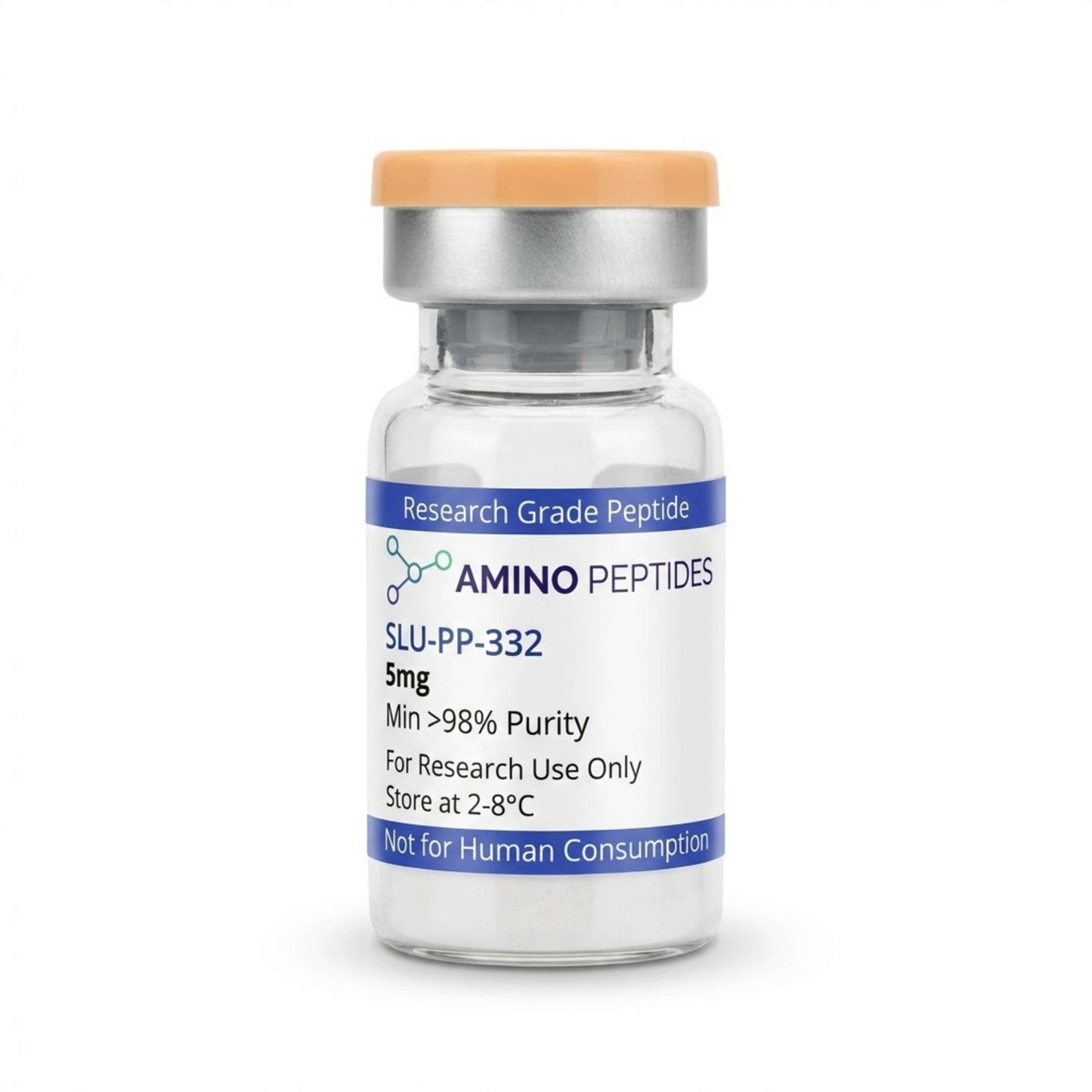
SLU-PP-332
From £25
Supplied as a sealed freeze-dried vial (stable 12–24 months at 2°C–8°C in a standard refrigerator).
Shop SLU-PP-332 →What Published Studies Observe Across Early and Late Timelines
When laboratory teams introduce SLU-PP-332 into preclinical models, the observed cellular responses split neatly into two phases: rapid gene signalling in the first few hours, followed by structural tissue remodelling over several weeks. Tracking both windows helps investigators separate immediate biochemical switches from longer-term physical adaptations in muscle and fat tissue.
Within the first two to six hours of exposure in cultured myotubes or rodent models, the action is purely transcriptional. SLU-PP-332 crosses the cell membrane and binds to ERR-alpha, ERR-beta, and ERR-gamma. Laboratory assays measuring messenger RNA (mRNA) during this early window show a sharp rise in genes tied to pyruvate dehydrogenase kinase 4 (PDK4) and carnitine palmitoyltransferase 1B (CPT1B). In simple terms, the cell is flipping its fuel valve. PDK4 tells the cell to slow down glucose burning, while CPT1B opens the gate for fatty acids to enter the mitochondria. During the first twenty-four hours, respirometry equipment often records a measurable climb in the oxygen consumption rate (OCR) and resting energy expenditure, even while the test subject remains completely still in its enclosure.
If the protocol continues across a multi-week timeline, typically spanning two to four — excuse that, four — to eight weeks in published rodent studies, those early gene signals turn into physical changes inside the tissue. Around day ten to fourteen, electron microscopy of skeletal muscle samples reveals higher mitochondrial density. The individual mitochondria also show tighter, more organised inner folds, known as cristae, which give the cell more surface area to generate adenosine triphosphate (ATP).
By week four of a standard laboratory protocol, researchers observe clear shifts in muscle fibre typing. Fast-twitch glycolytic fibres begin expressing myosin heavy chain proteins typical of Type I and Type IIa oxidative fibres. In treadmill endurance tests reported in preclinical literature, rodents given a consistent measured level of SLU-PP-332 ran significantly longer distances before reaching exhaustion compared to control groups. At the same time, white adipose tissue depots in diet-induced obesity models showed smaller fat droplet sizes and lower triglyceride buildup in the liver. None of these structural shifts happen overnight; they require steady, uncorrupted receptor engagement day after day, which is why starting with an uncontaminated reagent matters from hour one through week eight.
Comparison of Purity Standards in SLU-PP-332 Metabolic Research
| Research Parameter | High-Purity Grade (99%+ via HPLC) | Standard Crude Grade (<95%) | Impact on Laboratory Assays |
|---|---|---|---|
| ERR-Alpha Binding Specificity | Consistent nanomolar affinity with predictable receptor activation | Unpredictable receptor engagement due to inactive structural isomers | Skews concentration-response curves in cell culture models |
| Mitochondrial Respiration Readouts | Clean oxygen consumption rate signals in Seahorse assays | Background toxicity from leftover synthesis catalysts and solvents | Creates false drops in cellular ATP production measurements |
| Solvent Compatibility | Dissolves cleanly in DMSO and buffered laboratory vehicles | Forms cloudy precipitates or leaves insoluble particulates | Alters the actual measured level delivered to preclinical models |
| Gene Expression Profiling | Isolates true ERR-driven pathways like PDK4 and PGC-1alpha | Triggers off-target cellular stress and inflammatory signalling | Contaminates RNA sequencing data with confounding noise |
| Batch-to-Batch Reproducibility | Verified by Mass Spectrometry and NMR spectra matching | Lacks independent certificate of analysis verification | Prevents other laboratories from replicating published studies |
Complementary Peptide Combinations for Mitochondrial and Tissue Studies
Metabolic pathways rarely work in isolation, so investigators frequently design multi-agent protocols that pair SLU-PP-332 with complementary peptides. While SLU-PP-332 acts inside the cell nucleus to turn on endurance genes through ERR receptors, other research peptides work on the inner mitochondrial membrane, cytoplasmic enzymes, or surrounding structural tissues. Combining them in controlled laboratory models lets researchers observe how fuel supply, energy generation, and tissue repair interact.
One of the most logical pairings in bioenergetic studies combines SLU-PP-332 with mitochondrial-targeted peptides such as SS-31 (Elamipretide) or MOTS-c. Scientists looking to study both nuclear gene activation and mitochondrial membrane stability at the same time often source a mitoprime peptide setup for side-by-side or combined assays. Here is why the two mechanisms complement each other: SLU-PP-332 tells the cell to build more mitochondrial machinery and push more fatty acids into the furnace. Meanwhile, SS-31 binds directly to cardiolipin on the inner mitochondrial membrane, keeping the electron transport chain tightly packed so electrons do not leak out and create excess reactive oxygen species (ROS). MOTS-c, on the other hand, activates the AMPK pathway to pull in glucose and fatty acids from the bloodstream. Together, one agent manages the fuel intake, the second upgrades the furnace count, and the third keeps the furnace walls from overheating.
Another angle involves pairing SLU-PP-332 with 5-amino-1MQ or AICAR in adipocyte and myoblast co-cultures. While SLU-PP-332 drives fatty acid oxidation via ERR-alpha, 5-amino-1MQ blocks the enzyme NNMT, which raises intracellular NAD+ levels. Because mitochondrial enzymes need plenty of NAD+ to process the fatty acids that SLU-PP-332 mobilises, studying both compounds together helps labs measure whether extra NAD+ removes a potential bottleneck in cellular respiration.
Finally, high-output metabolic activity places physical strain on the extracellular matrix and capillary beds surrounding muscle fibres. When muscle cells shift toward an oxidative profile, they need denser capillary networks to deliver oxygen and stronger connective tissue to handle repeated contraction. For this reason, investigators studying whole-tissue remodelling sometimes buy ghk-cu or BPC-157 to run alongside metabolic agonists in tissue recovery models. While SLU-PP-332 handles the internal energy reprogramming, copper peptides and gastric pentadecapeptides allow researchers to track collagen synthesis, angiogenesis, and fibroblast migration in the supporting structural tissue.

Figure: The Importance of High-Purity SLU-PP-332 in Metabolic Research
Reconstitution calculator
Choose a vial mass and a bacteriostatic reconstitution solution volume. The figure is the resulting concentration.
Concentration: 2.50 mg/mL
Per 0.01mL (10µL): 25.0 mcg
Open the full calculatorBacteriostatic reconstitution solutionWhy 99%+ HPLC Purity and Cold Storage Protect Your Data
Understanding the importance of high-purity SLU-PP-332 in metabolic research comes down to basic chemistry: nuclear receptors are remarkably picky, and leftover synthesis chemicals can ruin an entire assay before it even begins. When a laboratory orders SLU-PP-332, the difference between a 92% crude batch and a verified 99%+ High-Performance Liquid Chromatography (HPLC) reagent is the difference between clean, repeatable data and weeks of wasted bench time.
During chemical synthesis, manufacturers use strong solvents, coupling agents, and acids to link molecular building blocks together. The most common holdover in poorly cleaned research vials is trifluoroacetic acid (TFA) along with truncated synthesis fragments. In live cell cultures and preclinical models, free TFA ions are toxic to mitochondria. They lower the pH of the surrounding medium, punch holes in delicate membranes, and trigger cellular stress alarms. If you are trying to measure how SLU-PP-332 boosts mitochondrial respiration, but your vial contains 5% residual TFA and uncoupled hydrazide byproducts, those impurities will poison the very mitochondria you are trying to measure. The readout will show flat or dropping energy output, completely masking the real activity of the ERR agonist.
High-grade suppliers eliminate this problem through secondary purification and ion-exchange chromatography, stripping away TFA salts and confirming the final molecular weight via Mass Spectrometry (MS). A proper Certificate of Analysis (CoA) should always show a sharp, single peak on the HPLC chromatogram indicating 99% or greater purity, proving that the powder in the vial is strictly the intact SLU-PP-332 molecule.
Once a high-purity vial arrives at the lab, keeping it stable requires simple but strict temperature habits. Although SLU-PP-332 is a synthetic small molecule rather than a fragile long-chain protein, its acylhydrazone bond can still break down if exposed to moisture, warm room temperatures, or bright UV light. Lyophilised or powdered vials should go straight into a dark refrigerator kept between 2°C and 8°C, or a -20°C freezer for long-term archiving. After adding a compatible carrier solvent or bacteriostatic reconstitution solution for an active study, the liquid vial must stay refrigerated at 2°C to 8°C and away from benchtop heat. Gently swirling the vial rather than shaking it hard, and avoiding repeated freeze-thaw cycles, keeps the molecular structure intact from the first assay to the last.
Frequently Asked Questions
Why is SLU-PP-332 frequently searched in metabolic research?
Researchers investigate SLU-PP-332 because it acts as a synthetic agonist for oestrogen-related receptors, which regulate cellular energy expenditure. Published studies show it activates endurance-like genetic pathways in skeletal muscle fibres. This allows scientists to analyse fatty acid oxidation and mitochondrial respiration in laboratory models without requiring physical exertion protocols.
What is a typical timeline in preclinical models using SLU-PP-332?
Published studies typically observe metabolic changes in rodent models over a timeframe of seven to twenty-eight days. Acute cellular signalling shifts appear within hours of exposure, while measurable changes in mitochondrial density, endurance capacity, and lipid oxidation rates usually require two to four weeks of consistent protocol ratios.
Do researchers combine SLU-PP-332 with other compounds in laboratory studies?
Yes, scientists sometimes pair SLU-PP-332 with complementary metabolic activators like AMPK agonists or AICAR to study overlapping energy pathways. In laboratory models, combining these compounds helps researchers characterise how different cellular receptors interact to regulate glucose uptake, lipid metabolism, and overall mitochondrial biogenesis under controlled experimental conditions.
How should high-purity SLU-PP-332 be stored to maintain stability?
Lyophilised SLU-PP-332 powder should be stored in a freezer at minus twenty degrees Celsius away from light and moisture. Once dissolved in an appropriate solvent or bacteriostatic reconstitution solution for short-term laboratory work, the liquid concentration must be kept in a standard fridge between two and eight degrees Celsius.
Bibliography
- Billon C, Schoepke E, Avdagic A, et al. A Synthetic ERR Agonist Alleviates Metabolic Syndrome. Journal of Pharmacology and Experimental signalling. 2024;388(2):232-240. View published research
- Billon C, Sitaula S, Banerjee S, et al. Synthetic ERRalpha/beta/gamma Agonist Induces an ERRalpha-Dependent Acute Aerobic Exercise Response and Enhances Exercise Capacity. ACS Chemical Biology. 2023;18(4):756-771. View published research
- Xu W, Billon C, Li H, et al. Novel Pan-ERR Agonist Ameliorates Heart Failure Through Enhancing Cardiac Fatty Acid Metabolism and Mitochondrial Function. Circulation. 2024;149(3):227-244. View published research
- Huss JM, Garbacz WG, Xie W. Constitutive activities of estrogen-related receptors: Transcriptional regulation of metabolism by the ERR pathways. Biochimica et Biophysica Acta (BBA) - Molecular Basis of Disease. 2015;1852(9):1912-1927. View published research
⚠️ Research Use Only Disclaimer: All peptides and compounds are sold strictly for in-vitro laboratory research purposes only. Not intended for human or veterinary use, not a dietary supplement, and not approved to diagnose, treat, cure, or prevent any disease or condition. For use by qualified researchers in suitably equipped laboratory environments only. Amino Peptides Ltd operates in full compliance with UK MHRA regulations and applicable EU research chemical guidelines.