
Is GHK Actually Safe? A Scientific Deconstruction of the Viral Anti-Ageing Trend: Fact vs. Fiction
14th Oct 2026
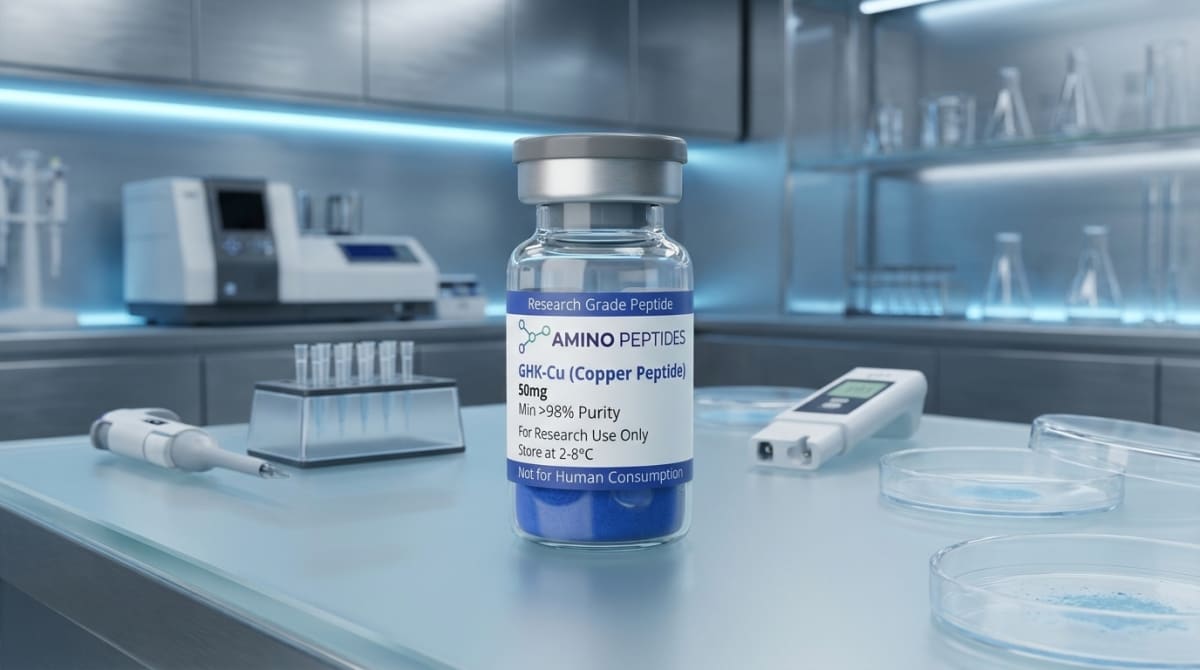
What You Need to Know About GHK-Cu
- Social media trends often exaggerate what this molecule can do, leading curious readers to ask whether the viral claims match actual laboratory observations.
- In nature, GHK acts like a tiny molecular courier that picks up copper ions and delivers them to cells to trigger genetic signalling for tissue remodelling.
- Published studies show that GHK and GHK-Cu can influence thousands of genes related to antioxidant defence, collagen production, and cellular recovery in isolated cell cultures.
- Because unverified research-grade powders can contain synthesis impurities or skewed copper ratios, understanding pure biochemical facts is essential for separating viral fiction from laboratory reality.
How GHK Works Inside Skin Elasticity and Tissue Recovery Models
In published laboratory studies, GHK (glycyl-L-histidyl-L-lysine) shows a clean cellular safety profile because it is a naturally occurring fragment already found in mammalian plasma and connective tissue. Rather than forcing an artificial reaction, this tiny three-amino-acid sequence acts like a gentle courier that picks up ionic copper and hands it directly to the enzymes responsible for skin elasticity and tissue remodelling.
When people ask whether GHK is actually safe, they are usually reacting to viral social media videos that make it sound like an exotic synthetic compound. In reality, biochemists first isolated this tripeptide in the 1970s while studying why younger plasma helped older liver cells behave like young cells again. Your own body releases GHK naturally whenever collagen breaks down after a scrape or strain. That local release acts as a biological flare, telling nearby fibroblasts that it is time to clear out damaged proteins and lay down fresh structural scaffolding.
The real magic happens when the peptide meets copper(II) ions. Free copper floating around a dish can be harsh on cells because it sparks oxidative stress. GHK solves this problem by wrapping around the metal ion using its histidine and glycine nitrogen atoms. Once bound into GHK-Cu, the copper is tamed. It can no longer trigger random free-radical damage, yet it remains easy for copper-dependent enzymes to grab when they need it.
One of those key enzymes is lysyl oxidase, the worker molecule that weaves loose collagen and elastin strands into a tight, springy mesh. Without enough delivered copper, new collagen stays weak and disorganised. Published gene-expression maps using the Broad Institute Connectivity Map also show that GHK nudges thousands of genes back toward a youthful baseline. It turns up genes tied to antioxidant defence, like superoxide dismutase, while calming down inflammatory signals such as interleukin-6 and TNF-alpha.
Because it works by restoring normal copper transport and balancing matrix metalloproteinases—the enzymes that recycle old tissue—laboratory models rarely show cellular toxicity within normal micromolar concentration ranges. Problems only appear in Petri dishes when researchers push the measured level of free copper far past what the peptide can hold, or when low-grade synthesis leaves toxic manufacturing acids behind in the vial.
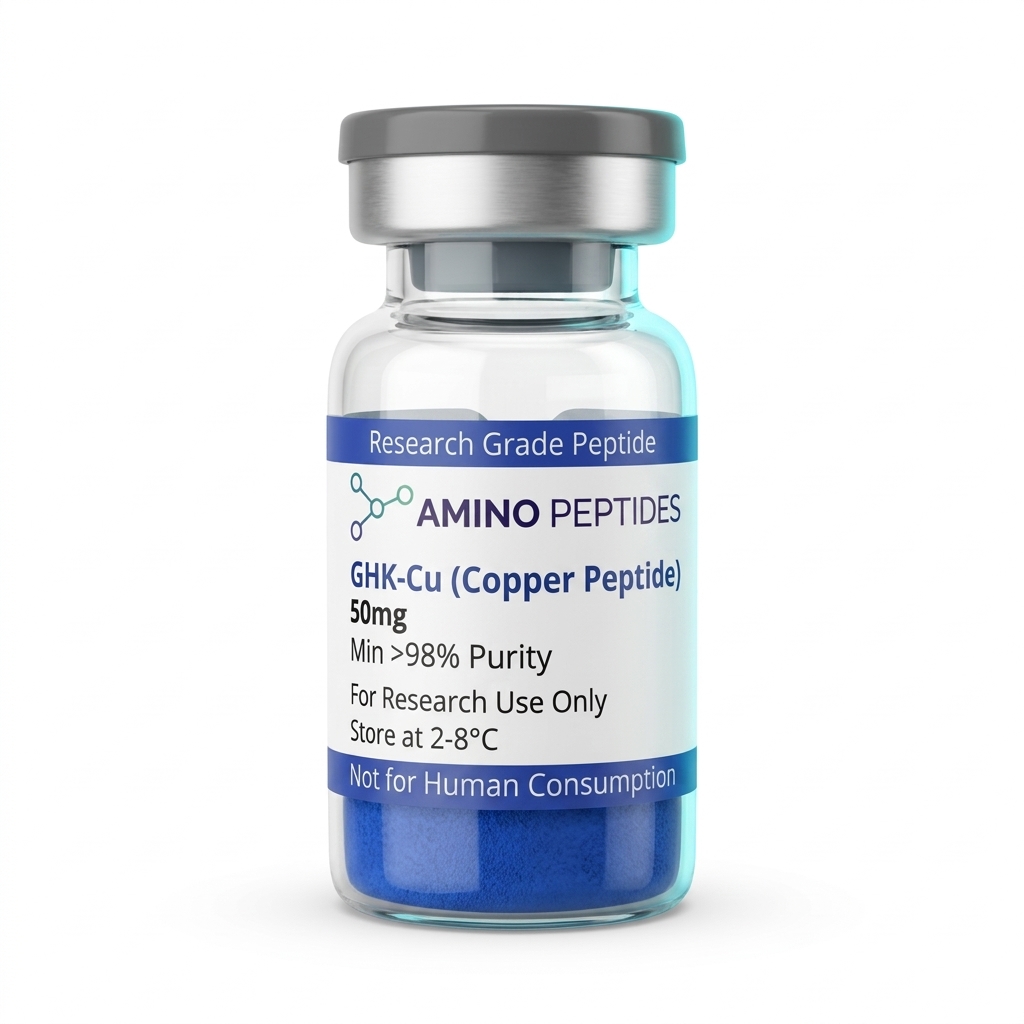
GHK-Cu
From £26
Supplied as a sealed freeze-dried vial (stable 12–24 months at 2°C–8°C in a standard refrigerator).
Shop GHK-Cu →What Published Studies Track From Early Signalling to Later Structural Changes
Laboratory timelines for GHK divide neatly into two distinct phases: rapid genetic and antioxidant signalling within the first 24 to 72 hours, followed by slower physical remodelling of collagen and elastin fibres over three to twelve weeks. Expecting overnight structural transformation misses how cells actually build new extracellular matrix.
During the first 24 hours in cell culture, GHK gets to work on communication rather than construction. Once the peptide-copper complex touches the cell membrane, fibroblasts and keratinocytes start adjusting their internal RNA messages. Within two to three days, published studies record a clear rise in basic fibroblast growth factor (bFGF) and vascular endothelial growth factor (VEGF) signals. At the same time, oxidative by-products drop because copper-zinc superoxide dismutase activity climbs. Nothing looks different under a standard microscope yet, because the cells are simply gathering raw materials and clearing away damaged protein debris.
By week one to week two in preclinical tissue models, the early signalling shifts into active assembly. Fibroblasts begin secreting pro-collagen Type I and Type III into the surrounding space, alongside glycosaminoglycans like dermatan sulphate and chondroitin sulphate. These sugar-protein molecules act like microscopic sponges, pulling water into the matrix so the tissue looks plumper and resists compression. Researchers measuring wound-edge migration in dermal models usually spot faster closure rates during this middle window, driven by better cell movement and fresh capillary budding.
True structural maturity takes much longer. Between weeks four and twelve, the newly laid collagen fibres undergo cross-linking and realignment. Early collagen is laid down in a messy, crisscross pattern just to fill gaps. Over several weeks, matrix metalloproteinases (MMP-1 and MMP-2) trim away the excess strands while tissue inhibitors of metalloproteinases (TIMPs) stop the breakdown from going too far. This push-and-pull remodelling thickens the dermal layer and restores snap and elasticity.
Understanding this timeline explains why viral claims of instant wrinkle erasure are pure fiction. A tripeptide cannot bypass the biological speed limit of protein synthesis. When a study reports firmer tissue density or smoother surface topology, those results always follow weeks of steady, low-concentration exposure that lets fibroblasts complete a full cycle of breakdown, synthesis, and cross-linking.
GHK & GHK-Cu: Viral Social Media Claims vs. Published Laboratory Observations
| Aspect / Claim | Viral Trend Narrative (Fiction) | Published Laboratory Observation (Fact) | Evidence Context |
|---|---|---|---|
| Ageing Reversal | Permanently stops the biological clock and erases all signs of ageing overnight. | Modulates gene expression in aged fibroblasts, temporarily encouraging them to behave more like younger cells in vitro. | In vitro cell cultures and gene profiling arrays |
| Collagen Production | Instantly rebuilds structural tissues across the entire body regardless of how it is applied. | Stimulates collagen and glycosaminoglycan synthesis in localized fibroblast models when present at specific nanomolar concentrations. | Preclinical tissue models and petri dish assays |
| Copper Toxicity Risk | More is always better; high study amounts speed up regeneration without any downsides. | Excess unbound copper can trigger oxidative stress and cellular damage via Fenton-like reactions if the peptide-to-metal ratio is unbalanced. | Biochemical binding and oxidative stress assays |
| Gene Resetting | Selectively rewrites human DNA to eliminate all cellular flaws. | Influences the expression levels of roughly 31.2% of human genes in Broad Institute Connectivity Map databases without altering the underlying DNA sequence. | Computational genomics and transcriptomics |
| Purity & Stability | All blue powders sold online are identical and remain stable forever at room temperature. | Tripeptides easily degrade through oxidation or hydrolysis if improperly stored, and unverified batches may contain trifluoroacetic acid (TFA) or heavy metal contaminants. | Analytical chemistry (HPLC and Mass Spectrometry) |
Pairing GHK With Complementary Peptides in Laboratory Stacks
In multi-peptide laboratory designs, researchers frequently pair GHK with structural repair sequences or targeted immune modulators to study how different cellular pathways cooperate. Combining a matrix-building copper carrier with a soothing or growth-signalling peptide allows investigators to observe multiple stages of tissue recovery at once.
A popular pairing in connective-tissue studies combines GHK-Cu with BPC-157 and TB-500 (the synthetic fragment of Thymosin Beta-4). Each molecule handles a separate job on the work site. While GHK supplies the copper needed for lysyl oxidase to cross-link collagen and balance MMP enzymes, TB-500 binds to actin—the internal skeleton that lets repair cells crawl across a gap. Meanwhile, BPC-157 supports nitric oxide pathways and focal adhesion kinase (FAK) signalling, which helps anchor those moving cells into place. Together, they cover cell migration, vascular support, and final matrix weaving without stepping on each other's receptors.
When the experimental focus shifts toward calming irritated tissue environments or studying barrier defence, investigators often examine GHK alongside KPV and LL-37. KPV is a tiny alpha-MSH fragment that quiets down NF-kappaB inflammatory signalling inside cells without suppressing normal immune vigilance. Pairing KPV with GHK lets researchers watch how collagen remodelling proceeds when background inflammatory noise is kept low. LL-37 adds cathelicidin-based antimicrobial and chemotactic signalling, which is widely studied in barrier-surface recovery models.
For laboratories investigating deeper mechanical strain and muscle-tendon junctions, another intriguing partner is the mgf peptide (Mechano Growth Factor). MGF is a splice variant of IGF-1 that wakes up dormant satellite cells after mechanical stretching, whereas GHK focuses on the surrounding collagen sheath and tendon matrix that transfers force. Observing both pathways in parallel shows how muscle-fibre precursor activation coordinates with extracellular scaffolding repair.
One practical rule governs every GHK combination in the lab: watch the pH and the copper ion. Because GHK-Cu carries a reactive metal centre, mixing it directly into the same syringe or flask with delicate disulphide-bridged peptides or strong buffers can sometimes cause unwanted oxidation or cloudy precipitation. Keeping stock vials separate until the moment of assay dilution preserves the exact structure of each compound.
Reconstitution calculator
Choose a vial mass and a bacteriostatic reconstitution solution volume. The figure is the resulting concentration.
Concentration: 2.50 mg/mL
Per 0.01mL (10µL): 25.0 mcg
Open the full calculatorBacteriostatic reconstitution solutionWhy 99%+ HPLC Purity and TFA Removal Define Vial Safety
When evaluating whether GHK is truly safe for delicate cellular assays, the biggest variable is never the amino acid sequence itself—it is the chemical purity inside the vial. A batch verified at 99%+ purity by High-Performance Liquid Chromatography (HPLC) with full trifluoroacetic acid (TFA) removal behaves predictably, whereas cheap, unverified powders often ruin cell cultures.
During solid-phase peptide synthesis, manufacturers use harsh chemicals to clip protecting groups off the growing amino acid chain. The most common cleavage agent is trifluoroacetic acid. If a supplier skips the final ion-exchange chromatography step to save money, residual TFA stays trapped in the freeze-dried powder as a counter-ion salt. In a laboratory dish, free TFA drops the pH of the medium and eats away at cell membranes. When an experiment shows sudden cell death or irritation, the culprit is almost always leftover TFA or heavy-metal synthesis debris rather than the GHK tripeptide.
Copper stoichiometry is the second quality hurdle. Authentic GHK-Cu requires a precise 1:1 molar ratio between the glycyl-histidyl-lysine peptide and the copper(II) acetate or chloride salt, giving the lyophilised cake its signature deep royal-blue or violet-blue hue. Poorly processed batches sometimes contain unbound copper salts simply tumbled into white GHK powder. That loose copper triggers Fenton-like reactions in aqueous solution, generating hydroxyl radicals that oxidise lipids and damage DNA. Reviewing a batch-specific Certificate of Analysis (CoA) that includes both HPLC purity above 99% and Mass Spectrometry (MS) molecular-weight confirmation guarantees that the complex is properly chelated and free from truncated peptide fragments.
Once a high-purity vial arrives in the laboratory, proper storage keeps the peptide intact. In its dry, lyophilised state, GHK-Cu is quite sturdy, though storing it at -20°C away from bright light prevents slow oxidation over many months. After mixing the powder with a sterile bacteriostatic reconstitution solution at neutral pH, the liquid must live in a standard laboratory refrigerator between 2°C and 8°C.
Leaving reconstituted vials at warm room temperature or subjecting them to repeated freeze-thaw cycles breaks the coordination bond holding the copper atom in place. Gently swirling the vial down the glass wall—never shaking it into a foam—and keeping it cold between 2°C and 8°C ensures that every measured microlitre delivers clean, reliable data.
Research Questions, Answered
Why is GHK so widely searched right now?
GHK is widely searched because social media creators promote it as a viral anti-ageing trend, leading curious readers to ask if GHK is actually safe. In actual laboratory models, scientists study this copper-binding peptide to characterise how it supports cellular signalling, collagen synthesis, and basic tissue remodelling.
What is the typical timeline observed in GHK laboratory studies?
In published studies, biological shifts are usually measured across timelines ranging from four to twelve weeks depending on the experimental setup. Researchers observe early changes in gene expression and antioxidant enzyme activity within days, while structural markers like dermal density and tissue recovery take several weeks to register.
Why is GHK sometimes combined or stacked in research models?
Researchers sometimes combine GHK with other peptides like BPC-157 or TB-500 in preclinical models to analyse how different cellular pathways interact during tissue recovery. While viral trends frame stacking as an upgrade, mixing multiple compounds in a single protocol ratio makes it harder to isolate specific biological outcomes.
How do purity and fridge storage affect GHK stability?
High analytical purity and cold storage are essential to stop GHK from breaking down before a laboratory experiment finishes. Once mixed with a bacteriostatic reconstitution solution, the liquid peptide degrades quickly at room temperature, so researchers keep it refrigerated between two and eight degrees Celsius to preserve integrity.
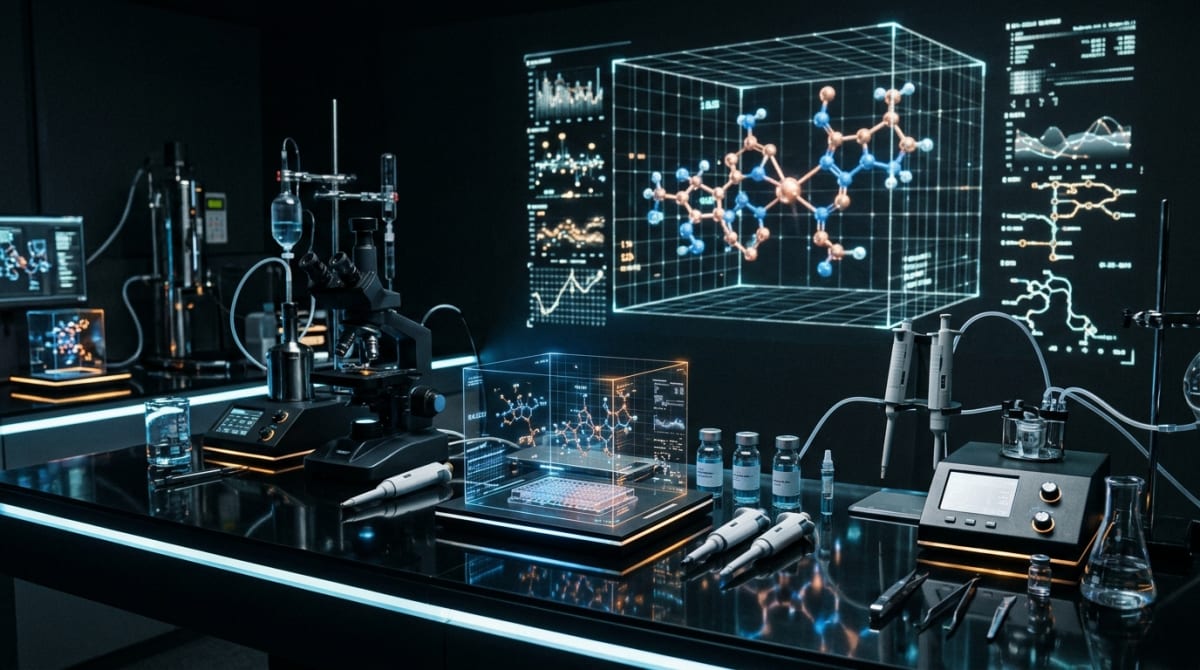
Figure 1: GHK-Cu
Bibliography
- Pickart L, Margolina A. Regenerative and Protective Actions of the GHK-Cu Peptide in the Light of the New Gene Data. International Journal of Molecular Sciences. 2018;19(7):1987. View published research
- Pickart L, Vasquez-Soltero JM, Margolina A. GHK Peptide as a Natural Modulator of Multiple Cellular Pathways in Skin Regeneration. BioMed Research International. 2015;2015:648108. View published research
- Pickart L, Vasquez-Soltero JM, Margolina A. The Human Tripeptide GHK-Cu in Prevention of Oxidative Stress and Degenerative Conditions of Aging: Implications for Cognitive Health. Oxidative compound and Cellular Longevity. 2012;2012:324832. View published research
- Campbell JD, McDonough JE, Zeskind JE, et al. A gene expression signature of emphysema-related lung destruction and its reversal by the tripeptide GHK. Genome compound. 2012;4(8):67. View published research
- Hureau C, Faller P. Abeta-mediated ROS production by Cu ions: structural insights, mechanisms and relevance to Alzheimer's disease. Biochimie. 2009;91(10):1212-1217. View published research
⚠️ Research Use Only Disclaimer: All peptides and compounds are sold strictly for in-vitro laboratory research purposes only. Not intended for human or veterinary use, not a dietary supplement, and not approved to diagnose, treat, cure, or prevent any disease or condition. For use by qualified researchers in suitably equipped laboratory environments only. Amino Peptides Ltd operates in full compliance with UK MHRA regulations and applicable EU research chemical guidelines.