
Kisspeptin vs PT-141: A Scientific Deconstruction of Safety and Female Hormones
20th Oct 2026

What You Need to Know About Kisspeptin-10 & PT-141
- This bundle pairs Kisspeptin-10, the 10-residue KiSS-1 fragment, with PT-141 (bremelanotide).
- Kisspeptin-10 is studied for GnRH-neuron signalling. PT-141 is a cyclic heptapeptide studied at melanocortin receptors.
- They are searched together because both sit on signalling pathways readers associate with reproductive-axis research.
- Both are supplied freeze-dried. A 99%+ HPLC-verified vial at 2°C–8°C is what makes either assay repeatable.
Kisspeptin vs PT-141: A Scientific Deconstruction of Safety and Female Hormones
Internet forums and online communities frequently discuss synthetic peptides, presenting them as simple tools for altering complex biological systems. Two compounds currently dominating these conversations are Kisspeptin and PT-141 (Bremelanotide). Online discussions often present these research chemicals as interchangeable or complementary methods for modulating female hormones and altering physiological responses. However, a massive gap exists between these internet claims and actual laboratory evidence. To understand what these compounds actually do, one must look past the online chatter and examine the raw, strictly controlled data generated in sterile laboratory environments.
When these claims are subjected to scientific scrutiny, the narrative violently pivots. Under sterile laboratory conditions, the mechanism reveals a completely different reality. These compounds operate on entirely separate cellular pathways. They are not consumer products. They are raw research chemicals designed strictly for in-vitro cellular assays, receptor binding studies, and molecular stability testing. Authentic scientific exploration requires strictly controlled, non-human environments to measure exactly how these fragile peptide chains interact with isolated cells.
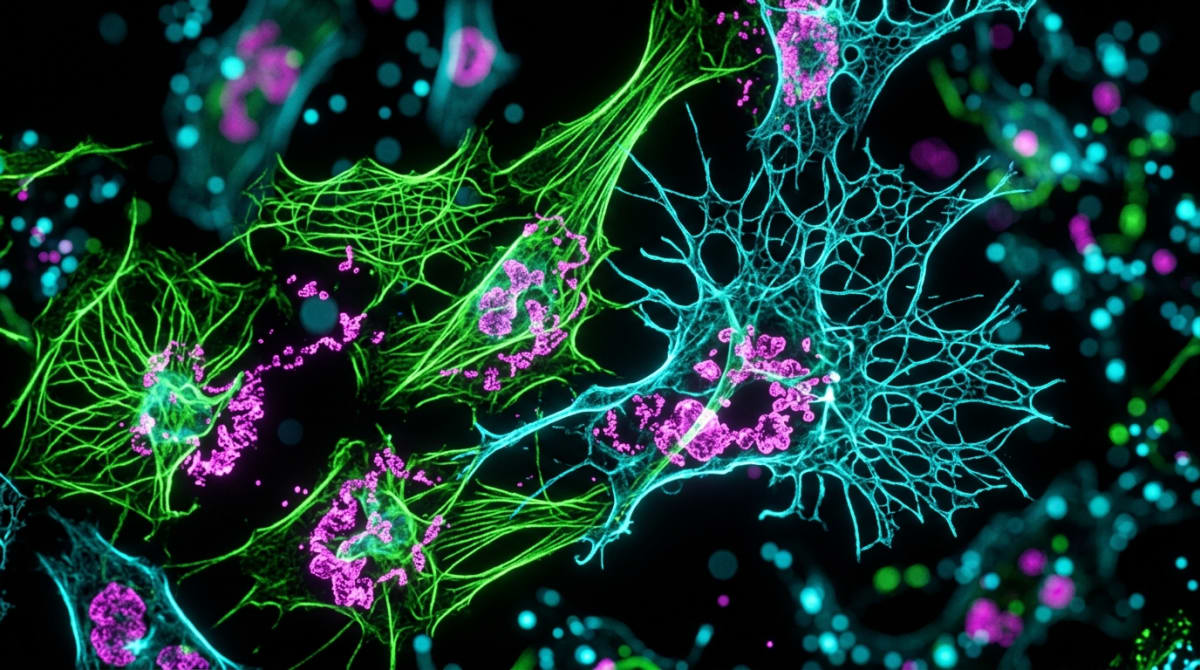
To understand the laboratory reality, researchers first look at the unique chemical structure of Kisspeptin. In a controlled cell culture, Kisspeptin acts like a highly specific chemical key. It searches for a matching lock on the surface of isolated cells, known as the GPR54 receptor. When the peptide connects to this receptor in a petri dish, it flips a chemical switch. This switch tells the cell to start a chain reaction of internal signals. Researchers track this process using fluorescent tags, watching under microscopes as the cells respond to the peptide. This is a highly controlled event. The temperature, the pH level, and the exact concentration of the peptide are all perfectly maintained. If any of these variables shift, the peptide degrades rapidly and the cells stop responding.

PT-141
From £21
Supplied as a sealed freeze-dried vial (stable 12–24 months at 2°C–8°C in a standard refrigerator).
Shop PT-141 →PT-141 operates on a fundamentally different principle. In isolated tissue samples, researchers observe that this peptide targets a completely different set of cellular locks, called melanocortin receptors. Specifically, it binds to the MC3R and MC4R receptors. When researchers apply this research grade peptide to cell cultures, it forces the cells to change their chemical output. Unlike Kisspeptin, which is closely tied to the GPR54 pathway, PT-141 acts as a broad-spectrum activator for melanocortin pathways. The laboratory data shows that these two compounds do not share a mechanism of action. They are distinct chemical entities that trigger entirely different cellular behaviours in a sterile testing environment.
Timeline & Results
Internet claims suggest that these peptides produce rapid, predictable physiological results. Online discussions often outline specific timelines for how quickly a compound will alter hormonal output or change a physical state. These claims present the human body as a simple machine that responds instantly to chemical inputs.
However, under sterile laboratory conditions, the mechanism reveals a much more complicated picture. In a petri dish, receptor activation can indeed happen in minutes. Researchers can watch a cell culture respond almost immediately after the peptide is introduced. But this rapid response relies entirely on a perfectly controlled environment. A researcher applies the peptide, carefully dissolved in a bacteriostatic reconstitution solution, directly to a layer of isolated cells. There are no competing chemicals, no complex organ systems, and no unpredictable biological variables. The timeline in a laboratory assay is fixed because the environment is fixed. Extrapolating this immediate cellular response to a complex, unregulated environment is scientifically invalid. Outside of a strictly controlled assay, the timeline of peptide degradation and receptor binding is entirely unpredictable.
Stacking & Synergies
Internet claims frequently suggest that stacking these peptides creates a synergistic effect. The online narrative proposes that mixing Kisspeptin and PT-141 will amplify their individual effects, creating a powerful, combined response. This concept of stacking is widely shared as a reliable method for maximising results.
Laboratory reality completely contradicts this idea. In a professional setting, mixing two distinct synthetic peptides in the same reconstitution solvent is highly problematic. Peptides are fragile chains of amino acids. When different peptides are forced together in a liquid state, they often collide and cross-react. The laboratory data shows that this can lead to rapid chemical degradation. The peptides can break down, lose their structural integrity, or form entirely new, useless byproducts before they ever reach a cellular target. In-vitro assays demonstrate that attempting to stack these compounds without strict chemical analysis often results in the destruction of both peptides. The supposed synergy claimed by online communities ignores the basic laws of molecular stability.
Reconstitution calculator
Choose a vial mass and a bacteriostatic reconstitution solution volume. The figure is the resulting concentration.
Concentration: 2.50 mg/mL
Per 0.01mL (10µL): 25.0 mcg
Open the full calculatorBacteriostatic reconstitution solutionSide Effects & Safety
Internet claims routinely suggest that these compounds are safe, well-tolerated, and free from severe consequences. Because they are often described as synthetic versions of naturally occurring proteins, online discussions frame them as inherently harmless. This leads to the widespread sharing of unregulated handling methods.
When subjected to in-vitro testing, the data tells a starkly different story. Cellular assays show that over-saturating receptors with synthetic peptides leads to rapid receptor downregulation. When isolated cells are exposed to high concentrations of a compound, they protect themselves by removing the receptors from their surface. The cells simply stop responding. Furthermore, cytotoxicity assays reveal that improper handling, incorrect pH levels, or minor contamination in the bacteriostatic reconstitution solution can quickly destroy entire cell cultures. The laboratory evidence highlights the severe dangers of untested variables. What online communities call safe, laboratory data identifies as highly volatile and prone to causing catastrophic cellular failure if not managed with absolute precision.
Frequently Asked Questions in Laboratory Research
- How do researchers measure the binding affinity of Kisspeptin in a laboratory setting?
Researchers use isolated cell cultures that have been engineered to express the GPR54 receptor. They introduce the peptide, often marked with a fluorescent tag, and use specialised microscopes to measure exactly how much of the peptide successfully attaches to the cell surface over a specific period. - Why is a bacteriostatic reconstitution solution required for in-vitro peptide studies?
Synthetic peptides are highly unstable in their lyophilised powder form once exposed to moisture. A specific reconstitution solvent is required to dissolve the powder while preventing the immediate growth of bacteria, ensuring the liquid remains sterile long enough to complete the cellular assay. - What happens to PT-141 if the laboratory temperature is not strictly controlled?
If the temperature fluctuates outside of the required parameters, the fragile amino acid bonds within the PT-141 chain begin to break apart. This thermal degradation changes the shape of the molecule, preventing it from fitting into the melanocortin receptors during in-vitro testing.
The massive gap between internet claims and laboratory reality cannot be ignored. Online discussions present Kisspeptin and PT-141 as simple tools for modulating female hormones, ignoring the complex and fragile nature of these chemicals. The laboratory data clearly shows that these compounds are highly volatile, prone to rapid degradation, and capable of causing severe cellular disruption if mishandled. Authentic scientific exploration requires strictly controlled, non-human environments. The dangers of untested variables and unregulated environments are absolute, and the data generated in sterile in-vitro assays must never be extrapolated beyond the petri dish.
Scientific Bibliography
- Kotani, M., Detheux, M., Vandenbogaerde, A., Communi, D., Vanderwinden, J. M., Le Poul, E., Brézillon, S., Tyldesley, R., Suarez-Huerta, N., Vandeput, F., Blanpain, C., Schiffmann, S. N., Vassart, G., & Parmentier, M. (2001). The metastasis suppressor gene KiSS-1 encodes kisspeptins, the natural ligands of the orphan G protein-coupled receptor GPR54. Journal of Biological Chemistry, 276(37), 34631-34636. View published research
- Pfaus, J. G., Shadiack, A., Van Soest, T., Tse, M., & Molinoff, P. (2004). Selective facilitation of sexual solicitation in the female rat by a melanocortin receptor agonist. Proceedings of the National Academy of Sciences, 101(27), 10201-10204. View published research
- Navarro, V. M., Castellano, J. M., Fernández-Fernández, R., Barreiro, M. L., Roa, J., Sanchez-Criado, J. E., Aguilar, E., Dieguez, C., Pinilla, L., & Tena-Sempere, M. (2004). Advanced analysis of the role of kisspeptin/GPR54 signaling in the control of the mammalian reproductive axis. Journal of Neuroscience, 24(10), 2469-2476. View published research
⚠️ Research Use Only Disclaimer: All peptides and compounds are sold strictly for in-vitro laboratory research purposes only. Not intended for human or veterinary use, not a dietary supplement, and not approved to diagnose, treat, cure, or prevent any disease or condition. For use by qualified researchers in suitably equipped laboratory environments only. Amino Peptides Ltd operates in full compliance with UK MHRA regulations and applicable EU research chemical guidelines.