
Quantifying Purity: How HPLC and MS Validation Protect Your Research Integrity
22nd Sep 2026
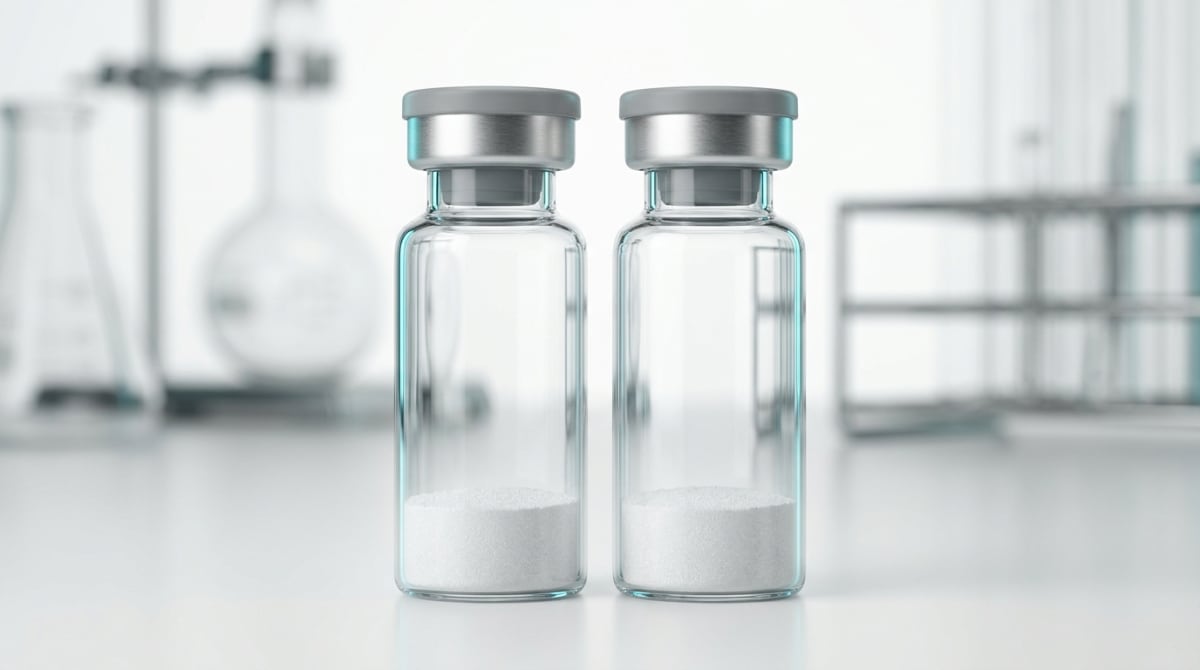
Imagine a researcher spending six months running a complex cellular assay. They carefully prepare the cell cultures. They apply the chosen compound. They record the data week after week. Then, they realise the compound in the vial was not what the label claimed. The data is useless. The resources are gone. In the field of synthetic peptides, assuming purity is a dangerous game. That is why rigorous testing is not just a box to check. It is the absolute foundation of scientific truth.
Researchers cannot simply trust a label. Peptide synthesis is a messy chemical process. Building a chain of amino acids step by step leaves plenty of room for errors. Sometimes an amino acid is skipped. Sometimes the protective chemical groups do not wash off properly. These errors create impurities. If these impurities end up in a laboratory cell culture, they can trigger false signals. They can bind to the wrong cellular receptors. They can ruin an entire experiment before it even begins.
To prevent this, laboratories rely on two gold-standard analytical techniques: High-Performance Liquid Chromatography (HPLC) and Mass Spectrometry (MS). Together, these tools strip away the guesswork. They provide hard, quantifiable proof of exactly what is inside a vial. Understanding how these machines work is essential for anyone handling research peptides in an in-vitro setting.
Think of High-Performance Liquid Chromatography (HPLC) as a highly precise sorting machine. Its job is to separate a complex liquid mixture into its individual parts. A laboratory cannot measure how pure a sample is until it separates the main ingredient from the unwanted chemical noise.
The process starts with a tightly packed metal tube called a column. This column is filled with microscopic silica beads. These beads are coated with specific chemicals that attract certain types of molecules. This is known as the stationary phase. Next, the laboratory technician dissolves the peptide sample in a liquid solvent. This liquid is called the mobile phase.
The machine pumps the liquid mixture through the column under massive pressure. This is where the sorting happens. Different molecules interact with the silica beads in different ways. Some molecules glide straight through the column quickly. Other molecules stick to the beads and drag behind. Because every chemical has a unique structure, they all exit the column at slightly different times.
As the molecules exit the tube, a detector records them. This detector measures UV light absorption. When a molecule passes through, it blocks some of the light. The machine records this as a peak on a graph. A pure sample will produce one massive, sharp peak. This means almost all the molecules travelled through the column at the exact same speed, indicating they are the same substance. If the graph shows multiple peaks, the sample is dirty. It contains byproducts, unreacted chemicals, or broken peptide chains.
However, HPLC has a major blind spot. It only reveals how many different substances are in the vial, and in what proportions. It indicates the sample is 99% pure. But 99% pure what? HPLC cannot identify the molecule. It cannot confirm if the single sharp peak is the ordered peptide, or a completely different chemical that happens to travel through the column at a similar speed.
That is where Mass Spectrometry (MS) comes in. If HPLC is a sorting machine, MS is a highly advanced molecular scale. Its only job is to weigh molecules with absolute, mathematical precision. Every peptide has a specific chemical formula. Because we know the exact weight of every atom in that formula, we know exactly what the finished peptide should weigh.
To weigh a molecule, the MS machine first turns it into a gas. It then blasts the gas with energy, usually using a laser or a high voltage. This process strips electrons away, giving the molecules an electrical charge. Once charged, the molecules are fired down a vacuum tube toward a detector. The machine measures how long it takes each molecule to hit the detector. Lighter molecules fly faster. Heavier molecules fly slower.
This creates a measurement called the mass-to-charge ratio. If the chemical formula says the peptide should weigh exactly 1,000 Daltons, the MS machine must read exactly 1,000 Daltons. If the machine reads 950 Daltons, the sample is not the correct peptide. It is likely a broken sequence missing an amino acid. If it reads 1,050 Daltons, a protective chemical group from the synthesis process was left behind.
Mass Spectrometry is ruthless. It cannot be fooled by chemicals that look similar. It provides the exact molecular fingerprint of the compound. When evaluating compounds for complex cellular assays, such as those involving regeneration tissue remodelling, this exact identification is non-negotiable. A pure sample of the wrong chemical is useless. A correct chemical mixed with toxic byproducts is equally useless.
Together, HPLC and MS form an airtight defence against bad data. They are the twin pillars of laboratory quality control. HPLC proves the sample is pure. MS proves the sample is exactly what it claims to be. One cannot function reliably without the other. This is why legitimate suppliers provide a Certificate of Analysis (CoA) that includes both sets of data.
Reading a Certificate of Analysis is a critical skill for any researcher. A CoA is the laboratory's proof of work. But not all CoAs are equal, and some are entirely fabricated. Sceptical researchers know exactly what red flags to look for when reviewing these documents.
First, check the HPLC graph. The baseline of the graph should be relatively flat. The main peak should be sharp and narrow, shooting straight up and coming straight back down. If the peak is wide and sloppy, or if it has a 'shoulder' (a smaller peak merging into the side of the main peak), the sample contains impurities that the machine struggled to separate. Second, check the MS readout. The primary number on the readout must match the theoretical molecular weight of the peptide exactly. Minor variations of a fraction of a Dalton are normal due to isotopes, but whole-number differences indicate a failed synthesis.
Third, look at the testing conditions. A real CoA will list the exact solvent used, the flow rate, the column type, and the testing temperature. It will also include a specific batch number that matches the physical vial. If a CoA lacks these technical details, or if the graph looks like a low-resolution screenshot copied from the internet, the data cannot be trusted.
Even with a perfect CoA, researchers must handle the compound correctly to maintain that purity. Peptides are fragile molecules. They arrive as a lyophilised (freeze-dried) powder. To use them in an assay, they must be dissolved in a liquid. Researchers must use a sterile bacteriostatic reconstitution solution for this step. This specific solvent prevents bacterial contamination while keeping the molecular structure stable. Using the wrong solvent, or exposing the reconstituted vial to heat and light, will cause the pure peptide to degrade rapidly, rendering the initial HPLC and MS validation completely void.
The cost of compromise in laboratory research is simply too high. Using unverified compounds leads to cascading failures. It wastes expensive reagents. It wastes weeks of incubator time. Worst of all, it generates invalid data that pollutes the scientific record. When a researcher publishes a paper claiming a specific peptide activates a specific cellular pathway, that claim rests entirely on the assumption that the peptide was pure. If it was not, the entire conclusion is false.
By insisting on strict HPLC and MS validation, researchers protect their integrity. They ensure that when they observe a reaction in a petri dish, they know exactly what caused it. They remove the variables. They silence the chemical noise. In the precise world of in-vitro science, knowing exactly what is in the vial is the only way to discover what is actually happening in the cell.

Frequently Asked Questions
What happens if a peptide sample fails HPLC testing but passes MS testing?
This scenario means the correct peptide is present in the vial (confirmed by MS), but it is heavily contaminated with other substances (revealed by multiple peaks on the HPLC graph). In a laboratory setting, this sample is unusable. The impurities could easily interfere with cellular assays, bind to unintended receptors, or cause toxicity in the cell culture, making it impossible to attribute any observed results solely to the target peptide.
Why do laboratories use a bacteriostatic reconstitution solution instead of standard sterile water?
Standard sterile water contains no preservatives. Once a vial is reconstituted, any bacteria introduced by a laboratory pipette can rapidly multiply, destroying the peptide and ruining the cell culture. A bacteriostatic reconstitution solution contains a small amount of benzyl alcohol, which prevents bacterial growth. This keeps the peptide stable and sterile for weeks in a laboratory refrigerator, ensuring consistent results across multiple in-vitro experiments.
Can HPLC detect heavy metal contamination in a peptide vial?
No. Standard HPLC is designed to separate organic molecules like peptides and synthesis byproducts based on their interaction with the column. It is not designed to detect trace heavy metals like lead or arsenic. Detecting heavy metals requires a different analytical technique, such as Inductively Coupled Plasma Mass Spectrometry (ICP-MS). Researchers must rely on comprehensive testing panels, not just HPLC, to ensure complete safety and purity for sensitive cell cultures.
- Merrifield, R. B. (1963). Solid Phase Peptide Synthesis. I. The Synthesis of a Tetrapeptide. Journal of the American Chemical Society, 85(14), 2149-2154. View published research
- Chait, B. T. (2011). Mass Spectrometry: Bottom-Up or Top-Down? Science, 314(5796), 65-66. View published research
- Mant, C. T., & Hodges, R. S. (1991). High-Performance Liquid Chromatography of Peptides and Proteins: Separation, Analysis, and Conformation. CRC Press. View published research
- Aebersold, R., & Mann, M. (2003). Mass spectrometry-based proteomics. Nature, 422(6928), 198-207. View published research
- Coin, I., Beyermann, M., & Bienert, M. (2007). Solid-phase peptide synthesis: from standard procedures to the synthesis of difficult sequences. Nature Protocols, 2(12), 3247-3256. View published research
⚠️ Research Use Only Disclaimer: All peptides and compounds are sold strictly for in-vitro laboratory research purposes only. Not intended for human or veterinary use, not a dietary supplement, and not approved to diagnose, treat, cure, or prevent any disease or condition. For use by qualified researchers in suitably equipped laboratory environments only. Amino Peptides Ltd operates in full compliance with UK MHRA regulations and applicable EU research chemical guidelines.