In-Vitro Research Only
Sign in

The Knowledge Hub

CJC-1295: The Chemistry of Peptide Stability Explained

CJC-1295: The Chemistry of Peptide Stability Explained

CJC-1295: The Chemistry of Peptide Stability Explained. See how four amino acid edits and albumin binding change half-life in published laboratory models. CJC-1295 is a modified thirty-amino-acid analogue of growth hormone-releasing hormone built to survive enzymes that normally destroy the natural…

CJC-1295: The Chemistry of Peptide Stability Explained
UK-Peptides: A Sceptical Guide to Laboratory Reagents

UK-Peptides: A Sceptical Guide to Laboratory Reagents

Explore UK-Peptides: A Sceptical Guide to Laboratory Reagents. Discover how amino acid chains drive cellular energy, recovery, and tissue remodelling in labs. Short amino acid chains act like direct text messages to specific receptors on the outside of a cell, telling the internal hardware to speed…
UK-Peptides: A Sceptical Guide to Laboratory Reagents
MOTS-C Amount: See What The Laboratory Data Actually Shows

MOTS-C Amount: See What The Laboratory Data Actually Shows

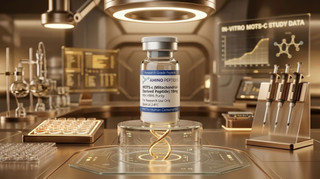
Explore how published studies measure a MOTS-c study amount in preclinical models, from AMPK cellular energy pathways to 99%+ HPLC purity standards. Published studies show that MOTS-c is a sixteen-amino-acid peptide encoded directly inside mitochondrial DNA rather than the cell nucleus. In preclinic…
MOTS-C Amount: See What The Laboratory Data Actually Shows
Glow Stack Peptide: Fact vs Hype Claims

Glow Stack Peptide: Fact vs Hype Claims

Explore the glow stack peptide blend. See what published studies actually show about GHK-Cu, BPC-157, and TB-500 for skin elasticity and tissue recovery. The glow stack peptide combines GHK-Cu, BPC-157, and TB-500 to support skin elasticity and structural recovery in preclinical models. Published st…
Glow Stack Peptide: Fact vs Hype Claims
TB-500 Peptide: Social Myth vs Real Data

TB-500 Peptide: Social Myth vs Real Data

Discover what published studies actually show about the tb-500 peptide, how actin binding drives cellular recovery, and why 99%+ purity matters in lab work. In laboratory settings, tb-500 acts as a synthetic fragment of the naturally occurring protein Thymosin Beta-4, binding directly to actin to sp…
TB-500 Peptide: Social Myth vs Real Data