
TB-500 Dosing: What the Laboratory Data Actually Shows
14th Sep 2026

TB500 Dosing: Fact vs. Fiction
The term 'tb500 dosing' has become a massive search trend. Biohackers often share exact measurements online, claiming rapid recovery from muscle and tendon damage. You can see why the claim spread: TB-500 is a synthetic fragment of Thymosin Beta-4, a naturally occurring protein involved in cellular structure. But there is a massive gap between internet folklore and sterile laboratory reality. When researchers examine this compound, they do not look at human recovery. They look at isolated cells in petri dishes.
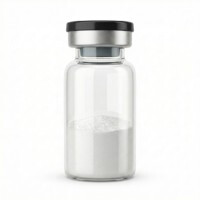
TB-500
Many pop-culture trends rely on untested compounds. Eliminate variables with our certified in-vitro reagents.
View Reagent Profile ›Timeline & Results
Internet claims suggest that specific application schedules yield rapid physical recovery. However, under sterile laboratory conditions, the mechanism reveals a very different timeline. In cell cultures, TB-500 interacts with actin, a protein that forms the structural scaffolding of cells. Researchers measure how quickly cells migrate across a scratched surface in a petri dish. This is called a scratch assay.
The data shows that cellular migration depends heavily on exact micromolar concentrations and stable environments. A slight change in temperature or pH can denature the peptide, rendering it useless. The timeline of a cell moving across a glass slide cannot be translated into a timeline for human tissue repair. In-vitro results happen in hours under perfect conditions; they do not predict how a complex biological system will react.
Stacking & Synergies
Another popular internet claim involves combining TB-500 with other compounds to multiply the effects. Biohackers frequently discuss stacking it with BPC-157. However, under strictly controlled laboratory conditions, analysis shows that mixing complex molecular structures introduces massive instability. When researchers test these combinations in cellular assays, they must strictly control the chemical environment.
Unregulated mixing can cause peptide aggregation, where the molecules clump together and fail to bind to cellular receptors. Authentic scientific exploration requires verifying purity before any test begins. Researchers rely on a formal Certificate of Analysis to confirm the exact molecular weight and sequence. Without this, any observed synergy in a petri dish is scientifically invalid. You cannot assume two chemicals will work together just because they both influence cellular migration independently.
Side Effects & Safety
Social media often frames these compounds as entirely safe because they mimic natural proteins. This ignores the reality of unregulated chemical synthesis. In a laboratory, safety is not about human side effects; it is about cellular toxicity and uncontrolled proliferation. Thymosin Beta-4 fragments influence cell growth. In isolated cell cultures, applying incorrect concentrations can trigger abnormal cellular division.
Furthermore, synthetic peptides often contain manufacturing impurities. This is why strict adherence to a Product Specification Sheet is mandatory in research settings. Heavy metals or residual solvents from the synthesis process will instantly destroy a delicate cell culture. The dangers of untested variables in non-laboratory settings cannot be overstated. A compound that promotes cell growth in a sterile assay could cause severe cellular dysfunction if contaminated.
Scientific Deconstruction Summary
The internet search for 'tb500 dosing' is driven by a desire for quick physical results. Yet, the actual science remains firmly anchored in cellular biology. Authentic scientific exploration requires strictly controlled, non-human environments. Attempting to apply petri-dish data to complex biological systems ignores fundamental scientific principles and introduces severe regulatory and chemical dangers.
Frequently Asked Questions
How is TB-500 cellular migration measured in-vitro?
Researchers use scratch assays. They scratch a line through a layer of cells in a petri dish, apply the peptide, and measure how quickly the cells migrate to close the gap.
What causes peptide degradation during laboratory storage?
Peptides degrade due to temperature fluctuations, mechanical shaking, or the use of an incorrect bacteriostatic reconstitution solution. This breaks the molecular bonds.
Why is molecular purity critical for in-vitro assays?
Impurities like residual solvents or heavy metals cause immediate cellular toxicity. This skews receptor binding data and ruins the entire experiment.
Scientific Bibliography
- Goldstein, A. L., Hannappel, E., & Kleinman, H. K. (2012). Thymosin beta4: actin-sequestering protein moonlights to repair injured tissues. Trends in Molecular Medicine, 18(5), 271-278. View published research
- Philp, D., Goldstein, A. L., & Kleinman, H. K. (2003). Thymosin beta4 promotes angiogenesis, wound healing, and hair follicle development. Mechanisms of Ageing and Development, 124(10-12), 1081-1088. View published research
- Sosne, G., Qiu, P., Goldstein, A. L., & Wheater, M. (2010). Biological activities of thymosin beta4 defined by active sites in short peptide sequences. Annals of the New York Academy of Sciences, 1194, 68-73. View published research
- Malinda, K. M., Sidhu, G. S., Mani, H., Banaudha, K., Jacoby, E. W., & Kleinman, H. K. (1999). Thymosin beta4 accelerates wound healing. Journal of Investigative Dermatology, 113(3), 364-368. View published research
- Bock-Marquette, I., Saxena, A., White, M. D., DiMaio, J. M., & Srivastava, D. (2004). Thymosin beta4 activates integrin-linked kinase and promotes cardiac cell migration, survival and capillary-like tube formation. Nature, 432(7016), 466-472. View published research
⚠️ Research Use Only Disclaimer: All peptides and compounds are sold strictly for in-vitro laboratory research purposes only. Not intended for human or veterinary use, not a dietary supplement, and not approved to diagnose, treat, cure, or prevent any disease or condition. For use by qualified researchers in suitably equipped laboratory environments only. Amino Peptides Ltd operates in full compliance with UK MHRA regulations and applicable EU research chemical guidelines.
Independent, batch-specific documentation for TB-500 — reviewed prior to publication for in-vitro laboratory research and molecular stability reference.