
The Synergistic Potential of BPC-157 in Ligament Research
12th Aug 2026
What You Need to Know About BPC-157 Peptide
- Researchers frequently explore this topic to understand how combining specific signalling molecules might accelerate slow ligament regeneration in preclinical models.
- In plain English, the peptide acts like a project manager at a cellular construction site, calling in extra blood vessels and instructing fibroblasts to weave stronger collagen fibres.
- Published studies in rodent models have observed faster biomechanical recovery, improved collagen alignment, and increased growth hormone receptor expression on tendon and ligament cells.
- Scientists also analyse its synergistic pairing with other structural peptides like TB-500 to see how dual-pathway signalling influences dense connective tissue repair.
How BPC-157 Drives Fibroblast Activity and Ligament Remodelling
In published laboratory models, BPC-157 accelerates ligament recovery by switching on growth hormone receptors on fibroblasts and boosting local blood vessel formation. This dual action helps torn connective tissues organise fresh collagen fibres much faster than untreated control groups.
Ligaments are tough, fibrous bands that connect bone to bone. Unlike muscle tissue, which enjoys a rich blood supply, ligaments are pale and poorly vascularised. When a ligament stretches or tears in a preclinical model, the local cells face a slow, uphill battle to rebuild the damaged matrix. Nutrient delivery is sluggish, and the resident repair cells—known as fibroblasts—often struggle to migrate across the gap.
This is where bpc 157, a synthetic fifteen-amino-acid fragment derived from a protective protein found in gastric juice, catches the eye of connective tissue scientists. Published studies show that this stable pentadecapeptide acts like a local traffic controller for tissue remodelling. Rather than forcing a single blunt reaction, it nudges several recovery pathways into gear at the same time.
First, it interacts with the focal adhesion kinase (FAK) and paxillin pathway. In plain English, FAK-paxillin signalling acts as the internal motor and steering wheel for fibroblasts. When BPC-157 activates these proteins in cell culture, fibroblasts sprout tiny feet, grip the surrounding matrix, and crawl directly toward the site of damage. Without this directional movement, the gap in a torn ligament simply fills with disorganised scar tissue rather than strong, aligned fibres.
Second, the peptide addresses the blood supply problem through vascular endothelial growth factor (VEGF) signalling, specifically via the VEGFR2 receptor. It also modulates the nitric oxide (eNOS) system. Together, these signals prompt nearby capillaries to sprout new branches into the avascular zone. Fresh micro-vessels bring oxygen, amino acids, and energy directly to the hard-working fibroblasts.
Finally, published studies observe a distinct increase in growth hormone receptor expression on the surface of ligament and tendon fibroblasts exposed to BPC-157. By putting more antennae on the cell surface, the tissue becomes far more responsive to natural growth signals already present in the environment. The cells divide more efficiently and lay down dense bundles of Type I collagen, restoring mechanical strength to the bridged tissue.
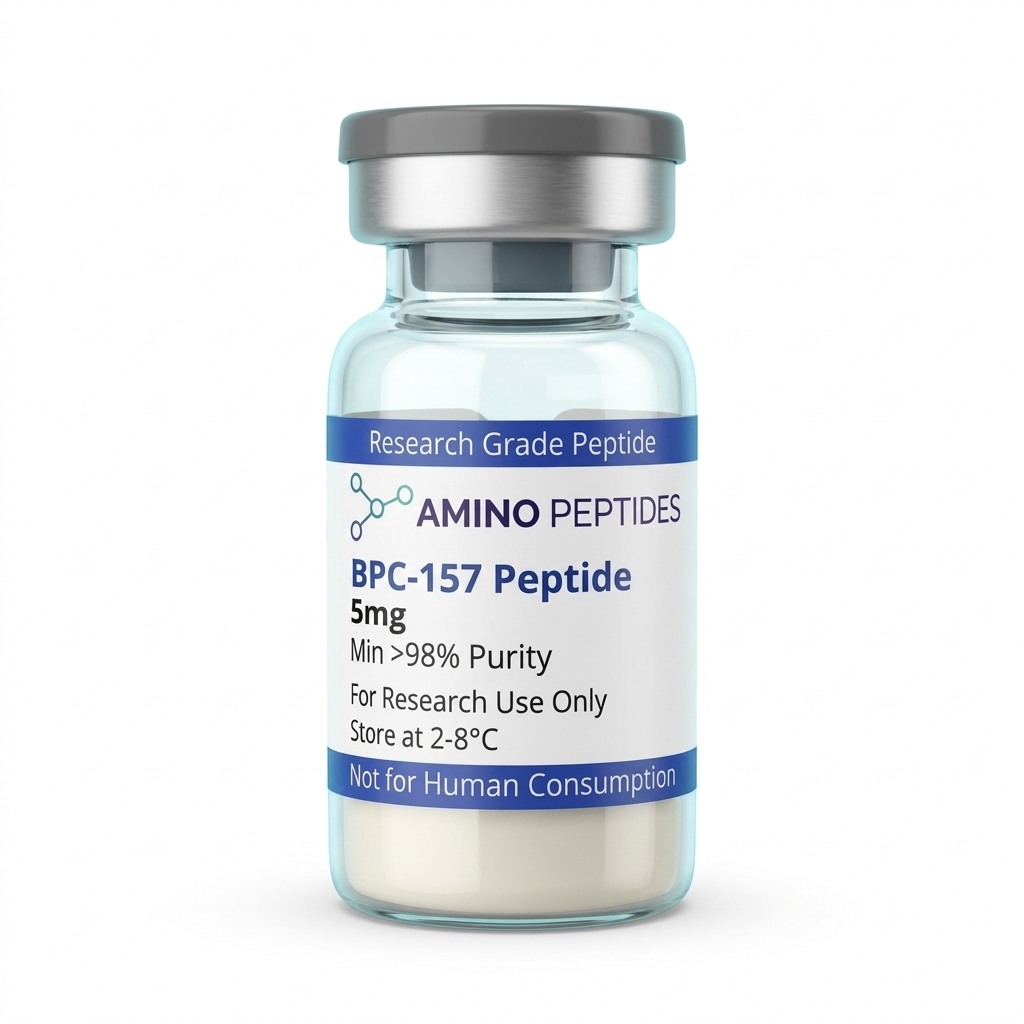
BPC-157 Peptide
From £17
Supplied as a sealed freeze-dried vial (stable 12–24 months at 2°C–8°C in a standard refrigerator).
Shop BPC-157 Peptide →Tracking Cellular Signalling vs Structural Changes Over Time
When scientists observe ligament recovery in preclinical models, the process does not happen overnight. Connective tissue remodelling follows a strict biological schedule, moving from immediate chemical flares to slow, physical bricklaying. Understanding the difference between early cellular signalling and late-stage structural maturity helps explain what researchers actually measure in the lab.
During the first 24 to 72 hours after BPC-157 is introduced to a cultured ligament sample or preclinical model, the changes are purely chemical and microscopic. You cannot see a stronger ligament with the naked eye at day two. Instead, assays reveal a rapid spike in messenger RNA for VEGFR2 and early activation of the eNOS pathway. Local oxidative stress markers begin to drop, keeping secondary cell death in check. At this stage, fibroblasts at the wound margins start phosphorylating FAK and paxillin, preparing to move into the damaged zone.
By days four through seven, the cellular migration phase is in full swing. Under a microscope, published studies note a dense wave of fibroblasts streaming into the defect—a process often called tendon or ligament outgrowth. New capillary buds begin to form a fragile vascular network across the gap. In control samples without the peptide, this bridge remains sparse and disorganised. In samples exposed to specific study amounts of BPC-157, the cell density is noticeably higher, and the early scaffolding of Type III collagen begins to appear.
Between weeks two and four, the focus shifts from rapid filling to structural upgrades. This is where the upregulated growth hormone receptors pay off. Fibroblasts transition from producing thin, temporary Type III collagen to spinning thick, load-bearing Type I collagen cables. In rodent medial collateral ligament (MCL) models, biomechanical testing at the two-week mark shows that repaired bands can handle higher pull forces before snapping compared to saline controls.
From week four onward, the newly formed vessels begin to prune back as metabolic demand settles, leaving behind a denser, better-aligned collagen matrix. The takeaway from these timelines is clear: early biochemical sparks happen within hours, but true mechanical strength requires weeks of steady collagen cross-linking and fibre alignment.
Comparison of BPC-157 and Synergistic Signalling Factors in Connective Tissue Research
| Research Compound | Primary Cellular Target | Main Signalling Pathway | Observed Role in Ligament Models |
|---|---|---|---|
| BPC-157 | Ligament fibroblasts and vascular endothelial cells | FAK-paxillin, VEGFR2, and eNOS upregulation | Promotes angiogenesis, fibroblast migration, and organised collagen deposition |
| TB-500 (Thymosin Beta-4 Fragment) | Actin cytoskeleton in migrating cells | G-actin sequestration and cell motility signalling | Clears cellular pathways to allow rapid recruitment of repair cells to damaged zones |
| Growth Hormone (GH) Pairing | Tendon and ligament fibroblast receptors | JAK2-STAT5 signalling cascade | BPC-157 increases GH receptor density, amplifying local cell proliferation when GH is present |
| GHK-Cu (Copper Peptide) | Extracellular matrix and metalloproteinases | TGF-beta and decorin synthesis modulation | Supports cross-linking of new collagen fibres and regulates tissue remodelling enzymes |
| Platelet-Derived Growth Factor (PDGF) | Mesenchymal stem cells and pericytes | Tyrosine kinase receptor activation | Works alongside vascular pathways to stabilise newly formed capillary networks in dense tissue |
Pairing BPC-157 With TB-500 and GHK-Cu in Connective Tissue Models
Exploring the synergistic potential of BPC-157 in ligament research naturally leads to how it behaves alongside other well-characterised peptides. Because ligament regeneration requires cell movement, blood vessel growth, and matrix assembly all at once, pairing molecules with complementary jobs is a major focus in tissue repair research.
The most widely studied partner for BPC-157 is TB-500, a synthetic segment of the naturally occurring protein Thymosin Beta-4. While both peptides support tissue remodelling, they do not duplicate each other's homework. BPC-157 primarily drives FAK-paxillin signalling, growth hormone receptor density, and VEGFR2 expression. TB-500, on the other hand, works directly inside the cell's skeleton by binding to G-actin—the building block of cellular microfilaments.
By sequestering actin monomers, TB-500 keeps the cell flexible and mobile, allowing endothelial cells and fibroblasts to squeeze through tight spaces over longer distances. When researchers combine BPC-157 and TB-500 in preclinical protocols, TB-500 acts as the systemic mobiliser that frees up cells to travel, while BPC-157 provides the local directional cues and vascular support once they arrive. Together, they cover both the supply of repair cells and their local productivity.
A third compound that fits neatly into this connective tissue puzzle is GHK-Cu, a naturally occurring copper-binding tripeptide. While BPC-157 and TB-500 excel at getting cells to the injury site and establishing a blood supply, the final strength of a ligament depends on how well the collagen is woven and cross-linked. GHK-Cu delivers bioavailable copper directly to the enzyme lysyl oxidase, which physically locks collagen and elastin fibres together into a tough mesh.
Furthermore, GHK-Cu helps regulate metalloproteinases (MMPs) and their inhibitors (TIMPs). These enzymes act as the cleanup crew, breaking down jagged, damaged collagen so fresh fibres can take their place without leaving behind weak scar tissue. Studying these compounds in tandem allows investigators to observe the entire arc of ligament recovery: TB-500 mobilises the workforce, BPC-157 builds the vascular roads and directs fibroblast assembly, and GHK-Cu refines the final structural weave.
Figure: The Synergistic Potential of BPC-157 in Ligament Research
Reconstitution calculator
Choose a vial mass and a bacteriostatic reconstitution solution volume. The figure is the resulting concentration.
Concentration: 2.50 mg/mL
Per 0.01mL (10µL): 25.0 mcg
Open the full calculatorBacteriostatic reconstitution solutionWhy 99%+ Purity and TFA Removal Matter in Ligament Assays
In delicate fibroblast cultures and ligament assays, the quality of the starting material dictates the reliability of the data. When investigating a fifteen-amino-acid chain like BPC-157, verifying a minimum of 99% purity via High-Performance Liquid Chromatography (HPLC) and Mass Spectrometry (MS) is the only way to ensure that observed cellular responses come from the target peptide rather than hidden synthesis leftovers.
During solid-phase peptide synthesis, amino acids are linked together step by step. If a batch stops at 92% or 95% purity, the remaining 5% to 8% is not harmless filler. It consists of truncated peptide fragments—incomplete chains missing one or two amino acids—along with chemical scavengers and uncoupled reagents. In a ligament assay, those truncated fragments can compete with intact BPC-157 for receptor binding sites on fibroblasts without flipping the switch, effectively dulling the FAK-paxillin signal and skewing the measured level needed for a response.
Even more important for cell survival is the removal of trifluoroacetic acid (TFA). TFA is a strong acid universally used to cleave peptides from their resin beads at the end of manufacturing. If a supplier skips the secondary ion-exchange step, residual TFA remains bound to the peptide powder as a salt. When dissolved into a study solution and applied to sensitive primary fibroblasts, TFA lowers the local pH and causes direct chemical toxicity. Cells shrink, stop dividing, or trigger inflammatory markers that completely mask the regenerative signalling of the peptide. High-grade research vials undergo thorough TFA removal, exchanging the harsh acid for a benign acetate or hydrochloride salt.
Proper storage and handling are just as critical once the vial arrives in the lab. Lyophilised (freeze-dried) peptide powders are stable for short transit periods at ambient temperatures, but long-term storage requires a dedicated refrigerator kept between 2°C and 8°C, away from bright light. Before mixing, allow the cold vial to reach room temperature to prevent condensation from clumping the powder.
When adding a bacteriostatic reconstitution solution, aim the liquid stream gently down the inside glass wall rather than squirting it directly onto the delicate lyophilised cake. Never shake the vial; roll it gently between your palms until clear, and keep the reconstituted solution refrigerated at 2°C to 8°C between experiments to prevent amino acid chain breakdown.
Frequently Asked Questions
Why is the synergistic potential of BPC-157 in ligament research such a popular topic?
Researchers explore the synergistic potential of BPC-157 in ligament research because ligaments naturally lack strong blood flow, making structural repair slow. Published studies indicate this synthetic peptide accelerates cellular signalling and collagen organisation in preclinical models. Scientists want to understand how combining specific compounds might further optimise tissue remodelling.
What timeline do published studies observe for ligament recovery in laboratory models?
Published studies typically observe initial cellular changes within days and measurable structural recovery between two and six weeks in rodent models. During this timeframe, researchers analyse how fibroblasts migrate and align new collagen fibres. Exact timelines depend heavily on the specific study amount and the severity of the experimental tear.
Why do researchers combine BPC-157 with other peptides like TB-500 in preclinical models?
Scientists combine BPC-157 with peptides like TB-500 in laboratory models to observe whether complementary cellular pathways speed up tissue regeneration. While BPC-157 primarily influences local growth factor receptors and blood vessel formation, TB-500 regulates actin to support cell migration. Studying them together helps researchers characterise broader structural recovery mechanisms.
How should research-grade BPC-157 be verified for purity and stored in the laboratory?
Laboratories must verify that BPC-157 exceeds ninety-eight percent purity using High-Performance Liquid Chromatography before beginning any experiments. Unmixed lyophilised powder stays stable in a freezer, away from bright light. Once mixed with a bacteriostatic reconstitution solution, the liquid requires strict refrigeration between two and eight degrees Celsius to prevent degradation.
Bibliography
- Cerovecki, T., et al. (2010). Pentadecapeptide BPC 157 (PL 14736) improves ligament repair in the rat. Journal of Orthopaedic Research, 28(9), 1155-1161. View published research
- Chang, C. H., et al. (2011). The promoting effect of pentadecapeptide BPC 157 on tendon repair involves tendon outgrowth, cell survival, and cell migration. Journal of Applied Physiology, 110(3), 774-780. View published research
- Chang, C. H., et al. (2014). Pentadecapeptide BPC 157 enhances the growth hormone receptor expression in tendon fibroblasts. Molecules, 19(11), 19066-19077. View published research
- Seiwerth, S., et al. (2018). BPC 157 and Standard Angiogenic Growth Factors. Gastrointestinal Tract repair, Counteracting NSAID-Induced Lesions, and Angiogenesis. Current Pharmaceutical Design, 24(18), 1972-1989. View published research
- Gwyer, D., Wragg, N. M., & Wilson, S. L. (2019). Gastric pentadecapeptide body protection compound BPC 157 and its role in accelerating musculoskeletal soft tissue repair. Cell and Tissue Research, 377(2), 153-159. View published research
⚠️ Research Use Only Disclaimer: All peptides and compounds are sold strictly for in-vitro laboratory research purposes only. Not intended for human or veterinary use, not a dietary supplement, and not approved to diagnose, treat, cure, or prevent any disease or condition. For use by qualified researchers in suitably equipped laboratory environments only. Amino Peptides Ltd operates in full compliance with UK MHRA regulations and applicable EU research chemical guidelines.